From Clearance Revenues to Student Dropouts: the Financial Crisis Sweeps Away Palestinian Education
The root of the crisis lies in “Israel’s” refusal to transfer tax revenues to the Palestinian Authority.
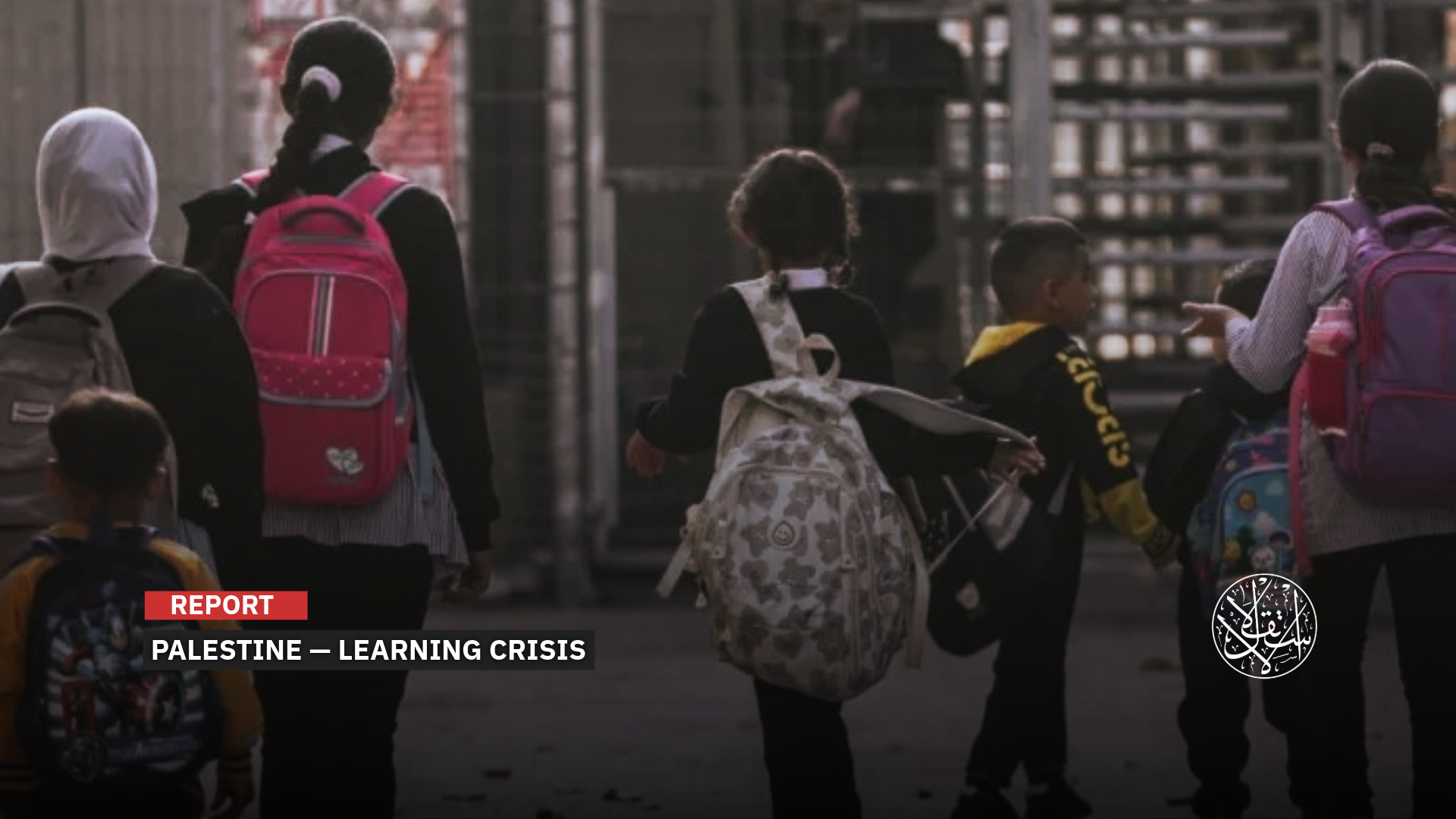
The Palestinian educational system has been subjected for years to an unprecedented process of erosion, which has recently intensified, producing a distorted educational reality, marked by a truncated school week and a catastrophic learning deficit that threatens an entire generation.
In recent years, the educational system has undergone continuous decline, reaching an unprecedented level in the recent period, which foreshadows long-term repercussions on academic achievement and social stability.
The Roots of the Crisis
The primary cause of the current crisis lies in “Israel’s” refusal to transfer clearance revenues, which represent two-thirds of the Palestinian Authority’s income.
Since 2019, the occupation government began making monthly deductions from these revenues under the pretext of the PA paying salaries to the families of prisoners and martyrs, with around $1 billion deducted between February 2019 and July 2024.
After the Operation al-Aqsa Flood on October 7, 2023, “Israel” withheld $75 million monthly, the portion allocated to Gaza, and then stopped transfers entirely from May 2025.
According to official data, the withheld funds reached $4.5 billion by the end of 2025, resulting in the lowest liquidity for salaries and services.
In addition, the PA lost a quarter of its gross domestic product after work permits for more than 200,000 workers in “Israel” were canceled and the blockade and checkpoints tightened, causing local tax revenues to decline and making salary financing impossible without new debt.
The withholding of funds coincided with a sharp drop in foreign aid, with international support for the PA reaching $358 million in 2025 compared with about $2 billion in 2008.
Meanwhile, the Arab pledge to provide $100 million monthly, adopted by the Arab League in 2012, was realized only partially, according to the Arab Center Washington DC.
With accumulating debt and borrowing from local banks, the PA’s debt reached the equivalent of 106 percent of GDP by November 2025.
Since November 2021, the government has been forced to pay half the salaries or more or less in some cases and irregularly, with education and health services most affected.
Today, public schools are unable to pay teachers’ dues or operate schools throughout the week, making disruption unavoidable.
In addition, many experts hold the PA responsible for some aspects of the crisis.
A report by the Arab Center notes that the PA accumulated massive debts to banks and suppliers due to poor planning, overreliance on withheld revenues, and borrowing.
Budgets for education and health also suffer from a lack of transparency, with the Palestinian Teachers’ Union demanding a clear allocation for education and the establishment of an emergency fund to ensure salary payments.
Added to this is the difficulty of internal collection and weak local taxation due to the exhausted economy, leaving the government unable to make up the shortfall from other sources.
Devastating Effects
Since the start of partial salary payments five years ago, teachers have lived in a state of discontent and strikes.
Local sources indicate that education workers make up more than half of public sector employees, receiving only 60 percent of their salaries and on irregular schedules, prompting prolonged strikes.
In February 2026, the Teachers’ Union went on strike again, protesting deductions from part of their salaries and the Palestinian government’s withholding of salaries for about one hundred teachers who had participated in previous protests, as punishment.
Reports indicate that the strike disrupted about half of the schools in the West Bank.
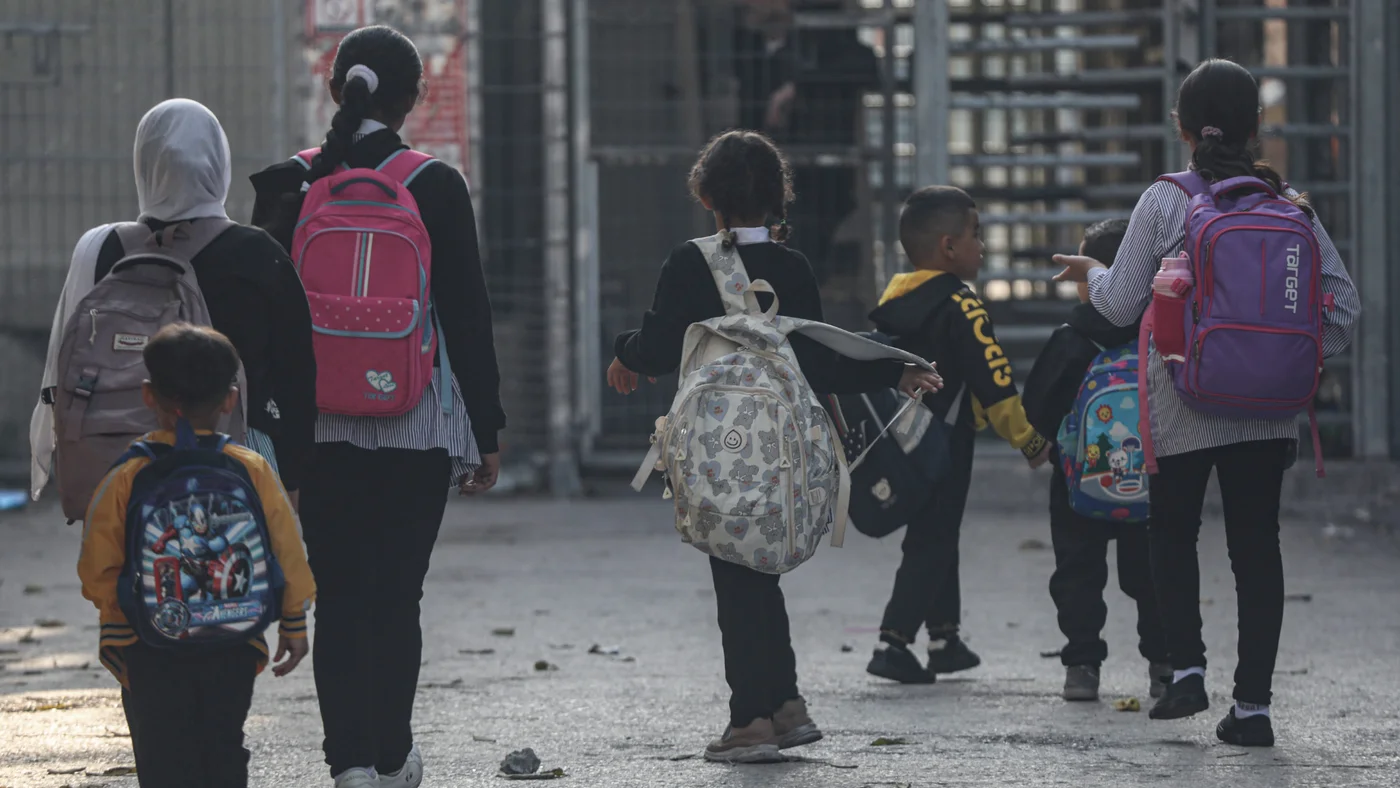
Even when working, teachers are required to attend only three days a week, with their schedules reduced to concentrated lessons, increasing pressure and limiting their ability to deliver full lessons.
The crisis forced the Ministry of Education to reduce the school week from five to four days during the 2023/2024 academic year, then to three days at the start of 2025/2026. The school term was also delayed by a week due to lack of funding.
The Palestinian curriculum requires 182 school days to complete content, but students in public schools attended fewer than 50 days in the first term, losing nearly half of their instructional time.
This gap exposes students to the risk of failing to acquire basic reading and math skills, with the United Nations Relief and Works Agency for Palestine Refugees, UNRWA, warning of a shift from learning poverty to a full curricular emergency.
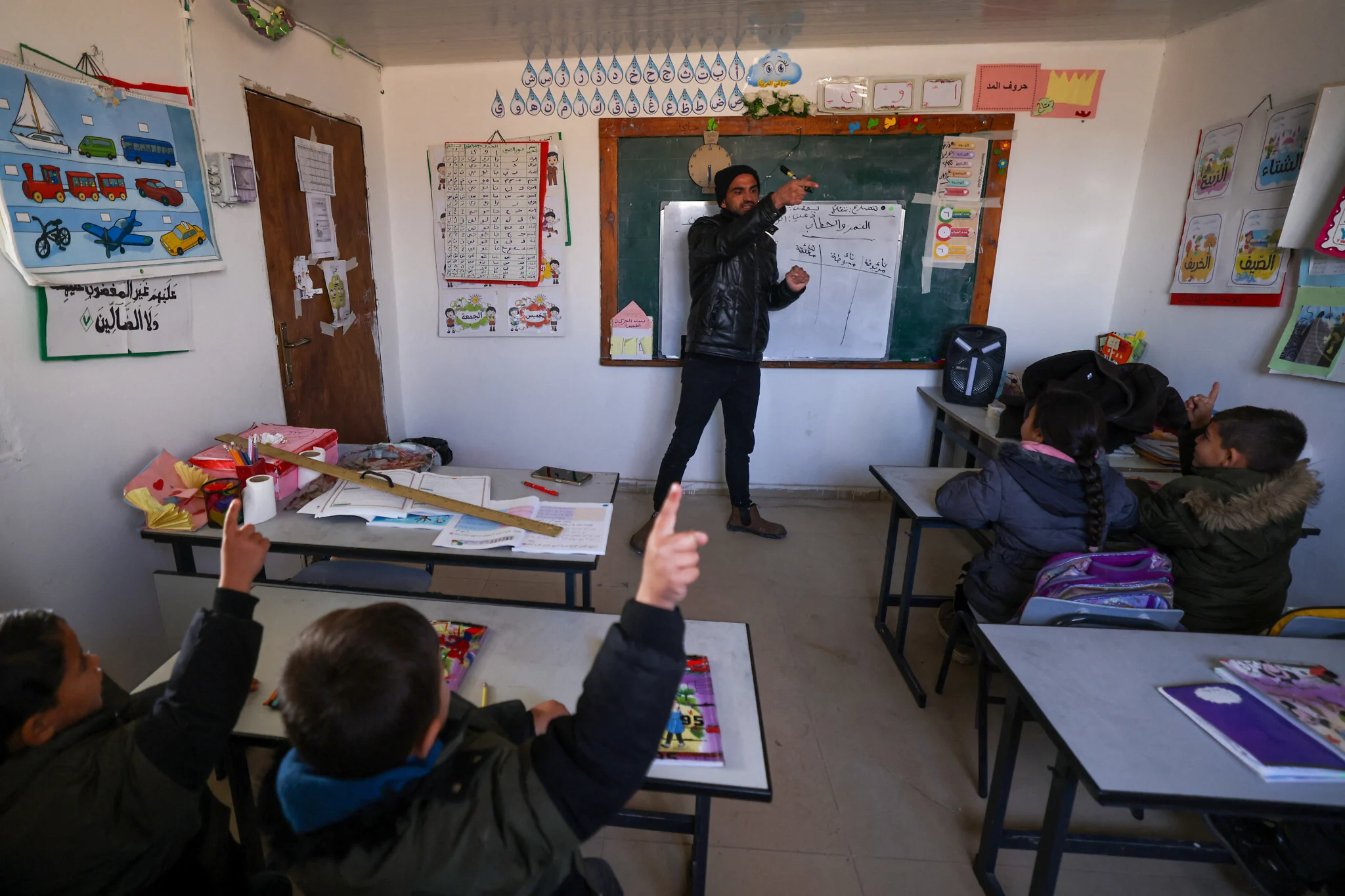
Due to time pressure, teachers focus on Arabic, math, and English, while science and social studies are neglected.
As a result of declining salaries and instability, many teachers have left their jobs to work in factories or trade, as confirmed by the principal of Zainabia School in Nablus in press statements.
This shortage has increased the burden on remaining teachers, who now teach 40-minute lessons and cover multiple subjects.
On the other hand, student dropout rates are rising among the 650,000 students distributed across 1,948 public schools in the West Bank, plus 500 kindergarten sections.
PA officials estimate that 5 to 10 percent of students in the West Bank have dropped out over the past two years, with some turning to work, believing that attending intermittent classes is futile.
The disruptions have affected family and social life. Families are forced to leave their children alone at home or pay extra for private tutoring to compensate for the lack of schooling, straining household budgets.
The lack of a school routine creates stress and laziness among students, producing a clear gap in their learning levels.
In addition, UNRWA reports that occupation violations and settler attacks caused 2,000 incidents disrupting learning during 2024/2025, leaving students in a state of fear and psychological trauma.
No Solutions!
An Arabic language teacher at a public school in Ramallah explained the details and roots of the crisis, saying, “For four years, we have not received our full salary. It started at 80 percent, then dropped to 70, and finally to 60 percent.”
In an interview with Al-Estiklal, the teacher, who requested anonymity for fear of losing her job, added, “My salary was 4,700 shekels, then dropped to 3,500, and now 2,700, which represents 60 percent, and I have dues of 50,000 shekels” (the dollar equals 3.13 shekels).
“Each payslip shows the total dues, but that is just ink on paper, as in practice none of these dues are paid.”
“Instead of giving us the full salary, the PA’s solution was for us to teach three days in person and two days remotely,” she added.
But this had a devastating effect on students, as she said, “The benefit rate is very low, not exceeding about 20 percent, because students do not follow lessons or attend when they are at home.”
She explained, “Some people do not have electricity cards (prepaid) or internet, or there is one computer in the house for four students, and they have to divide the time, with each following only 10 minutes per lesson. All of this affects academic achievement.”
She emphasized that teachers cannot complete the curriculum and are forced to skip many important lessons due to limited time and fewer school days.
Faced with this reality, many parents were forced to send their children to private tutoring to compensate for the shortfall, “but this is beyond their means, especially since employees do not receive full salaries and workers are unemployed,” due to “Israel” preventing them from entering work in the occupied territories.
The crisis also affected retired teachers, as the teacher reported that they receive only 200 shekels (less than $100) per month because of the crisis.
The Teachers’ Union and parents’ associations call for the establishment of an emergency fund to guarantee full salary payments for education workers until the crisis ends, and to make education a top priority in the general budget.
The union proposes plans to increase local revenues and stop unnecessary spending, demanding greater transparency from the government in resource management.
The Popular Campaign to Protect Education also calls for contributions from the private sector and Palestinian communities abroad to directly fund schools.
Experts assume that the fundamental solution lies in addressing the political and economic causes of the crisis. The Arab Center Washington DC stresses that “Israel’s” continued withholding of tax revenues is the decisive factor in the deterioration of education.
The center sees financial governance reform within the PA, boosting local revenues, and reducing corruption and unproductive spending as all necessary steps to resolve the crisis.
Sources
- Occupation, PA Inaction and Financial Troubles Drive Education Crisis in Palestine
- Running on Empty: The Deepening Financial Crisis of the Palestinian Authority
- Palestinian Teachers Strike Over Slashed Salaries as Israel Continues Withholding PA Funds
- Financial Blockade Threatens the Future of Education in Palestine [Arabic]