France Revisits 1968 Pact With Algeria: Are Special Migration Privileges on the Brink?
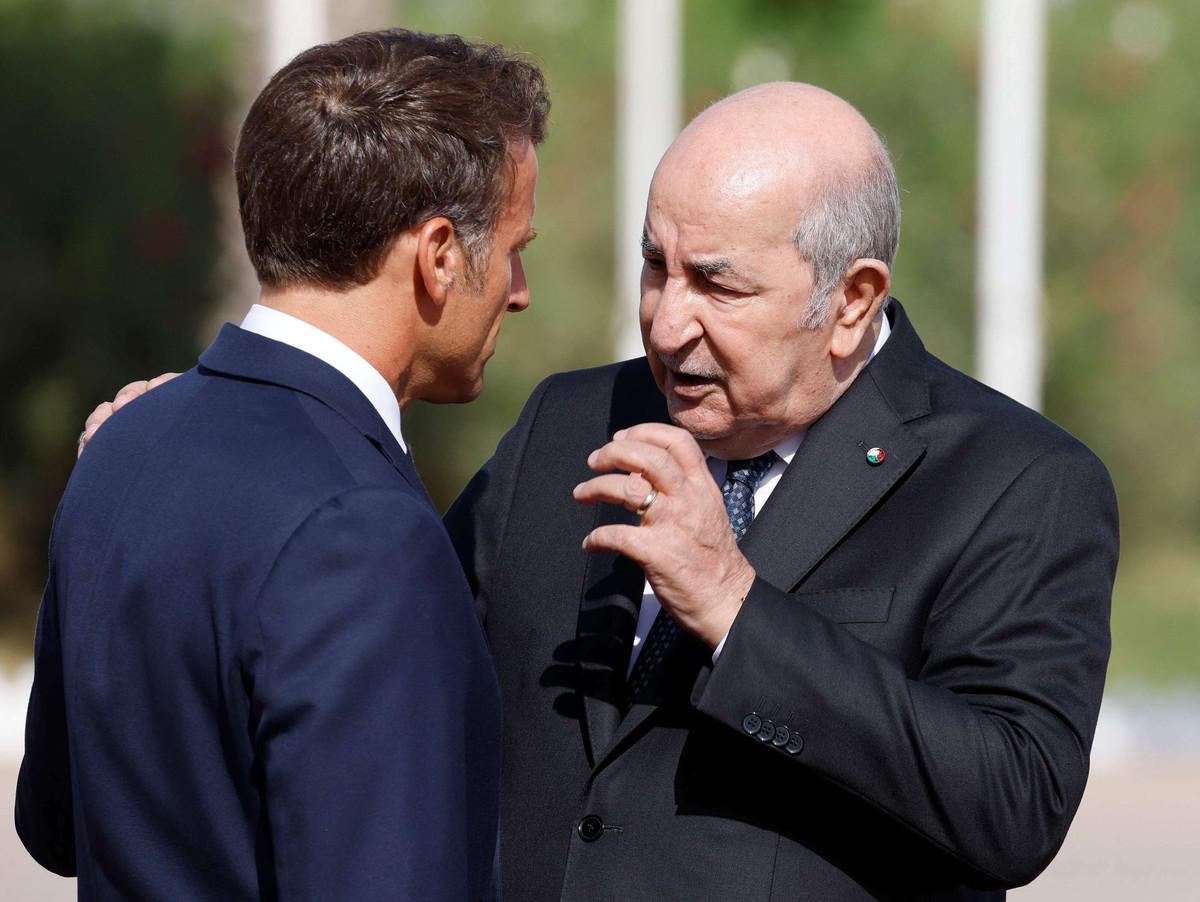
Macron has decided to take several initiatives in the coming weeks to amend the migration agreement.
France has returned to discussing the cancellation or amendment of the historic immigration agreement signed with Algeria in 1968, which regulates the presence of Algerians in the European country and grants them special privileges compared with other foreigners.
The agreement stipulates that Algerians are granted a 10-year residence permit after only three years of residence in the country, compared with five years for others, and the right to obtain a 10-year residence permit for those married to a French citizen after one year of marriage.
The facilitations include obtaining a five-year residence permit on the condition of finding a job within nine months, easing family reunification after only one year of residence, and also facilitating the opening of commercial businesses, among other privileges. But Paris wants to amend all of that.
What’s New?
The latest remarks came from French Prime Minister Sebastien Lecornu, who said the 1968 agreement regulating migration between Algeria and France “no longer clearly aligns with our interests,” stressing that they want to negotiate it and reach a result “as a matter of urgency.”
Lecornu said in a statement to the newspaper Voice of the North during February 2026 that “President Emmanuel Macron has decided to take several initiatives in the coming weeks to achieve tangible results regarding this agreement,” without providing details about the nature of the anticipated measures.
The French prime minister had previously made clear that he prefers the option of renegotiating the agreement rather than canceling it outright, reaffirming his commitment to revising the existing framework in a way that responds to what Paris considers the requirements of the current phase.
French Interior Minister Laurent Nunez said in the same month that Paris believes it is “necessary and urgent to renegotiate the 1968 agreement,” justifying this by pointing to “a number of privileges” it grants, particularly in the field of family migration.
He indicated that France wants to restore balance and prioritize economic migration over family migration, confirming that this file will be subject to discussion between the two sides.
Regarding the implementation of deportation orders for irregular Algerian migrants, Nunez said cooperation in this area “has not yet resumed,” adding that “there have been voluntary departures.”
The minister is scheduled to travel to Algeria during February 2026 “to discuss security issues, particularly the return of Algerians and the migration agreement.”
The debate over the agreement resurfaced after an attack in the city of Mulhouse, eastern France, in February 2025 that killed one person, carried out by an Algerian who had been issued a deportation order but whose country refused to take him back.
As a result, then-Prime Minister Francois Bayrou announced that his government would review the agreement within six weeks if Algeria continued to refuse to receive deportees, noting that the accord grants Algerians “exceptions” to French immigration law.
Two days after Bayrou’s remarks, Algeria’s Foreign Ministry published a warning that “any tampering” with the agreement would be met with a similar response regarding other accords. However, the French interior minister said in his latest remarks that Macron had announced that Algerian President Abdelmadjid Tebboune “agrees to renegotiate.”
In October 2025, the French National Assembly, Parliament, under pressure from the right-wing National Rally party, adopted a nonbinding resolution calling for the cancellation of the 1968 agreement.
The move was seen as a symbolic victory for far-right leader Marine Le Pen, as it was the first time a resolution submitted by her party had passed, although the government rejected immediate cancellation and favored negotiation.
The following day, the new prime minister, Lecornu, declared that the agreement “belongs to another era” and “must be renegotiated,” tasking the Interior and Foreign Ministries with opening talks with Algeria to redraft it in a way that ensures “reciprocity” and aligns with the current labor market.
In practical terms, French officials aim to reduce long-term residence permits and link them to conditions related to salary and qualifications, tighten the conditions for family reunification, and replace the existing privileges with economic migration programs similar to “talent passport” schemes for qualified individuals.
Accordingly, companies would need to resort to other visa categories to employ Algerians, while marriage or family reunification applications would be subject to greater scrutiny.

What Are the Reasons?
The Mulhouse incident brought the debate back over the failure to enforce the deportation of irregular Algerians because Algeria has refused to receive its nationals.
This coincided with deteriorating economic conditions, as the unemployment rate in France rose to 7.5 percent and opportunities for young people declined, making public opinion more sensitive toward any system that favors a particular community.
The far right relies on a new parliamentary report prepared by MPs Mathieu Lefevre and Charles Rodwell, which estimates that the migration agreement with Algeria costs the state about 2 billion euros annually in social assistance, although the report itself acknowledges that the figure is approximate.
But these reasons may be largely formal at this stage, as the rise of the far right and the traditional right has turned immigration into a quintessential election issue.
In October 2025, lawmakers from the National Rally party said the agreement grants an “exceptional” privilege to Algerians, while French citizens in Algeria do not receive comparable benefits.
With municipal elections approaching in March 2026, the party used this issue to mobilize its base, and the press described the passage of the resolution as a symbolic victory that strengthens the far right’s prospects and puts pressure on the government of Sebastien Lecornu to take concrete steps.
Left-wing circles saw the absence of lawmakers from President Emmanuel Macron’s party during the session as contributing to the resolution’s passage, which they described as “racist.”
As the far right plays on this chord and makes immigration a central slogan, Macron has begun to pull the rug from under his opponents by speaking of a new initiative to amend the agreement.
In a sign that it is being used by the right for electoral purposes, Algerian President Abdelmadjid Tebboune previously described the 1968 agreement as an empty shell.
Relations between the two sides grew tense when France recognized Morocco’s sovereignty over Western Sahara in the summer of 2024, prompting Algeria to recall its ambassador and suspend security and humanitarian cooperation.
This diplomatic context makes the review of the agreement a lever of pressure in a broader dispute over memory and legitimacy after French colonialism.
Despite the focus on the remaining privileges, the agreement has undergone numerous amendments that have reduced most of its advantages.
The first amendment, in 1985, made residence permits valid for one year or 10 years instead of five years, while maintaining the freedom to establish commercial businesses.
In 1986, France introduced a visa requirement for Algerians, ending freedom of movement.
The 1994 amendment required the submission of housing documents, financial resources, and a return ticket for family visits, and set an absence limit of three years, otherwise residency would be withdrawn.
In 2001, the agreement was aligned with the Chevenement law, which granted certain rights to foreigners in general but froze the special status of Algerians.
These amendments brought the status of Algerians closer to general laws, but other features remained.
Potential Impacts
The French government aims to shift from focusing on “family migration” to selective migration of an economic nature, but this shift raises questions about the future of the Algerian community in France.
The current agreement has allowed the formation of a large and deeply rooted Algerian community.
Data from the French Institute for Demographic Studies, INED, and a report by the Stimson Center indicate that about 891,700 people born in Algeria were residing in France in 2024, making them the largest foreign group.
According to the Stimson Center, they live in major cities and work in construction, services and transport, while tens of thousands hold university degrees and are integrated into advanced professions.
Their financial remittances account for about 0.7 percent of Algeria’s gross domestic product.
It explains that if the privileges are canceled or eased, the impact will be direct.
It says canceling the agreement would replace 10-year residence cards with short-term permits requiring frequent renewal, make family reunification subject to complex bureaucratic procedures, and limit access to social assistance.
It could also impose stricter conditions on salaries and qualifications for Algerian migrants and force companies to rely on “talent passport” visas for qualified employees.
This means that about 900,000 people would find themselves facing an unclear legal status, and some may have to move to regular immigration programs or leave the country.
Potential amendments would also restrict the freedom to establish projects, as Algerians would have to prove feasibility and initial capital like other foreigners, according to the same center.
At the same time, tightening the granting of residence permits could lead to an increase in cases of irregularity.
According to French government statistics, the number of irregular Algerian migrants in 2025 rose by 51.5 percent compared with 2024, reaching more than 51,000 cases.
If long-term work permits are restricted, they could face the risk of deportation or turn to informal work.
From another angle, canceling the agreement could complicate the situation of second- and third-generation children, many of whom hold French nationality but are connected to families that still hold Algerian nationality, according to Euronews.
Experts fear that tightening family reunification could create family gaps and increase feelings of discrimination, which could have social repercussions and fuel far-right rhetoric.
Algeria has also warned that withdrawing privileges could prompt it to impose similar restrictions on French residents in Algeria, further complicating cultural and commercial relations.
Sources
- Paris Intends to Amend the 1968 Agreement Regulating the Algerian Presence in France, Nunez Speaks of Preferring Economic Migration Over Family Migration [Arabic]
- France Threatens to Review Algeria Migration Pact in Row Over Deportations
- Reconsidering the 1968 Franco-Algerian Accord
- Is the 1968 Franco-Algerian Agreement on Borrowed Time?
- France to Reexamine 1968 Migration Pact With Algeria Amid Diplomatic Tensions