Boycott in Ramadan: How to Tell Palestinian Dates from Settler Ones
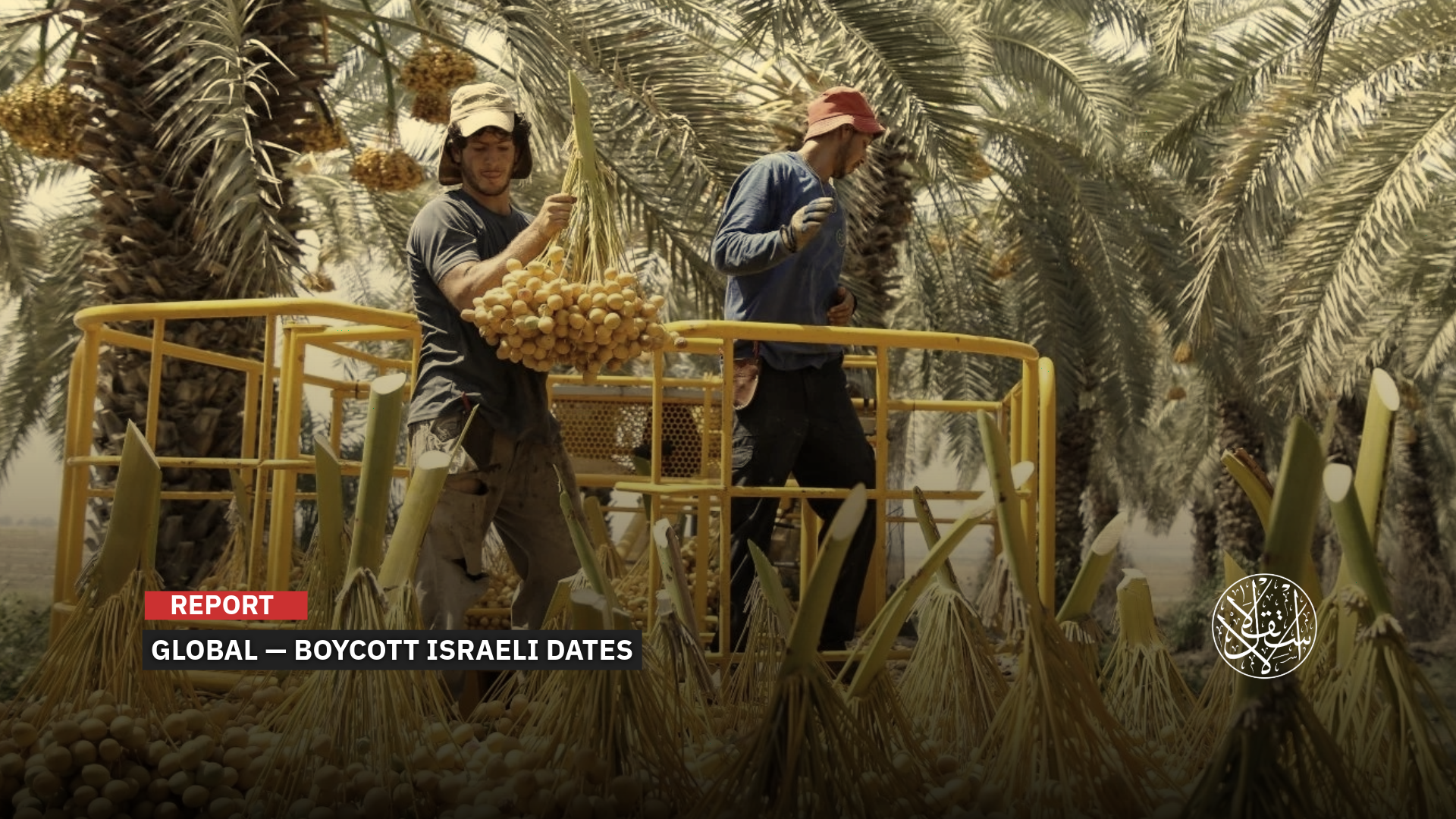
Purchasing Israeli dates helps fund the settlements.
As Ramadan 2026 begins, global calls to boycott Israeli Occupation dates have intensified, arriving at a moment when consumption of the fruit traditionally peaks and scrutiny of its origins sharpens.
The appeals are rooted in the fact that a significant share of the dates “Israel” exports to Europe and other markets are grown in settlements built on occupied Palestinian land, making their purchase, activists argue, a direct contribution to the settlement economy.
Latest Campaigns
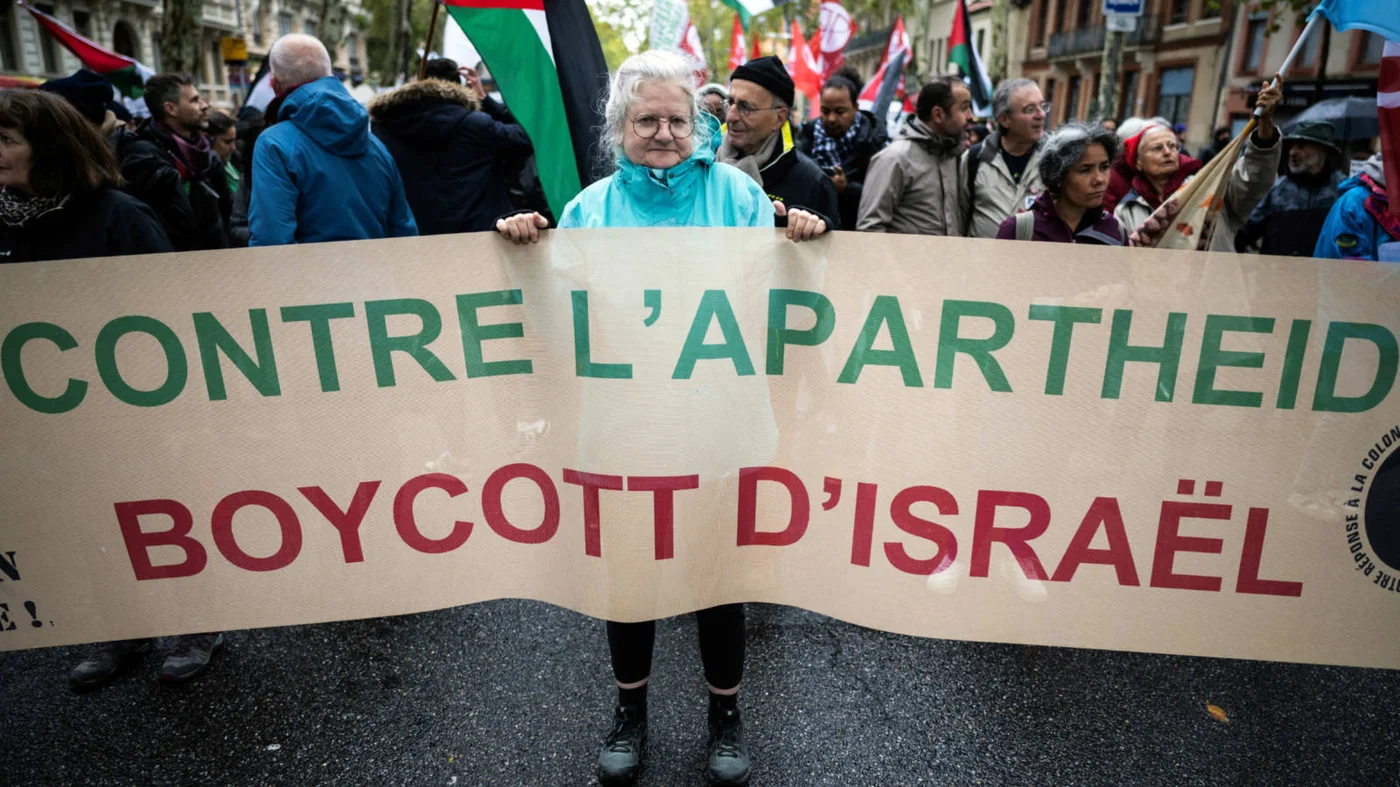
In France, the advocacy group EuroPalestine has called for a boycott of dates sold in the country that are produced in settlements in the occupied West Bank and marketed under the names “Medjool” or “Mejhoul.”
The group’s president, Olivia Zemor, said that most Medjool dates available on the French market come from illegal settlements or entities complicit with the Israeli Occupation. Some packages list the country of production as Jordan or Morocco, while the dates’ actual origin is Israeli.
Volunteers are carrying out awareness activities inside major supermarkets, informing consumers and encouraging them to choose alternative products.
Videos circulating online have also shown boycott campaigns unfolding in several French cities, including a protest inside a halal butcher shop in Paris after Israeli dates were discovered being sold as products from another country. Customers expressed anger after finding Israeli labels on the packaging, with some demanding refunds.
In the Spanish city of Malaga, activists from the Boycott, Divestment and Sanctions (BDS) movement have launched a grassroots campaign to raise awareness about boycotting Medjool dates exported from the Israeli Occupation, ahead of Ramadan, while calling for stronger economic pressure on companies linked to settlement activity.
In the United Kingdom, the groups Friends of al-Aqsa and Palestine Solidarity Campaign have relaunched their annual “Check the Label” campaign, urging consumers to ensure that the dates eaten at iftar do not come from settlements.
In the United States, organizations such as American Muslims for Palestine and the Council on American-Islamic Relations (CAIR) have called for a boycott of Israeli dates, publishing lists of companies to avoid and stressing that boycotts are a peaceful means of pressuring “Israel” to end settlement expansion.
The BDS movement has also urged a complete boycott of Israeli dates, particularly during Ramadan, arguing that they are grown on stolen Palestinian land and irrigated with stolen water.
In a statement posted on Instagram, BDS said date farming has become a source of funding for the crimes of the Israeli Occupation, while also entrenching land and water theft and undermining Palestinian agriculture in order to exclude it from competition.
The movement added that while the Israeli Occupation encourages the production of settlement-grown dates, it simultaneously tightens restrictions on Palestinian farmers by banning the sale of palm saplings, confiscating agricultural equipment, seizing land, blocking access to water and wells, and imposing strict limits on agricultural production.
Production Scale
The Israeli Occupation produces large quantities of dates, particularly the Medjool variety, making it an influential competitor despite its relatively small size within the global dates market, which was valued at an estimated $32.7 billion in 2025.
“Israel’s” date industry is worth around 1.2 billion shekels (about $360 million) and employs roughly 600 farmers cultivating between 60,000 and 70,000 dunams. The sector is heavily export-oriented, with producers shipping about 35,000 tons annually, as was the case in 2025.
Yet only 8,800 tons of those exports originate from within “Israel’s internationally recognized borders,” meaning that roughly 75 percent of exported dates come from settlement farms in the occupied West Bank.
By contrast, the Palestinian date sector has seen notable growth in recent years. Palm cultivation is concentrated in Jericho, the Jordan Valley, and Gaza, particularly in Deir al-Balah and Khan Younis.
According to a 2025 field assessment by the Supreme Committee for Estimating Date Production in Palestine, local output reached 25,300 tons, up from 22,000 tons in 2024, produced by 351,000 palm trees across 893 farms in the West Bank and Gaza.
Palestinians export around 16,000 tons of dates to more than 35 countries, with thousands of families economically dependent on the sector. Estimates suggest about 7,000 workers are employed in palm cultivation.
According to the WAFA News Agency, between 60 and 70 percent of locally produced dates are absorbed by the domestic market, underscoring the sector’s economic importance and the impact of Israeli dates flooding Palestinian markets on the trade balance.
The Times of Israel reported that Israeli producers have been forced to pivot toward domestic marketing after external demand slowed amid boycott campaigns.
Several retailers, including the British cooperative Co-op, have halted imports from Israeli companies in line with ethical policies that prohibit links to settlement activity.
In recent years, the Palestinian date industry has expanded significantly, but it continues to face unfair competition and deceptive labeling practices that make it harder for consumers to distinguish Palestinian dates from those originating in settlements.
The growing practice of repackaging and hijacking the geographic identity of dates is undercutting the competitiveness of Palestinian products, while settlement farms benefit from advanced infrastructure, government support, and tax incentives.
“Palestine has a long history of date cultivation and could have been one of the world’s top exporters. Instead, Israeli restrictions and ongoing war, and the masking of the true origin of Israeli dates have devastated the industry,” said Mahmoud al-Abadsa, a palm farmer from Deir al-Balah, in an interview with Al-Estiklal.
“The restrictions include the destruction of farmland through bombing and bulldozing, settler attacks, denial of access to water, rising shipping and transport costs, and the closure of crossings, compounded by the near-total devastation of the sector during the most recent war.”
“The Israeli Occupation operates on two tracks,” al-Abadsa added. “It destroys this industry inside Palestine, then steals our name to sell its own products on global markets. It is a double crime.”
How They Cheat and How It’s Revealed
Israeli date producers have sought to sidestep widening Arab and international boycott campaigns by labeling their products as “Made in the West Bank,” a move designed to keep them on shelves despite growing scrutiny. Activists, however, were quick to spot and challenge the tactic.
Settlement farms produce premium varieties, most notably Medjool dates, and to offset losses from the boycott, producers have increasingly sold their harvests to Palestinian traders, who then market them inside Palestinian markets as locally grown produce.
This kind of maneuvering is not new. Hebrew sources, including Yedioth Ahronoth, show that the Zionist settlement project began early on by appropriating date palm offshoots from neighboring countries to establish date farming across the Jordan Valley.
An Israeli document reveals that in 1924, Jewish National Fund official Yosef Weitz brought “hundreds” of palm offshoots from Egypt. In the 1930s, others traveled to Egypt, Iraq, Kurdistan, and Persia, importing thousands more seedlings “through indirect means,” which were then planted in agricultural clusters in the Jordan Valley and the Beisan area.
To help consumers tell the difference, the Palestinian Ministry of Agriculture says Palestinian dates are exported with official health certificates, certificates of origin, and a Jordanian barcode beginning with 625, while Israeli dates typically carry barcodes starting with 729 or 871.
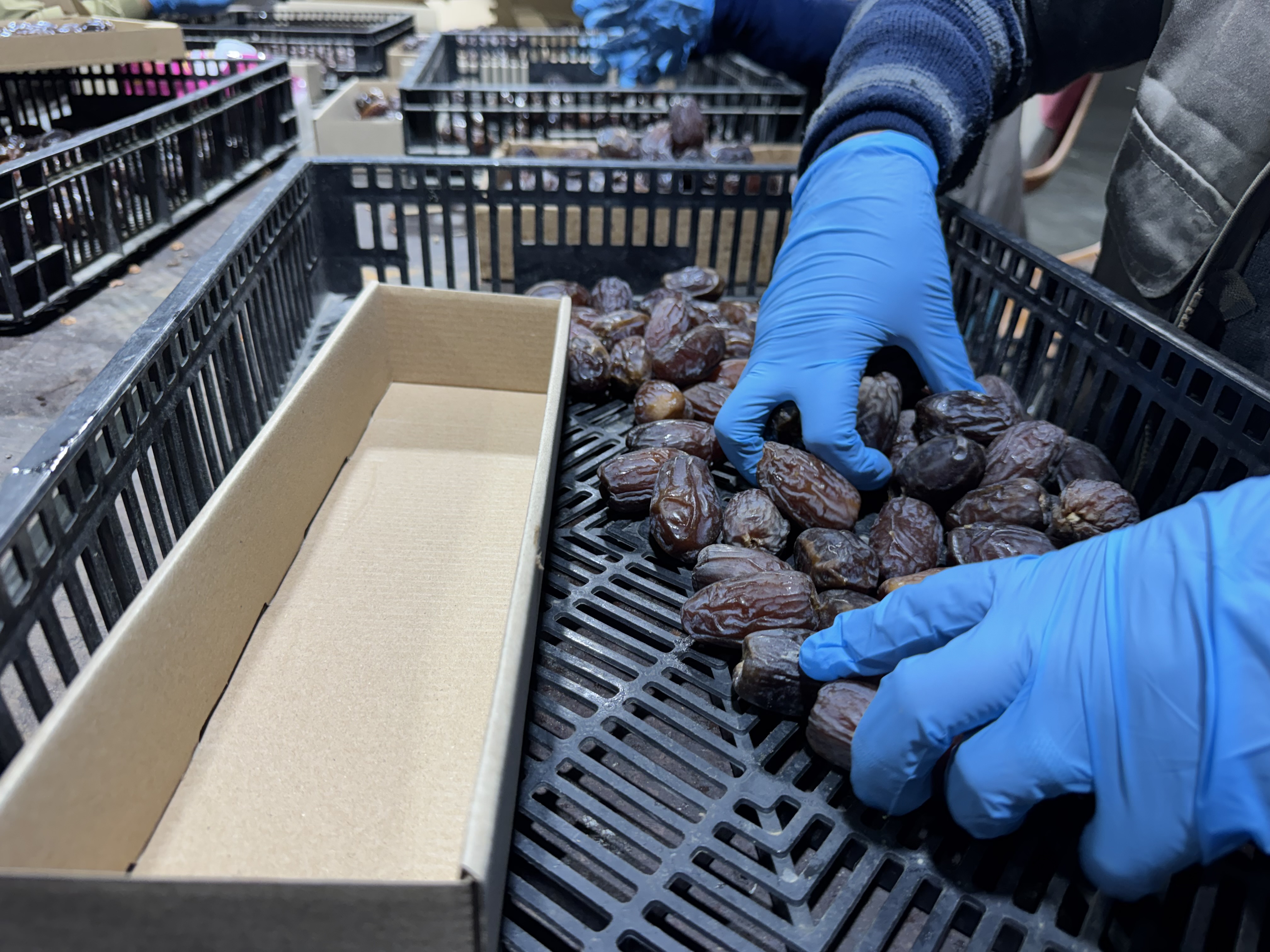
Beyond paperwork, there are visible physical differences. Settlement palm trees are irrigated with treated wastewater, producing dates that are larger and darker, often tending toward black. Palestinian dates, by contrast, are grown using fresh water and are known for their medium honey-colored hue.
As boycott campaigns gained momentum, Palestinian date seller Mohammed Kaid Salim explained in a video that while the two products can appear similar, only a small number of consumers can reliably identify settlement dates.
He noted that Palestinian dates are typically clean, smooth, and relatively free of wrinkles, with a reddish tint or a light dark color, while settlement dates tend to be either pale blond or an unnaturally deep black.
Palestinian officials warn consumers not to rely on appearance alone, noting that some Israeli companies repackage their products in boxes bearing Arabic names or labels such as “Made in Palestine,” a practice intended to mislead buyers.
In 2014, the Palestinian Ministry of National Economy confiscated around 20 tons of Israeli dates that were being sold under a “Palestinian product” label, and in the years that followed, authorities opened investigations and made arrests in similar cases.
Palestinian exports to Europe also require an EUR.1 certificate, which facilitates entry into EU markets—a standard that Israeli companies involved in repackaging do not respect.
Among the best-known Israeli brands exporting settlement-grown dates are Jordan River, Mehadrin, Hadiklaim, King Solomon Dates, Carmel Agrexco, Star Dates, Anna and Sarah, Medjool Plus, and others.
According to the CBI database, which publishes EU market-entry requirements and sector reports, roughly 50% of Medjool dates exported to Europe originate in “Israel,” while trade publications suggest the figure may be as high as 75%.
EU regulations and a 2019 ruling by the European Court of Justice require clear labeling of goods produced in settlements, distinguishing them from products made within “Israel’s internationally recognized borders.”
European governments advise their citizens and companies to steer clear of economic activity in settlements, citing legal, financial, and reputational risks.
Yet despite guidance from many European states on the “risks of doing business in settlements,” enforcement remains weak, and suppliers often ignore the rules, allowing counterfeiting to continue.
Sources
- Growing Palestine’s Dates [Arabic]
- Black Gold: How One Variety of Dates Took Over a Billion Shekels Industry
- https://www.timesofisrael.com/facing-us-tariffs-flooded-eu-markets-gaza-closure-israeli-date-growers-issue-sos/
- France Acts Against Israeli Dates Amid Exposing Attempts to Manipulate Origin
- Israel date industry fears Ramadan boycott following Gaza bloodshed
- The Date on Your Iftar Table May Fund the Genocide – How to Spot the Difference