Criminalizing Support for the Resistance: Jordan’s Next Step?
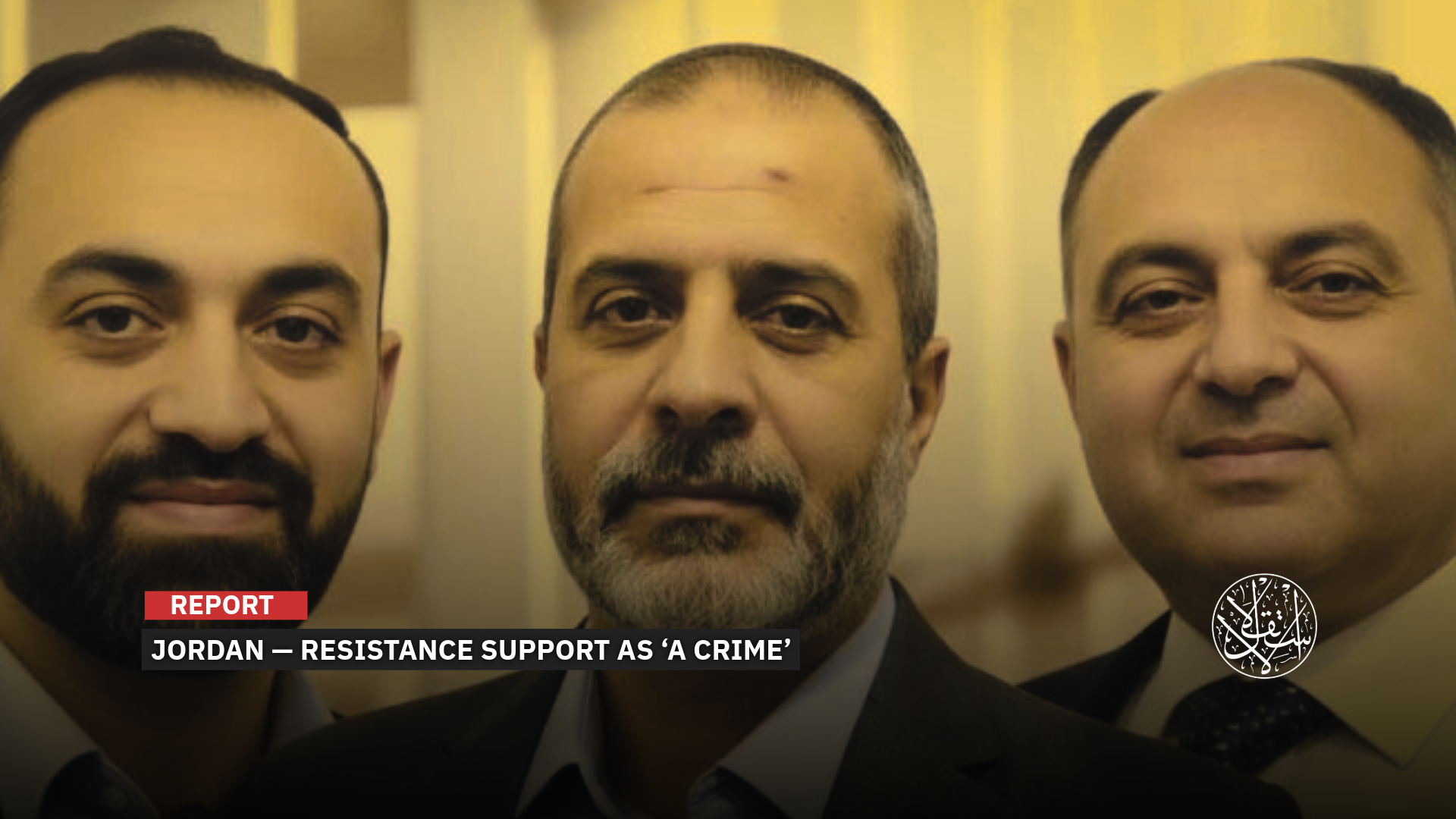
The verdict came under the Anti-Terrorism Law, despite no actions taking place on Jordanian soil.
In an unprecedented move, Jordan’s judiciary has criminalized the Palestinian Resistance Movement (Hamas), upholding severe sentences against Jordanian detainees in the so-called “Support for the Resistance” case, prompting the Defense Committee for the detainees to urge Jordanian Parliament to amend the Anti-Terrorism Law, which it described as a blunt instrument of criminalization.
On February 10, 2026, Jordan’s Court of Cassation confirmed 20-year sentences with hard labor against the Jordanian detainees Ibrahim Jabr, Hudhaifa Jabr, and Khaled al-Majdalawi, on charges of supporting the Palestinian resistance against the Israeli Occupation and supplying weapons to the West Bank.
The Harshest Sentence
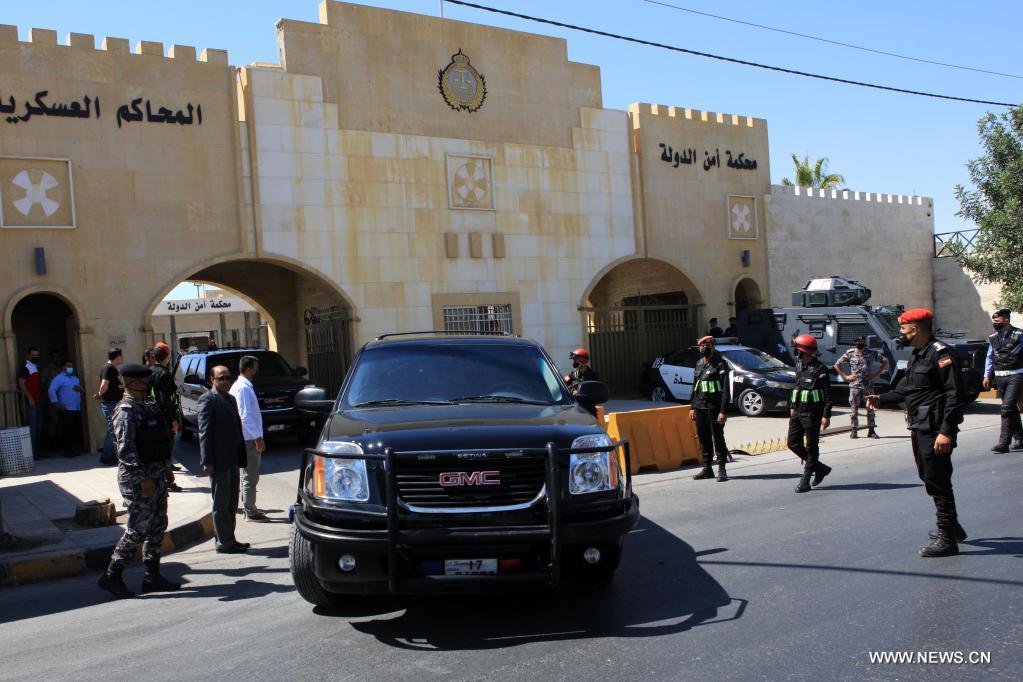
Despite a series of legal flaws identified by defense lawyers in the State Security Court’s ruling sentencing the three detainees to 20 years in prison, the Court of Cassation ultimately aligned itself with that decision and upheld the maximum penalty.
Among the errors cited by the defense was the State Security Court’s reliance on Jordan’s Anti-Terrorism Law, even though the specific article invoked requires proof of special intent as a core element of the crime, particularly the deliberate use of hazardous materials to carry out terrorist acts or other unlawful purposes.
Lawyers also argued that the court erred in classifying the defendants’ actions as unlawful terrorist acts on Jordanian soil, equating them with acts of legitimate resistance in occupied territory. This reasoning, they said, was used to sidestep the Arab Convention on the Suppression of Terrorism, which explicitly excludes legitimate resistance and its lawful acts from the definition of terrorism.
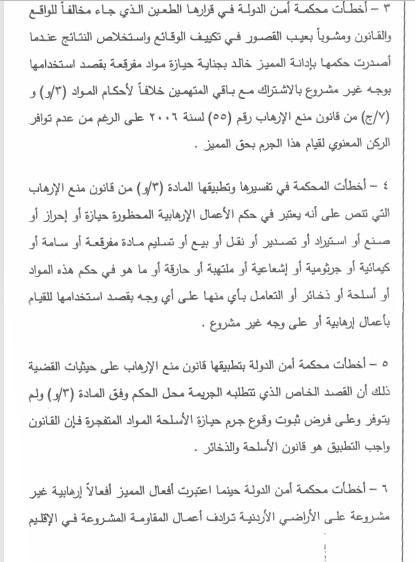
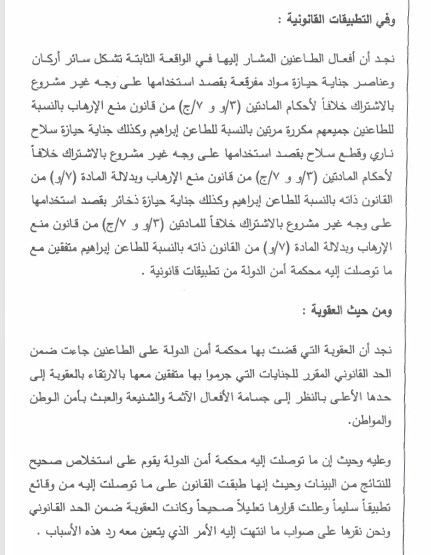
The Court of Cassation brushed aside those arguments, stating in its latest ruling that the sentence handed down by the State Security Court “fell within the statutory limits prescribed for the felonies of which the defendants were convicted,” and that it agreed with raising the penalty to its maximum “in light of the gravity of the acts, described as sinful and heinous, and as undermining the security of the state and its citizens.”
The court added that the State Security Court’s conclusions were “based on a sound assessment of the evidence,” that the law had been applied correctly to the established facts, and that the reasoning of the verdict was legally sound, with the sentence remaining within the bounds of the law.
In late April 2025, the State Security Court sentenced four defendants in the case known as “Support for the Palestinian Resistance” to 20 years in prison with hard labor: Ibrahim Jabr, Hudhaifa Jabr, Khaled al-Majdalawi, and Ahmad Ayesh.
The ruling followed months of proceedings that began with the arrest of brothers Ibrahim and Hudhaifa Jabr on May 13, 2023. Prosecutors accused them of transporting weapons from the city of Mafraq to the town of Hawara in support of Palestinian resistance groups in the West Bank, describing their role as logistical in a weapons-smuggling operation.
The two other defendants, Khaled al-Majdalawi and Ahmad Ayesh, were arrested later that year. Both denied the charges, insisting their activities were humanitarian and charitable in nature, aimed at assisting civilians in Gaza and supporting students.
A Political Ruling
Legal sources in Jordan, speaking to Al-Estiklal on condition of anonymity, said the Court of Cassation’s decision to uphold the State Security Court’s ruling amounted to an explicit move toward criminalizing Hamas itself, not merely the acts attributed to the defendants.
According to the sources, the ruling went beyond judging the actions of the individuals and effectively labelled the movement itself politically, a move they said clashes with Jordan’s constitutional and international obligations, including the principle of peoples’ right to self-determination.
The Court of Cassation failed to address most of the defense’s grounds for appeal, issuing instead a generalized response that relied heavily on political language rather than legal reasoning, a move the sources described as unprecedented in Jordanian judicial practice.
They also said the court endorsed both the conviction and the 20-year sentence without providing a substantive legal justification or doctrinal reasoning, raising questions about the pressures placed on the judicial panel and the legal fragility of the ruling itself.
The verdict, the sources stressed, represents a historic precedent in Jordan in terms of the severity of the punishment, noting that such sentences have not previously been imposed on Jordanians “accused” of attempting to support Palestinian resistance in the West Bank.
Separately, Jordanian human rights lawyer Hala Ahed wrote in a post on X on February 21 that it was “deeply regrettable” for the court to impose the maximum penalty, particularly when international standards and the Arab Convention on the Suppression of Terrorism explicitly exclude resistance movements from the definition of terrorism.
The Sadaara Center for Information and Consulting said in a statement published on its website on February 23 that the harsh sentences signal a firm commitment to criminalizing any activity deemed supportive of Palestinian resistance, particularly the provision of material assistance or supplies, and to cracking down on all attempts at smuggling or infiltration toward Palestinian territory.
The center argued that the rulings send a clear message to Jordan’s security partners, especially the United States and “Israel,” that the kingdom remains committed to securing its internal front and controlling its borders, despite political tensions with the Israeli Occupation amid developments in the West Bank.
The verdict, issued by the highest court in the judicial hierarchy, also reflects, according to the center, the influence of political decision-making over the broader direction of the judiciary, effectively closing the door on any possibility of pre-verdict settlements in the case. The center noted that there had been an expectation that the Court of Cassation, given its institutional weight and judicial restraint, would not simply follow the State Security Court and that the defendants and their lawyers might succeed in drawing a distinction between the two.
The center described the outcome as a dangerous indicator, warning that political decision-makers are risking the credibility of the judiciary and its highest court in the public consciousness and reducing an institution meant to be independent to an extension of executive authority and its security-driven approach.
A Test for Parliament
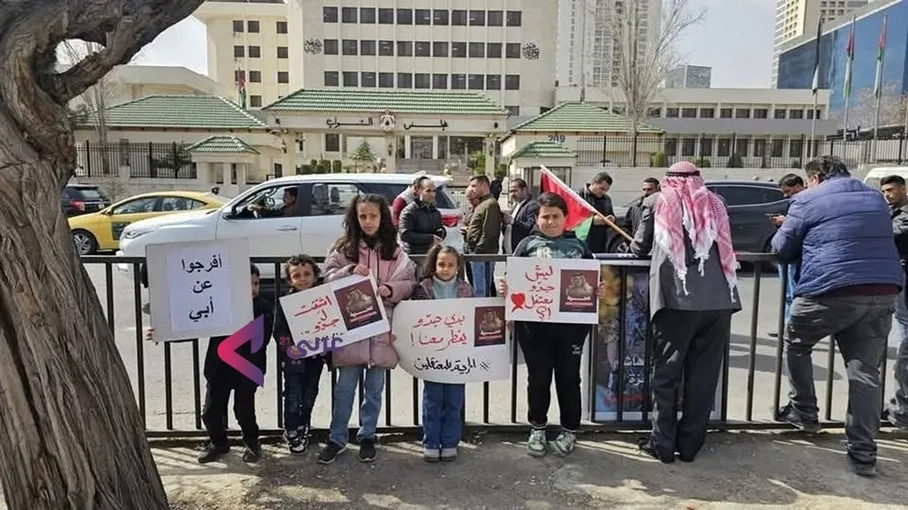
The Defense Committee for detainees in the “Support for the Resistance” case issued urgent appeals to Jordan’s parliament on February 23, calling for amendments to the Anti-Terrorism Law, which it said had become a primary tool for criminalizing lawful national activity.
The committee placed parliament squarely before its legislative responsibilities, urging lawmakers to introduce amendments that would explicitly halt the criminalization of the resistance and affirm the right to support it.
In its statement, the committee called for an immediate end to what it described as the branding and prosecution of resistance under the banner of terrorism, stressing that support for armed struggle is protected under the UN Charter and the Arab Convention on the Suppression of Terrorism and does not threaten state security.
The statement also disclosed contested procedural details, saying the defense had submitted a request on December 18, 2025, for the case to be reconsidered by a different judicial panel to ensure impartiality. Instead, the final ruling was issued by the same panel that had previously reviewed the public prosecutor’s appeals, a move the committee described as a disregard for core guarantees of a fair trial.
The committee added that the continued criminalization of such acts runs counter to the current political reality, as the Israeli Occupation is being tried before the International Court of Justice (ICJ) on charges of genocide in Gaza.
It called on the judiciary to apply international conventions on the prevention of genocide and the right of peoples to self-determination when handling similar cases, reiterating its confidence in the justice of its clients’ cause and their right to a retrial under a legal framework that protects support for resistance.
In a dangerous escalation, the detainees’ families said their sons were subjected last month to a sudden campaign of repression inside Jweideh Prison.
The measures, according to the families, included smashing their personal electrical cooking appliances, throwing their clothes and belongings into the rubbish, destroying their beds, and directing insults and shouting at them in front of criminal inmates in a degrading manner.
They said the Defense Committee reserves the right to take legal action against anyone found responsible for violating the rights of its clients before the appropriate police court.
The three detainees, Ibrahim Jabr, Hudhaifa Jabr, and Khaled al-Majdalawi, were arrested in May 2023, months before the events of October 7 and the Israeli genocide in Gaza.
Sources
- Jordanian Court Upholds 20 Year Prison Sentence Against Detainees Accused of Supporting the Resistance
- Jordan’s Harsh Sentences for Resistance Support Detainees Signal Political Control Over the Judiciary and Close the Door to Settlements [Arabic]
- Jordanian Court Sentences Several Defendants in “Support for Resistance” Cases to 20 Years in Prison [Arabic]
- Call for Amendment of Jordan’s Anti-Terrorism Law After 20-Year Sentence for “Support of Resistance” [Arabic]