As Fears Grow of a New U.S. War on Iran, What Role Will the Houthis Play?
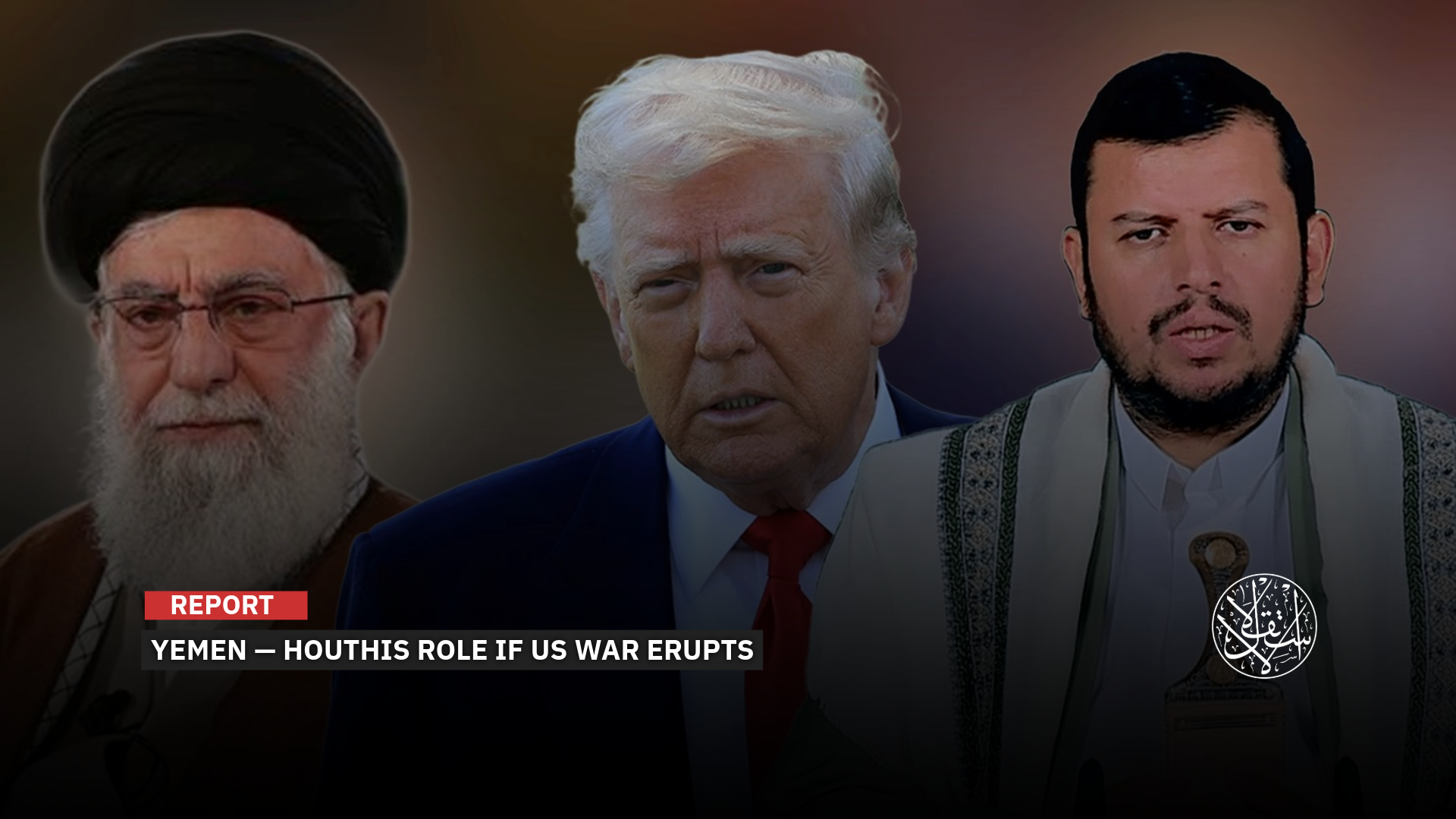
Since October 7, the Houthis have moved into a new phase of involvement in the region’s conflicts.
Amid a rapid escalation in U.S. military pressure on Iran, and with President Donald Trump announcing that preparations for a potential strike are complete, coupled with a narrow window of just 10 to 15 days to force a settlement on American terms, the region appears to be heading into a period of acute instability. Deterrence calculations are colliding with high-stakes attempts to break political will.
On the other side, Iran’s official rhetoric continues to stress defiance of international pressure, a clear signal of Tehran’s commitment to a strategy of endurance and escalation rather than accommodation.
Within this tense landscape, Iran’s regional proxies stand out as its most effective instruments of indirect confrontation. Tehran has relied on allied militias as forward tools to unsettle adversaries and shift the arena of conflict across multiple geographic and political fronts, easing pressure at home while reshaping regional power dynamics.
The Houthis in Yemen have emerged as one of the most visible and consequential of these actors. No longer confined to a local war, they have stepped into the role of a regional player closely tied to the calculations of an increasingly internationalized confrontation.
Since Operation al-Aqsa Flood, the Houthis have moved into a new phase of involvement in the region’s conflicts, expanding their political and military reach. This has been most evident in their direct threats to international shipping in the Red Sea and the Bab el-Mandeb, as well as their open confrontations with the United States and the Israeli Occupation.
Despite the heavy losses the group has suffered as a result of this uneven engagement, 2025 marked the peak of Houthi influence in terms of strategic impact and political function.
The movement has succeeded in entrenching itself as an advanced Iranian pressure tool, capable of scrambling regional calculations and imposing rising security and economic costs on Tehran’s adversaries, with far-reaching consequences for Yemen’s future and the trajectory of conflict across the wider region.
The Houthis’ Position
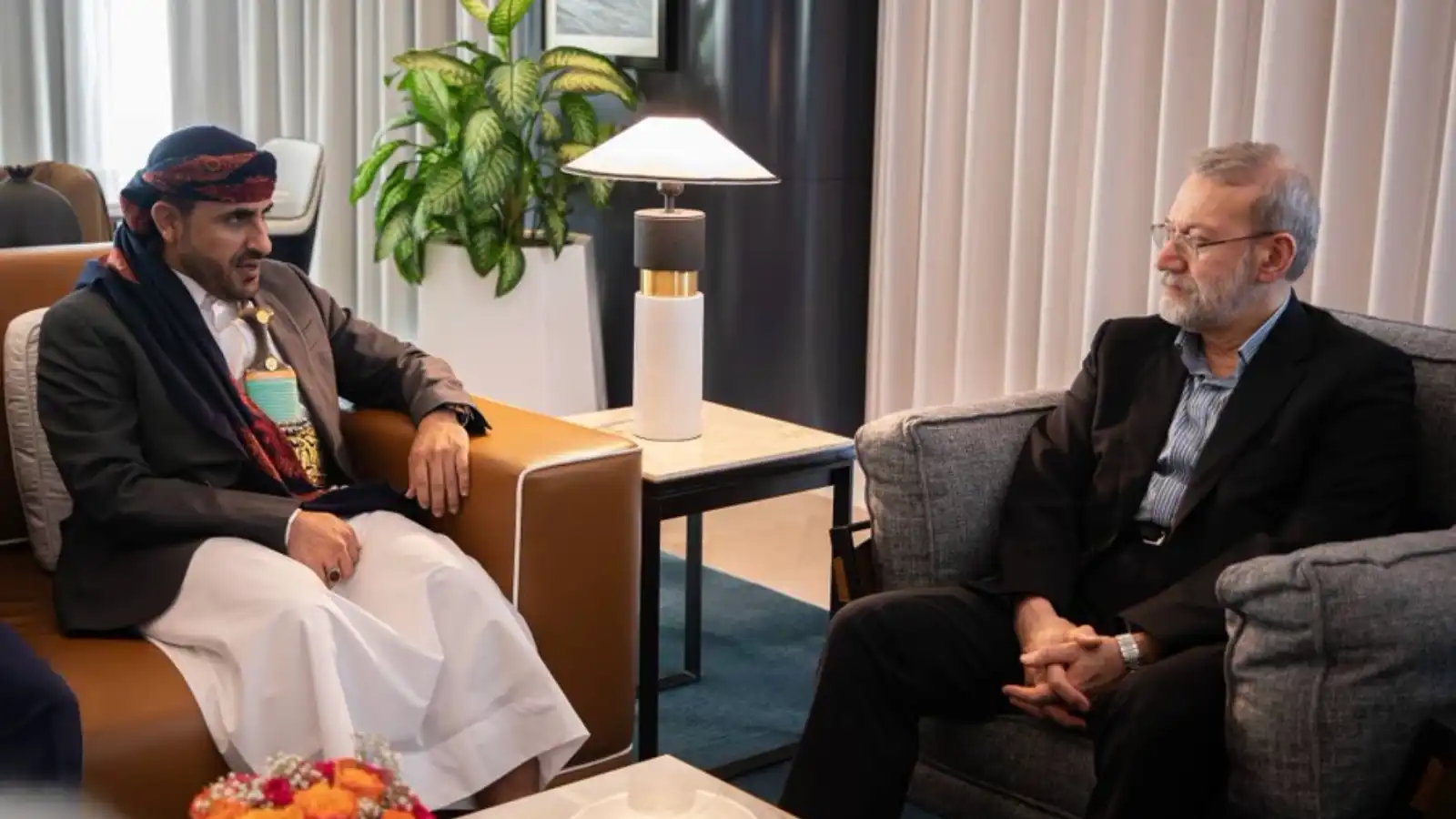
As the Houthis recalibrate their posture and seek to revive a potential regional role in any looming confrontation between Iran and the United States, a notable development emerged on February 10, when Ali Larijani, secretary of Iran’s Supreme National Security Council (SNSC), met in Muscat with Mohammed Abdulsalam, the spokesman for Ansar Allah (the Houthis).
The meeting reflected an advanced strategic and coordination dimension in the relationship between the two sides. It also underscored that Sanaa, under Houthi control, has become part of Iran’s broader negotiation and pressure equation, rather than a separate or marginal arena in regional conflict calculations.
The timing carried particular weight, coinciding with a sensitive phase of U.S.-Iran talks over Tehran’s nuclear program. It pointed to a shared interest between Iran and the Houthis in aligning political and security positions and in probing ways to respond to escalating U.S.-Israeli pressure across the region.
Taken together, this marked a shift in the relationship from ideological alignment and support toward a more advanced level of direct political and security coordination at a moment of exceptional regional volatility.
Many intelligence reports suggest that Iran’s Islamic Revolutionary Guard Corps (IRGC) has discussed with the Houthis scenarios for activating alternative support fronts in the event of a direct U.S.–Iran confrontation, including the possible use of cells or weapons not previously disclosed or deployed.
This has heightened concern among regional and international observers over the possibility that the Houthis could move fighters or intelligence cells beyond Yemeni territory to target U.S. and Western interests across the region.
These indications coincide with other reports that Houthi leaders have received direct instructions from the IRGC to raise combat readiness and activate offensive options, including targeting international shipping routes in the Red Sea, the Arabian Sea, and the Bab el-Mandeb Strait, as strategic pressure tools in any broad regional escalation.
Developments on the ground, alongside statements by Houthi leaders, reinforce the assessment that the group is inclined to back Iran should it come under attack or face a full-scale war from the United States and “Israel.”
In speeches delivered during the first week of February 2026, the group’s leader, Abdul-Malik al-Houthi, called for confronting what he described as “American-Zionist aggression,” urging mass mobilization in solidarity with what he termed the region’s “oppressed peoples” and signaling clear alignment with Iran and Lebanon against what he framed as a U.S.–Israeli project of domination.
In another address on February 13, 2026, al-Houthi argued that the U.S. and Israeli focus on Iran was part of an effort to weaken its regional role, portraying Tehran as a strategic barrier to American dominance in the Middle East.
Al-Houthi has consistently employed an ideological and political discourse that situates support for Iran within the broader framework of the so-called “axis of resistance,” casting regional developments as part of an all-encompassing struggle against the United States and “Israel.” Yet since January 2026, he has stopped short of issuing an explicit declaration confirming direct Houthi participation in a potential U.S. war on Iran, despite the escalatory signals embedded in his rhetoric.
The Houthis released a video on January 28, 2026, featuring footage of past attacks on commercial vessels and carrying implicit threats to resume targeting international shipping in the Red Sea should tensions between Washington and Tehran intensify. The video was accompanied by a stark caption: “What is coming will be greater.”
This coincided with the presence of a U.S. aircraft carrier in the region amid rising tensions with Iran.
Press reports in February 2026 also tracked Houthi military movements, including the preparation of missiles and drones, described as potential steps toward military escalation targeting U.S. interests or assets if a wider confrontation against Iran were to erupt.
Israeli security assessments likewise pointed to the possibility that the Houthis could exploit any U.S. war on Iran to launch new attacks against Israeli or international targets.
Senior Houthi figure Mohamed al-Bukhaiti issued explicit threats via X, warning that the group would enter the war alongside Iran if it were targeted by the United States. “Our fingers are on the trigger,” he wrote, “ready for a powerful, painful, and deterrent strike against the Israeli and American enemy if any aggression is launched against Iran.” He added that such a strike “will surprise both friend and foe and will not be limited to maritime routes or airports but will hit sensitive locations they do not expect.”
In another post, al-Bukhaiti went further still, declaring that “by order of Imam Ali Khamenei and the Iranian armed forces, Tel Aviv and your airports are no longer safe at all,” adding in stark language, “blood for blood, fire for fire, and iron for iron.”
Ways to Respond
Even so, and despite the sharp tone of recent statements, the Houthi leadership has so far stopped short of issuing a clear, formal declaration committing to direct military action alongside Iran in the event of a U.S. attack, as it did in previous statements during 2025.
Instead, current Houthi messaging emphasizes indirect forms of retaliation, such as targeting international shipping and exerting pressure on U.S. interests, without adopting a position that would amount to a declaration of open war or a formal pledge of full participation in a U.S.-Iran confrontation.
Houthi options in the event of a U.S. strike on Iran can be broadly grouped into four main pathways, beginning with two that appear most immediately plausible.
The first is indirect pressure, widely seen as the most likely scenario. This would involve targeting international shipping lanes in the Red Sea and Bab el-Mandeb, threatening vessels linked to U.S. and Israeli interests, and deploying missiles and drones as calibrated signals of deterrence. Such an approach allows the Houthis to exert influence without bearing the full cost of declaring war, while keeping political room for maneuver intact.
The second option is limited regional escalation. Under this scenario, the group could selectively widen the scope of its operations, either by striking long-range Israeli targets or by carrying out discreet, high-impact operations outside Yemen through undisclosed cells or capabilities. The aim would be to raise the cost of confrontation for Iran’s adversaries without tipping into an all-out regional war.
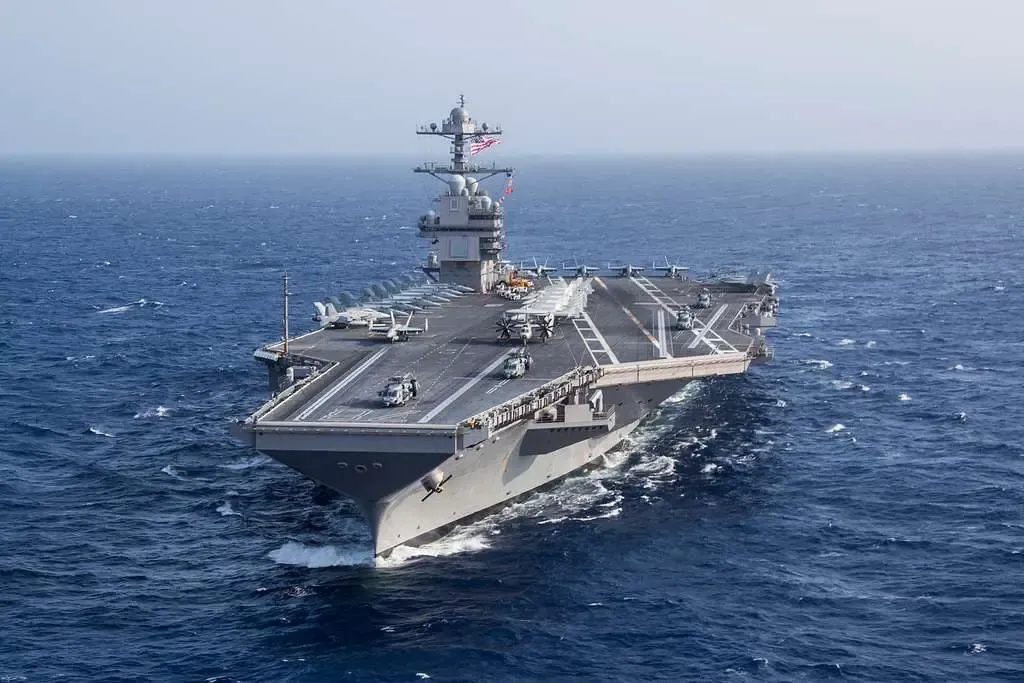
The third path is direct military engagement, involving the opening of an active front against U.S. interests. This option appears less likely at this stage, given the high risks it entails and the possibility of triggering devastating military retaliation against the group inside Yemen, similar to what occurred during the fifty-day war waged by the United States against the Houthis from March 15 to May 5, 2025.
The fourth option is phased restraint and delayed escalation. Under this approach, the Houthi leadership could opt to postpone any broad escalation, relying instead on heightened readiness and media-driven threats while waiting for greater clarity on the trajectory of a U.S.-Iran war, the scale of Iran’s actual response, and the positions of regional and international actors.
If adopted, this path would reflect a degree of tactical rationality, sparing the Houthis the costs of attrition and reducing the risk of devastating U.S. or Israeli strikes that could, in turn, embolden Yemen’s internationally recognized government to advance militarily, while also fueling domestic public resentment against the group.
In essence, the Houthis are operating within a delicate equation: backing Iran without sacrificing their local gains, with a clear preference for indirect pressure as the least costly and most politically effective tool.
For now, according to observers, the group appears intent on positioning itself as a “pressure arm” within the so-called “axis of resistance,” avoiding a leap into open war unless forced into it or called upon as part of broader Iranian calculations.
Sources
- Pezeshkian: Iran Will Stand Firm Against Global Pressure [Arabic]
- Ali Larijani Meets Ansarallah Spokesman in Oman
- Israeli Fears of a Yemeni 'Flood' Mirroring October 7 [Arabic]
- Houthis threaten escalation in the Red Sea if Iran is targeted
- Missiles and Drones Are Being Prepared: Houthis 'Gear Up for War' [Arabic]
- Bleak Future for West Bank Pupils as Budget Cuts Bite
- Leader Abdul-Malik al-Houthi's statement– 17 Sha’ban 1447 AH | February 5, 2026 [Arabic]
- Address by Leader Abdul-Malik Badr al-Din al-Houthi Preparing for the Holy Month of Ramadan – 25 Sha’ban 1447 AH | February 13, 2026 [Arabic]