Lebanon Between Reform and the Monopoly of Arms: What Future Awaits the May Parliamentary Elections?
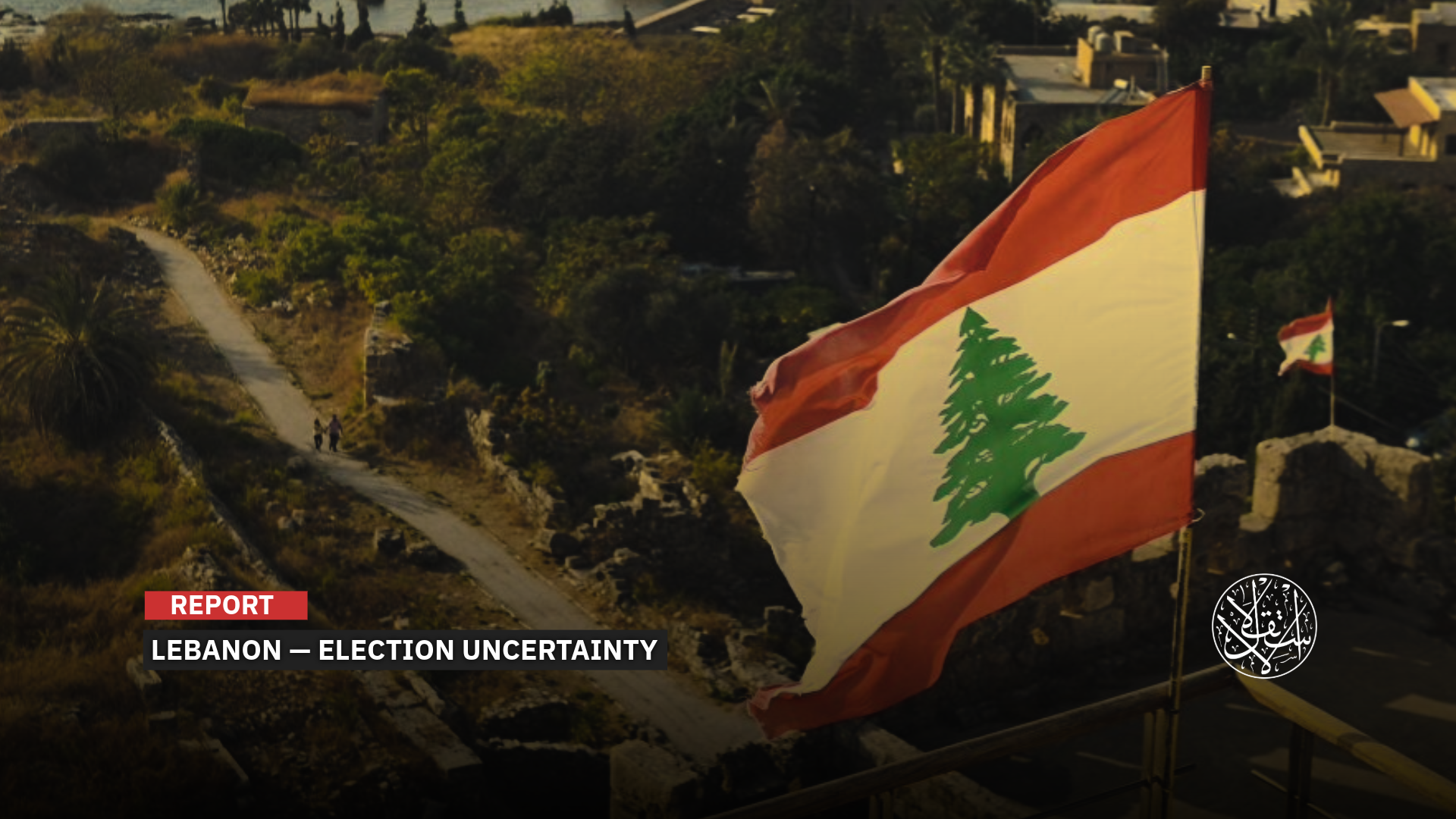
Lebanese media reported that France and Saudi Arabia had pushed for a delay to the elections.
More than three months before Lebanon’s parliamentary elections, local newspapers circulated reports that several countries, including Saudi Arabia and France, have requested a postponement of the vote, raising questions about the motives behind such calls and whether they could gain traction amid Lebanon’s intricate domestic landscape.
Although the election scheduled for May 10, 2026, remains officially on track, its fate is clouded by uncertainty. Political and legal disputes persist over provisions of the electoral law, particularly Articles 112 and 122, which limit the representation of Lebanese expatriates to six seats elected under what is known as “District 16.”
In contrast, political parties represented in the Parliament, most notably the Lebanese Forces, are calling for these two articles to be suspended, as was done in the 2018 and 2022 terms, by amending them within the Parliament, allowing expatriates to vote for the full 128-member Parliament instead of limiting their representation to a specific number of seats.
External Requirements
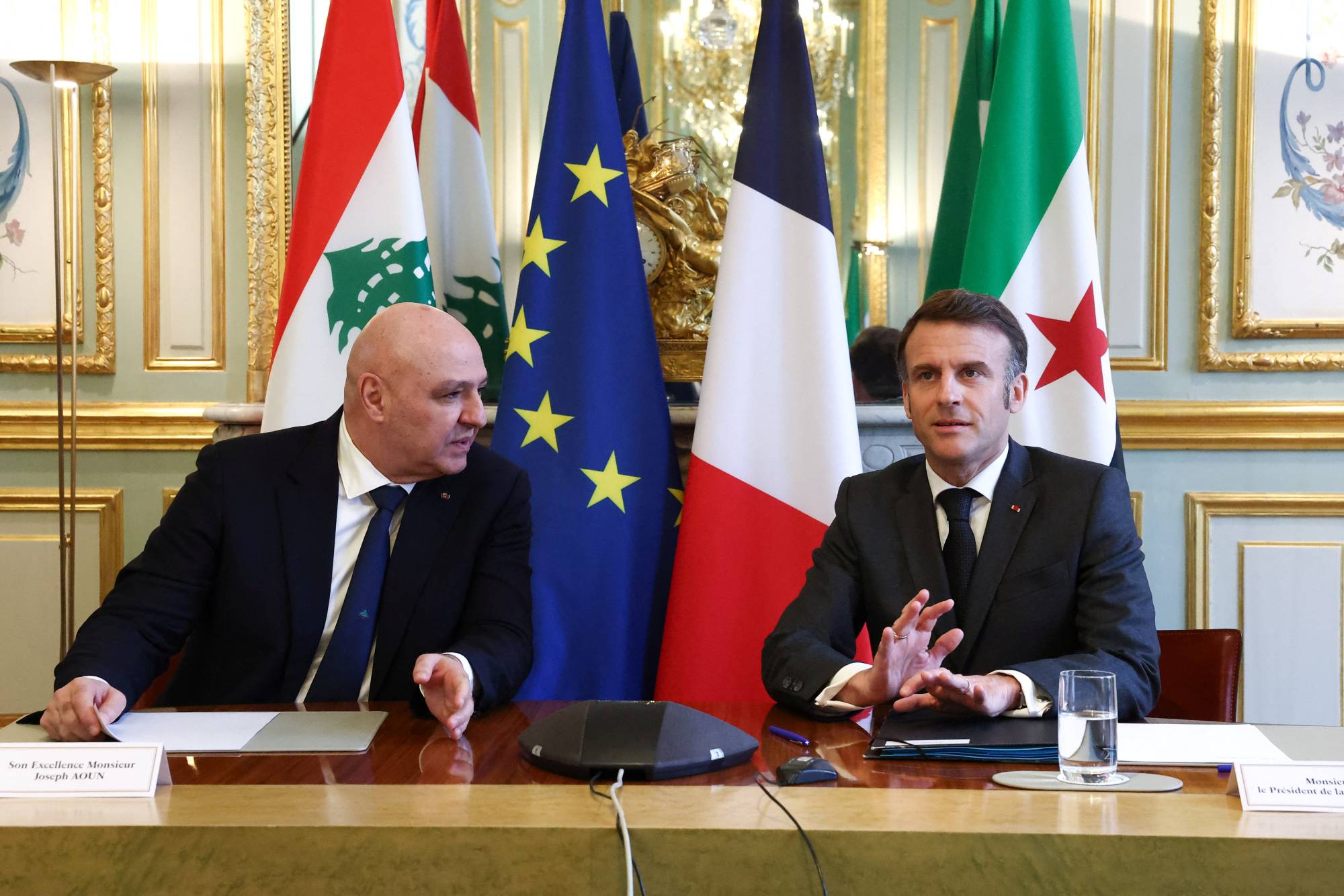
On February 21, 2026, the newspaper Al-Akhbar, which is aligned with Hezbollah, published a report stating that President Joseph Aoun and Parliament Speaker Nabih Berri had, for the first time, received direct French-Saudi requests to extend the current Parliament’s term and postpone elections for at least one year.
According to the paper, the discussion began after Prime Minister Nawaf Salam returned from a visit to France and held contacts with the Saudi Arabia side.
He reportedly informed prominent figures that he had heard direct remarks urging a delay in the elections, coupled with a clear preference for him to remain as prime minister.
The newspaper added that a new development emerged through what one visitor to the presidential palace, whom it did not name, relayed about Aoun receiving a French message calling for discussions on postponing the elections under the argument that “internal conditions are not conducive to any serious change, and that the continuation of Salam’s government would help complete reforms and the disarmament plan.”
It also reported that a senior minister, whom it did not identify, quoted Berri as saying he had deliberately escalated his rhetoric on the elections after receiving a direct Saudi request to extend Parliament’s term for at least one year.
The paper noted that the Saudi side intensified pressure after being informed of Saad Hariri’s decision to contest the elections. It said the postponement request was justified on the grounds that Lebanon is going through exceptional circumstances and cannot freeze the issue of confining weapons to state control or halt reforms, while strongly backing Salam’s continuation as prime minister.
According to the report, Berri insists that any request to extend Parliament’s term must come from the government, not from Parliament itself.
He informed relevant parties that the so-called Shiite duo, Hezbollah and Amal Movement, would not take part in proposing an extension.
However, they would not oppose it if the government were to submit the proposal and if key blocs, particularly Saudi allies, approved it, a reference to the Lebanese Forces, the Kataeb Party, the Progressive Socialist Party and some Sunni lawmakers.
In the same context, the newspaper Al-Binaa reported on February 21 that political figures had met with foreign ambassadors in Lebanon during the previous week, where there were hints of a lack of external will and favorable regional conditions to hold parliamentary elections at this time.
According to the paper, those countries prefer to delay the elections for one or two years until the regional picture becomes clearer, particularly regarding the trajectory of U.S.-Iran negotiations and their repercussions for the region, effectively placing Lebanon in a holding pattern.
Meanwhile, the newspaper Al-Joumhouria reported on February 21 that a senior official, whom it did not name, stressed that “no one, domestically or abroad, will be able to obstruct the elections or prevent them from being held on time. The elections will take place as scheduled and on the basis of the current electoral law, full stop.”
The official added that “there are parties within the government pushing toward an extension, and some of its members are keen on keeping Parliament in place and prolonging its mandate, but that will not happen. The government is bound to apply the law in force as it stands and cannot override it in response to temporary political wishes or calculations.”
Weapons First
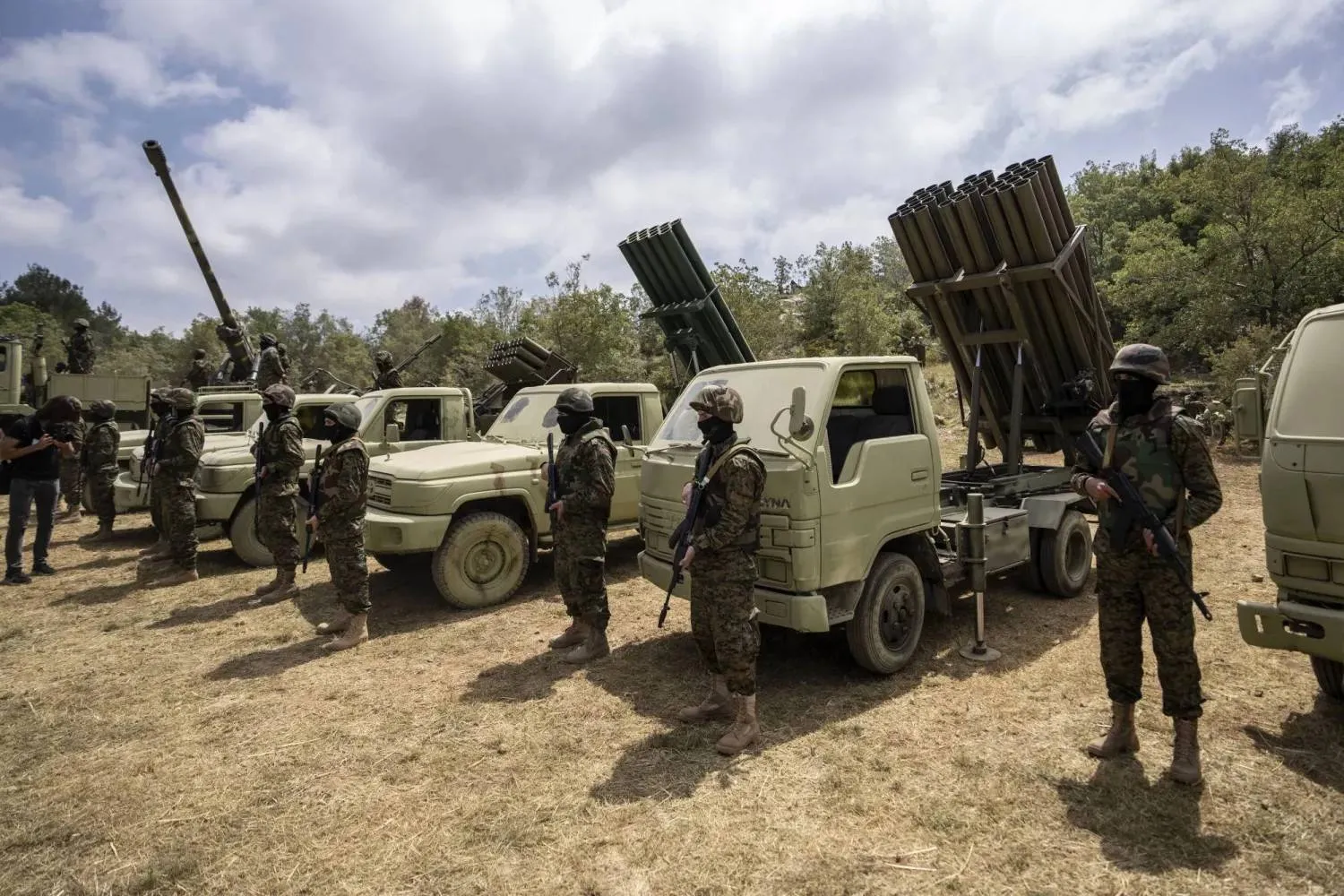
Regarding the possibility of postponing the elections, Lebanese political analyst Hanna Saleh said “the Lebanese national interest requires prioritizing the completion of disarmament and the implementation of economic reforms before heading to elections.”
Saleh told Al-Estiklal that “any elections held under the glare of Hezbollah’s weapons, and in areas subject to sectarian alignments and divisions, would effectively falsify voters’ will and reproduce the same political class, keeping Lebanon far from establishing a just state that meets the aspirations of its people.”
Since the events of October 7, 2023, the United States has been pressuring Lebanese authorities to disarm the party, linking the issue to support for the country’s reconstruction.
The party, however, has held fast to its weapons, while signaling readiness to discuss the matter if “Israel” withdraws from Lebanese territory and halts its attacks.
On claims of foreign pressure to delay the elections, Saleh said he has no direct information on the matter.
Still, he argued that “the continuation of corruption, described by the World Bank as among the largest financial disasters of the past 150 years, coupled with the absence of accountability for the corrupt who enjoy Lebanese funds, renders elections merely a process that reproduces the crisis and keeps the country in the same cycle that led it to collapse.”
Saleh also said the position of the Legislation and Consultations Authority at the Justice Ministry, which rejects discrimination between a resident Lebanese voter and an expatriate whose voting rights are restricted, could assert itself politically.
“The constitution provides for equality among Lebanese, and this principle could make postponing the elections more likely given the complexities of the current law,” he said.
In recent days, Lebanon has witnessed sharp political divisions over the parliamentary election law, particularly regarding voting by nonresident Lebanese and the creation of “District 16.”
The debate hinges on the opinion of the Legislation and Consultations Authority, which some consider a binding legal reference for the administration, while others argue that the law in force cannot be amended or suspended except through explicit legislation issued by Parliament.
In response to a question from Interior Minister Ahmad al-Hajjar about the mechanism for expatriate voting, given the difficulty of implementing District 16, the authority confirmed on February 14 that Lebanese abroad retain their right to vote within the 15 electoral districts, ensuring their participation in the democratic process despite current legal complications.
Al-Hajjar had stressed at the time that “the primary objective is to hold the elections on their scheduled date,” adding that “no one wants a dispute over this constitutional milestone.”
He noted that the authority’s advisory opinion is not binding, but failing to adopt it requires a formal justification in accordance with the procedures governing work at the Justice Ministry.
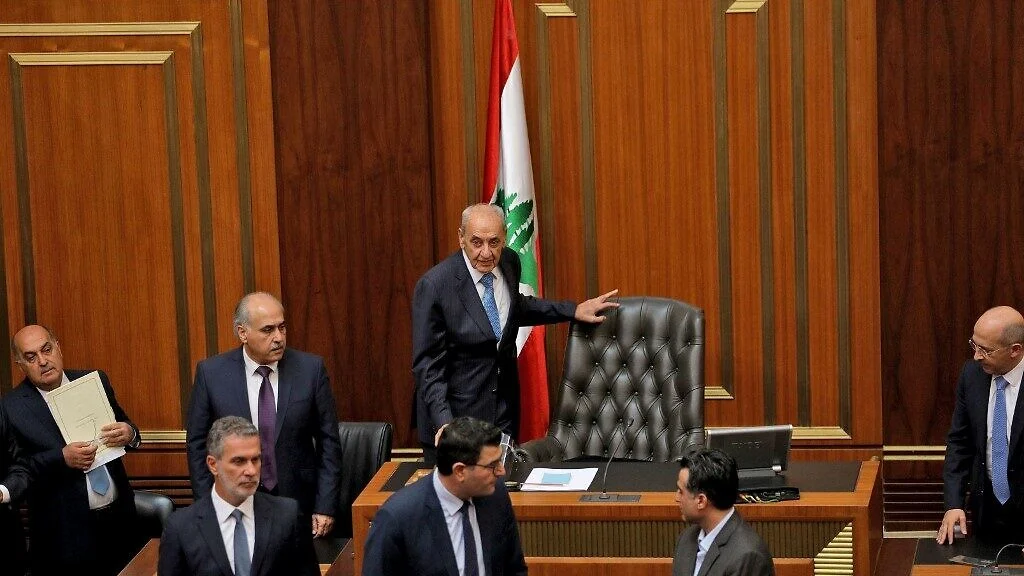
Parliament Speaker Nabih Berri reiterated his commitment to holding the elections as scheduled on May 10, during a meeting with Beirut Bar Association head Fadi Masri and members of the syndicate, according to Deutsche Presse-Agentur in a report published on February 20.
Berri said he had conveyed this position to President Joseph Aoun and to the government, stating, “It is not permissible, at the start of a new era, to hinder its launch by obstructing, postponing or extending the most important constitutional milestone, which forms the basis for the formation of authorities and the production of political life.”
A New Reality
In the same vein, American writer David Schenker argued that “without amendments to the election law, sanctions on elites aligned with Hezbollah, and the pursuit of stalled judicial cases such as the Beirut port explosion, along with other urgent measures, the party and its allies could regain their grip on Lebanon in the next round of national elections.”
In an article published by the Washington Institute for Near East Policy on February 17, Schenker urged the administration of U.S. President Donald Trump to encourage amendments to the electoral law, arguing that “the Lebanese Parliament should reflect the new reality on the ground.”
He noted that “the Lebanese diaspora, which outnumbers Lebanon’s resident population, is currently entitled to vote for only six out of 128 parliamentary seats.”
He added that “many of these citizens emigrated in search of safety, stability and opportunity, away from a culture of death dominated by Hezbollah,” contending that Washington has not been sufficiently engaged in this critical domestic political file, even though the upcoming elections “will determine Lebanon’s future, and the next vote is decisive for maintaining reform momentum.”
Schenker also pointed out that Parliament Speaker Nabih Berri holds the decisive say over whether amendments to the law are put forward for discussion or a vote.
He suggested that “limited changes, such as allowing displaced Shiite voters from the south to cast ballots at major polling centers in or around Beirut, instead of in their destroyed villages, free from intimidation, could make a difference in the results.”
Lebanese writer Rania Chakhtoura said the so-called Quintet Committee, comprising the ambassadors of the United States, France, Qatar, Egypt and Saudi Arabia, has recently resumed its meetings with Lebanese officials.
She said two of its ambassadors hinted in private discussions at the possibility of postponing the electoral milestone until after progress is made on the path toward withdrawing Hezbollah’s weapons.
In an article published by Akhbar al-Youm on February 20, 2026, Chekhtoura wrote that “the international community believes that holding elections in the coming months, before the outcome of negotiations or a potential confrontation between the United States and Iran becomes clear, would not alter the balance of power in Parliament. The Shiite duo would retain its 27 seats, whereas postponement until after those two files are resolved could produce a breach estimated at no fewer than four seats.”
According to the writer, a meeting of the Quintet Committee may soon be held with President Joseph Aoun, Prime Minister Nawaf Salam, Defense Minister Michel Menassa, Interior Minister Ahmad al-Hajjar and Army Commander Rodolphe Haykal to discuss the course of implementing the exclusivity of arms and the stages completed, in addition to addressing the elections file.
She concluded that the elections have, in one way or another, become linked to the weapons file, with talk circulating of a possible postponement of up to two years in exchange for commitments to reform conditions, most notably amendments to the election law and adoption of a magnetic voter card, to be completed within a period not exceeding one year.
Sources
- Saudi Arabia and France Officially: Postpone the Elections! [Arabic]
- The International Community Is Not Keen on Holding Lebanon’s Elections… Why? [Arabic]
- Postponing the Elections… On the Advice of the “Quintet”? [Arabic]
- Justice Ministry Clarifies: Expat Voting Guaranteed Across 15 Electoral Districts [Arabic]
- Lebanese Divide Over the ‘Legislation and Consultation Authority’ Opinion on Parliamentary Elections [Arabic]
- In Lebanon, Kicking the Can Down the Road Before the May Elections [Arabic]
- Berri Insists on Holding Lebanon’s Parliamentary Elections on Schedule Next May [Arabic]