This Is How 'Israel' Became a Regional Leader of the Arab Regimes
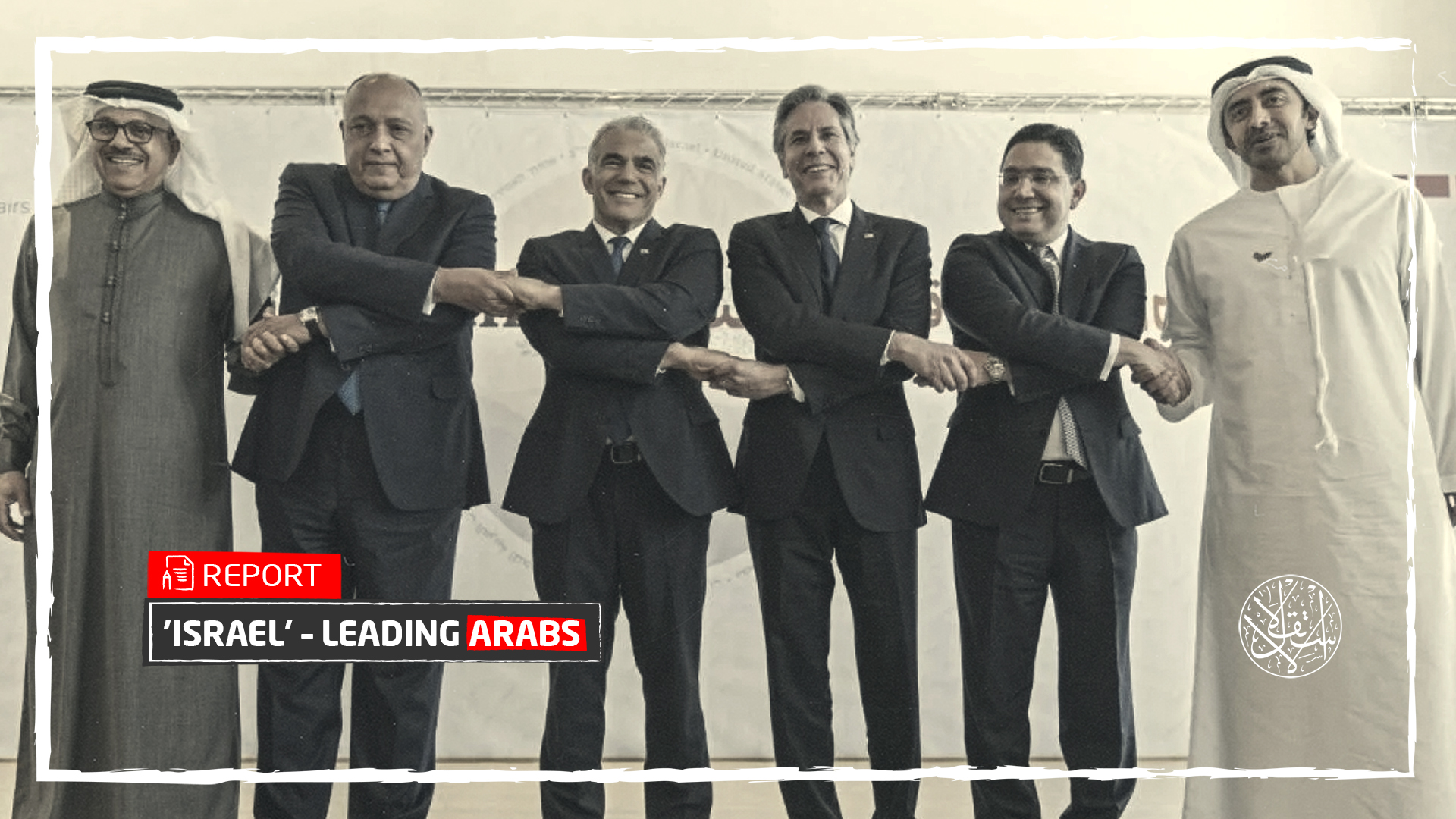
The three summits in Sharm el-Sheikh, Aqaba and Naqab, which brought together "Israel" and the United States with six Arab countries, Egypt, the UAE, Bahrain, Morocco, Iraq and Jordan, raised questions about Tel Aviv's transformation into a leader in the Arab region.
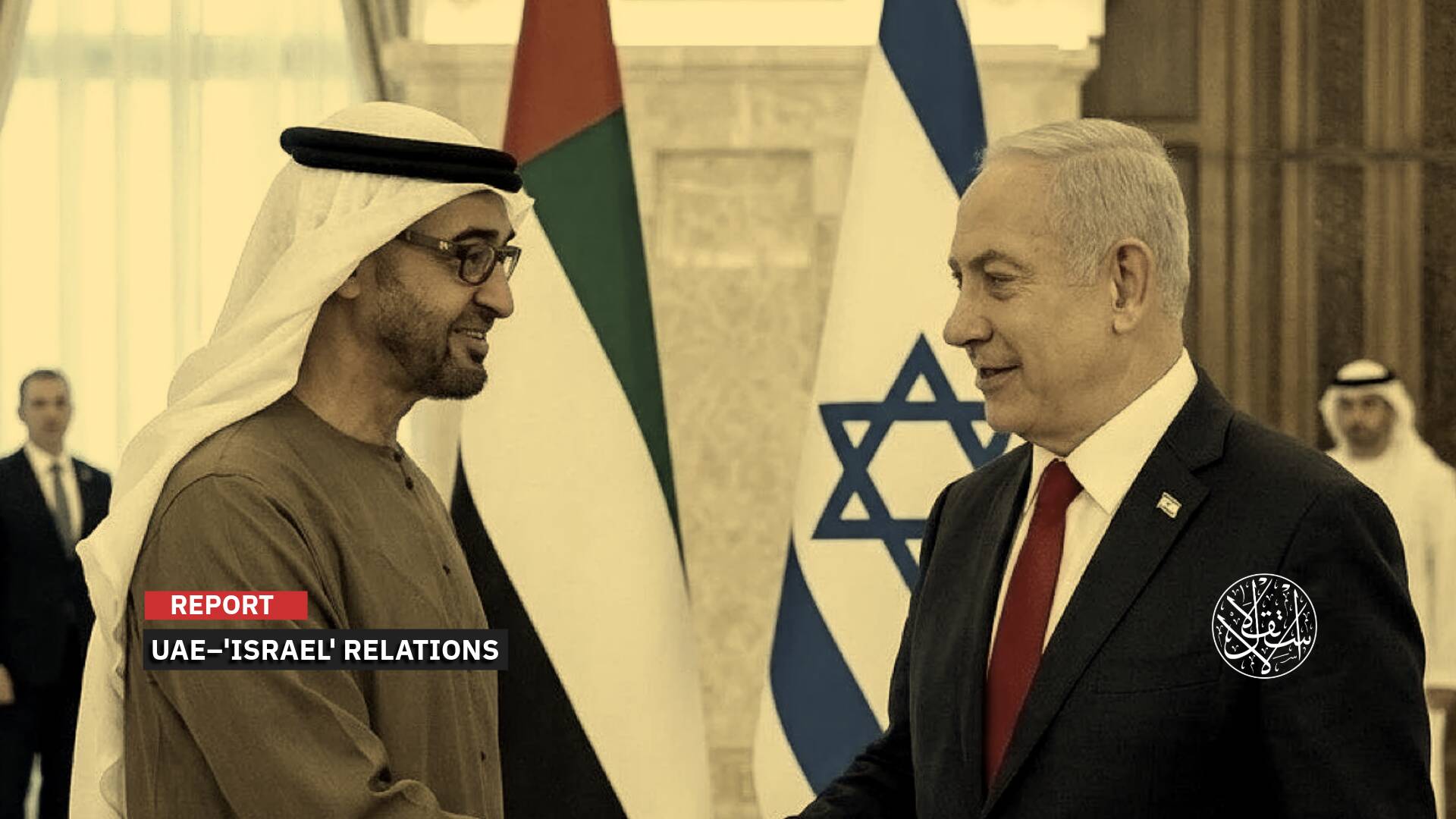
On March 22, 2022, a summit was held in Sharm el-Sheikh between the President of the Egyptian regime, Abdel Fattah al-Sisi, Abu Dhabi Crown Prince Mohammed bin Zayed, and Israeli Prime Minister Naftali Bennett.
A four-way summit was also held in Aqaba on March 25 between Jordan, Egypt, the UAE and Iraq, centered on what the Israeli occupation proposed in Sharm el-Sheikh about forming an alliance against Iran as well.
On March 27-28, 2022, a summit was held in Naqab between foreign ministers of the Israeli occupation, USA and four Arab countries: Egypt, the UAE, Bahrain and Morocco.
Leadership Position?
The conclusion of the three summits was the Israeli occupation’s leadership of the Arab countries amid the absence of the League of States and the dispute over holding its next summit.
The focus of the three summits was "Israel" and its quest to form an alliance with Arab regimes, under the pretext of confronting the Iranian threat, and facing the global shortage of wheat and energy, which could cause a crisis in Arab countries, according to what was published by the French news agency on March 28, 2022.
"Tel Aviv" took advantage of the Arab fragile regimes during the Ukraine war, to form new arrangements in the region at the expense of the central Palestinian cause.
This extremist journalist, Eddie Cohen, pushed the Arabs to ridicule, by talking about the imminent transfer of the headquarters of the Arab League to "Israel," and the holding of the next Arab summit there.
Former Tel Aviv ambassador to Egypt, Yitzhak Levanon, claimed in an article he published in Maariv newspaper on March 24, 2022, that his country has become the "axis of action" in the region, and that "the Sharm el-Sheikh summit proved that Israel has turned into a leading center in the region."

He talked about an "alliance" forming between the Israeli occupation and Arab countries and giving a greater role to "Tel Aviv" in the region, until it started meditating for Egypt to relieve the pressure imposed on it because of its human rights file.
Axios website confirmed on March 23 that the Israeli occupation had agreed and encouraged Washington to pass the deal of F-15 planes to Egypt that had been disabled for years, as part of this leadership role for "Tel Aviv."
Haaretz's political analyst, Yonatan Lis, considered on March 23 that these summits "prove Israel's position in the Middle East" and "a tangible expression of the radical change that has occurred regionally, and the rise of Tel Aviv's position since the signing of the Abraham Accords."
He considered "the consolidation of relations between Israel and the Arab regimes indicates a further change in the Palestinian issue, which has been gradually marginalized after it was the basis of the permanent conflict, and the Arab leaders no longer care about, they just insist on cooperation with Tel Aviv."
An Arab meeting was held in the occupied Naqab, which the New York Times considered March 27, as evidence that "Tel Aviv began to reap the fruits of Abraham's agreements of normalization" and "a profound reorganization of the Middle East."
It was a paradox that the Israeli occupation announced an Israeli–American summit in Jerusalem, with three foreign ministers of Arab countries that normalized its relations in the year 2020 (the UAE, Bahrain and Morocco), then its return to announce Egypt’s participation as well, and the summit moved to the occupied Naqab.
Israeli journalist Barak Ravid, correspondent of the Walla website, confirmed on March 27 that the Israeli occupation did not plan to invite Egyptian Foreign Minister Sameh Shoukry to attend the six-party meeting.
He explained that Israeli Foreign Minister Yair Lapid called his counterparts in the UAE, Bahrain and Morocco to attend a summit in Jerusalem, "and they agreed without hesitation, and thus it took only three days to prepare the summit," then Shoukry asked to attend, and his invitation blew up.
It seems that Shoukry's participation is part of the Hebrew state's "engineering" of the political situation in the Arab region, and an attempt to link the new normalization with the old, and to put Egypt back on the train after a chill in its relationship with Washington due to human rights.
The researcher and expert on Israeli affairs, Mohammed Seif al-Dawla criticized the participation of Arab ministers in a meeting inside the occupied Palestinian territory.
He assured to Al-Estiklal that "it is not acceptable for us to be attached to this alliance or others in the manner of mobilization and collective summons", and that "it is located in Israel as if it has become the center and leadership for the region and for the participating Arab group."
He explained that this fulfills the prophecy of former Israeli President Shimon Peres, who said on the sidelines of a conference of some Arab businessmen in Casablanca in 1994: "Egypt has led the Middle East for 40 years, and this is the result."
Peres then continued: "If you let Israel lead for even ten years, you will see."
Messages and Warnings
Many questions were raised about the reasons behind the Israeli occupation’s announcement that the meeting's headquarters would be moved from Jerusalem, as it had previously announced, to the Naqab city in the south of the occupied Palestinian territories.
Many believed that this was in response to the guerrilla operation carried out by the Palestinian Muhammad Abu al-Qia’an in late March, which led to the killing of four settlers in the city of Beersheba, in a message showing solidarity from the Arab countries.
The Israeli goal appeared when the Arab foreign ministers at the Naqab Summit sent their condolences to the families of those killed in the second operation that took place in Hadera, near "Tel Aviv," while they were in the occupied Palestinian territory, and condemned the attack, according to what was published by the occupation army radio on March 27.
Another goal for the Israeli occupation in holding the summit in the Naqab is to show the presence of tacit blessing from the Arab representatives of the settlements. At the same summit, the Tel Aviv government announced the construction of five Jewish settlements.
Not only that, but the Hebrew Kan channel confirmed on March 27 that the Arab foreign ministers will visit the tomb of David Ben-Gurion, the first prime minister of "Israel," even though he is responsible for the crimes and displacement of the Palestinian people in 1948, which was not confirmed.
The settlement of Sde Boker, which hosted the meeting of Arab ministers with the Israelis, was built in 1948 on the ruins of the lands of Palestinian Bedouin tribes that were displaced and killed by the Haganah gangs on the orders of Ben-Gurion.

Some Arab diplomatic circles analyzed the reason that holding the meeting in Jerusalem meant that the Arabs officially recognized it was the capital of the Hebrew state, so to avoid embarrassment, the meeting was canceled there.
The New York Times on March 26 confirmed this meaning, noting that "the decision to hold the meeting in the Naqab and not in Jerusalem reflects how the city's status remains a very sensitive issue for Arab leaders."
But the comments of Israeli diplomats and journalists about choosing the Naqab were surprising and confirm that the Arabs did not object to it or Jerusalem, and that it was the Israeli occupation that chose the place where Ben-Gurion's tomb is located to confirm its message.
Journalist Aluf Benn said sarcastically in Haaretz on March 27: "What does it mean for the Arabs to gather around a grave that expelled the Palestinians from their land?"
He added: "The symbolic meaning of the choice of location should not be underestimated. Ben-Gurion was the first responsible for the 1948 Nakba and who oversaw the expulsion of refugees from Israel, the confiscation of their lands, and the suppression of those who remained."
He continued, "The visit of (Arab foreign ministers) to his grave will symbolize a new page in relations between Israel and the Arab world without the Palestinians, just as in the Abraham agreements that ignored them."
In conjunction with these summits, Arab officials began to put pressure on the Palestinians not to cause any inconvenience to the Israelis during the month of Ramadan, due to fears of an outbreak of confrontations similar to the war between Gaza and "Tel Aviv," last Ramadan.
Hebrew newspapers said that the visit of Jordan's King Abdullah II, to Ramallah, to meet with President Mahmoud Abbas on March 28, was caused by work to prevent an escalation in Jerusalem during the month of Ramadan.
Kan channel clarified on March 25 that the Israeli occupation transmitted, through the Egyptian mediator, a message warning to the Palestinian factions in Gaza against the escalation of the security situation in the West Bank or Jerusalem.
It quoted well-informed sources in Cairo, that officials in the Egyptian intelligence service had recently made contacts with "Israel" and officials in the Islamic resistance movements Hamas and Islamic Jihad in order to reduce the security tension.
On March 26, the Israeli Army Radio revealed that the coordinator of Tel Aviv government activities in the Palestinian territories, Major General Ghassan Alyan, visited Cairo in an undisclosed manner, due to fears of a security escalation during the month of Ramadan.
It explained that Alyan met with senior officials in the Egyptian intelligence, and discussed with them the situation, to convey messages to Hamas that the Israeli occupation is not interested in an escalation in Jerusalem or Gaza.
Despite the Arab mediation to warn the Palestinians, the Israeli government continued to provoke them, and approved a plan to continue the settlers' storming and violating the al-Aqsa Mosque during Ramadan instead of preventing them.
However, the Operation Hadera, a city located between Tel Aviv and Haifa, came on the same day as the Naqab Summit to shift the interest of the Hebrew media from talking about the alliance to confirming that the operation brought the Israeli occupation back to the bitter reality and that the clash is inevitably coming in Ramadan.
New NATO?
During his visit to Washington in August 2021, Prime Minister Naftali Bennett proposed to US President Joe Biden, the formation of a military alliance that includes the Israeli occupation, Gulf states and Jordan to confront Iran.
At that time, Kan confirmed on August 29, 2021, that the alliance proposed by Bennett was similar to the North Atlantic Treaty Organization (NATO).
During the Sharm el-Sheikh summit with Sisi and bin Zayed, Bennett reiterated his intention to establish a regional alliance led by the Israeli occupation in light of the withdrawal of the United States from the region, fearing that Iran would fill the void left by the United States.
According to what was published by the Hebrew Channel 11 on March 23, this military alliance will be called the "regional defense strategy" against Iran, and it will include joint missile defense and countering Iranian drone strikes.
On March 27, Jerusalem Post quoted "sources close to Foreign Minister Yair Lapid" that "Israel and the countries of the Abraham Agreement discussed creating a defense alliance to confront Iranian aggression, at the Naqab Summit."
A source said: "Ideas have been put forward to develop a regional security architecture that would build deterrence against threats from the air and sea."
Despite Saudi Arabia's non-participation, on March 27 the Wall Street Journal quoted a US official as saying that Saudi Arabia, which had refrained from normalizing relations with Israel, had held quiet talks with it about "closer military cooperation."
According to Israeli media reports, this alliance may include other Arab countries in addition to those that have normalized their relationship with Tel Aviv.
The Wall Street Journal wondered whether "the Abraham agreements could expand into a formal defense alliance and the role that the United States would have in any new military relationship."
The American newspaper described the Naqab summit as "part of the geopolitical realignment."
It stressed that "the new diplomatic and security relations are reshaping the Middle East, as former enemies seek unity to contain Iran, while the United States is reconsidering its security role in the region, and Russia and China are seeking to fill Washington's vacuum."
Because the formation of an "Arab-Israeli NATO" will be directed at the Palestinian resistance and Iran, which supports it, and will be of a military nature, the factions in Gaza strongly criticized the participation of four Arab foreign ministers in the summit, and warned against forming this alliance.
Eight resistance factions described the Naqab summit as "the axis of evil", and contradicted the desires of peoples to reject normalization, and considered it "reflecting the loss of the Arab identity of all those who agreed to be part of the project of normalization with the enemy."
Sources
- The summit in Egypt proved: Israel has overnight become a major regional factor that everyone is dawning on [Hebrew]
- The Egypt summit proved that Israel had turned into a central regional element overnight [Arabic]
- Israel Summit Shows Ties With Arabs Moving From Ceremony to Substance
- Negev Summit: Israel, Arab states discuss regional defense alliance
- The first summit of its kind to be held in Jerusalem [Arabic]
- A Middle East Geopolitical Realignment Accelerates to Confront and Contain Iran