85% Unemployment After Israeli Aggression: How Gaza Families Survive Without Steady Income
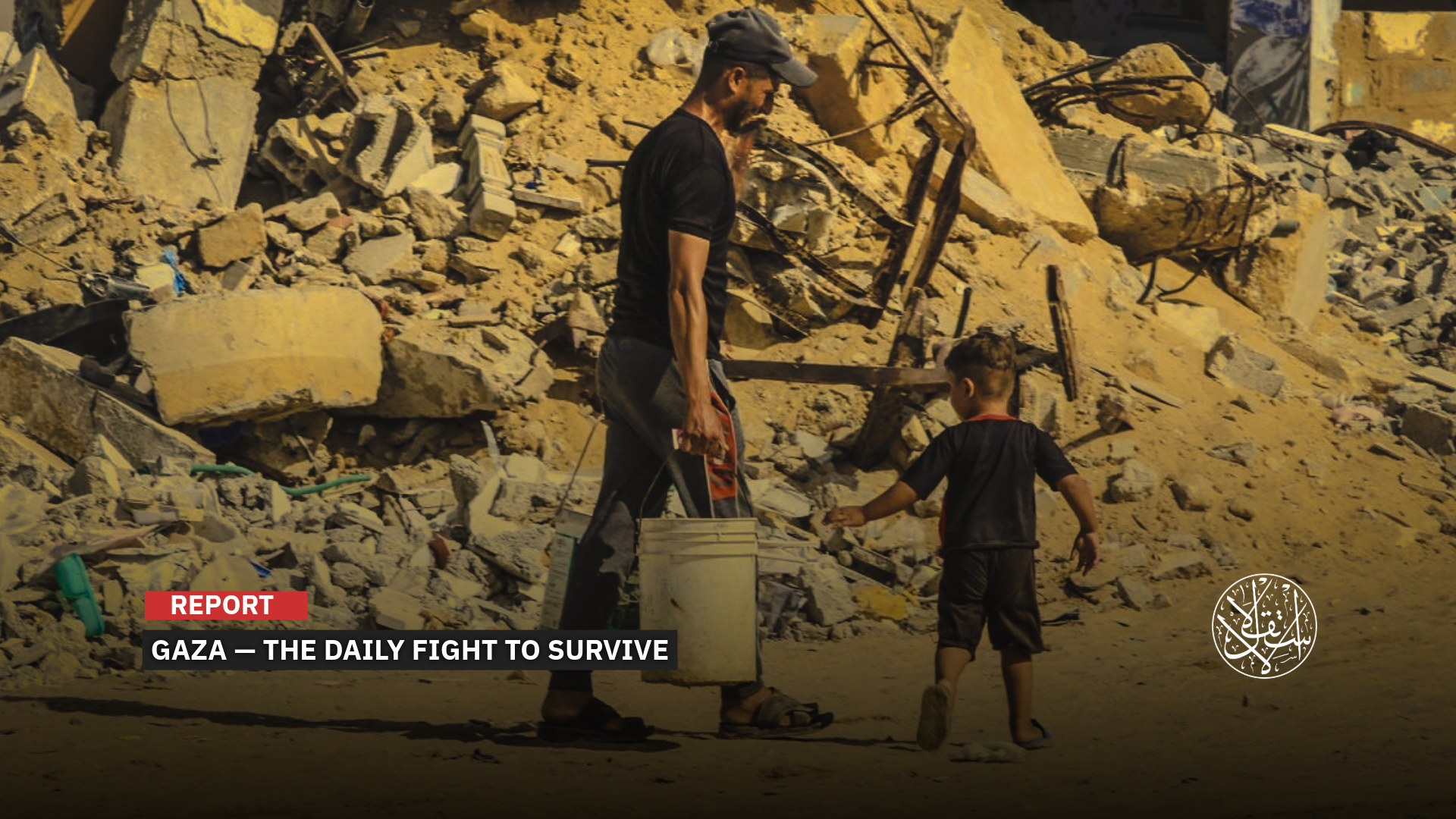
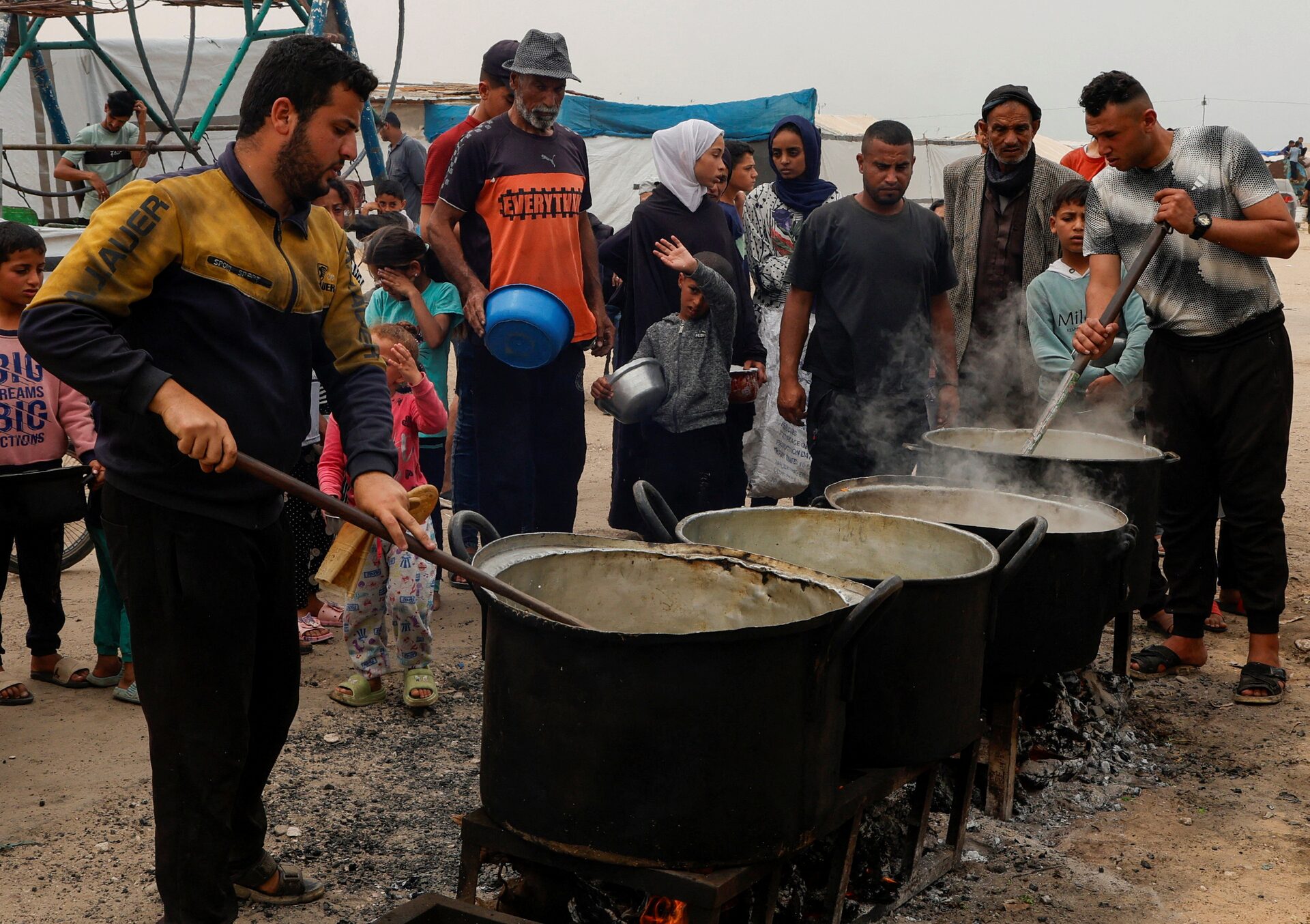
Many families in Gaza rely on charity kitchens to secure hot meals.
Though the Israeli aggression has ostensibly subsided since October 2025, Gaza today reads less like a territory at peace and more like a live experiment in survival under “a ceasefire” too fragile to guarantee either security or sustenance.
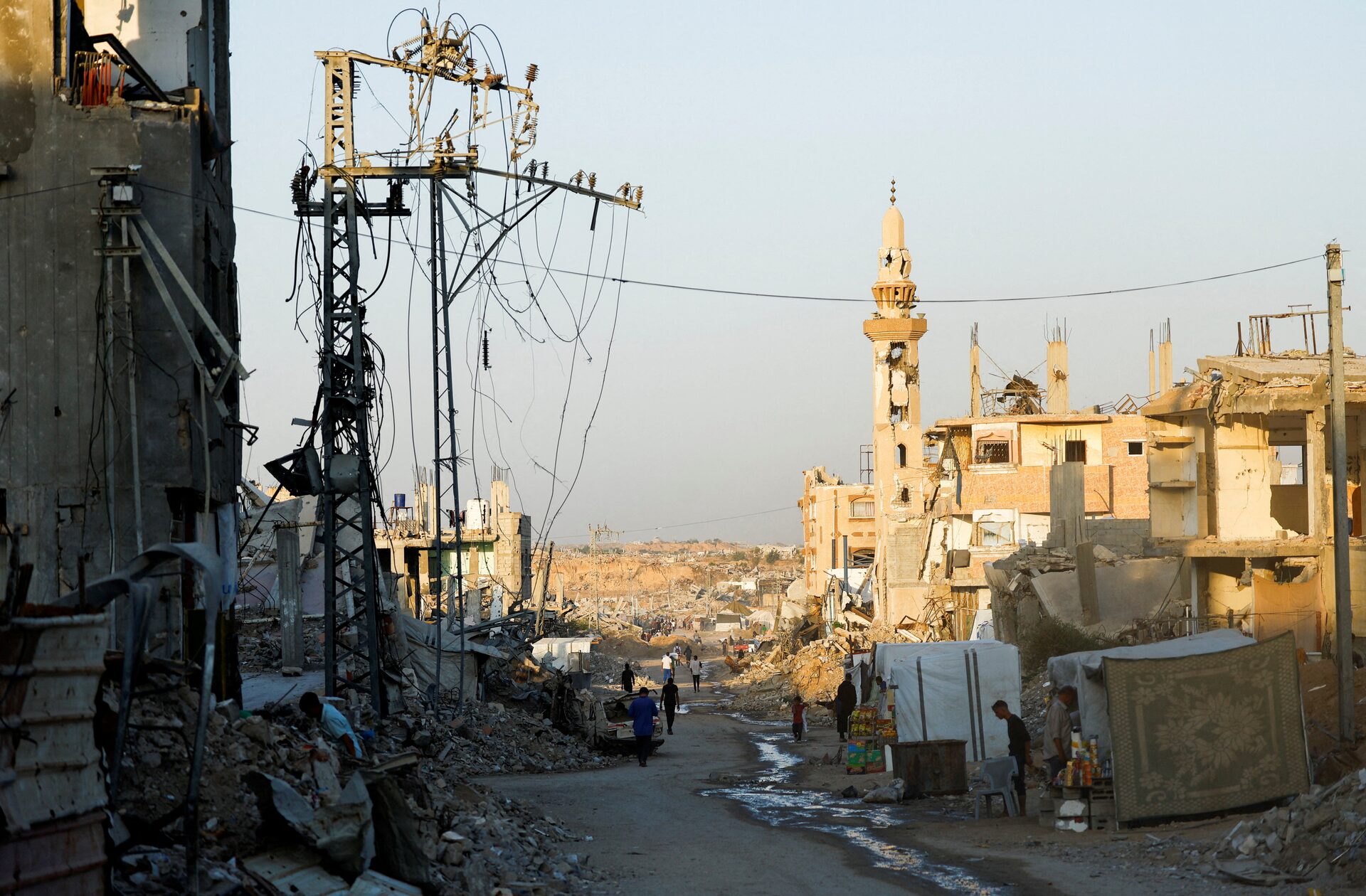
Two relentless years of genocide have all but extinguished economic life in the enclave, triggering an 83 percent collapse in GDP and leaving more than 70 percent of infrastructure and private sector assets in ruins.
While “the ceasefire” has allowed goods to reappear, however unevenly, the return of supply has done little to ease the burden on ordinary people. Prices remain well above their pre-October 2023 levels, with UN reports documenting spikes of up to 200 percent across a wide range of essential commodities, turning basic survival into an ever more expensive struggle.
Surviving Without Income
In Gaza, survival has become uncoupled from income. Since January 2026, unemployment has climbed past 80 percent, according to UN estimates, a catastrophic level that has stripped households of what little formal work remained.
Officials in the West Bank place the figure even higher, at around 85 percent, after the Israeli war wiped out or disrupted more than 390,000 jobs and destroyed roughly 37,000 businesses. The labor market, already fragile, has effectively collapsed.
For most workers, livelihoods have vanished across factories, workshops, farms, and services alike. Government employees, meanwhile, receive salaries irregularly, if at all, offering little stability in an economy that barely functions.
Much of Gaza’s 2.4 million population has been pushed into irregular day labor or informal work, clearing rubble, selling secondhand goods, or scraping together a few hours of low-paid work. These opportunities are scarce and unpredictable.
In this vacuum, humanitarian aid has become the closest thing to a financial system. Multi-purpose cash programs typically provide about 1,250 shekels, roughly $378, per household, usually as a one-time digital payment coordinated by the Cash Working Group (CWG) as part of the broader humanitarian response.
Even this support disappears quickly. A portion is lost to withdrawal fees ranging from 12 to 14 percent, and the rest is rapidly spent. Families often resort to borrowing from relatives and neighbors or selling part of their food aid to buy other necessities not included in relief packages.
Food insecurity has intensified. With 170 community kitchens shut down, facilities that once provided between 400,000 and 500,000 free meals daily, many families now depend on the remaining charity kitchens for a single hot meal. Closures have been driven by shortages of supplies, funding, or both.
Mohammad al-Farra, 43, a father of four, describes a life of constant improvisation. He relies on charity kitchens for food and drink, while other expenses such as water and transport are covered through community support. When money runs out, he told Al-Estiklal, he borrows from his brother or sells part of the flour he receives as aid. At times, he finds work clearing debris or carrying goods for about 30 shekels a day, but even that is not always available.
The High Cost of Living
Living in Gaza today demands far more than securing food. Markets may show a semblance of stability in the availability of goods, but affordability remains out of reach. By February, the consumer price index had climbed to 146 percent of its pre-October 2023 level, leaving prices stubbornly high in an economy where incomes have nearly vanished.
Local estimates suggest that a household now needs at least 2,000 shekels a month to get by, while cash assistance covers only a fraction of that amount. The gap between needs and means continues to widen.
Matters have been worsened by the U.S.-Israeli war on Iran, which “Tel Aviv” has used as grounds to tighten crossings and restrict the flow of goods, pushing prices even higher in an already strained market.
Data from UNICEF in 2026 shows that food alone accounts for roughly 40 percent of household spending in Gaza, followed by energy, cooking gas, hygiene supplies, medicine, transport, and clothing. Even basic items such as vegetables, fruit, and bread are sold at inflated prices due to limited supply, with families often reduced to just two meals a day, according to UN reports.
Water, too, has become a scarce commodity. A UN report from March 2026 found that residents of Gaza City receive less than six liters per person per day, a consequence of damage to key water lines and severe fuel shortages. Many families are forced to buy drinking water from private trucks at high cost or rely on rainwater collection.
Cooking gas is equally limited, covering only about 20 percent of demand. As a result, many households burn wood or even waste to cook and keep warm. Healthcare adds another layer of strain, with medicines largely unavailable in public facilities, pushing patients toward expensive private pharmacies.
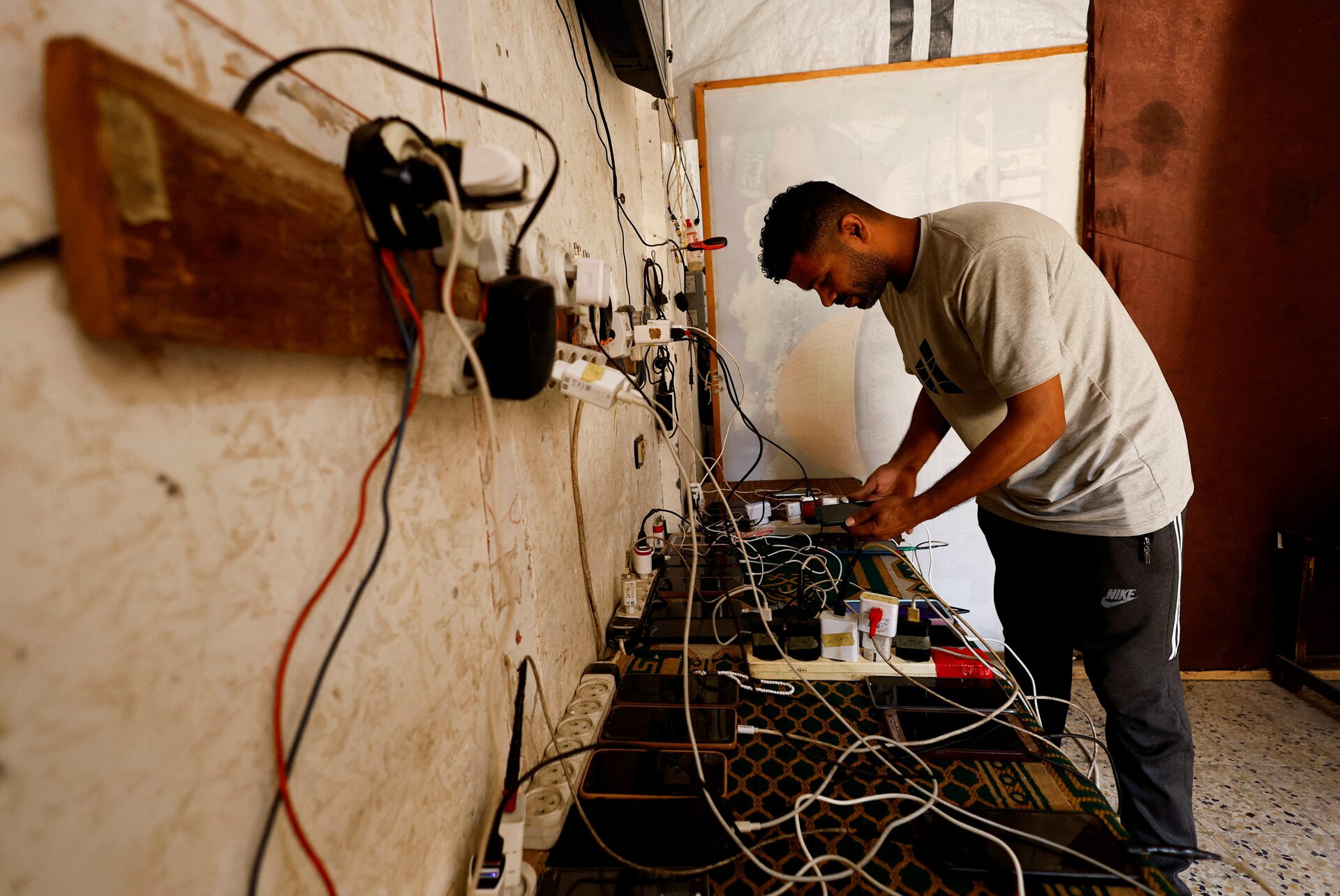
Daily life is further disrupted by the near-total collapse of electricity. More than 80 percent of the distribution network has been destroyed, and Gaza has gone without a stable power supply for two years. What little energy remains comes from diesel generators or small-scale solar panels, both dependent on scarce fuel.
Other unavoidable expenses pile up, from cash withdrawal fees to rent or temporary shelter costs, as well as clothing and blankets during winter.
Mahmoud al-Manaama, 39, a father of two who lost his job after a printing shop was targeted, now relies on irregular work to survive. Food alone consumes half of his daily spending. Tomatoes, he told Al-Estiklal, have reached 30 shekels per kilogram and potatoes 17, while fruit ranges between 30 and 35 shekels. Even drinking water comes at a high price, as safe tap water is no longer an option.
A Truce Without Recovery
If the ceasefire has, at times, softened the intensity of Israeli Occupation bombardment, it has done little to revive Gaza’s shattered economy. Any prospect of recovery remains constrained by the structural barriers imposed on movement, trade and production.
Restrictions on crossings have persisted, leaving the flow of goods erratic, particularly for non-food items. Prices have fluctuated sharply, often climbing back toward levels seen during the height of the war itself. When crossings were shut on February 28, 2026, costs spiked almost immediately, while humanitarian agencies were forced to ration fuel, cutting back on waste collection, water, production and distribution.
Even after the reopening of the Karm Abu Salem commercial crossing in the south, trade flows have remained too limited to meaningfully stimulate the besieged economy, slowed by inspections and frequent rejections of shipments.
The Israeli Occupation continues to block shipments of industrial materials and spare parts needed to restart factories, classifying them as “dual-use” out of concern they might be used for military production.
The result is a near-total collapse of the private sector. According to the Palestinian Ministry of Labor, 37,000 businesses have been fully or partially destroyed, crippling manufacturing, handicrafts, and essential services alike.
Large factories lie in ruins or stand idle without electricity or equipment, while what remains of economic activity has retreated into homes, where small-scale goods are produced and sold within displacement camps.
This breakdown has stripped thousands of jobs, reduced local supply, and deepened dependence on imports and aid. Efforts to restart small and medium enterprises face steep obstacles, from lack of capital to the absence of raw materials.
The scale of reconstruction required is vast. A report by the UN Trade and Development (UNCTAD) estimates that rebuilding Gaza would cost more than $70 billion and take decades just to return to 2022 levels.
Near-term economic forecasts offer little optimism. By late 2025, the Palestinian Monetary Authority had already projected that restrictions on movement and goods would persist, keeping economic activity confined to a narrow space tied largely to humanitarian assistance.
Compounding the economic collapse is the continuation of Israeli military violations. Even under the ceasefire, the Israeli Occupation is still bombing Gaza every day, leaving any meaningful recovery out of reach.
For Mahmoud al-Manaama, the reality is stark. The physical destruction and absence of income, he said, render the current truce little more than a partial pause in fighting, one that fails to translate into improved living conditions.
“Without a permanent ceasefire, the full reopening of crossings and a comprehensive reconstruction effort, Gaza’s residents remain trapped in a cycle of survival, searching each day for ways to endure, with no stable income and no clear horizon for recovery,” he added.
Sources
- The Performance of the Palestinian Economy for 2025, and Economic Forecasts for 2026
- The cumulative economic cost of occupation for the Palestinian people (2000–2024) and the long road to recovery
- Gaza Humanitarian Response | Situation Report No. 65
- UNICEF Internship Program—Fully Funded Global Opportunities
- Dozens of Gaza communal kitchens shut as supply runs out, worsening hunger
- UNICEF Gaza humanitarian cash transfer monthly bulletin – January 2026
- Gaza’s economy collapsed 83% in 2024, pushing all 2.3 million people into poverty