Shanghai Ranking of the Best World Universities: 7 Egyptian and None of the Moroccan Universities
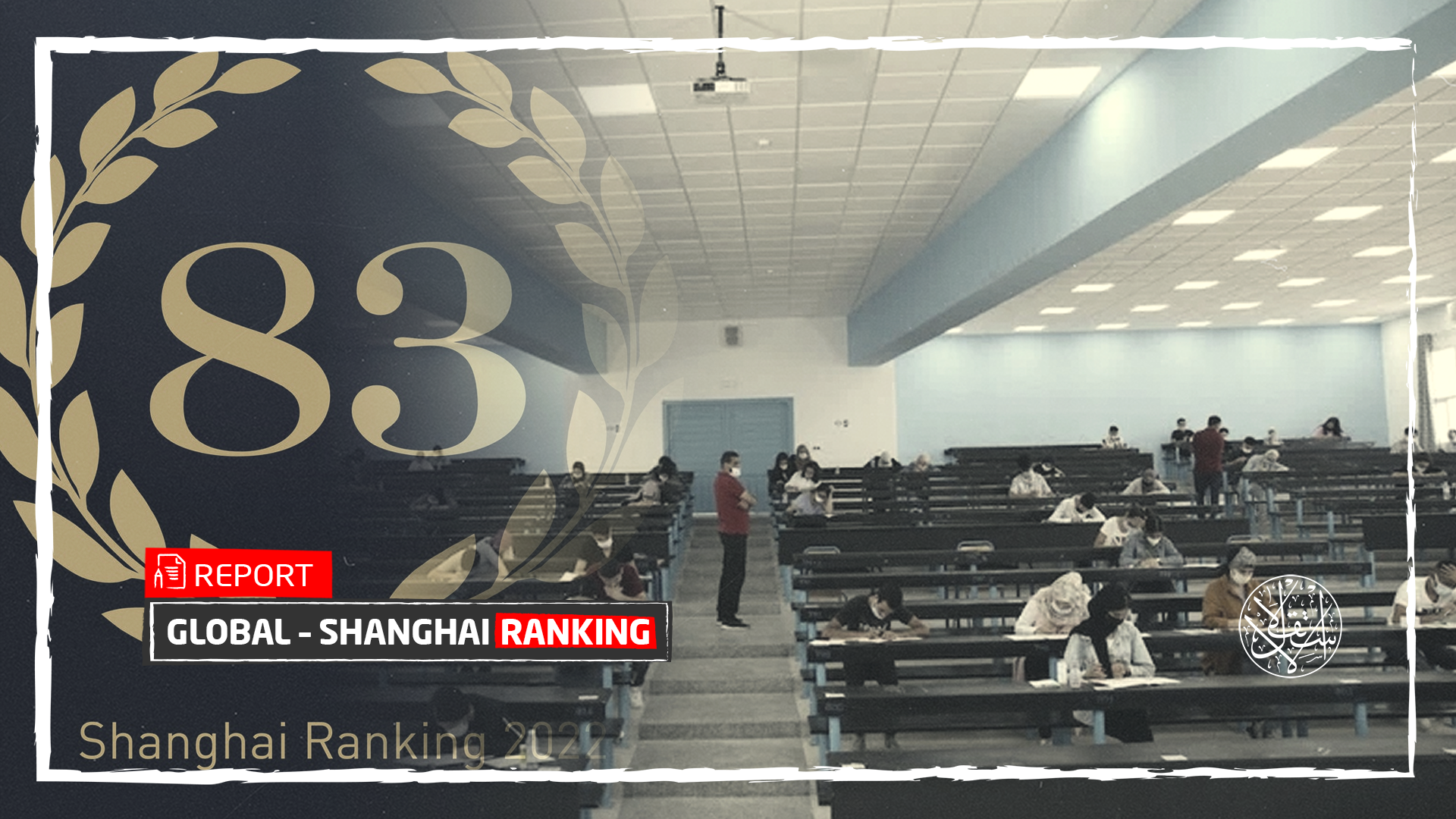
The Shanghai ranking of the world's best universities was released on 15 August. Harvard University topped, for the twentieth consecutive year, the Shanghai ranking of the best universities around the world in 2022.
Following Harvard University, Stanford University ranked in second place. The Massachusetts Institute of Technology (MIT) rose to third place.
While Britain's Cambridge ranked fourth, the American universities, Berkeley and Princeton, ranked fifth and sixth. Then, the British University of Oxford ranked seventh.
OUT NOW ShanghaiRanking’s Academic Ranking of World Universities #ARWU 2022 #ShanghaiRanking #universities
— ShanghaiRanking (@ShanghaiRanking) August 15, 2022
Explore the full results here: https://t.co/686Ak7LwgX… pic.twitter.com/w1j83srMbL
Well-Ranking Arab Universities
19 Arab universities were able to reserve places in this classification. From Egypt: Cairo University, Alexandria University, Mansoura University, Ain Shams University, al-Azhar University, Zagazig University, and Kafrelsheikh University.
From Saudi Arabia: King Abdulaziz University, King Saud University, King Abdullah University, King Fahd University, Taif University, King Khalid University, and Prince Sattam bin Abdulaziz University.
From the Emirates, Khalifa University. Of Jordan, the University of Jordan, and from Lebanon the American University of Beirut. It is the Sultanate of Oman Sultan Qaboos University and from Qatar the University of Qatar.
Universities in English-speaking countries took the top ten in the rankings, as it was in last year, with eight American universities and two British universities, in this global ranking of the best higher education institutions issued by the Shanghai Ranking Consultancy since 2003. In total, 39 US universities emerged among the top 100 on the list.
As for the first educational institution outside the English-speaking countries, it is the University of Paris-Saclay, which ranked 16th.
The University of Jordan entered the Shanghai World Ranking for the first time. It ranked among the best 701-800 universities in the world, in a distinguished historical achievement.
Global Ranking Criteria
The Shanghai Ranking is one of the global rankings that have various indicators. The classification takes into account six criteria. Among them are the number of Nobel Prize winners and the Fields Medal among its alumni and professors, as well as the number of researchers whose names appear frequently in their field of expertise or even the number of articles published in the journals Science and Nature. The worth of the degree acquired by the academics working full-time during the evaluation process was also an important criterion.
The percentage given to each criterion is as follows:
- Graduate success (10 percent).
- The volume of studies and research published in the British journals Nature and Science (20%).
- Percentage of references to such research and universities in the media and scientific journals (20%).
- The percentage of referring to researchers in the last five years (20%).
- Academic performance (10 percent).
The Shanghai ranking ranks only the top 500 universities in the world, as it is the most accredited ranking in the world.
In his explanation of this absence, Khalid al-Samadi, former Secretary of State for Higher Education and Higher Research in Morocco said that any reading in the international classifications must be objective, indicating that the international classifications of universities are many and numerous, and each classification has specific criteria.
Some classifications adopt objective criteria that allow Arab good universities to be on the list, while some classifications adopt criteria that are in favor of private universities.
He cited, in this regard, the Shanghai classification, which requires that one of the researchers belonging to the university be a recipient of the "Nobel Prize." Noting that this condition alone is sufficient to exclude all Moroccan universities, pointing out that this makes some universities contract with professors from this class to meet this condition and to be classified in the international classification as someone who buys an international player to win matches.
Al-Samadi explained in a statement that the Shanghai classification depends on a set of conditions and criteria that must be met without exception in any university to be included in the classification. Noting that even if one condition is not met, these universities do not obtain the same classification, and he added the "Nobel" clause, which carries a high score, is sufficient to exclude any university, whatever it may be.

Maghreb Universities Absent
As the trend during the last years, no Moroccan university has been able to reserve a place within the list of the thousand best universities in the world for the year 2022.
It is not only Moroccan universities that failed to join the list of this internationally prestigious classification. Yet, also many countries from North Africa and the Middle East, led by Tunisia and Algeria.
In an interview with Al-Estiklal, the Moroccan activist Khalida Bekkali said: “It is sad that none of the Moroccan universities are among the best-ranking world universities. In my opinion one of the main reasons behind this fact is that the best universities are in the French language, the students struggle first to master the French language instead of innovating in their native language. Plus, the French language does not allow them to access the edge of the scientific studies that are published in English.”
Al-Samadi said that this international classification enables the university to benefit from the support of donors and the private sector, noting that as an investment process in a specific field, and to invest to benefit from the number of privileges that ranked universities obtain.
On the other hand, al-Samadi stated that the normal classifications that take into account scientific publications and patents, the number of students, the use of information and communication technologies, whether in teaching or in digitizing administration, transparency, and governance, Morocco has always aspired to be among the thousand universities.
The same speaker stressed, that we cannot in any way judge the Moroccan university by a classification like this, but in the normal classifications, al-Samadi says, we have been trying to get into it for ten years, which is what happened, as Moroccan universities ranked 800 and 850 in the top 1000 universities.
He cited, in this regard, the University of Mohammed I in Oujda, which entered the rankings for the first time, in addition to the University of Mohammed V and the University of Cadi Ayyad.