Gaza Approaches ‘the Day After’: Is Trump Answering His Muslim or Zionist Allies?
“The future of the Gaza Strip will be decided not only in Jerusalem or within Gaza itself but also in Riyadh, Abu Dhabi, Ankara, and Doha.”
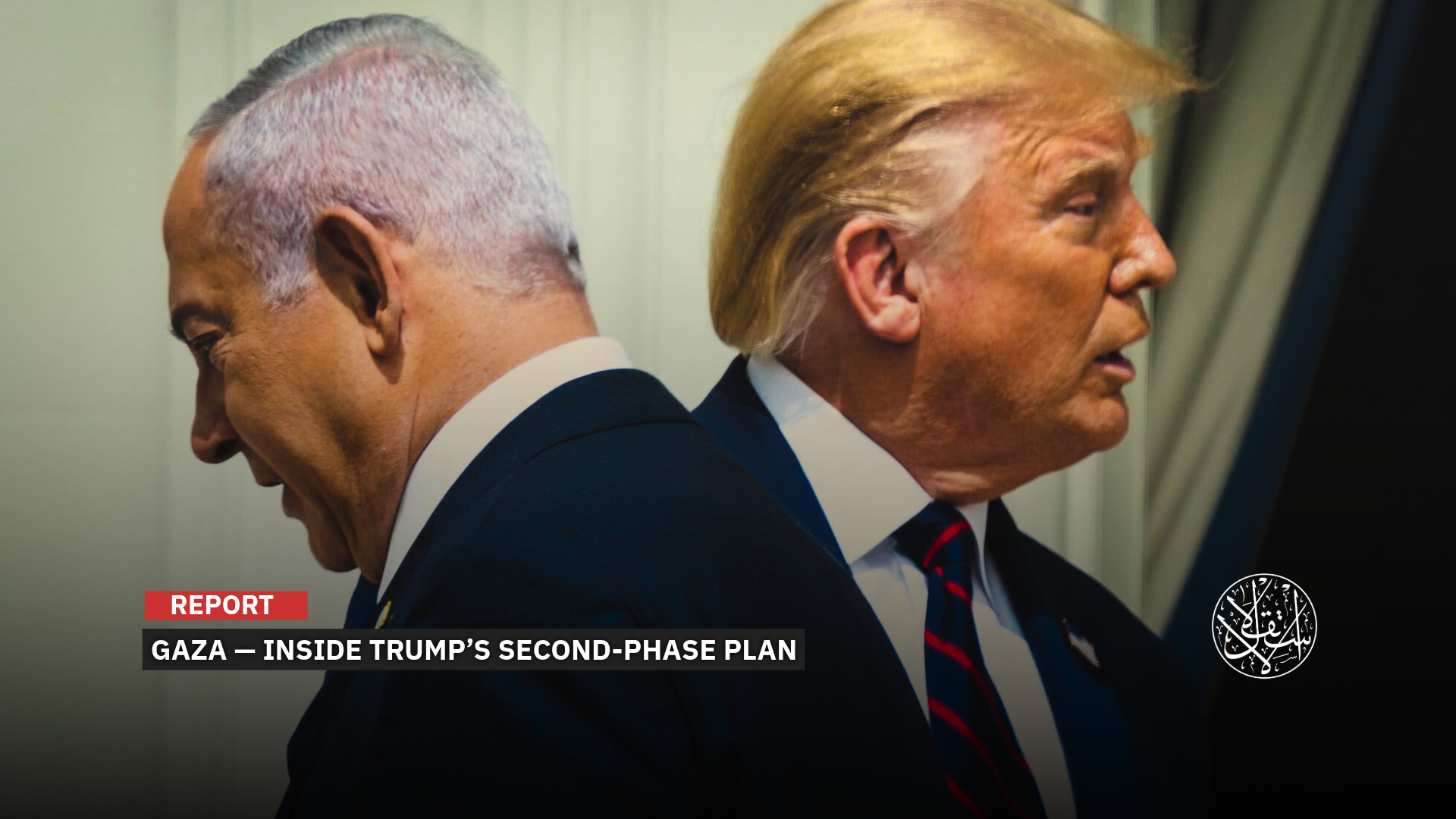
As the United States moves to finalize two key elements of President Donald Trump’s second-phase plan for Gaza—the creation of an International Stabilization Force and the formation of a Palestinian technocratic committee to govern the Strip—the shape of “the day after” in Gaza is coming into focus, and it may not be what the Israeli Occupation hoped for.
Washington has already taken a decisive step by sending a draft resolution to the UN Security Council on November 6, 2025, proposing the establishment of the International Stabilization Force in Gaza. The force would operate for two years, from January 2026 to 2028, a move that runs counter to “Israel’s” demand that the UN not oversee the mission. Trump, however, brushed aside those objections and pressed ahead.
Palestinian factions are also set to meet in Cairo in the coming days to finalize the formation of a technocratic Gaza Administrative Committee, officially ending Hamas’s 18-year rule over the Strip since it took control in 2007, paving the way for the second phase of Trump’s plan.
Both developments challenge “Israel’s” preferred vision of direct military control or an international mission outside UN oversight, signaling a significant American shift away from earlier ideas of occupying the Strip and forcibly displacing its people.
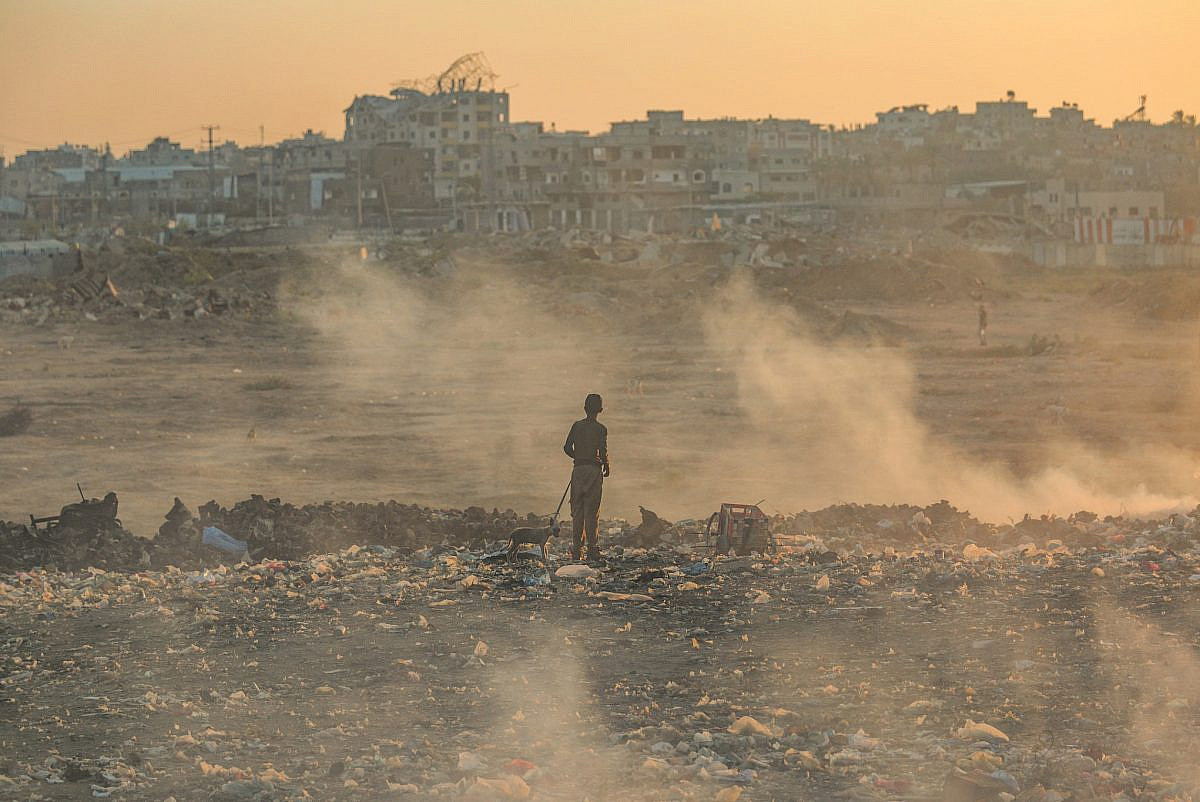
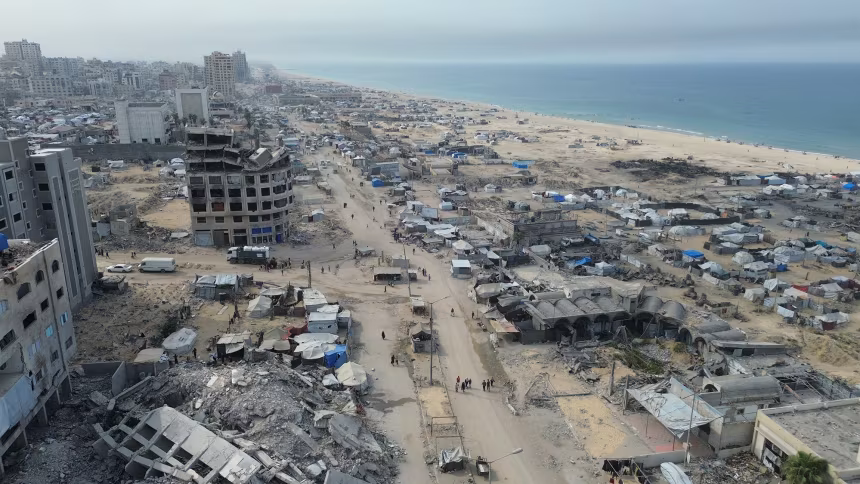
Still, the Israeli Occupation retains control over 53 percent of Gaza’s territory and maintains a military presence across nearly a third of the Strip. Even if it complies with the next phase and withdraws its troops, it insists that disarming the Resistance must come first, a condition that could determine how far this new plan can really go.
Trump 1, Netanyahu 0
On November 2, 2025, Israel’s public broadcaster Kan 11 reported growing disagreements between the Israeli Occupation government and the U.S. administration over the mechanism for forming the international force set to deploy in Gaza as part of the second phase of President Donald Trump’s ceasefire plan to end the war.
According to the report, Tel Aviv objected to two main points: first, that the force be established through a United Nations Security Council resolution, and second, that it include armed Turkish troops.
But a day after Qatari Prime Minister and Foreign Minister Mohammed bin Abdulrahman al-Thani told CNN that Doha was working with Washington to ensure a clearly defined mandate for the participating international forces, reports emerged that Trump had already submitted a draft resolution to the United Nations.
On November 3, 2025, Axios confirmed that the United States had circulated a draft resolution to Security Council members calling for the creation of an International Stabilization Force (ISF) in Gaza with a two-year mandate starting in January 2026.
Three days later, on November 6, Washington formally sent the draft to Council members, signaling its commitment to advancing Trump’s Gaza plan.
This move effectively ignored “Israel’s” first major objection—that the UN should not oversee the force—and aligned with the position of the Arab and Muslim Group of Eight, which had insisted the force operate under UN authority.
The Israeli Occupation had sought to maintain field control and decision-making power in Gaza, rejecting any UN-led model similar to peacekeeping operations. But Trump’s approval of UN supervision handed him a point on the scoreboard, while “Israel” came up empty in this round.
According to the leaked U.S. draft resolution published by Axios and Reuters, the international force would be tasked with securing Gaza’s borders with “Israel” and Egypt (Rafah), protecting civilians and humanitarian aid, training a Palestinian police force to operate alongside it, and carrying out disarmament operations and the destruction of military infrastructure.
The document, labeled “sensitive but unclassified,” would grant the United States and other participating nations broad authority to administer and secure Gaza until the end of 2027, with an option to extend the mission beyond that date.
Israeli Reservations
On November 5, 2025, military analyst Ron Ben-Yishai from Yedioth Ahronoth revealed the details of “Israel’s” objections to the U.S. proposal for an international “Gaza Force” and the role of the United Nations.
He explained that Tel Aviv believes the American draft resolution establishing such a force could restrict the Israeli army’s freedom of “action” and weaken the requirement for Hamas to fully disarm. Israeli officials also fear the plan might allow Hamas to retain part of its arsenal, reviving Prime Minister Benjamin Netanyahu’s concern that the model could resemble the UNIFIL mission in Lebanon, which “Israel” sees as a burden and an obstacle to its “military goals.”
According to Yedioth Ahronoth, “Israel’s” security establishment views several clauses in the U.S. draft with suspicion. The text does not specify which countries will take part in the force or the exact scope of its mandate. “Israel” also objects to granting the United Nations formal authority over the mission, fearing a repeat of what it considers UNIFIL’s repeated failures to enforce Hezbollah’s disarmament.
Ben-Yishai, however, believes that the United States is not seeking a binding Security Council resolution under Chapter VII, but rather a broadly worded political document that would provide cover for a U.S.-led stabilization mission carried out in cooperation with Arab and Muslim states.
Under Trump’s plan to end the war on Gaza, this force would function as a body operating under the umbrella of a “Board of Peace,” chaired by Trump himself alongside former British Prime Minister Tony Blair and coordinated by an international body representing around forty countries.
“Israel’s” strongest objection concerns the clause on Hamas disarmament. While Trump’s original plan used the term “disarmament,” the new U.S. draft refers instead to “decommissioning,” a softer term that the Israeli Occupation considers vague and elastic, allowing Hamas to sidestep the demand to surrender all its weapons, including light arms, to an external monitoring body.
The full text of the draft resolution also calls for the establishment of the Board of Peace (BoP) as a transitional governing body with international legal status, tasked with setting the framework and coordinating funding for Gaza’s redevelopment. The arrangement would remain in place until the Palestinian Authority completes a satisfactory reform program approved by this board, effectively giving Trump’s council oversight of Gaza’s administration.
The draft further assigns the Board of Peace responsibility for supporting a non-political Palestinian technocratic committee made up of qualified local professionals who would manage Gaza’s civil and administrative affairs under its supervision.
An analysis by Al-Estiklal suggests that the resolution legitimizes “Israel’s” ongoing occupation and deprives Palestinians of meaningful self-governance, turning the local committee into a depoliticized body of administrators receiving instructions from Trump’s Board of Peace.
The proposed structure grants Trump and Blair’s board sweeping powers over Gaza’s present and future, while using the United Nations only to provide formal endorsement as a political cover.
The draft also authorizes the Israeli Occupation and Egypt, named explicitly in the text, along with unspecified participating countries, to define the mandate and operational scope of the international force. This formulation gave Netanyahu room to eliminate any significant Turkish role in Gaza, allowing him to publicly declare that he would not permit Turkish participation.
Will Turkiye Join the Plan?
“Israel’s” second condition, rejecting the participation of Turkish troops in the international force for Gaza, appears to be more complicated than it first seems. It is not only Tel Aviv that opposes a Turkish role, but also Cairo, according to indicators observed by Al-Estiklal.
One sign came from the absence of Egypt’s foreign minister from the Gaza ministerial meeting held in Istanbul on November 3, 2025. The gathering, hosted by Turkish Foreign Minister Hakan Fidan, brought together the foreign ministers of Indonesia, Pakistan, Saudi Arabia, and Jordan, along with representatives from the UAE and Qatar—but Egypt was notably missing.
All of these countries had earlier attended a leaders’ summit with U.S. President Donald Trump on September 23, 2025, to discuss post-ceasefire arrangements in Gaza and the formation of an Arab-Islamic stabilization force for the enclave.
Egypt’s foreign minister, who had played a prominent role in the New York meetings and warned at the time that “the devil is in the details,” was expected to attend the Istanbul session but did not appear.
When journalists asked the Turkish foreign minister why his Egyptian counterpart, Badr Abdelatty, or any representative from Cairo was absent, Fidan explained that the Egyptian minister had been scheduled to attend but was unable to come due to another international engagement in his country.
However, Egyptian journalist Hafez Mirazi suggested that Fidan’s comment was a diplomatic attempt to save face for Cairo, noting that there had been no official event preventing Egypt’s participation that day.
Reports that a session of the Egyptian-American strategic dialogue on Africa might have caused the scheduling conflict were inaccurate. That meeting, which involved Trump’s envoy and son-in-law, Massad Boulos, and covered issues such as Sudan, Libya, the Congo, and Ethiopia’s Grand Renaissance Dam, took place a full day before the Istanbul summit.
Mirazi also noted that in his post-meeting press conference, Minister Fidan hinted that some unnamed parties were cooperating with “Israel” and supporting its rejection of Turkish participation in any Gaza stabilization force.
This led Mirazi to ask whether Egypt was the country Fidan was referring to—the one that, along with the Israeli Occupation, does not want Turkiye to have a military role on the ground in Gaza.
He also left open another possibility: perhaps the Egyptian minister’s absence from the Istanbul meeting had no political motive at all but was simply due to an unexpected circumstance, in which case, as the saying goes, “the absent may yet have a good excuse.”
Trump’s 20-point plan calls for the creation of a temporary international stabilization force to be deployed immediately in Gaza, tasked with training and supporting an approved Palestinian police force in the territory.
“Israel’s” rejection of the plan appears to be linked to “a dramatic move” by Ankara. On November 8, 2025, Turkiye’s attorney general issued arrest warrants for Israeli Prime Minister Benjamin Netanyahu and 36 senior officials on charges of genocide related to the Gaza war.
Former Israeli foreign minister Avigdor Lieberman drew a direct line between the two developments, writing on X that the arrest warrants make it perfectly clear why Turkiye cannot have any direct or indirect presence in Gaza.
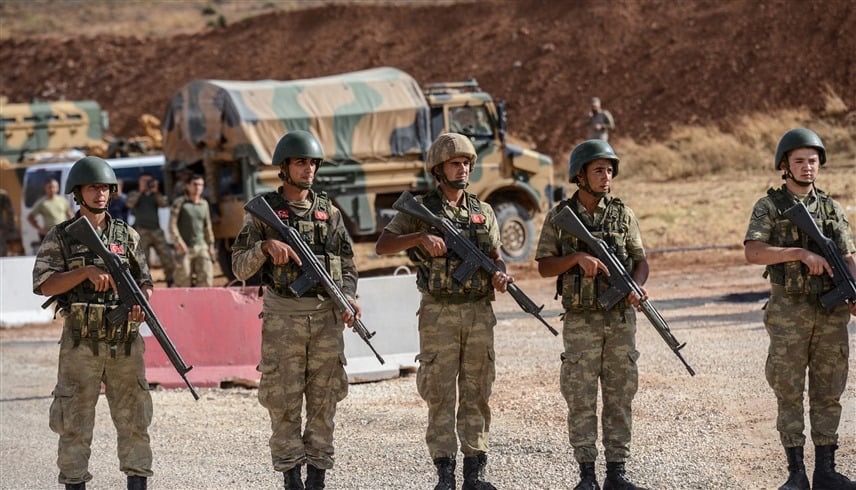
Despite this, reports indicate that President Trump has remained firm on including Turkish participation in the Gaza force. Washington has so far dismissed Netanyahu’s objections, arguing instead that Turkiye represents one of several “neutral states” suitable for the mission.
According to Axios, Trump’s draft resolution submitted to the UN Security Council explicitly lists Egypt, Qatar, and Turkiye among the countries contributing troops to the joint force.
The report explains that Trump views Turkiye’s involvement as essential to reassuring Hamas and building local trust in Gaza during the reconstruction phase. If Trump succeeds in imposing this condition on Netanyahu, it would mark the second time he has overridden Israeli objections—though for now, the signs suggest a tougher fight ahead.
Gaza’s Administrative Committee
The Gaza Administrative Committee, composed of technical experts and professionals rather than politicians, represents the second key pillar of Trump’s Gaza plan. Preparations are now underway to finalize its formation before the end of the year, as efforts continue to bridge the divide between Hamas and Fatah, a process in which Hamas has shown unusual flexibility.
According to The Washington Post, eight Palestinian factions are expected to meet in Cairo soon to put the final touches on the framework of this interim administration. Closed-door discussions could allow Hamas to retain a limited role in shaping Gaza’s governance after the war, despite “Israel’s” declared intent to eliminate the group’s political influence and decades of friction between Hamas and the Palestinian Authority.
“The main objective is to empower the Palestinians, including the Palestinian Authority, to be able to run Gaza as an integral part of the West Bank and as a step for the realization of the Palestinian state,” Egyptian Foreign Minister Badr Abdelatty told the Post.
Yet the key question, the paper noted, is whether Israeli Prime Minister Benjamin Netanyahu or President Donald Trump, whose “peace plan” calls for forming a new governing body, will oppose a Gaza administration that emerges from Hamas–Fatah talks.
Both leaders, wary of Hamas’s return to power, might actually find common ground with Palestinian President Mahmoud Abbas, according to Khaled Okasha, an Egyptian consultant who has advised Palestinian and Egyptian delegations in ceasefire negotiations. The authority “fears there is a U.S.-Hamas agreement behind the scenes” to the effect that Hamas may be able to play some role in Gaza in the future, Okasha said. “The Palestinian Authority wants more than Israel that Hamas is totally removed from Gaza.”
A joint paper published by Israel’s Institute for National Security Studies (INSS) on November 4, 2025, argues that “the future of the Gaza Strip will be decided not only in Jerusalem or within Gaza itself but also in Riyadh, Abu Dhabi, Ankara, and Doha.”
Since the ceasefire took effect, these capitals have been exploring how they might shape the “day after” in Gaza.
While Saudi Arabia and the UAE have welcomed the ceasefire and Trump’s plan to end the war, they have also conditioned reconstruction aid on the disarmament of Hamas, at least its attack capabilities, and the transfer of authority to the Palestinian Authority or another internationally recognized body.
According to the INSS and several U.S. reports, if the disputes over the international stabilization force and Gaza’s administrative committee are resolved, the contours of Gaza’s “next day” will be largely set—though ultimate control would still lie with Trump’s self-styled “peace trustees council.”
Sources
- 8 Palestinian factions meet to shape Gaza’s future – including Hamas
- Disarm or decommission? Israel worried about weak US Gaza draft, tracks Hezbollah buildup
- Regional Involvement in the Gaza Strip: Scenarios and Implications
- Scoop: U.S. seeks UN approval for Gaza security force with broad two-year mandate
- Update on Donald Trump’s Plan for Gaza Peace
- US submits draft resolution to UN Security Council for international force in Gaza
- US may ask UN to mandate international force in Gaza for two years, document shows