Has Tunisia’s President Surrendered Sovereignty to Algeria Through a Military Pact?
“National sovereignty is inviolable”.
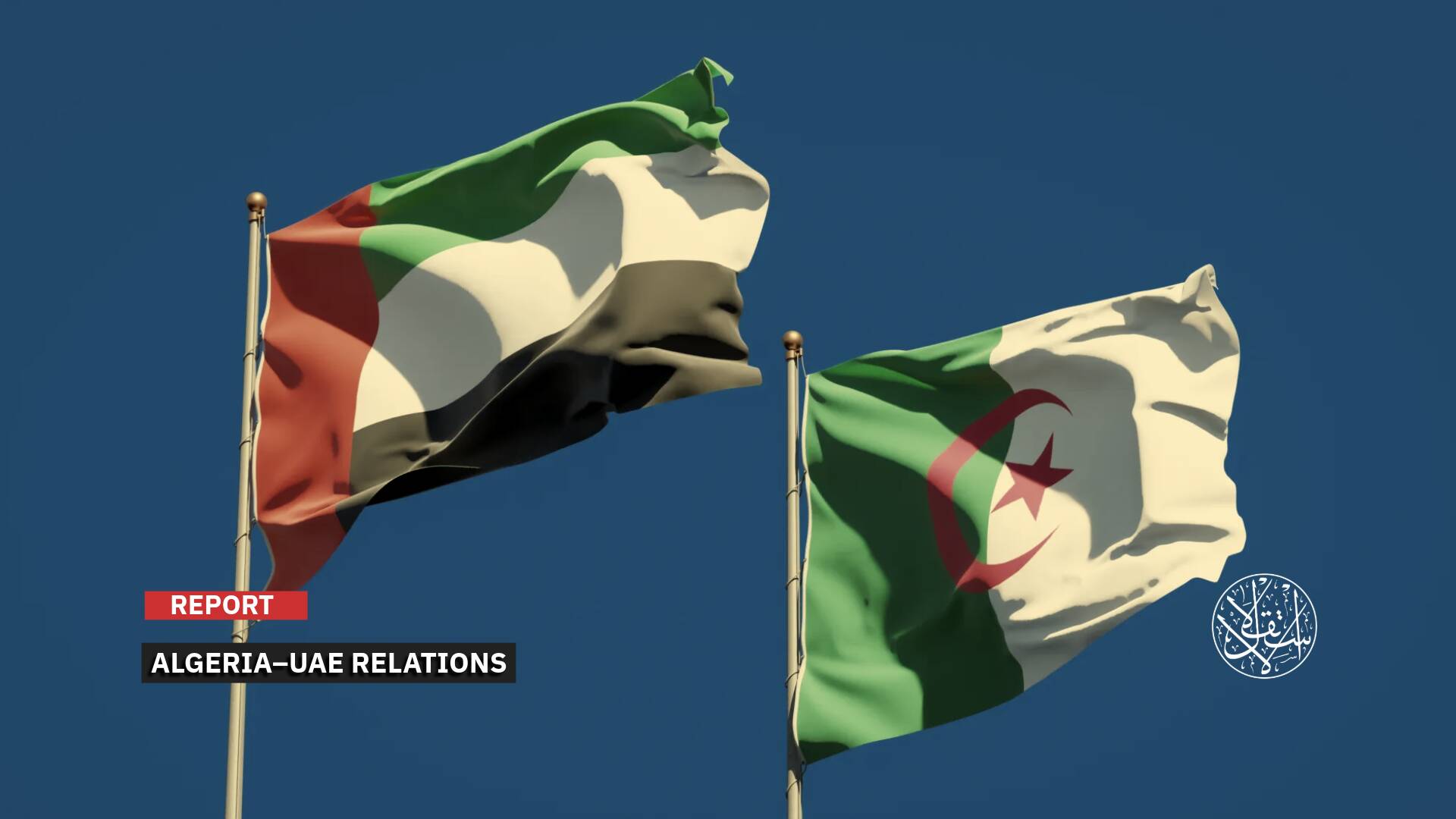
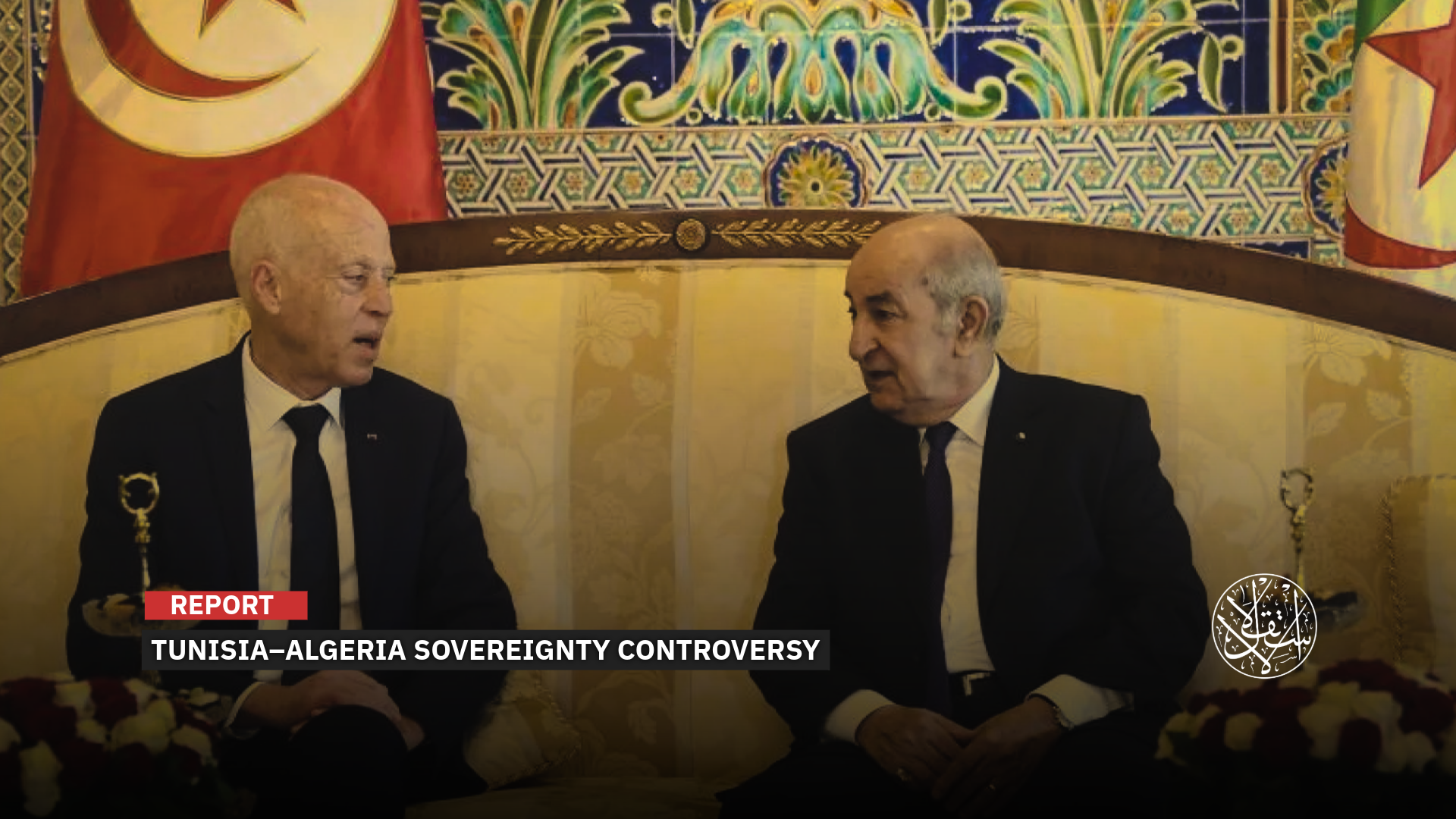
Tunisia’s political, legal, and media elites are experiencing a wave of intense debate following the conclusion of a military agreement with neighboring Algeria, amid growing claims that President Kais Saied has relinquished elements of the country’s sovereignty.
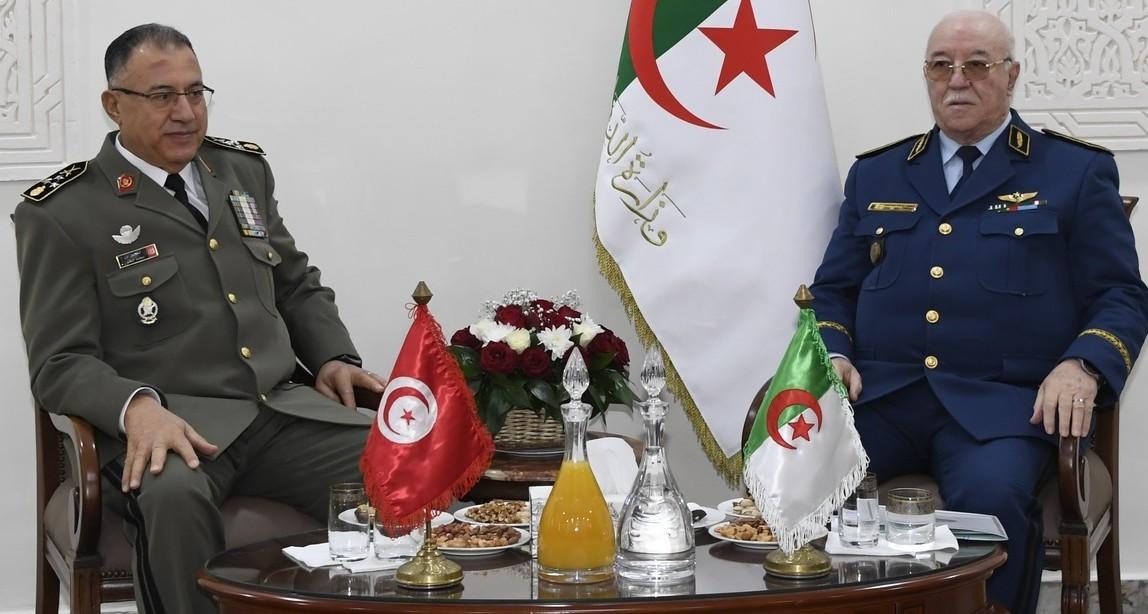
The controversy was reignited after a senior Tunisian military delegation, led by the chief of staff of the land forces, Lt. Gen. Mohamed El Ghoul, arrived in Algeria on December 24, 2025.
The visit was dedicated to discussing issues of military cooperation between the two countries, in light of the agreement signed on October 7, 2025.
In formal terms, the agreement falls within the framework of legitimate bilateral cooperation between two neighboring states facing shared security challenges, particularly in a context of regional instability and the spread of cross-border threats.
However, leaked provisions of the agreement, reportedly disclosed by the Tunisian television channel Zitouna, suggest that the scope goes beyond technical coordination or the exchange of expertise.
According to the leaks, the agreement reaches into the core of state sovereignty, namely the management of Tunisia’s internal security and the safeguarding of the continuity of its governing institutions.
The leaked text reportedly allows for military and security assistance to be provided at the request of Tunisia’s highest executive authority.
This assistance would include the protection of state institutions and the neutralization of what are described as “subversive or rebellious elements”, with the possibility of Algerian military forces being deployed on Tunisian territory.
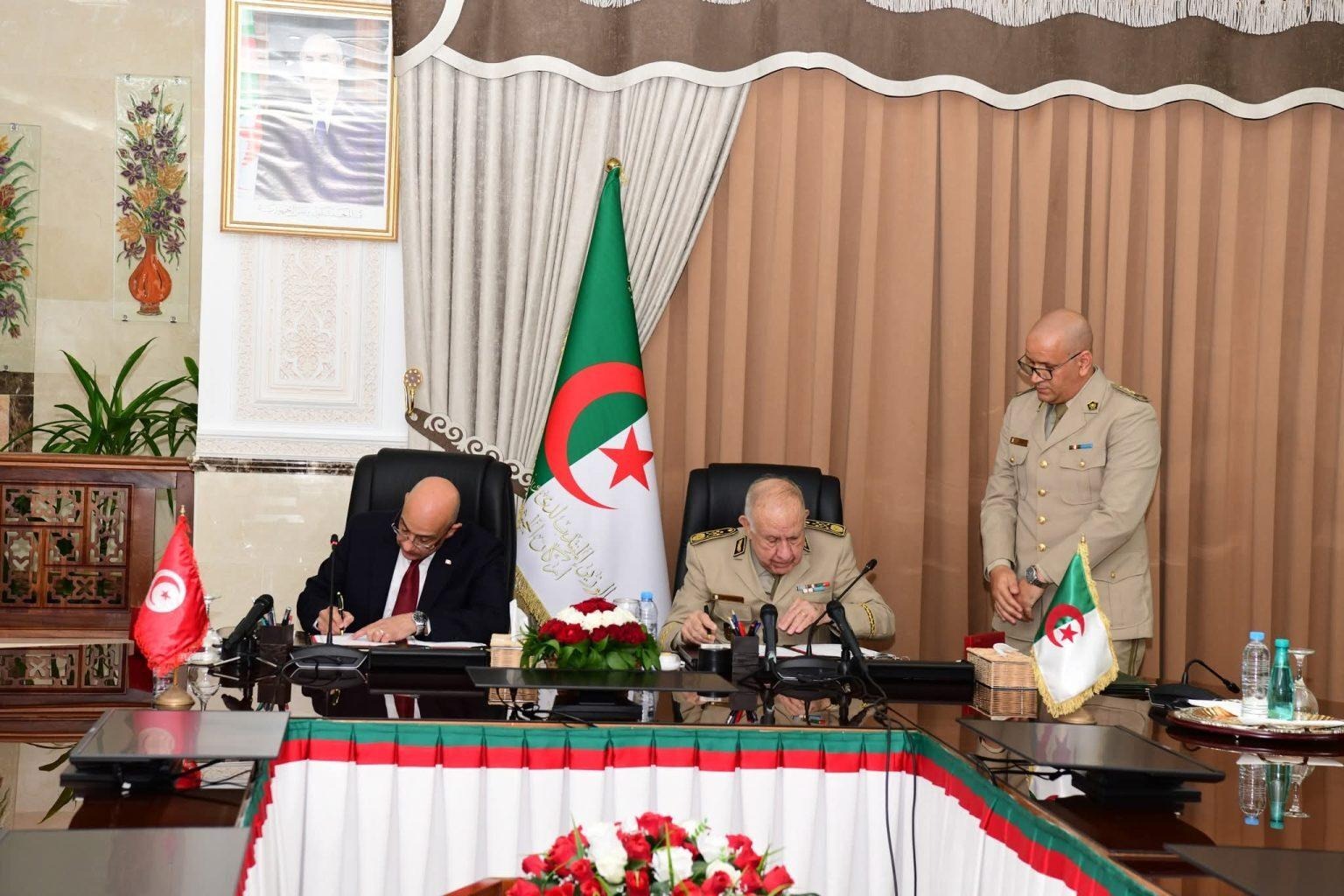
Algeria’s Ministry of Defense issued a statement on October 7, 2025, confirming that the chief of staff of the National People’s Army, Gen. Said Chengriha, had received Tunisia’s Minister of Defense, Khaled Sehili, who was visiting Algeria at the head of a senior military delegation.
The Algerian ministry stated that the two sides signed a “joint governmental agreement on cooperation in the field of defense between the defense ministries of the two countries”, describing it as a “landmark moment in the history of relations between the two states” and an “important step toward strengthening bilateral military relations”.
In Tunisia, however, the agreement has fueled fears that the line between cooperation and sovereignty has become increasingly blurred, raising concerns about the extent to which internal security and political stability may now depend on external military support.
Critical Reactions
Several politicians and activists in Tunisia have expressed anger over what has been reported about the agreement. Among them is Anouar Gharbi, a former adviser to ex-president Moncef Marzouki, who described it as “the most dangerous agreement to Tunisian freedom and dignity”.
In a Facebook post dated December 18, 2025, Gharbi elaborated on his position, stating that the agreement represents “the gravest threat to the freedom and dignity of Tunisians, with its provisions moving in a single direction, between a dominant party and a subordinate one”.
He added that it reminded him of the arrangements governing Chechnya’s administration and its relationship with central authority in Moscow, a relationship of dependency masked by the preservation of the language of sovereignty.
The Tunisian politician warned that the agreement, if its authenticity is confirmed, despite the fact that the source enjoys a high level of credibility in investigative journalism, would effectively turn Tunisia into a subordinate region and place the current authorities directly in the crosshairs of legal accountability.
In turn, the human rights activist Ezzedine Hazgui said in a Facebook post dated December 18, 2025, that he had followed the Zitouna television channel and that he “heard and saw” that there is a “catastrophic agreement with Algeria”.
He called on the ruling authority to provide clarifications that would confirm or deny what he described as “this disastrous news”.
At a practical level, the former Tunisian minister Mabrouk Korchid called, in a post dated December 19, 2025, on what he described as some of the free voices among parliamentarians to summon the minister of defense and question him.
He said this should be done to establish the authenticity of the leaked document and to determine what is contained in the actual agreement, while also seeking to understand why no official denial has been issued regarding the leaked text.
By contrast, the former Tunisian minister, Mohamed Abbou, argued that there are several indicators suggesting that what has been circulated about the contents of the agreement is not accurate.
In a Facebook post, Abbou noted that the deployment of units from the Algerian People’s Army abroad requires a decision by the president of the republic and the approval of two-thirds of the members of both chambers of parliament, in accordance with Article 91 of the constitution.
He said this applies to any incursion into the territory of another state, whether to apprehend terrorists or to defend a system facing a revolution, rebellion, or attempted coup.
He added that the Algerian People’s Army, which emerged from a “black decade” during which Algeria endured immense suffering, is not a mercenary militia driven by money that could be drawn into the internal conflicts of other states.
Abbou went on to say that questions related to the continuity of the constitutional system and the issue of legitimacy in a country such as Tunisia should, in principle, be left to a constitutional court, not to a foreign army.
He added that Algeria is not known for intervening in such political labyrinths.
He further argued that there is no reason to believe Tunisia has a coup-oriented army, noting that its military doctrine was shaped in national academies and through training in countries with professional armies that clearly understand their missions and their relationship with civilian authority within a framework of legality, not in eastern Mediterranean academies.
Abbou concluded that the Tunisian army would not accept an agreement allowing a foreign army, even a friendly one, to enter Tunisian territory to pursue terrorists.
He said Tunisia may have previously accepted foreign technical support during periods when terrorism struck the country, but that today the army possesses sufficient equipment and real combat experience, not merely theoretical knowledge.
It has sacrificed lives, he added, and remains the most trusted institution, making it inconceivable that it would allow others, outside the military and security forces, to carry out missions on its soil.
Calls for Transparency
In the absence of any official response to the leaked contents of the agreement, a Tunisian political party has called on the authorities to disclose the full text of the recent security agreement signed with Algeria.
The party called The Haq Movement (The Right Movement), said, according to a report published by Ultra Tunisie on December 24, 2025, that such disclosure would aim to put an end to circulating leaks and to refute claims that the agreement grants Algeria the right to intervene militarily in Tunisia in support of President Kais Saied’s rule.
The party expressed concern over what it described as widespread leaks, arguing that while they reflect a vigilant society keen to safeguard national sovereignty and resources, they also highlight the dangers posed by the absence of official information. That vacuum, it said, leaves room for rumors, fuels suspicion, and ultimately undermines trust between the state and society.
It stressed that the national interest requires the adoption of a transparent communication policy capable of cutting off speculation and clarifying the facts for public opinion.
The party added that relations with Algeria are strategic and widely valued, but that their continuity and success remain contingent on the clarity and integrity of the agreements concluded, and on their ability to serve mutual interests within a framework of full respect for the sovereignty of each state.
Amid the escalating debate, Tunisian President Kais Saied denied the authenticity of the documents circulating and claimed the existence of a defense cooperation agreement with Algeria.
During his regular meeting with the prime minister on December 18, 2025, at the Carthage Palace, President Saied said that “there is no room for compromising national sovereignty”. He emphasized that accountability in accordance with the law is a legitimate right of the people, given what they have endured in terms of injustice, the seizure of their wealth, and the squandering of national resources.
Addressing critics who questioned his policies, the president said, “As for those who persist in their delusions and flounder about, they should know that the state is not run through social media posts, nor through fabricating documents that exist only in their diseased imagination. They are exposed and unmasked”.
Earlier, on November 14, 2025, Tunisia’s minister of defense expressed his disapproval, during a parliamentary session, of what he described as the exploitation of the military agreement between Tunisia and Algeria to spread rumors. He said that “the closer the two countries come to strengthening their cooperation, the more misinformation circulates”.
The minister stressed that Tunisia’s priority remains its security, the protection of its borders, and the preservation of its sovereignty, adding that relations with Algeria are based on structured partnerships that carry no political or ideological alignment.
He further explained that the military agreement with Algeria is not new, having originally been signed in 2001 and later revised to reflect changing circumstances.
He emphasized that the agreement carries no political dimension and that strengthening military cooperation between the two countries is a strategic choice that serves the security and stability of the region.
Infringement on Sovereignty
Despite President Saied’s denial, the failure to disclose or publish the text of the agreement with Algeria has only deepened suspicions about its content. In this context, the French newspaper Le Figaro argued that the agreement strikes at the heart of the Tunisian president’s nationalist discourse.
In an analysis published on December 26, 2025, the paper said that despite clarifications offered by the president and his defense minister, the issue has forcefully returned to the forefront, becoming the dominant topic of public debate and a growing source of concern among Tunisian public opinion.
The newspaper noted that the ongoing controversy highlights a public awareness in Tunisia of the risks inherent in this type of agreement, which does not require ratification by the Assembly of the People’s Representatives and appears to fall within the opaque category of “state secrets”.
As for the political fallout, the paper stressed that the affair weakens a political authority that has built its narrative, within a populist framework, around the slogan of national sovereignty and the rejection of any foreign interference.
It added that the leaked provisions reveal a starkly different reality, one in which sovereignty becomes “flexible” and open to interpretation, with Tunisian authorities seemingly prepared to display a form of dependency on Algeria.
According to the paper, a general sense of unease is spreading across Tunisia, fueled by the prevailing impression that Kais Saied has opened the door to potential Algerian intervention in the country.
Over the years, Le Figaro added, successive Tunisian governments had succeeded in keeping Algerian involvement at arm’s length. That balance, however, shifted fundamentally under Kais Saied, who came to power without genuine international backing and appeared to be searching for a “patron”.
The paper concluded that Algerian president Abdelmadjid Tebboune has effectively played that role, at a time when neither French president Emmanuel Macron nor Egyptian president Abdel Fattah el-Sisi managed to do so.
Unanswered Questions
Reflecting on these reactions, the former Tunisian minister Fawzi Abdelrahman said that the issue of the military agreement with Algeria raises many questions, some of which can be answered, and others that remain unresolved.
“The first,” Abdelrahman told Al-Estiklal, “is that news of the agreement was published on the Algerian side’s page, not the Tunisian one. We also know that President Saied has denied the accuracy of what is being circulated about the contents of the agreement.”
He added, however, that what was published by Zitouna, a credible channel, and by the newspapers Jeune Afrique and Le Figaro, without any official denial of those details, makes the reports appear closer to the truth.
On the reason for the Tunisian authorities’ silence, Abdelrahman said there are several explanations. “First, Kais Saied’s authority has killed politics in its noble sense. He has not killed the opposition, but he has killed the political discourse within his own side. Today, no one within the ruling authority carries a political voice. Ministers are senior administrators who do not intervene in political affairs. They are faces without a voice.”
“Second,” he continued, “the military institution, which should be at the forefront of the story, is silent as in all countries, and in that sense it is fulfilling its role. But the defense minister is the party that should respond to public questions, and he does not.”
Abdelrahman added that the official silence can also be explained by the political embarrassment of Tunisia’s authorities regarding this agreement. “They do not speak, nor confirm, nor deny. They simply remain silent.”
Regarding the possibility of implementing the agreement, he said, “The duty is simply to cancel the agreement, because it is unacceptable in form and content and cannot in any way reflect the popular will of our country.”
“Canceling the agreement is, in my view, the only correct position. I will not go into the details of the agreement; it is enough to mention its imbalance and the fact that it is not subject to the constitutional accountability it should have been,” he continued.
On another point, Abdelrahman stressed that the situation should not lead to an emotional reaction affecting relations with the neighboring country or the principles of Tunisia’s foreign policy toward it, as they should be.
He said these principles are summarized in the idea that “we do not allow ourselves to intervene in Algerian affairs, and the principle of sovereignty applies to both sides,” adding that “the history of the two countries is closely linked and has always been guided by a single principle: supporting the people and standing by them.”
“The authorities of the two countries may differ or take different directions at certain times or on certain issues, but respect for opinion and position, and the continuation of dialogue, is the best way to overcome disagreement.”
Ben Abdelrahman also pointed out that “the constants of our foreign policy are to work for the unity of the Greater Maghreb and to promote economic cooperation and integration.”
He emphasized that “this agreement, described by the Algerian defense ministry’s page as a landmark in the history of relations between the two countries, demonstrates that Tunisia is experiencing a governance crisis and an institutional crisis, and that we cannot continue along this dead-end path, whatever the nature and content of the agreement.”
It is worth noting that Algerian President Abdelmadjid Tebboune affirmed during his regular meeting with Algerian media on Friday, September 26, 2025, that Algeria’s policy is based on respect for the sovereignty of states and non-interference in their affairs.
In response to voices claiming Algerian interference in Tunisian affairs, Tebboune said that “what is being circulated is mere hysteria and has no basis in truth.” The Algerian president described the relationship between Tunisia and Algeria as “like the relationship of a single state,” adding, “They have always been good neighbors, and there is no shadow over a relationship that remains strong and solid.”
Sources
- Haraket Haq calls for the official text of the latest agreement with Algeria to be published and for a transparent communication policy to be adopted [Arabic]
- Security agreement with Algeria undermines Tunisian president Kaïs Saïed’s nationalist stance [French]
- Sehili: Military agreement with Algeria reviewed to strengthen border cooperation [Arabic]