From Khartoum to Juba: How Sudan’s War Spread Beyond the Border
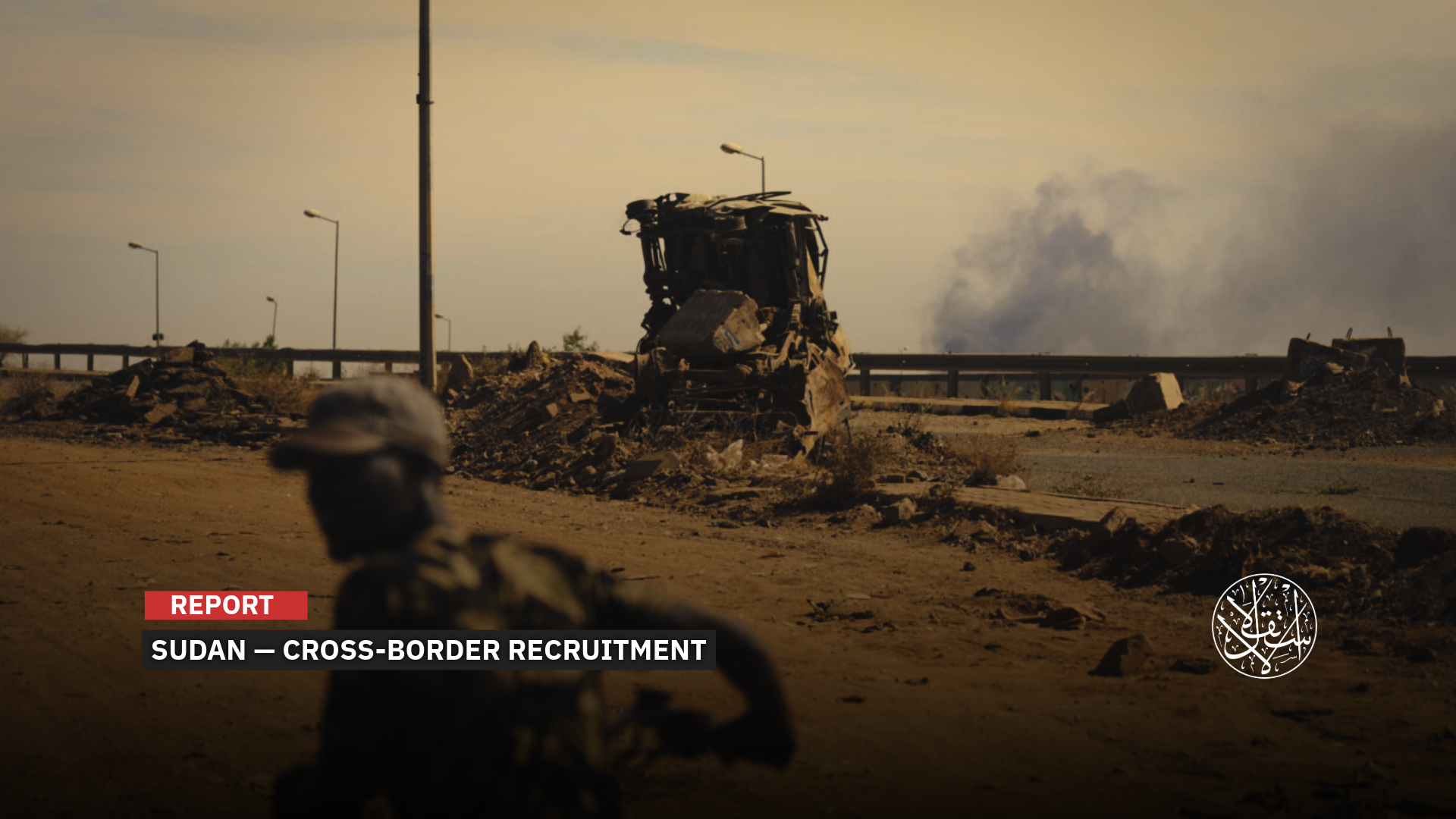
A number of the fighters were initially part of local militias that took shape amid the southern civil war.
In the fierce fighting currently underway in Kordofan, not everyone who took up arms was Sudanese. In early January 2026, the Sudanese army captured fighters from South Sudan who were fighting alongside the Rapid Support Forces, a militia led by Mohamed Hamdan Dagalo, known as Hemedti, and backed by the United Arab Emirates.
This development reveals a troubling reality: the war that broke out in Khartoum nearly three years ago has begun to draw in fighters from beyond Sudan’s borders. It is a dangerous indicator of the conflict’s widening scope, suggesting a shift from an internal war to one that is increasingly shaped by cross-border human involvement.
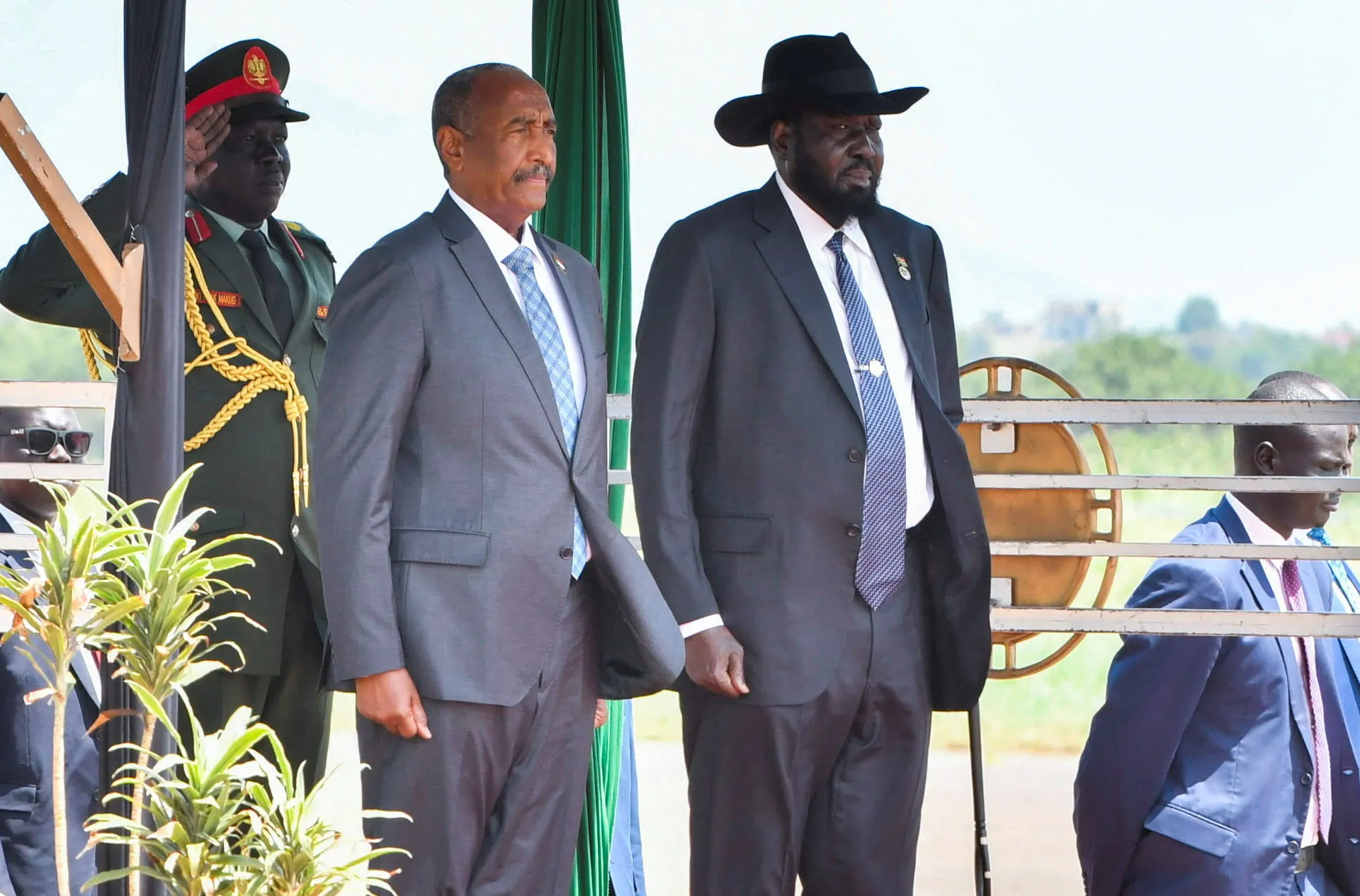
Questions have followed in quick succession. What drives groups or individuals from South Sudan to fight alongside Hemedti against the Sudanese army? And how will this development affect the already fragile relationship between Khartoum, led by General Abdel Fattah al-Burhan, and Juba, which is attempting to hold on to a narrow line of balance in an increasingly unstable regional environment?
Prisoners from South Sudan
According to Sudanese military sources, the army and allied forces captured more than ten foreign fighters on December 30 and 31, 2025, in the towns of Kazgeil and Riyadh in North Kordofan state, during direct clashes with the Rapid Support Forces militia.
The sources said that some of those taken prisoner were South Sudanese nationals, adding that Khartoum is preparing to formally contact the government in Juba, backed by what it described as documented evidence of their involvement in the fighting.
On January 1, 2026, the local “East Kordofan News” page on the X platform published a video showing commanders and soldiers from the joint force sharing a meal with detainees from the Rapid Support Forces militia.
The post claimed that the group included mercenaries from South Sudan, adding that they had been preparing to celebrate the New Year before being captured.
Although the content of the video has not been independently and impartially verified, its wide circulation has helped reinforce the Sudanese army’s official narrative.
These developments coincided with another escalation, marked by the killing of a prominent field commander in the Rapid Support Forces militia, Hamed Ali Abu Bakr, who had been leading attacking units, including fighters from South Sudan, in a drone strike that targeted the city of Zalingei in central Darfur on December 31, 2025.
Abu Bakr was mourned by the RSF militia commander’s adviser, Al‑Basha Tabiq, who vowed retaliation and accused the Sudanese army of carrying out a deliberate assassination.
Together, the two events, the captures and the killing, have intersected to shape the contours of a new phase of the war, one in which the Rapid Support Forces militias appear to be seeking every available source of leverage, including the recruitment of foreign fighters from the south, while the army accumulates relative battlefield gains in the central states and in Kordofan.
Who Are These Fighters?
From here, the first question that arises concerns the identity of the fighters arriving from South Sudan. Available information so far indicates that they are not members of regular units of the Sudan People’s Liberation Army, nor are they operating under an official mandate from the government in Juba.
Instead, they appear to come from a mix of former armed groups, tribal fighters, and individuals who accumulated combat experience during South Sudan’s civil war between 2013 and 2018.
It is believed that some of these fighters originate from areas in Northern Bahr el Ghazal and Western Equatoria, border regions that have historically seen deep tribal and economic interconnections with West Kordofan and Darfur.
Communities such as the Dinka, the Misseriya, and the Rizeigat, despite holding different nationalities following South Sudan’s independence in 2011, have maintained cross‑border networks of shared interests, including grazing, trade, and at times smuggling.
Sudanese security sources say that some of these fighters were originally members of local militias formed during the South Sudanese civil war, before being demobilized or sidelined following the reactivated peace agreement in 2018.
As economic conditions in South Sudan have deteriorated and unemployment has risen among former combatants, these individuals have become easy targets for recruitment networks linked to the Rapid Support Forces militia.
Hidden Motives
Sudanese politician Amin Abdel Razek said in comments to Al‑Estiklal that the involvement of fighters from South Sudan in the war inside Sudan cannot be separated from the regional support backing the Rapid Support Forces (RSF) militia, foremost among it the United Arab Emirates, which he accused of providing political and logistical cover that has allowed the militia to continue fighting despite its battlefield setbacks.
He added that the RSF militia, having exhausted its local support bases and lost strategic territory, has turned to recruiting foreign fighters from South Sudan, exploiting the country’s severe economic crisis, the near collapse of public services, and delays in paying regular security forces.
In his view, fighting in exchange for dollars or weapons is no longer an individual pursuit, but has become part of an organized recruitment system operating with external funding and backing.
Abdel Razek said this trajectory is tied to a broader network of cross‑border interests, including the smuggling of weapons, fuel, livestock, and people.
He argued that these networks enjoy protection from the RSF militia and move along well‑known border routes, amid what he described as troubling regional silence and Emirati support that, in his words, takes on humanitarian forms that appear compassionate on the surface while in reality managing the war.
He said the establishment of field hospitals and logistical support centers near Sudan’s borders, as seen in South Sudan, cannot be read in isolation from the military context, recalling previous experiences in Chad and Libya, where humanitarian work was used as a cover for running military operations and financing militias outside state control.
Abdel Razek stressed that the RSF militia, encouraged and supported by the UAE, is reopening old border conflicts between Sudanese and South Sudanese groups, exploiting the fragility of areas marked by tribal overlap.
He argued that the current war has provided cover for reviving violent disputes over resources and grazing land, threatening Sudan’s unity and the stability of the entire region.
He concluded by saying that the rebels’ reliance on foreign fighters, with explicit or implicit Emirati backing, represents a blatant violation of Sudanese sovereignty and a dangerous escalation that shifts the war from an internal conflict to a regional one.
He warned that the continuation of this path would lead to a prolonged wave of instability, the cost of which would ultimately be borne by the region’s peoples.

Why Is Hemedti Turning to Mercenaries?
Since the outbreak of the war on April 15, 2023, the Rapid Support Forces militia has relied primarily on their local manpower, drawing on tribal networks in Darfur and Kordofan and on an arsenal amassed during years of a former alliance with the army.
That equation, however, began to shift as forces loyal to Mohamed Hamdan Dagalo, known as Hemedti, lost strategic positions in Al‑Jazira state, Sennar, and parts of Khartoum, and as drone strikes intensified.
At this stage, the RSF militia has found itself in need of compensating for manpower shortages and turning to fighters who are not directly tied to Sudan’s social base, a move that reduces domestic sensitivity to human losses.
In this context, foreign fighters arriving from South Sudan perform a dual function, bolstering numbers while lowering the political cost.
The recruitment of fighters from neighboring countries, such as Chad and Tanzania, also gives the RSF militia greater room for maneuver and complicates the army’s efforts to secure borders and stem the flow of human reinforcements.
The presence of armed elements from South Sudan adds another layer to the relationship between Khartoum and Juba, which has been marked by fragility since South Sudan’s secession in July 2011.
Despite repeated attempts at cooperation, particularly on oil and border issues, mutual suspicions have remained deeply entrenched.
Khartoum’s accusations, even if indirect, that South Sudanese nationals are fighting alongside the RSF militia, place the government in Juba in an acutely sensitive position.
On the one hand, it is reluctant to enter a diplomatic confrontation with Sudan, a vital conduit for its oil exports to global markets.
On the other hand, turning a blind eye to the recruitment of its citizens into a neighboring war could be interpreted in Khartoum as complicity or negligence.
Sudanese diplomatic sources say that Khartoum is considering submitting a comprehensive file to Juba in January 2026, including the names of detainees and the routes by which they reached the battlefields.
If this step is not met with clear cooperation, the sources warn, bilateral relations could face renewed strain, with repercussions for sensitive economic and security files.
UAE and South Sudan
The picture grows more complex with the entry of the Emirati factor into the crisis, as an implacable adversary to Sudan in this war.
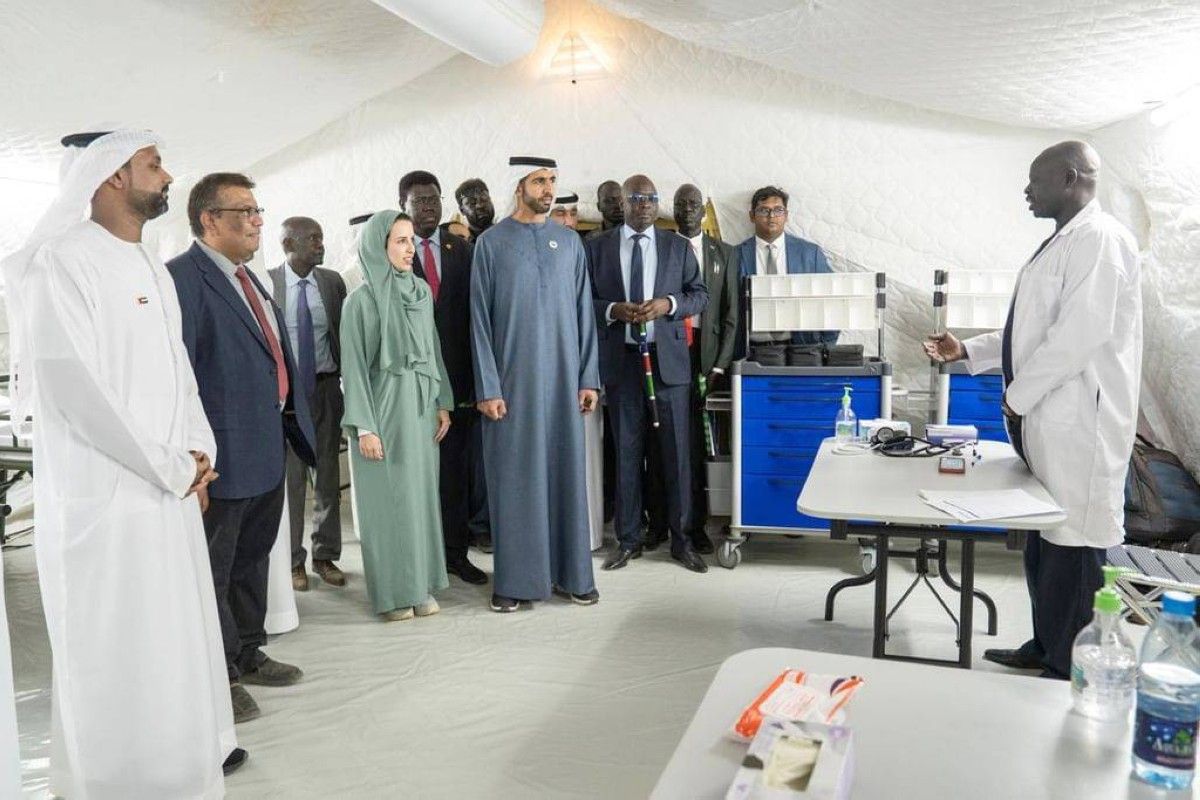
On March 7, 2025, the United Arab Emirates opened the “Madhol” field hospital in the Northern Bahr el Ghazal region of South Sudan, in the presence of a high‑level official delegation headed by the Emirati minister of state, Shakhboot bin Nahyan Al Nahyan, and under the direct patronage of the UAE president, Mohammed bin Zayed Al Nahyan.
Despite the project’s declared humanitarian character, the hospital’s location, roughly 64 kilometers from the Sudanese border, sparked wide controversy in Sudanese circles.
Politicians and activists, including Dr Ahmed Muqlid, argued that the facility serves as a cover for a logistical base used to support the Rapid Support Forces militia, citing similar precedents in the Um Jaras area on the Chadian border.
The Sudanese security expert Amer Hassan said in an interview with the Sudanese Tayba channel on March 12, 2025, that the UAE “is establishing a logistical base in South Sudan under the cover of the Red Crescent,” warning that such bases could be used to launch drones or to assemble mercenaries.
Although no conclusive public evidence has emerged to substantiate these accusations, the coincidence of the hospital’s opening with reports of foreign fighter movements has fueled suspicion and placed the government in Juba in an awkward position, caught between a powerful regional partner and pressure from its northern neighbor.
Ibrahim el‑Sheikh, a member of Sudan’s National Congress party, said in comments to Al‑Estiklal that the involvement of fighters from South Sudan in the Sudanese war, however limited in number it may appear, reveals an extremely dangerous trajectory, one marked by the creeping and highly draining internationalization of the conflict.
El‑Sheikh held regional powers, foremost among them the UAE, responsible for driving this path, stressing that the multiplicity of nationalities now involved in the fighting inside Sudan is no longer an incidental development, but a direct result of systematic policies that have opened the door to money, weapons, and mercenaries.
He added that this gradual internationalization does not necessarily mean the imminent outbreak of a full‑scale regional war, but it does pave the way for proxy conflicts, intelligence competition, and the use of border areas as rear bases for military operations, gradually turning Sudan into an open arena for the settling of regional scores.
Al‑Sheikh said the capture of fighters from South Sudan represents a serious alarm bell and raises a fundamental question about whether the country is facing a turning point in the course of the war, or merely another episode in a long chain of external interventions that have fueled the conflict and prolonged its duration.
He concluded by warning that Sudan’s war has not been a purely internal affair for some time, and that every foreign fighter captured, and every humanitarian facility surrounded by suspicion, brings Sudan one step closer to the edge of an open conflict, the cost of which will be paid first in Sudanese blood, and then in the stability of the entire region.
Sources
- Sudanese army announces capture of South Sudanese nationals among Rapid Support Forces ranks [Arabic]
- RSF Darfur security adviser killed in drone strike near Zalingei
- UAE opens Madhol field hospital in South Sudan [Arabic]
- The roots of militias in Sudan’s new tragedy [Arabic]
- How the Rapid Support Forces are reshaping Darfur’s demography through displacement [Arabic]
- Joint force says presence of “foreign mercenaries” in El Fasher battles constitutes a military violation and a threat to national sovereignty [Arabic]