Allies at Odds in Yemen: Where Do Washington and 'Tel Aviv' Stand in the Saudi–UAE Clash?
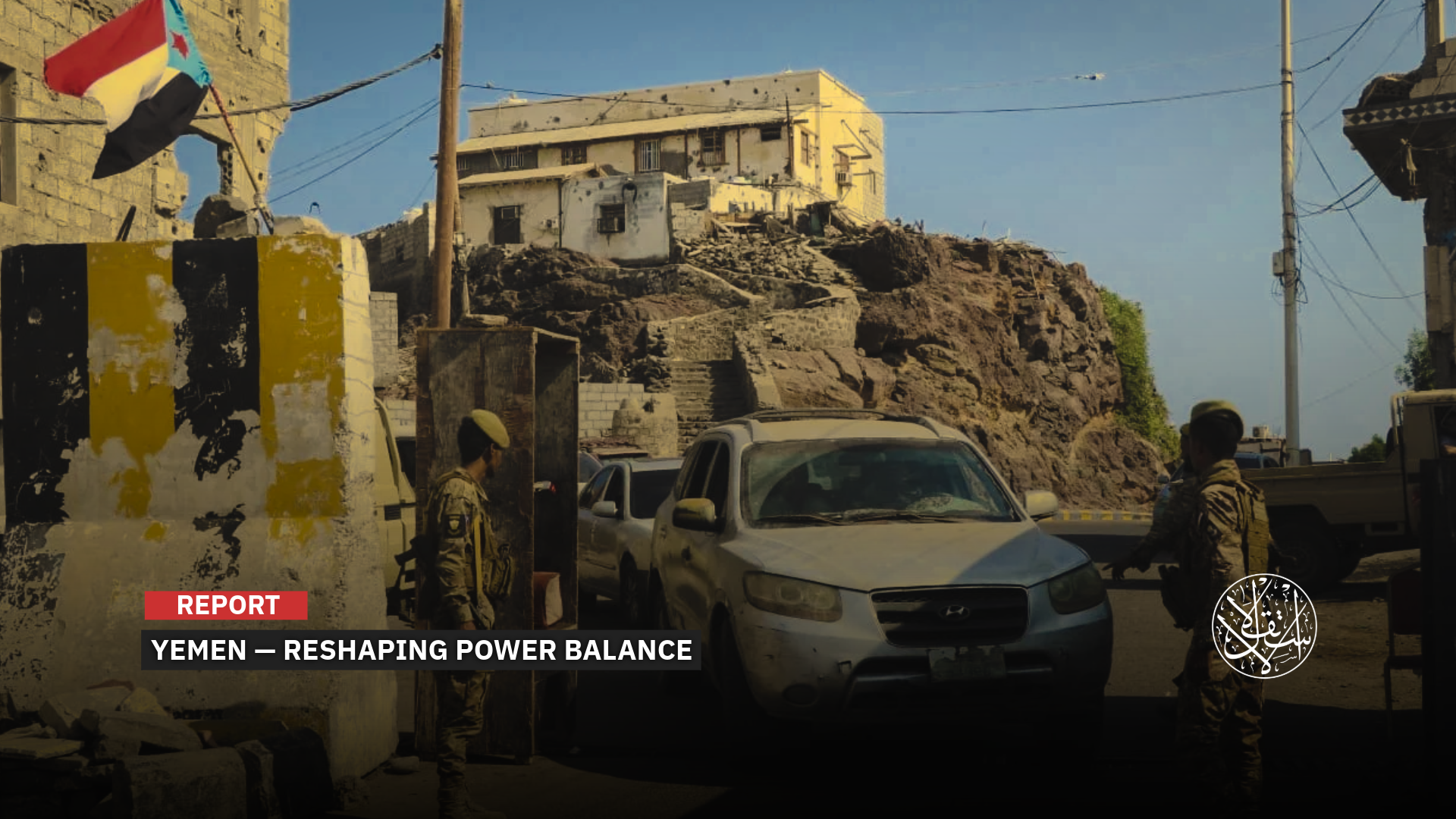
Israeli and American reports and statements have pointed to quiet political backing for separatists in Yemen.
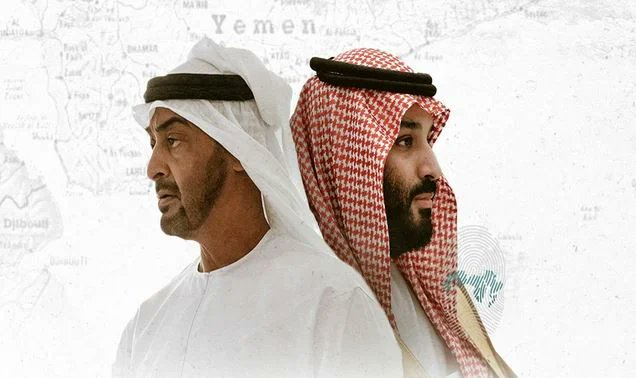
The clash between two of Washington’s central allies in Yemen, Saudi Arabia and the United Arab Emirates, has unsettled long-standing U.S. calculations that reduced the Yemeni crisis to the Houthi threat alone, a narrow security lens shared by the Israeli Occupation and focused largely on shipping lanes and strategic interests.
Yet the confrontation has also exposed a deeper reality. The fragmentation of Yemen, a card Abu Dhabi has played for years, appears less troubling to Washington and Tel Aviv than quietly appealing to them, seen as an effective way to reshuffle the regional deck and redraw spheres of influence through pliable separatist entities that are easier to manage politically and militarily.
The UAE’s push to entrench a separatist entity in southern Yemen cannot be separated from a broader project it has sought to engineer, one aimed at creating a loose “axis of separatists” stretching from Libya to Sudan, Yemen, and Somaliland. It is a reversed echo of the so-called “axis of resistance,” but with a different purpose: curbing Saudi influence, containing Iran, and opening direct channels of integration with the Israeli Occupation.
This trajectory fits squarely within a Western and Israeli vision that views the breakup of fragile states as a means to recalibrate regional balances, lower the costs of direct confrontation, and turn conflicts into prolonged internal struggles that drain major regional powers.
In this context, Israeli and American reports and statements have pointed to quiet political backing for separatists in Yemen and a tacit understanding of Emirati plans. That support has remained deliberately low-key in public, however, so as not to provoke Saudi Arabia, as Washington and Tel Aviv continue to bet on drawing Riyadh toward the Abraham Accords rather than pushing it to rethink its strategic alignment.
The U.S. Position
Officially, U.S. and Israeli policies on Yemen are presented as narrowly focused on countering the Houthis and protecting international shipping in the Red Sea, not on siding with one Gulf ally against another. What unfolds behind the scenes, however, suggests a more complex and contradictory picture.
At the outset of the Saudi-Emirati confrontation inside Yemen, Secretary of State Marco Rubio limited himself to a brief and carefully worded statement on December 26, 2025, reflecting Washington’s desire to avoid taking a hard line. Rubio said the United States was concerned about recent developments in southeastern Yemen and called for restraint and continued diplomatic efforts toward a lasting solution.
He added that Washington appreciated the diplomatic approach of its partners, Saudi Arabia and the UAE, and reaffirmed U.S. support for efforts to advance shared security interests. Observers read the phrasing as a reminder that America’s approach to Yemen, including disputes among its allies, is ultimately governed by U.S. security priorities.
On December 30, Rubio held separate phone calls with Saudi Foreign Minister Prince Faisal bin Farhan and UAE Foreign Minister Abdullah bin Zayed, discussing regional security and stability without signaling support for either side.
Western reports suggest that Washington’s Yemen policy revolves around three core objectives. The first is halting Houthi attacks on international shipping in the Red Sea, which pose a direct threat to U.S. commerce and to “Israel,” whose vessels have been barred and whose interests have been targeted. The second is pushing toward a comprehensive political settlement under UN auspices rather than an open-ended war, according to reports linked to the U.S. Congress. The third is backing Yemeni state unity and rejecting fragmentation or unilateral secession, on the grounds that Yemen’s breakup would invite deeper chaos in a strategically sensitive region.
By this logic, Washington appears not to be openly siding with any Gulf party in the latest dispute, instead applying quiet pressure for de-escalation and negotiation. It has publicly opposed any declaration by the UAE-backed Southern Transitional Council of an independent state and a new constitution, as reported by Le Monde on January 2, 2025.
That official picture, however, is contested from within Washington itself. Yemeni journalist Saif Almuthanna, host of The American Position on Yemen Shabab TV, said he obtained a statement from a U.S. official claiming that the administration of President Donald Trump “secretly supports” moves by the Southern Transitional Council to establish an independent southern state.
According to that account, the undeclared support is driven by calculations tied to securing key gateways to the Red Sea in line with Emirati interests, and by extension, U.S. interests, alongside Trump’s desire to deepen Emirati-Israeli cooperation as part of expanding the Abraham Accords and entrenching open Arab-Israeli ties.
British researcher Andreas Krieg, associate professor of security studies at King’s College London, has pointed to a U.S. interest in backing separatist forces as part of what he describes as ongoing plans of fragmentation and recomposition across the region.
Krieg has likened the UAE-led “axis of separatists” in Libya, Sudan, Yemen, and Somaliland to Iran’s so-called “axis of resistance,” arguing that both rely on complex networks that include financiers, mercenaries, and nonstate actors, both violent and nonviolent, as well as trade and logistics networks.
He argues that the UAE-aligned Southern Transitional Council is part of this axis, which seeks to construct a new regional order that sidelines Saudi Arabia, Qatar, Turkiye, and Egypt, while linking itself to “Israel” and the United States through the Emirati gateway.
In an interview with Al-Jazeera, Krieg described Abu Dhabi’s regional moves since the Arab Spring as an attempt to build multilayered networks of influence by integrating armed local actors and nonstate groups into active conflicts that serve this broader project.
By contrast, The New York Times reported in early January 2025 that the shift in tensions between Riyadh and Abu Dhabi, from quiet rivalry to open confrontation in Yemen, has caused growing unease in Washington. The paper noted that the clash of interests between the United States’ two most prominent Gulf allies, stretching from Yemen to Sudan, carries what it described as the seeds of a “serious headache” and could jeopardize sensitive investments and negotiations.
U.S. newspapers also pointed to a striking paradox in Emirati media discourse, where the Saudi-backed Yemeni government’s “Nation Shield Forces” are portrayed as “Muslim Brotherhood forces,” a narrative that is echoed in coverage of Sudan, particularly by Sky News Arabia.
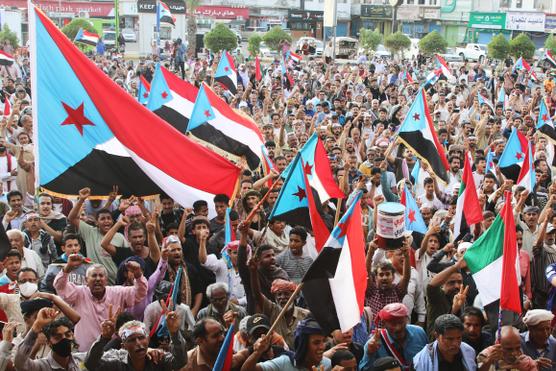
Against this backdrop, the Southern Transitional Council began laying the practical groundwork for secession by issuing a constitutional declaration for what it called the “State of South Arabia” in Yemen, modeled on cases such as Darfur and Somaliland. The move, according to observers, is intended to ease the UAE’s return to the Yemeni scene through a “formal request” from a self-declared separatist entity.
The constitutional declaration states that the “State of South Arabia” is an independent and fully sovereign state, with Aden as its capital and borders defined by the former international boundaries of the People’s Democratic Republic of Yemen.
Michael Ratney, a senior adviser with the Middle East Program at the Center for Strategic and International Studies in Washington, said this is a dangerous moment for the Gulf Cooperation Council, stressing that Washington has a major interest in de-escalation to prevent the conflict from becoming a “free gift to Iran.”
An analysis published by the Progress Center for Policies on December 31, 2025, argued that the Trump administration handled the Saudi-Emirati dispute over Yemen with caution, showing a general inclination to support Yemen’s unity and the internationally recognized, Saudi-backed government. This approach, the analysis noted, was reflected in the absence of any public comment from Trump following Saudi airstrikes on militias aligned with the UAE.
The analysis concluded that U.S. institutions do not view internal conflict among Washington’s allies as an urgent priority, so long as it does not threaten freedom of navigation in the Red Sea or bolster Iranian influence. It raised the question of whether Washington is unable, or simply unwilling, to contain the crisis, particularly given that the Houthis have so far refrained from exploiting the rift militarily.
‘Israel’ Rejoices
The Israeli Occupation has issued no official statements openly backing either side in the Saudi-Emirati clash inside Yemen. Yet Israeli analyses and opinion pieces circulating in Tel Aviv media have clearly revealed a tilt toward Abu Dhabi, driven by hard-nosed interests tied to influence in the Red Sea and a broader impulse to fragment the region and redraw its power maps.
Most Israeli commentary has framed the issue as fundamentally about the Houthis rather than an internal Gulf dispute. Some analysts argue that the Saudi-Emirati confrontation benefits the Houthis and therefore poses a threat to “Israel.” Others contend that, over the medium and long term, the conflict serves Israeli interests by expanding “Israel’s” regional role at the expense of both rival Gulf partners.
In this context, a report published by The Jerusalem Post on December 10, 2025, on rising tensions in Yemen said that strengthening the UAE-backed Southern Transitional Council could yield a potential strategic benefit for “Israel,” opening the door to a new reality in southern Yemen that could be amenable to security or economic cooperation with Tel Aviv.
“Israel’s” quiet support for the deepening Saudi-Emirati rift appears tied to a wider objective: weakening the cohesion of the Gulf Cooperation Council and unraveling what is often described as the pro-Western Arab axis, while reinforcing the bilateral Israeli-American alliance. This outlook also aligns with “Israel’s” apparent backing of the UAE-led separatist current in Yemen, Sudan, and Libya.
Israeli newspapers have reflected a measure of open gloating at the fracturing of this axis, suggesting that its erosion allows “Israel” to deal directly with Washington without the burden of troublesome regional partners.
Against this backdrop, Israeli analyst Zvi Bar’el wrote in Haaretz on January 2, 2025, mocking what he called the “myth” of Gulf unity and the pro-Western axis in the Middle East. He noted that Saudi Arabia and the UAE, despite being partners within the GCC, close allies of the United States, and joint participants in the war against the Houthis, have seen their partnership effectively unravel in Yemen.
Bar’el argued that Yemen has become “one of the places where the ‘axes’ approach that has characterized U.S. and Israeli policy shapers in the Middle East over the recent decades falls to pieces.”
He added that the Abraham Accords are designed to “break walls and make alliances, ensure military solidarity, and serve as a kind of joint security belt that operates according to joint interests that overcome each state’s individual interests.”
This perspective brings renewed attention to the trajectory of the war in Yemen since the launch of Saudi-led Operation Decisive Storm, which initially involved ten countries to varying degrees. Alongside Saudi Arabia and the UAE, Qatar participated before being excluded in 2017, Bahrain and Kuwait contributed limited air support, and Egypt gradually scaled back its role. Jordan and Morocco effectively withdrew, Sudan pulled out after the fall of Omar al-Bashir, and Pakistan’s parliament rejected ground participation from the outset.
In an opinion piece for The Times of Israel, writer Jose Levi Alvarez sharply criticized Saudi Arabia for clashing with the UAE, “Israel’s” close ally, arguing that Riyadh was effectively handing Yemen over to the Houthis, whom he described as “Israel’s” enemies aligned with Hamas.
Alvarez went further, claiming that the continuation of Saudi military operations against UAE-backed southern forces did not reflect strategic foresight but rather institutional weakness and rigid thinking. The immediate result, he argued, was to strengthen the Houthis amid the fragmentation of their opponents.
He concluded that Saudi Arabia faces a stark choice: either recalibrate and engage with actors who control strategic geography and can contain Iranian influence, or continue fighting for “a Yemen that no longer exists,” a reality that, in the final analysis, serves Israeli Occupation interests.
Walking a Tightrope
Reflecting Israeli caution, analyst Yoel Guzansky said that the deepening rift between the two Gulf allies, Saudi Arabia and the United Arab Emirates, may not be an unqualified gain for “Israel” across all arenas and could carry collateral damage for some of its regional interests.
Guzansky argued that the escalating rivalry between Riyadh and Abu Dhabi has negative repercussions for “Israel” on several fronts. He pointed to Sudan, where Saudi Arabia and the UAE back competing sides in the civil war, entrenching instability and delaying the path toward normalization between Khartoum and Tel Aviv.
He also linked “Israel’s” recognition of Somaliland to Gulf competition in the Horn of Africa, noting that the UAE has deep political, security, and economic ties with the separatist authorities there. “Israel’s” move, he said, came within this context, but it also provoked angry reactions from Saudi Arabia toward Tel Aviv.
Despite stressing that “Israel” is standing in the middle of the Saudi-Emirati dispute, Guzansky acknowledged that Tel Aviv is working in close coordination with Abu Dhabi in sensitive arenas such as the Horn of Africa and Somaliland, a contradiction that underscores the limits of this declared neutrality.
He described the growing rift between Riyadh and Abu Dhabi as posing a genuine strategic dilemma for “Israel.” Avoiding a clear position, he warned, can itself be read as an implicit tilt, given Saudi Arabia’s acute sensitivity to any real or perceived attempt to marginalize its regional role.
Sources
- Riyadh and Abu Dhabi: The Rivalry Reaching Israel’s Doorstep
- U.S. Welcomes Saudi and Emirati Leadership Supporting Yemen’s Sovereignty and Regional Security
- Trump Administration’s Position on the Saudi–Emirati Dispute over Yemen
- How Two Powerful U.S. Allies Came to Blows in Yemen
- Analysis A Saudi-UAE Face-off in Yemen Exposes the Myth of a Unified pro-Western Axis
- Southern Yemen separatists push for secession
- UAE-backed forces seize South Yemen oil belt, reshaping war and Gulf power balance - analysis