War in the Holy Month: Who Is Fueling Pakistan–Afghanistan Escalation?
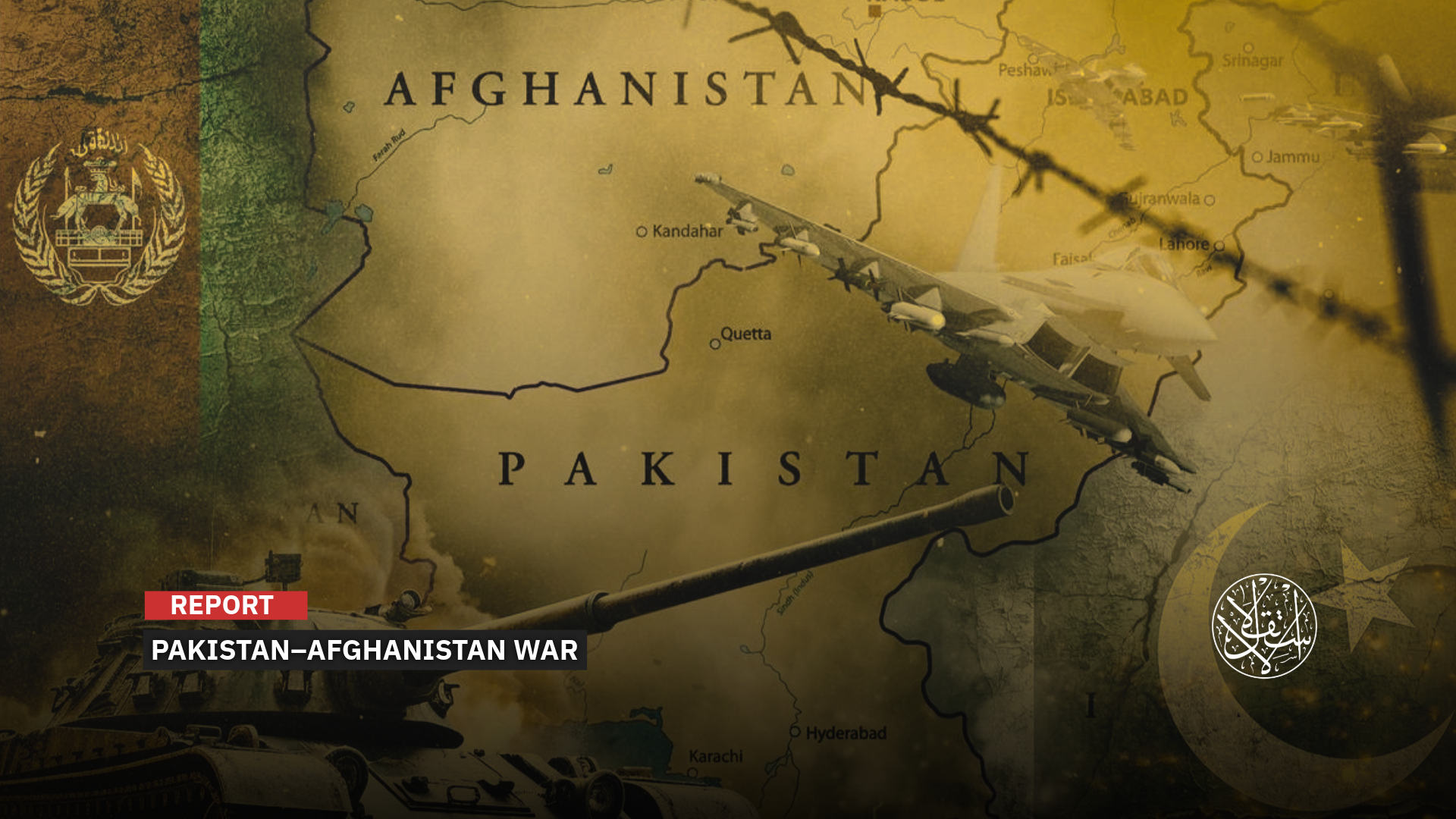
For the first time, Pakistan has struck government targets in the Afghan capital, Kabul.
After months of skirmishes, tit-for-tat attacks, and failed talks, Pakistan has declared what it calls an open war on Afghanistan’s Taliban government. The two sides have traded deadly strikes during Ramadan, hitting sites in both capitals and leaving scores dead.
Islamabad once backed the Taliban during the Soviet occupation and later throughout the U.S. presence in Afghanistan. But rising attacks by the Pakistan Taliban (also known as Tehrik-e Taliban Pakistan) along the border, coupled with renewed activity by Baloch separatist groups, have strained ties since the Taliban returned to power in August 2021.
According to figures the Pakistani military shared with CNN on February 27, 2026, more than 1,200 people, including soldiers and civilians, were killed in militant attacks inside Pakistan in 2025. That toll is nearly double the number recorded in 2021, the year U.S. forces withdrew from Kabul and the Taliban reclaimed control.
Some analysts argue the conflict goes beyond immediate security concerns, pointing to broader regional and international rivalries. They question whether outside powers are fueling the confrontation as part of a wider struggle for influence in South Asia.
Several observers suggest India may be tilting toward Kabul amid its long-standing rivalry with Pakistan, especially after renewed military tensions between the two in May 2025. Others believe Washington has stepped up cooperation with Islamabad as relations with the Taliban have deteriorated since the U.S. withdrawal.
There is also speculation linking the escalation to Indian Prime Minister Narendra Modi’s visit to the Israeli Occupation and comments by Israeli Prime Minister Benjamin Netanyahu about confronting what he describes as Sunni and Shia political Islamist axes, alongside talk of a new regional alignment stretching from India to Africa.
Still, these remain political interpretations that connect local clashes to broader geopolitical contests, underscoring how security concerns and power politics are colliding in an increasingly complex landscape.
What Happened?
Tensions along the Pakistan-Afghanistan border have been building since both sides declared peace talks deadlocked in November 2025. Sporadic gunfire and cross-border clashes soon followed.
Pakistan’s defense minister, Khawaja Asif, warned that Islamabad could slide into open conflict if Kabul failed to rein in the Pakistan Taliban, which Pakistan accused of launching attacks from Afghan territory with the Taliban’s backing.
Afghanistan’s Borders and Tribal Affairs minister, Noorullah Noori, fired back, cautioning Pakistan against a “direct confrontation” and urging it to learn from the fate of the United States and Russia in Afghanistan.
Clashes in October 2025 left dozens of soldiers dead on both sides before mediation led by Turkiye, Qatar, and Saudi Arabia secured a temporary halt in fighting.
But as attacks by the Pakistan Taliban resumed and Pakistani troops were killed, the standoff erupted into an unprecedented escalation on the evening of February 26, 2026. The two sides exchanged airstrikes and shelled major cities, including Kabul and Kandahar. Pakistani raids caused significant destruction in eastern and southeastern Afghanistan, while Kabul said it had targeted 15 border areas and ignited clashes in six villages.
The most dramatic turn came before dawn on February 27, when Pakistan formally declared “open war” on Afghanistan’s Taliban authorities. “Our patience has run out,” Asif wrote on X. “Now it is open war between us and you.”
For the first time, Pakistan struck government targets in central Kabul, as well as Kandahar, the Taliban’s power base. Additional air raids hit Laghman and Nangarhar provinces, targeting Taliban positions.
These strikes marked a major shift. Rather than targeting militants allegedly operating from Afghan soil, Islamabad directly hit sites tied to the Taliban authorities themselves, underscoring a deep rupture between two neighbors that were once close allies.
Casualty figures quickly became a battleground of competing claims. Pakistan’s government spokesperson, Mosharraf Zaidi, said the army had killed 274 Afghan Taliban fighters and wounded 400 others.
Kabul offered a sharply different account, reporting 13 soldiers killed and 22 injured. Taliban spokesperson Zabihullah Mujahid, meanwhile, claimed Afghan forces had killed 55 Pakistani soldiers, captured others, and destroyed 19 military positions.
Afghan army chief Qari Muhammad Fasihuddin was also quoted as saying his forces had launched “retaliatory operations” against Pakistani military posts along the border. He warned that if instability continued, the fight could be pushed deeper inside Pakistan, potentially reaching as far as Islamabad.
Analysts warn that if the escalation continues, the next phase could be far more dangerous. Abdul Basit, a senior associate fellow from the S. Rajaratnam School of International Studies, told CNN that there are “dangerous times ahead,” cautioning that any Afghan retaliation could target major Pakistani cities. Such a move, he said, risks unleashing broader chaos, especially given the Taliban’s growing drone capabilities and unconventional strike tactics.
Was the Taliban Leader Killed?
Conflicting reports swirled over the fate of the Taliban’s supreme leader, Hibatullah Akhundzada, after claims that Pakistani airstrikes hit near the presidential palace in Kabul, and unverified rumors circulated about his death, along with that of Pakistan Taliban leader Noor Wali Mehsud.
Afghan Times initially reported that Akhundzada was not present at the targeted compound during the Pakistani raids, implicitly dismissing reports of his death. The outlet later cited confirmations that the Pakistan Taliban leader had been killed, before subsequently publishing claims that the Afghan Taliban chief had also died—fueling further confusion and deepening the fog of war surrounding the leadership’s fate.
In response, the Taliban government announced what it described as “large-scale” strikes against Pakistani army positions along the border, claiming dozens of Pakistani soldiers were killed, wounded, or captured. Sources in Islamabad acknowledged casualties as well, though the figures differed.
Media outlets in Kabul reported that Afghan authorities had reached out to several Middle Eastern countries to explore ways to halt the escalation and revive talks with Pakistan, following earlier mediation efforts led by Qatar and Turkiye.
According to Afghan sources, the Taliban also moved quickly to contain the crisis, a step some observers viewed as a tactical pullback given its limited air and missile capabilities compared with Pakistan. Reports pointed to internal differences within the movement over how to forcefully respond to the ongoing Pakistani operations.
Given Pakistan’s military edge as a nuclear-armed state, analysts say the Taliban is more likely to revert to asymmetric tactics, drawing on its long experience in guerrilla warfare rather than entering a full-scale conventional war.
What makes the latest round of Pakistani strikes significant is that they targeted Taliban government facilities instead of terrorist targets in Afghanistan, Michael Kugelman, a senior fellow for South Asia at the Atlantic Council, told the BBC’s Newsday program.
“It’s now targeting the regime itself,” he said.
Internal and Regional Drivers
The escalation between Pakistan and the Taliban can be understood as the product of overlapping domestic pressures, regional rivalries, and a broader contest for international influence.
At home, the core of the crisis lies in Islamabad’s accusation that the Taliban government in Afghanistan is allowing the Pakistan Taliban to use Afghan territory as a safe haven to plan and launch cross-border attacks.
Beyond the borders, some analysts and commentators on social media frame the conflict as part of a broader regional axis struggle, where the interests of three major powers, India, China, and the United States, intersect. According to this view, each backs a different partner in the region. Still, there is no solid analytical consensus supporting this theory, and much of it remains speculative.
Inside Pakistan, some citizens have pushed back against the military escalation, arguing that the armed forces are dragging the country into unnecessary conflicts. On social media, critics accuse the military leadership of turning Pakistan into a pawn in wider international struggles, a narrative that highlights the political divisions running through Pakistani society.
Pakistan, for its part, accuses Kabul of providing a safe haven for militant activity along the border, particularly in provinces like Paktia, Khost, Nangarhar, and Kunar, from where attacks on the Pakistani military are launched.
Pakistan points to a series of attacks since late 2024, including an assault in the Bajaur region that killed 13 military personnel and civilians, linking them to militants based in Afghanistan. The Taliban government, however, dismisses these claims as a pretext for Pakistan’s military operations.
Even without official Taliban backing for the attacks, Pakistan argues that the Afghan authorities’ weak control over border regions makes them partly responsible for militant activity.
As tensions escalated, Pakistan launched airstrikes and cross-border operations targeting militant hideouts, extending deeper into Afghan territory for the first time after Afghan forces engaged and struck Pakistani border sites.
The situation is further complicated by geography: border areas like Chitral, Khyber, Mohmand, and Kurram feature rugged mountains and dense forests, creating ideal conditions for guerrilla warfare and ambushes.
Reports from the International Crisis Group (ICG) note that Islamabad gradually shifted from diplomacy to military pressure after losing patience, especially following the near-escalation of clashes in October 2025, which were only contained by regional mediation led by Turkiye, Qatar, and Saudi Arabia.
Pakistan also applied additional pressure by closing borders, restricting bilateral trade, and tightening controls on Afghan refugees, deporting hundreds of thousands—including journalists and human rights defenders—while enforcing strict visa requirements.
Militarily, Pakistan faces challenges in coordinating operations between the army and police along the porous border, particularly against groups like the Pakistan Taliban and Baloch separatist fighters in the southwest.
The conflict also has historical roots in the Durand Line, drawn by Britain in 1893 during the colonial era. Afghanistan refuses to recognize it, viewing it as an imposed line that divides Pashtun tribes, while Pakistan treats it as its official international border.
The Taliban government, in contrast, insists that the conflict with Pakistan is an “internal matter,” denying any interference in its affairs. It calls for dialogue and a peaceful resolution, emphasizing that its military operations fall under its “legitimate right to self-defense” against external threats.
Sources
- Afghan Taliban open to talks after Pakistan bombs Kabul, Kandahar
- What we know after latest escalation in Pakistan-Afghanistan tensions
- Pakistan’s defense minister says latest clashes with Taliban mean ‘open war.’ What’s happening?
- Pakistan: Responding to the Militant Surge on the Afghan Border
- Airstrikes hit Afghan capital of Kabul, hours after Afghanistan attacks Pakistan