After Iran’s Decline: Is Turkiye 'Israel’s' Next Target in the Middle East?
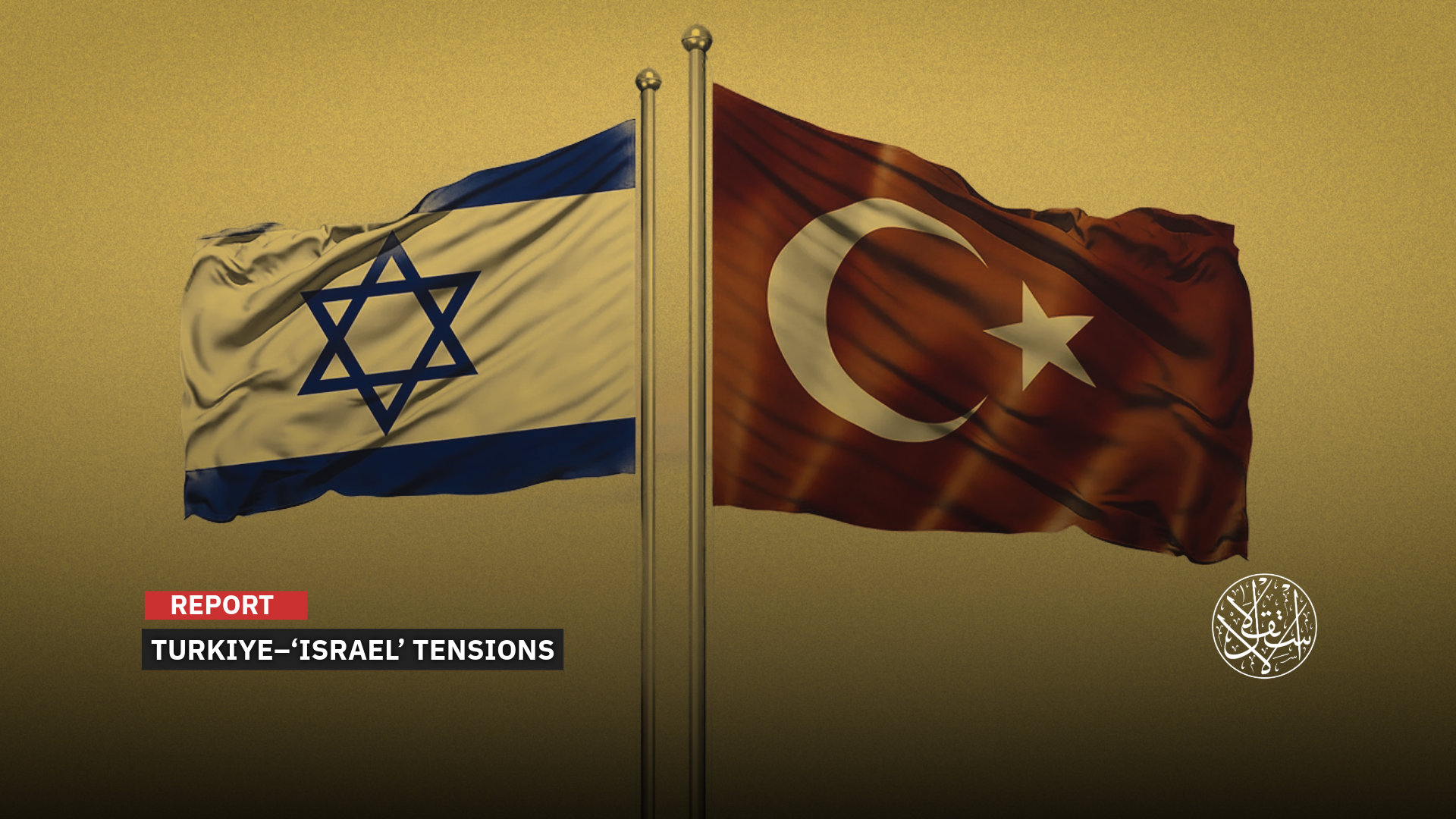
“Turkiye’s NATO membership and regional influence make any potential Israeli attack prohibitively costly.”
Following the dramatic developments in Iran, many experts and researchers have begun questioning the next target of Tel Aviv and Washington, who have made no secret of their aim to reshape the Middle East based on the gains achieved through a war on Iran.
Recently, some are discussing Turkiye as Israel’s potential next target, especially given the current state of tension and strain in Turkish-Israeli relations due to Israel's genocidal actions in the Gaza Strip.
With the escalating rhetoric of Israeli officials against Ankara, “Israel” appears to be attempting to portray Turkiye as a direct enemy, while many voices warn against the dangers of acting rashly toward a rising regional power and NATO member.
Amid the rapidly escalating regional turmoil, the Israeli-American war on Iran, and its repercussions on Gaza, Lebanon, and the rest of the region, a recurring question in political circles arises: Could the disagreements between “Israel” and Turkiye escalate into a direct military confrontation?
Expansionist Ambitions
Turkish media outlets and pundits have increasingly discussed claims that Israel could shift its focus to countering Turkiye after its operations aimed at weakening Iran.
This narrative gained momentum after the US and “Israel” launched strikes on Iran, with many in Turkiye highlighting former Israeli Prime Minister Naftali Bennett's recent remarks describing Turkiye as the new Iran.
Bennett considered President Recep Tayyip Erdogan a cunning and dangerous adversary, reflecting the extent of Israeli concern about Turkiye's growing role in sensitive regional issues.
US think-tanker Michael Rubin's questioned whether Ankara in 2036 will be like Tehran in 2026, sparking a major reaction from Turkish social media users.
Political analyses indicate that decision-making circles in Tel Aviv have begun to place Turkiye on their list of future targets, driven by fears of its increasing regional influence.
For months, pro-“Israel” media outlets have steadily escalated their rhetoric against Turkiye, portraying it as Israel’s most dangerous enemy.
Israeli commentators have also framed Turkiye’s presence in the eastern Mediterranean as a threat and its role in rebuilding post-war Syria as a new rising danger.
This means that Turkiye is emerging as a future strategic challenge for “Israel”. The Nagel Committee, tasked with reviewing the military budget, even submitted its recommendations to the government, stating that Turkiye represents a real threat.
Observers believe that promoting the idea of targeting Turkiye is sometimes aimed at pushing Ankara into forced alliances or pressuring the Turkish people to change their government's policies.
Nevertheless, Israel's expansionist ambitions and its desire to reshape the map of the Middle East according to its interests remain an undeniable reality, especially given the repeated pronouncements about the so-called Greater Israel project.
Benjamin Netanyahu, who seeks to weaken his rivals and empower loyal forces in the region, is watching with concern the noticeable improvement in Turkish-Saudi and Turkish-Egyptian relations.
This Arab-Turkish rapprochement represents an obstacle to Israeli ambitions to unilaterally determine the region's fate and reshape its security alliances, disregarding national principles.
Ankara is well aware of the extent of Israeli unease regarding its support for the Palestinian Cause and Hamas, and takes Tel Aviv's threats very seriously.
Accordingly, the Turkish leadership is working to close any potential security gaps, drawing on the harsh lessons learned from the recent military confrontation between “Israel” and Iran.
On the other hand, observers believe that if Iran ceases to be an influential regional power, “Israel” may seek to:
- Prevent the formation of any alternative axis, especially one based on an Arab-Turkish partnership that could reshape the balance of power.
- Neutralize Syria permanently to prevent it from becoming a strategic link between Ankara and the Arab world.
- Redefine the concept of stability in the region, so that it becomes synonymous with integration into the Israeli-led system, rather than challenging or opposing it.

Israeli Adventure
Despite the harshness of Israeli rhetoric, the balance of military power and the complexities of the global order impose a different reality when discussing a direct confrontation with Turkiye.
Turkiye possesses the second largest army in NATO and enjoys land, sea, and air offensive capabilities that far exceed those of other parties to conflicts in the region.
Ankara's membership in NATO means that any direct military aggression against it would put the region at risk of triggering Article 5 of the NATO treaty, which considers an attack on one member state an attack on all.
Even if the alliance does not take immediate military action, as it did during the tensions between Turkiye and Russia, the mere possibility of NATO involvement raises the political and military cost of any military adventure to an unsustainable level.
Europe's need for a strong and stable Turkiye is growing in light of the ongoing Russian-Ukrainian war, both to secure energy supplies and to prevent waves of displacement and illegal immigration that threaten European security.
Therefore, the assumption of a direct or indirect Israeli confrontation with Turkiye would also place Israel in open conflict with European countries, something “Israel” cannot afford.
Politically, the Turkish approach differs fundamentally from the Iranian one, as Ankara adopts the two-state solution, which enjoys broad international consensus.
This diplomatic stance makes it difficult for “Israel” to convince its Western allies of the necessity of targeting Turkiye under the pretext of a threat to global security, especially given the continued existence of diplomatic relations.
Geopolitics plays a crucial role in protecting Turkiye, as it lies at the crossroads between East and West, and European capitals consider it a bulwark of stability for the continent.
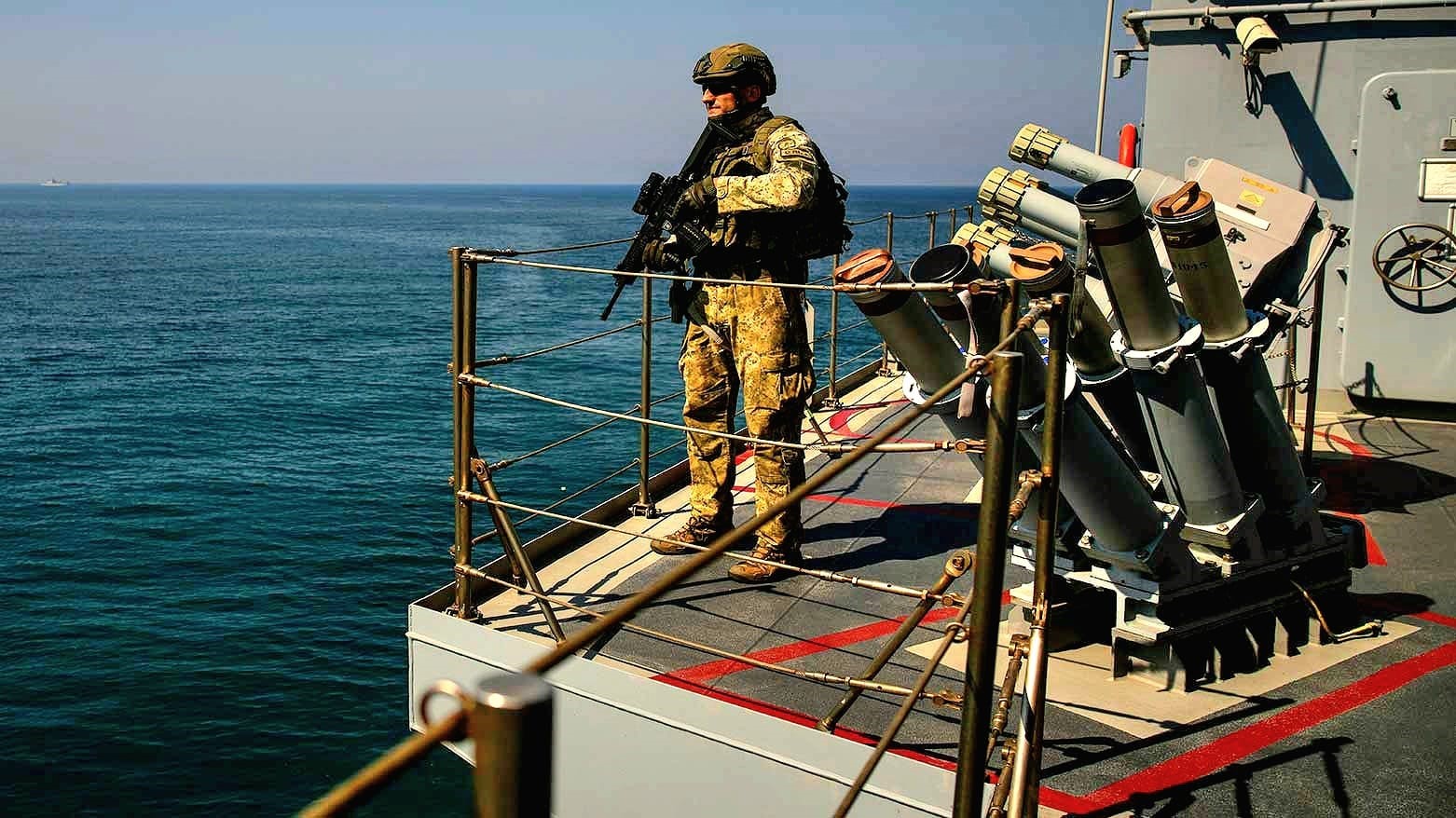
Military Doctrine
Despite the sharp tensions that have characterized bilateral relations over the past two decades, particularly in light of the Israeli aggression against Gaza and the energy conflicts in the Eastern Mediterranean, the relationship between Ankara and Tel Aviv has not deteriorated into a state of military hostility.
Furthermore, there have been no direct clashes between the two sides, and there is no declared military doctrine that considers the other a strategic enemy.
It is true that relations have experienced cycles of tension and rupture, but each time these were followed by a gradual normalization, reflecting the existence of permanent channels of communication that prevent a slide into direct confrontation.
Over the past two decades, the Turkish military industries have undergone a qualitative transformation, with Turkiye moving from a country heavily reliant on military imports to one striving for self-sufficiency.
Today, Turkiye is among the top 15 arms exporters globally, with its exports expanding to Africa, Asia, and Eastern Europe, thus solidifying its position as a regional power with independent military decision-making.
Therefore, any direct military confrontation would not be a swift strike, but rather an open-ended regional war with a heavy human and economic cost for both sides, with the potential to escalate and involve other parties.
This balance does not preclude tension, but it makes the option of direct war an irrational choice in strategic calculations.
In recent years, “Israel” has focused primarily on the Iranian threat, whether concerning Iran's nuclear program, ballistic missiles and drones, or its regional expansion through its proxies in Lebanon, Iraq, and Yemen.
Therefore, talk of opening a new front of conflict with a regional power the size of Turkiye is unrealistic and would dissipate resources and undermine its focus on what it considers the main threat to its national security.
A direct confrontation between Turkiye and “Israel” is highly unlikely in the short and medium term.
But this does not preclude indirect friction in several arenas, most notably Syria, where security interests intersect, and the Eastern Mediterranean region, given the competition over gas and maritime border demarcation.
Similarly, in Africa, both Ankara and Tel Aviv have a strong presence, as evidenced by Israel's official recognition of Somaliland as an independent state, aimed at containing Turkiye's strong presence in Somalia.

Political analyst Mahmoud Alloush explained to Al-Estiklal that while “Israel” is preoccupied with trying to dismantle fronts one by one, Turkiye appears to be in a military and political position that qualifies it to deter any attempt to cross the red lines that infringe upon its national sovereignty.
“The stability of the region depends largely on the balance of power, and any Israeli attempt to harm Turkiye could lead to a comprehensive explosion whose consequences neither Washington nor Europe can bear,” he added.
“Hence, the importance of Turkish strategic awareness in dealing with threats becomes clear, along with the continued strengthening of its self-defense capabilities as the only guarantee in a world that recognizes only power,” he concluded.