Egyptian Pound Falls Again Against the Dollar: What’s Happening in the Currency Market?
Geopolitical risks have caused the current crisis affecting the Egyptian pound.
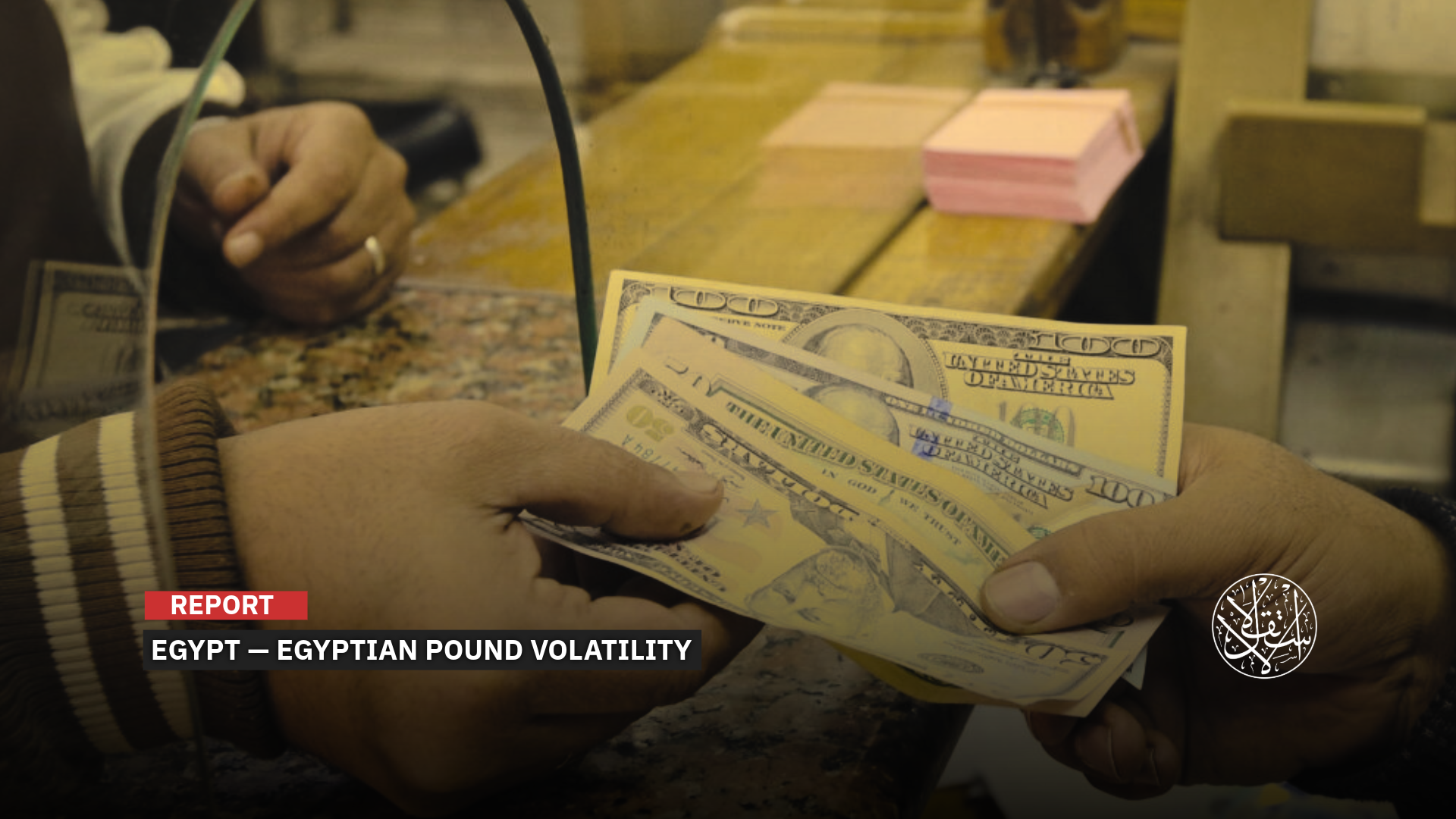
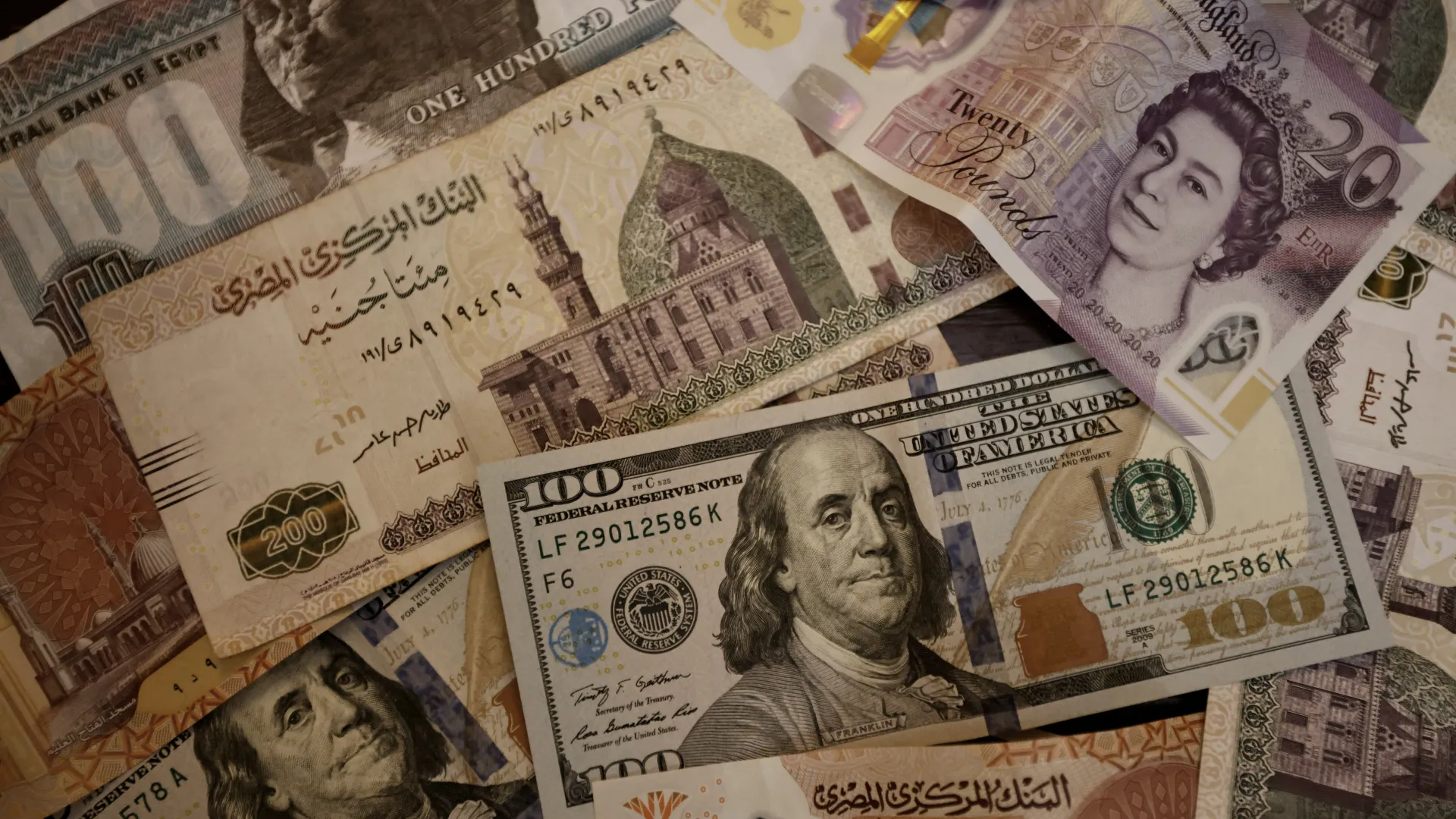
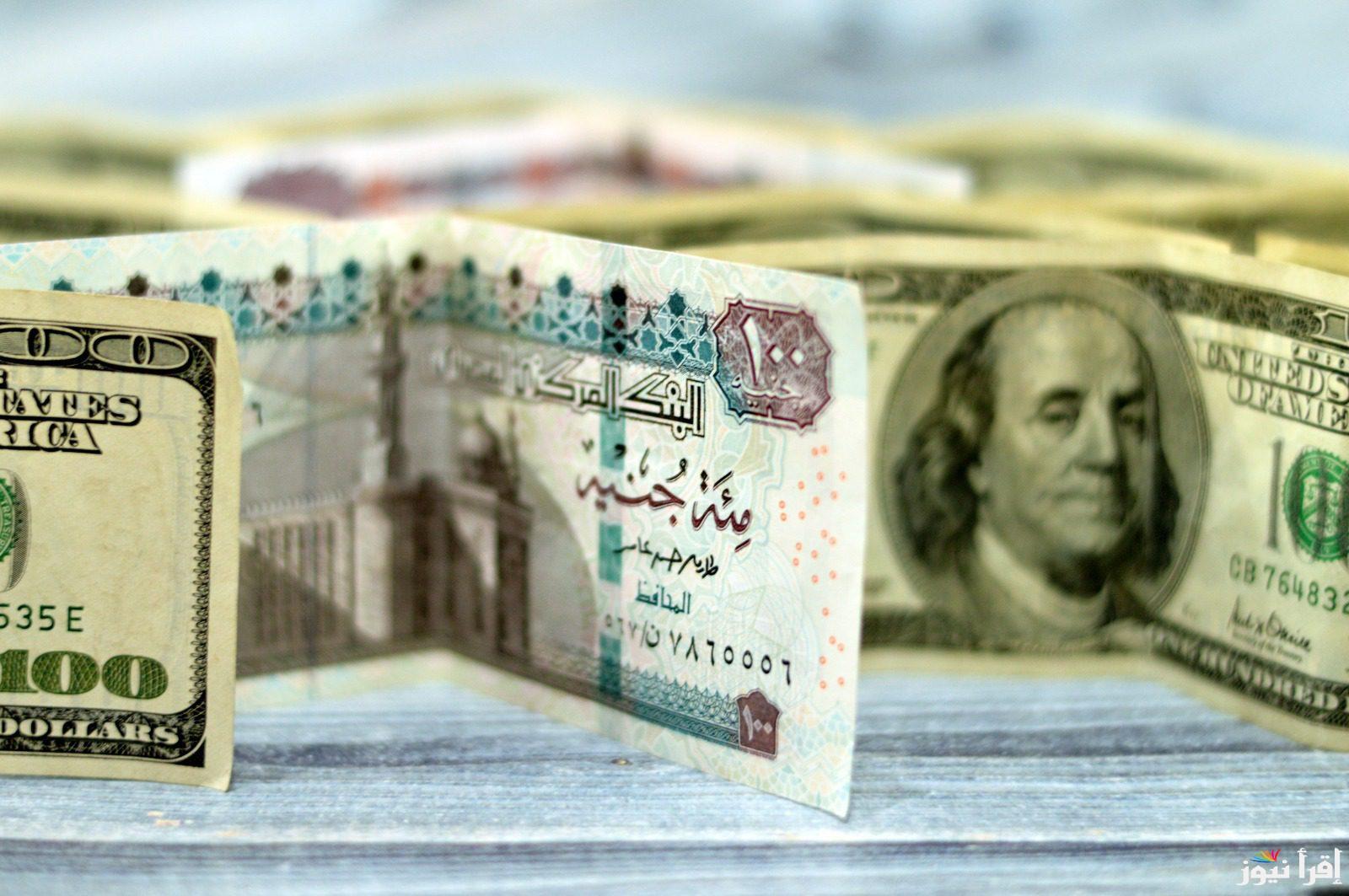
At a moment when Egypt’s foreign exchange market appeared increasingly sensitive to fluctuations, the U.S. dollar has once again approached the level of 48 Egyptian pounds, raising a new wave of questions about the future of the pound and the path of monetary stability in the coming period.
The movement seen in the market was not striking only because of the number itself, but also because of its timing, after months of relative calm during which economic policies had sought to stabilize the currency’s exchange rate.
This development raises questions about the nature of the pressures facing the pound, and whether what is happening is merely a temporary rebound linked to seasonal factors or external tensions, or the beginning of a new phase testing the market’s strength in a year in which the government is relying on financial inflows from international partners, led by the International Monetary Fund (IMF), in addition to remittances from Egyptians abroad and foreign currency reserves as key pillars of stability.
Three Tracks
The recent decline in Egypt’s foreign exchange market can be explained by the interaction of three main tracks that appeared simultaneously, according to the website Mada Masr.
The first track is linked to the financing rhythm of the economic reform program agreed with the International Monetary Fund, as the market is affected by the size and timing of the release of financial tranches and the conditions attached to them.
The second track relates to the movement of short-term capital, commonly known as “hot money,” which has recently seen a sudden shift toward exiting emerging markets, increasing pressure on the local currency.
The third track is connected to the broader external environment. Geopolitical tensions in the region have led to higher assessments of investment risk, which has been reflected in the cost of holding the Egyptian pound within international investment portfolios.
On February 26, 2026, the IMF’s executive board announced the completion of the fifth and sixth reviews of Egypt’s program under the Extended Fund Facility, as well as the first review under the Resilience and Sustainability Facility, allowing the disbursement of about $2 billion under the Extended Fund Facility and $273 million under the Resilience and Sustainability Facility.
However, despite praising improvements in macroeconomic indicators, the IMF noted that the pace of structural reforms remains slower than expected, particularly with regard to reducing the state’s role in the economy and accelerating the asset sale program, while the continued burden of debt and rising financing needs remain a major source of pressure on public finances.
Even so, the release of about $2.3 billion did not calm the market to the extent that might have been expected in earlier periods. Local reports indicated that the IMF linked any additional financing to the completion of the seventh review of the program.
Messages coming from international financial institutions also stressed the need to accelerate the government’s public offering program, enhance exchange rate flexibility, and continue efforts to control public debt and rationalize spending.
In the market, this was interpreted as a shift toward conditional financing rather than open flows, contributing to a higher risk premium associated with the Egyptian pound.
Persistent Anxiety
Alongside the financing file with the International Monetary Fund, the issue of hot money remains one of the most sensitive factors in Egypt’s economic landscape.
Reuters, in its coverage of the IMF’s decision, noted that improvements in macroeconomic indicators do not dispel concerns over the slow pace of structural reforms, given the Egyptian economy’s heavy reliance on inflows from short-term investment portfolios.
When a significant portion of foreign currency entering the market comes from foreign investments in debt instruments denominated in Egyptian pounds, any increase in global risk levels quickly shifts investor behavior, as they move to increase demand for dollars in the local market.
The Central Bank of Egypt regularly publishes data on secondary market operations for treasury bills denominated in pounds, reflecting the volume of activity in this market and its sensitivity to changes in yields and financial risk indicators.
Local reports indicate that in the days preceding the dollar’s rise, the secondary market experienced a wave of selling in some investment positions in local currency, effectively liquidating pound-denominated assets in preparation for a shift to dollars and an exit from the market, a pattern typically observed during hot money outflows.
These pressures are compounded by external factors related to the geopolitical environment.
Reports published by Bloomberg on February 26, 2026, noted that Egypt’s tranche of IMF financing arrived amid relative turmoil in global financial markets, with concerns over a potential escalation between the United States and Iran, a type of tension that usually drives short-term capital out of emerging markets.
Although these pressures are not unique to Egypt, their impact is greater in countries with high external financing gaps that continuously need to refinance portions of domestic and foreign debt, turning regional tensions quickly into direct pressure on the currency through investment portfolio movements.
The pound’s decline cannot be attributed solely to foreign investment outflows. Seasonal domestic demand also plays a significant role, as the approach of Ramadan increases imports and the demand for dollars to cover food and consumer goods imports, as well as payments by traders and importers who had postponed their obligations.
This pattern explains why exchange rates may experience temporary spikes even in the absence of fundamental changes in core economic indicators, highlighting the difference between monetary calm and true stability.
The former implies an absence of shocks, while the latter means the market can absorb shocks without disrupting overall balance.
Government Stakes
The Egyptian government is betting, in the face of these shocks, on what it considers a safety net of reserves and remittances.
The Central Bank of Egypt announced in an official statement on February 5, 2026, that net international reserves had reached $52.5938 billion at the end of January 2026.
This is not just a number. Reserves serve as the first line of defense when demand for dollars rises, whether to meet the needs of strategic goods or to calm excessive market volatility.
But reserves alone are not a substitute for sustainable inflows, which is why remittances take on particular importance. The same month was full of positive developments on this front.
On February 23, the Central Bank of Egypt reported that remittances from Egyptians working abroad reached an unprecedented $41.5 billion in 2025, a 40.5 percent increase compared with 2024.
This improvement in remittances partly explains why the pound appeared more resilient in 2025 compared with the peak turbulence of 2022–2024, but it does not change the fact that the Egyptian economy remains sensitive to three main sources of dollars: remittances, tourism, and the Suez Canal.
In particular, the Suez Canal has become a source of global concern since the Houthi attacks on shipping routes in the Red Sea, which forced vessels to reroute around the Cape of Good Hope.
Fund Equation
The Associated Press reported on February 26, 2026, that disruptions linked to regional developments, including Houthi attacks in the Red Sea, have had a negative impact on revenues from the Suez Canal, one of Egypt’s main sources of foreign currency.
The coverage noted that the attacks forced part of international shipping traffic to reroute away from the canal, reducing revenue flows associated with maritime activity and indirectly adding pressure on the local currency.
The challenge is no longer limited to short-term capital movements, but extends to one of the Egyptian economy’s key dollar arteries.
At the center of the economic landscape is the IMF-linked reform program, whose latest statement went beyond specifying the financial disbursement, also confirming the policy framework for the next phase, including continued exchange rate flexibility and tighter monetary and fiscal measures.
According to reports published by Reuters, these policies helped bring inflation down from a peak of around 38 percent in September 2023 to approximately 11.9 percent in January 2026, marking a relative improvement in price indicators.
The reports also noted that the recent easing of foreign currency shortages was supported by external financial inflows, including international financing, tourism revenues, remittances, and investment deals from Gulf countries.
The fundamental challenge, however, is that this stability is not built on increased domestic production or export expansion, but relies heavily on external financial inflows, leaving the economy vulnerable to any slowdown, delay, or tightening of international financing conditions.
The effects of the pound’s rapid depreciation appear across three main circles. The first is prices, as a weaker currency raises import costs, potentially threatening the decline in inflation and placing monetary policy in a difficult position between allowing exchange rate adjustments and absorbing inflationary pressures, or resorting to tighter financial and monetary measures that could affect economic growth.
The second circle relates to public finance, where IMF estimates suggest that high public debt and elevated financing needs continue to constrain the fiscal space available to the government, putting pressure on Egypt’s medium-term growth trajectory.
The third circle concerns market confidence, as Egypt’s foreign exchange market is highly sensitive to political and financial signals.
Any talk of delays, tightening, or uncertainty in international financing flows can prompt operators to increase precautionary demand for dollars, maintaining a fragile balance between supply and demand for foreign currency.
Volatile Policy
Dr. Hisham Mohsen, an expert in financial markets and the stock exchange, said that what the Egyptian pound is currently experiencing cannot be described as a full-blown crisis, but at the same time, it does not represent a price movement isolated from the course of economic policy over recent years.
In an interview with Al-Estiklal, he explained that the pound’s decline, coinciding with a more than 100 percent increase in interbank market trading volume, reflects real pressure on dollar demand within the market, not just temporary technical fluctuations.
He added that interpreting the indicators should not be limited to the size of the price drop alone, but also its economic significance.
The rise in trading at this scale indicates growing demand for foreign currency from both importers and investors.
Mohsen noted that Egypt’s monetary policy in recent years has exhibited a degree of volatility, alternating between periods of unofficial exchange rate stabilization, sudden currency liberalization, and interventions aimed at calming the market, a pattern that has created a constant sense of anticipation among foreign exchange operators.
He emphasized that the liberalization of the pound has not always been an entirely independent economic choice, but has also been tied to conditions linked to IMF financing programs.
Exchange rate flexibility is a core commitment within these programs, and any delay in its implementation can affect the timing of disbursements and increase pressure on the market.
He added that the pound’s relative stability during previous periods was not the result of a structural transformation in the economy, but rather reflected external financial inflows, including international financing, hot money, and remittances from Egyptians working abroad.
This made stability dependent on the continuation of these flows rather than on increased production or exports.
Mohsen warned against heavy reliance on short-term capital, commonly known as hot money, which moves according to yield and risk assessments and can exit emerging markets rapidly during political or military tensions, including developments in the Gulf region or tensions between the United States and Iran.
He also highlighted the risks of so-called herd behavior in financial markets, where the exit of some investors can prompt others to follow suit, accelerating pressure on the local currency.
He cited the experience of 2022, when foreign outflows estimated at around $22 billion exited the Egyptian market within a short period, illustrating how declining confidence can trigger sharp and rapid price movements.
Mohsen further noted that public debt remains one of the largest economic challenges, given the high dollar-denominated obligations on the Central Bank of Egypt this year, necessitating debt restructuring through longer repayment terms and lower financing costs, both domestically and externally.
He concluded that escaping the cycle of currency fluctuations requires a structural transformation in the Egyptian economy based on boosting productivity, increasing exports, and achieving sustainable growth in foreign currency sources, rather than relying solely on daily management of the dollar’s exchange rate or temporary interventions in the foreign exchange market.
Sources
- Pound Under Pressure: Why Has the Egyptian Currency Dropped Again Against the Dollar After Months of Stability? [Arabic]
- Egyptian Pound Drops to LE47.9 Against the Dollar
- IMF Completes Egypt Reviews Unlocking About $2.3 Billion
- Net International Reserves Reach US$52,593.8 Million at the End of January 2026
- IMF Reverses $400 Million Disbursement to Pressure Egypt to Devalue Pound and Sell Public Assets [Arabic]