From Global Aspirations to Regional Isolation: How Sanctions Cornered Hemedti
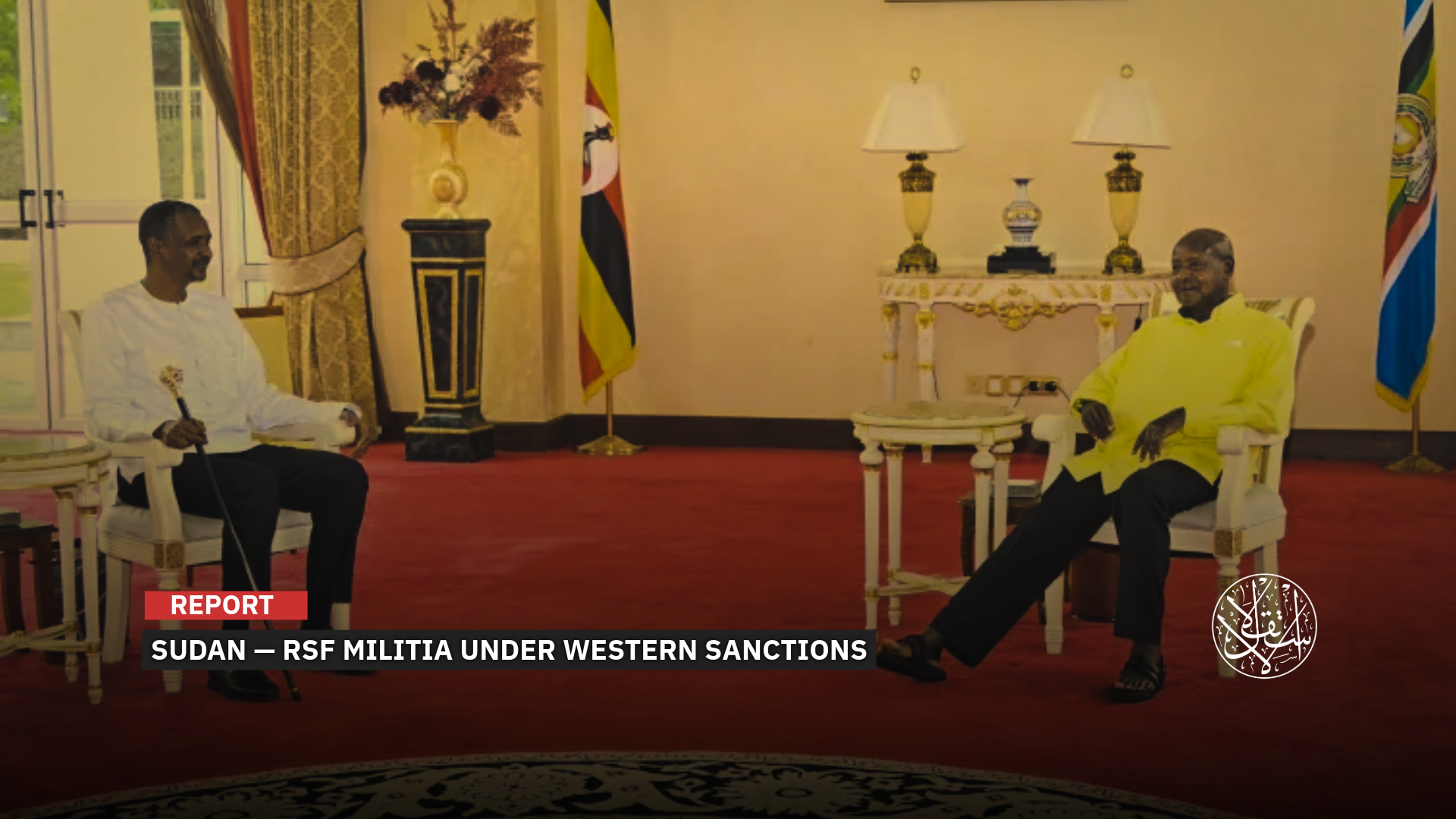
Sudan’s Foreign Ministry described the reception of Hemedti in Uganda as direct support for genocide crimes.
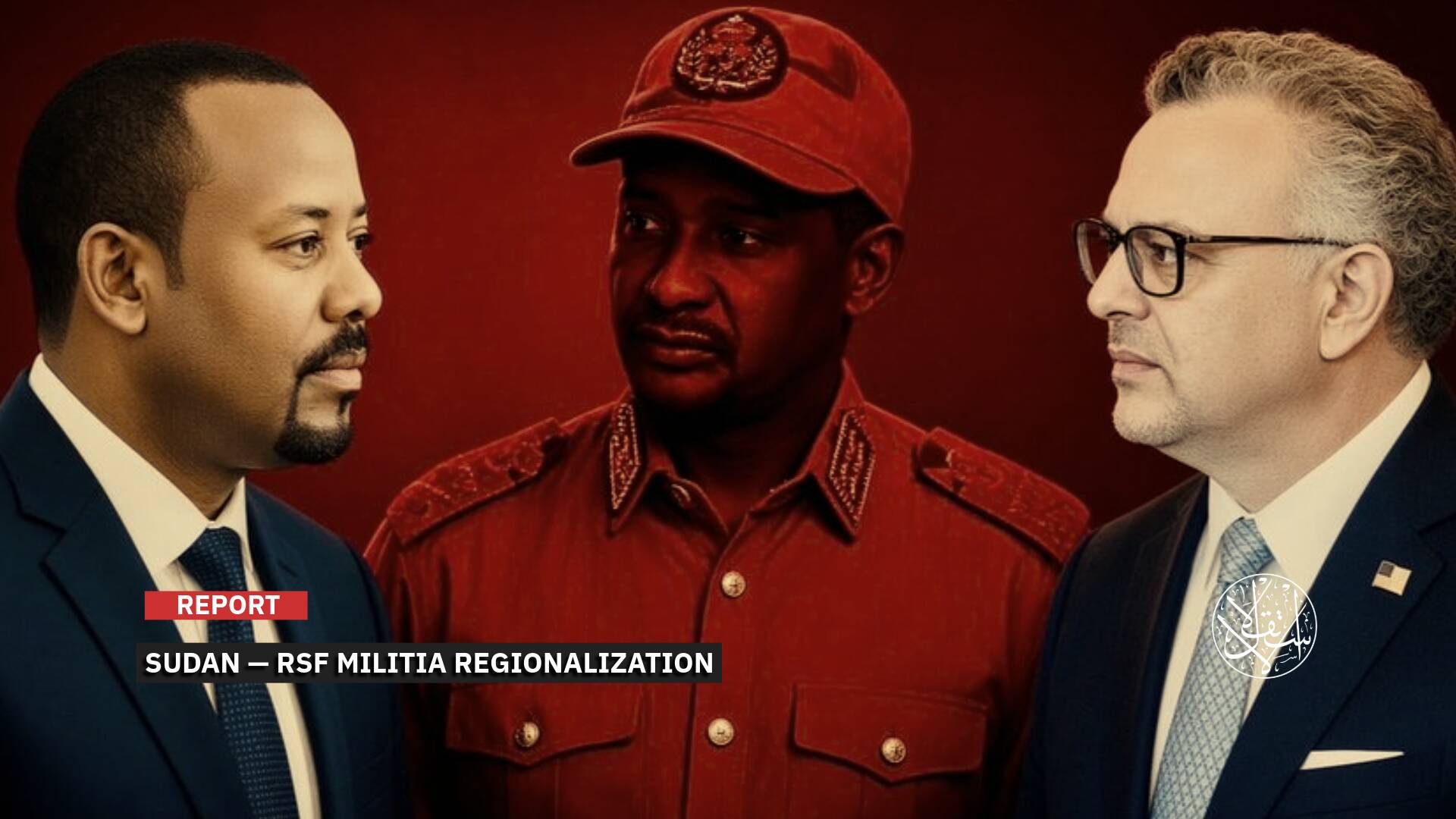
On February 24, 2026, the UN Security Council delivered a fresh political and legal blow to Sudan’s Rapid Support Forces (RSF) militias, placing several of its top commanders under sanctions, including its leader Mohamed Hamdan Dagalo, widely known as Hemedti. The move, issued under Resolution 1591, imposed travel bans and asset freezes on the militia’s senior leadership.
The decision was far from routine diplomacy. It marked a formal international acknowledgment that the RSF command bears responsibility for documented atrocities in Darfur, and it reinforced growing U.N. assessments that the violence in el-Fasher amounts to organized genocide.
The sanctions targeted Hemedti’s inner circle, including his brother and deputy Abdul Rahim Dagalo, along with Gedo Hamdan Ahmed, Brigadier General al-Fatih Abdullah Idris, and field commander Tijani Ibrahim Moussa Mohamed.
These figures sit at the heart of the RSF’s military and political command structure, meaning the measures struck directly at the militia’s operational leadership rather than symbolic figures.
When the top command of an armed group lands on international sanctions lists, the message goes well beyond political condemnation. It effectively reframes the group’s legal status, signaling that it is viewed not merely as a party to a domestic conflict but as an entity responsible for grave crimes warranting isolation and accountability.
UN reports, later echoed by Western governments, have described mass killings and systematic attacks against local communities in Darfur under conditions that were calculated to cause large-scale physical destruction. Diplomats told the Associated Press (AP) that the violence led by Hemedti’s forces in el-Fasher amounts to a full-fledged act of genocide.
Entebbe: A Bid to Break Isolation
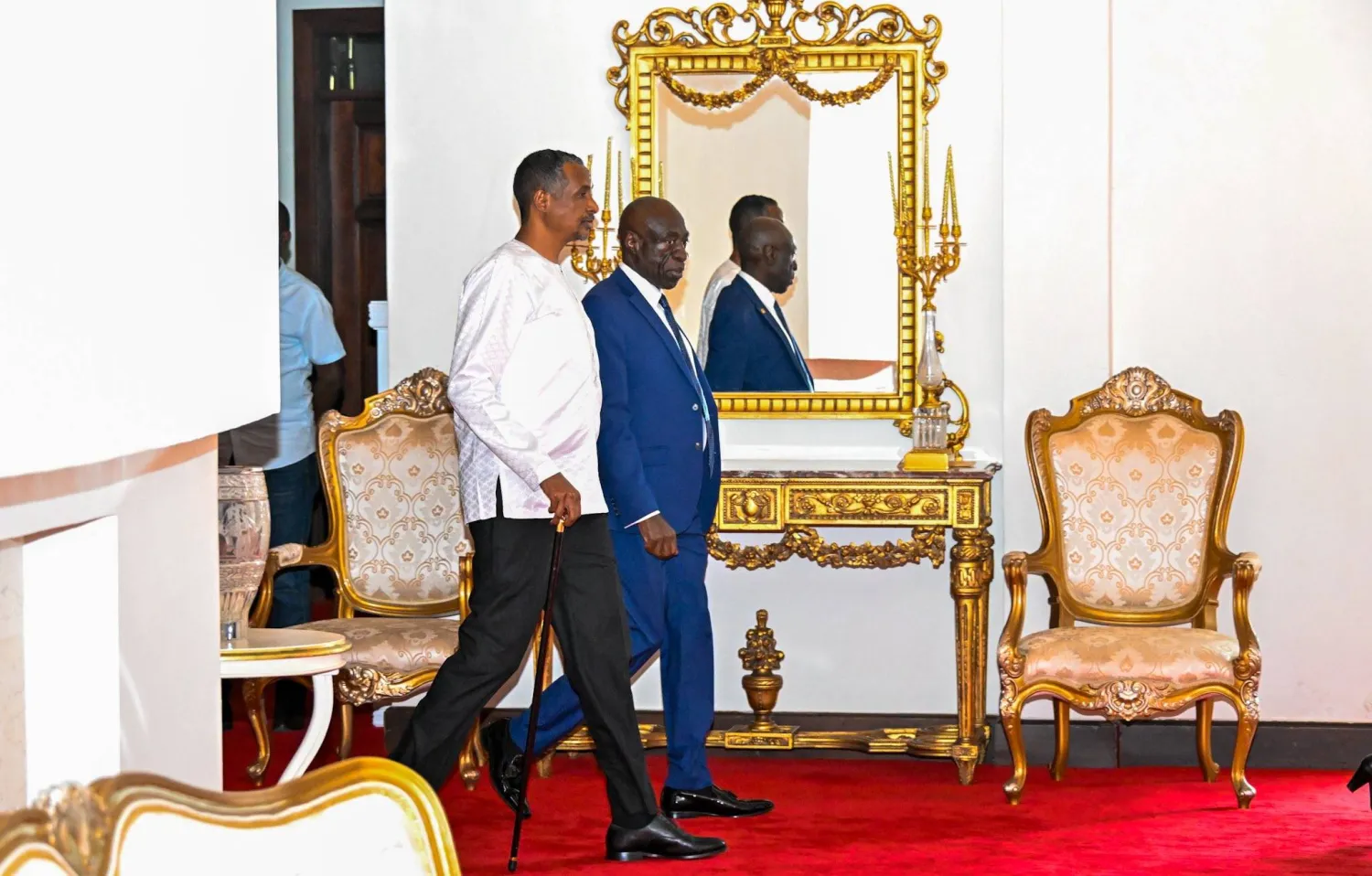
Hemedti’s appearance in the Ugandan city of Entebbe and his meeting with President Yoweri Museveni carried significance that went far beyond diplomatic protocol. The visit looked less like routine political outreach and more like an attempt to break the tightening circle of international isolation around him and his forces.
Sudan’s Foreign Ministry condemned the reception in a statement issued on February 22, 2026, calling it direct support for genocide crimes and arguing that the move violated the norms governing relations between states.
The criticism was not merely rhetorical. Sudanese officials framed their objection on legal and political grounds, arguing that hosting leaders accused of war crimes carries serious moral and diplomatic consequences. When a figure linked to reports of mass killing, forced displacement, and genocide is welcomed by a foreign government, the gesture is widely read as political alignment, even if presented under the language of mediation or peace efforts.
The Entebbe meeting also marked Hemedti’s first public appearance since September 2025. It came at a moment of intensifying international pressure to secure a nationwide humanitarian ceasefire in Sudan, where a war that began in April 2023 has killed tens of thousands and displaced roughly 13 million people, creating one of the world’s worst humanitarian crises.
Between tightening sanctions and diplomatic maneuvers abroad, the RSF militia now finds itself fighting a battle that is as political as it is military. The emerging equation is clear: mounting international isolation on one side and a scramble for regional footholds on the other.
Limited Arenas, Mounting Scrutiny
In Kampala, Mohamed Hamdan Dagalo sought to recast himself as a figure open to peace and supportive of an “African solution” to Sudan’s crisis. Yet the international context surrounding him has sharply narrowed the impact of that message.
The United States had already labeled the crimes committed by the RSF in Darfur as genocide, imposing sanctions directly on Hemedti. That designation carries far more than political symbolism. Any public engagement with him is now scrutinized under the lens of international accountability.
Britain followed with its own sanctions in December 2025, targeting RSF commanders, including figures later added to the UN Security Council’s sanctions list over atrocities reported in el-Fasher.
When UN sanctions overlap with American and British measures, the space for international movement shrinks dramatically. The restrictions are not only about the practical ability to travel. They also shape the legitimacy of hosting such figures and the political signals those meetings send.
The result is that Hemedti no longer moves across the global stage as he once did. His travel has largely narrowed to a small regional circle, with Uganda and Kenya emerging as key destinations. This is not a geographic coincidence but a direct reflection of sanctions and the mounting weight of international accusations, which have effectively redrawn the boundaries of his political and diplomatic reach.
Uganda, now one of the few places where Dagalo still appears publicly, has long been surrounded by questions about its relationship with the RSF.
In November 2024, Africa Intelligence reported near-daily cargo flights moving between Uganda, Sudan, and South Sudan, fueling suspicions of possible logistical support for the RSF.
A UN panel of experts also pointed in January 2024 to what it described as a “credible” possibility that weapons were reaching the RSF through airports in Uganda, Rwanda, and Kenya as part of a cross-border supply network.
Earlier still, The Wall Street Journal (WSJ) reported in August 2023 that a shipment believed to contain weapons had passed through Entebbe Airport under the cover of humanitarian aid. According to the newspaper, ammunition and assault rifles were later discovered inside the cargo crates.
None of these reports amounts to a formal accusation against Uganda. But their circulation in major international outlets has increasingly tied the country’s name to controversial supply routes linked to the RSF.
Kenya, meanwhile, appears in the current narrative as another node in Hemedti’s political activity. Sudanese diplomat Ambassador al-Obeid Ahmed Muraweh has said the RSF leader sometimes stays in Kenya and manages parts of his communications from there, consistent with Nairobi’s earlier role as a platform for political activity tied to the force.
Taken together, the picture reflects a striking shift. The man who once sought broad international visibility now operates within a far narrower regional arena, hemmed in by sanctions and political pressure that have steadily reshaped the map of his movements and alliances.
A Search for Legitimacy
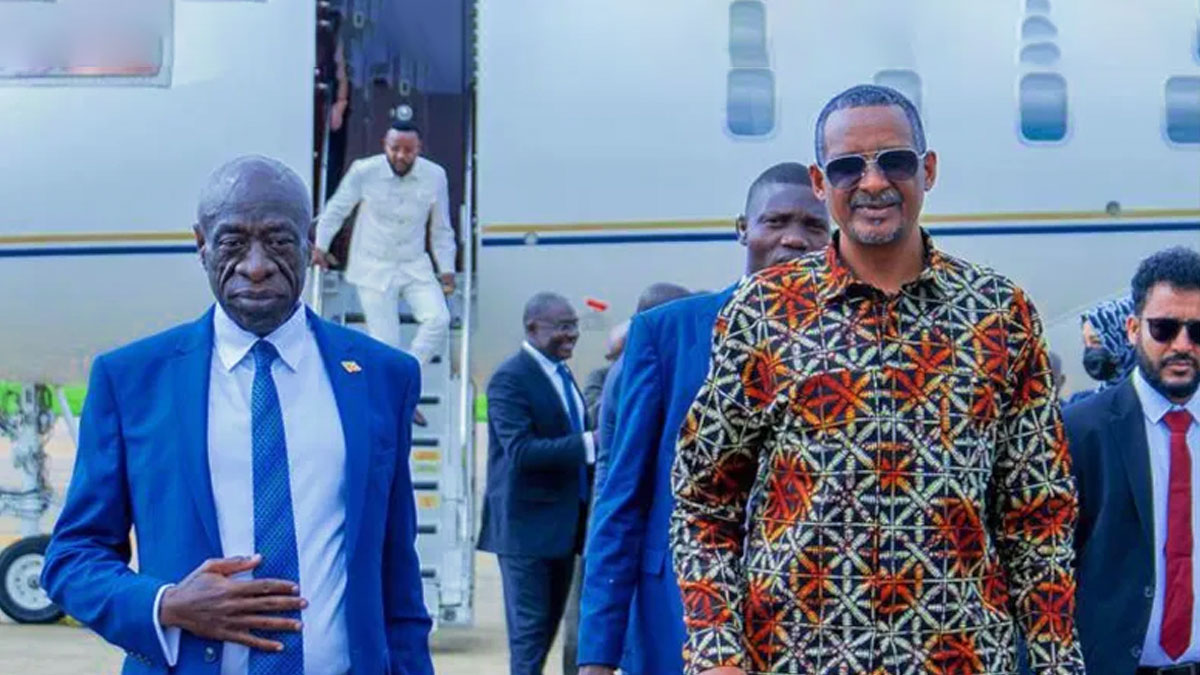
Moving between Kenya and Uganda reflects less political strength than shrinking options. Mohamed Hamdan Dagalo, who once sought broad international legitimacy, now finds himself confined to a narrow African corridor as most major capitals remain reluctant, or unwilling, to host him. One notable exception is his close relationship with the United Arab Emirates (UAE), which itself faces repeated accusations of backing the RSF.
The pressure goes far beyond political optics. Sanctions imposed on Hemedti and his forces effectively freeze assets, restrict banking transactions and complicate any financial activity linked to those on the blacklist. They also place governments that receive sanctioned figures in a delicate position, exposing them to political and economic risks that can ripple through their diplomatic ties and financial interests.
In that context, his presence on the territory of any state becomes an obvious political liability. The abuses tied to el-Fasher and Darfur have moved well beyond media allegations, appearing in reports by UN experts and echoed in official Western statements. That reality makes efforts to rebrand himself as a legitimate political actor from a handful of capitals collide with a high legal and political barrier.
The latest sanctions were not an isolated move. They form part of a steady accumulation of Western and UN measures. With each new step, the international narrative around Hemedti hardens, casting him less as a political stakeholder and more as a militia commander accused of presiding over grave atrocities.
Falling Short of the Crime
Sudanese politician Dr. Ibrahim Abdel-Ati says the pressure now facing RSF commander Mohamed Hamdan Dagalo goes beyond diplomatic isolation. It is, he argues, the inevitable outcome of the bloody path the militia has followed since the war began. Western sanctions, while significant, still fall short of matching the scale of the crimes committed.
Speaking to Al-Estiklal, Abdel-Ati said placing RSF leaders on travel bans and asset-freeze lists was a late and insufficient step. What happened in Darfur and other regions goes far beyond isolated abuses, amounting instead to a pattern of organized violence that resembles armed terror against civilians.
In his view, the international community continues to treat the crisis with traditional sanctions tools, while the reality points to a cross-border militia operating outside state structures. The RSF, he said, has carried out killings and mass displacement, relied on mercenaries and drones, and built funding and arms networks beyond state oversight. By the standards of international law and counterterrorism frameworks, he argued, such conduct fits the definition of an extremist armed group.
What is needed now, Abdel-Ati said, is not simply sanctioning individual commanders but formally designating the RSF as a terrorist organization. That step would place both its political and military leadership under terrorism listings, triggering wider financial prosecutions, cutting off funding channels, and holding accountable anyone who deals with the militia.
“Any country that finances this militia, facilitates its movements or provides political cover should face scrutiny under international counterterrorism laws,” he added.
“Those who supply weapons, offer protection, or turn a blind eye to training camps cannot be treated as neutral mediators.”
Abdel Ati also pointed to recurring allegations about supply routes and training networks passing through neighboring countries, calling for transparent international investigations into any capital that hosts RSF leaders or allows related activities. Among the claims making the rounds in diplomatic circles are reports of operations linked to Ethiopia, though these remain contested. Allowing such networks to operate without accountability, he warned, risks turning the region into an open arena for the internationalization of Sudan’s war.
He also criticized what he described as political complacency in some African capitals that receive Hemedti under the banner of mediation or dialogue. Hosting a militia leader accused of grave crimes, he argued, offers him political legitimacy and undermines Sudan’s sovereignty and institutional unity.
Sudan, Abdel-Ati said, does not need the rehabilitation of militias but their dismantling and the prosecution of their leaders before national or international courts. Any political process that does not begin with disarming the RSF and cutting off its funding sources will remain fragile and only deepen the country’s instability.
Ultimately, the international community faces a clear test: treat the RSF and its leadership as a transnational security threat and respond accordingly, or continue relying on partial sanctions that leave the door open for the crisis in Sudan and the wider region to repeat itself, according to the politician.
Sources
- Security Council 1591 Sanctions Committee Adds Four Entries to Its Sanctions List
- UN sanctions 4 commanders in Sudan’s paramilitary force accused of atrocities in Darfur
- Military Mission or Political Move? What's Behind Hemedti’s African Tour [Arabic]
- Where Is Hemedti Based? Sudanese Diplomat Reveals Details for the First Time [Arabic]