From Dismantling the STC to Reshaping Security: What Is Riyadh Planning in the South?
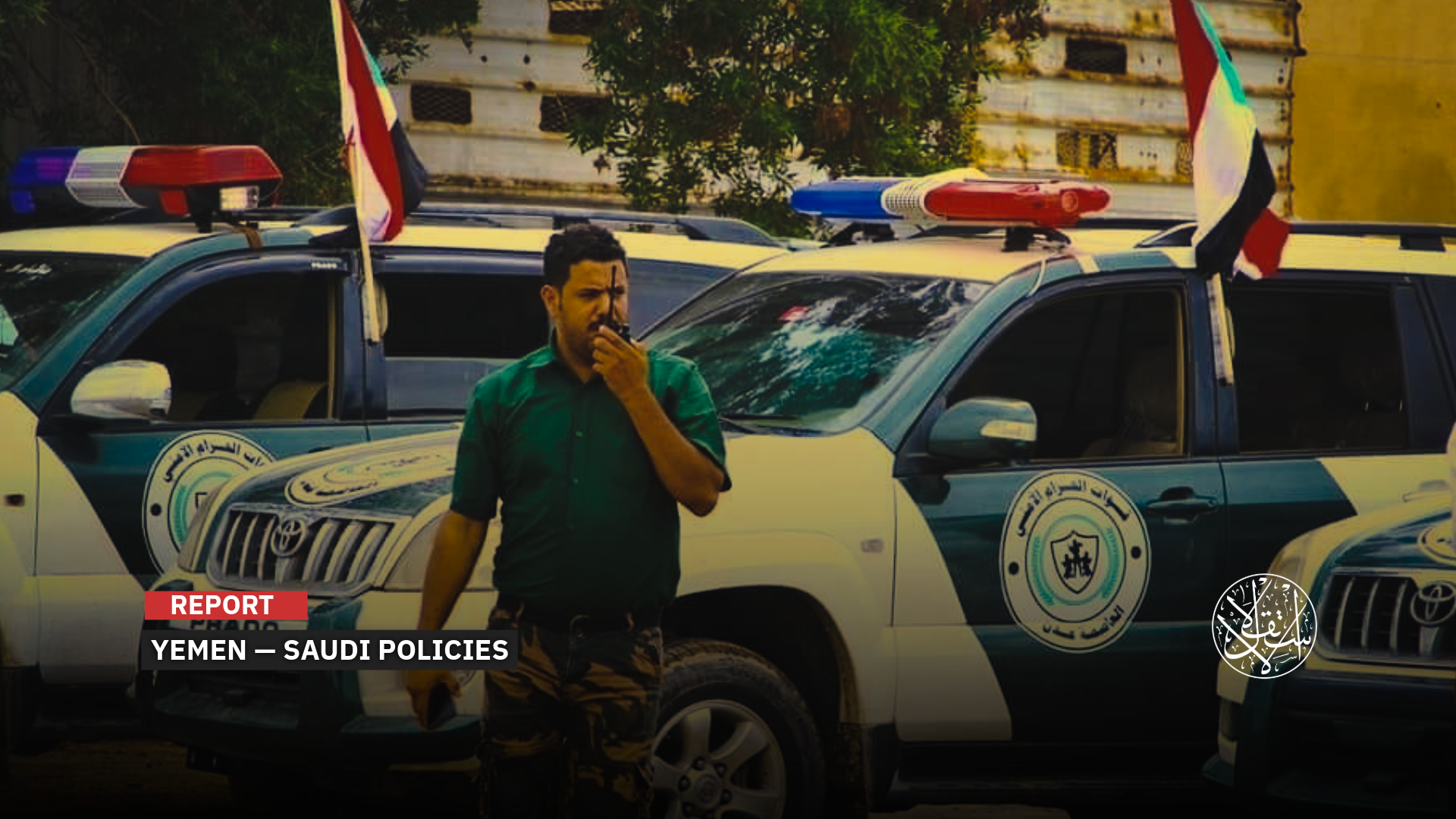
Jalal al-Rubaie is accused of committing acts of torture and enforced disappearance against Yemenis in Aden.
A wave of controversy has followed decisions by Yemen’s Interior Minister Ibrahim Haidan to appoint new figures to head key security bodies in Aden, the country’s interim capital. The controversy centers on several appointees whom critics say were involved in abuses against Yemenis when they served under former Southern Transitional Council (STC) president Aidros Alzubidi.
The appointments have reignited a broader debate: is the government trying to tighten its grip on security at any cost, or should real institutional reform begin by confronting the legacy of abuses and charting a clear path toward transitional justice?
They also raise another pressing question—whether the move signals an effort to unify Yemen’s fragmented security institutions or risks deepening the divisions that already define them.
Major Reshuffle
A decree issued on February 24, 2025, by Yemen’s Interior Minister Ibrahim Haidan framed the latest appointments within Aden’s police leadership as part of a broader effort to reorganize administrative and security work and improve institutional performance.
One of the most controversial decisions was the appointment of Jalal al-Rubaie, who still serves as commander of the National Security Forces (formerly the Security Belt, affiliated with the STC) as head of the Special Security Forces in Aden.
Al-Rubaie is widely known as one of the key military figures previously loyal to former STC president Aidros Alzubidi. Human rights groups have accused him of involvement in a range of violations, including killings, torture, and the operation of illegal secret detention facilities in Aden.
According to statements published by the Interior Ministry’s security media, the reshuffle also named Mohammed Abdo Mohammed Salem al-Subaihi as deputy director general of Aden Police and assistant for security affairs, while Jamal Fadl Abdulkarim al-Qatini was appointed assistant for human resources and financial affairs.
The decree further appointed Brigadier Mohammed Khaled Haidara al-Turki as assistant director for operations, and Brigadier Jalal Nasser Zain al-Rubaie as commander of the Special Security Forces branch in Aden.
Additional appointments included Hassan Mohsen Saleh al-Omari as head of the Criminal Investigation Department in Aden Police, with Fouad Mohammed Ali Ahmed Saeed as his deputy—moves the ministry said were intended to strengthen investigative capabilities and combat crime.
The reshuffle also placed Mayas Haidara Ali Ahmed al-Jaadani in charge of the Anti-Narcotics Department in Aden, while Brigadier Salim Saleh Ali al-Mahthouthi was appointed director of security for the Free Zone.
The changes come amid broader political shifts in Yemen. On February 6, 2026, the Presidential Leadership Council (PLC) announced the formation of a new 35-member government headed by Shaea al-Zindani, who retained the post of minister of foreign affairs and expatriates. The move followed the resignation of the previous cabinet led by Salem bin Braik, which lasted only eight months.
The reshuffle also unfolded after the Yemeni government regained control of Hadramout and al-Mahra provinces after the STC expanded its presence there. On December 29, 2025, Saudi Arabia intervened militarily, striking ships carrying Emirati military cargo and demanding that the United Arab Emirates (UAE) withdraw its forces from Yemen.
Earlier, on January 9, Abdulrahman al-Subaihi, secretary-general of the STC, announced the dissolution of the council and all its main and subsidiary bodies, along with the closure of its offices inside and outside Yemen. He said the step was taken to safeguard the future of the southern cause and preserve peace and security in the south and neighboring countries.

Temporary Integration
Explaining the government’s move, Yemeni political analyst and writer Abdulbaqi Shamshan said that reappointing figures once aligned with the STC can be seen as part of Saudi Arabia’s recent policy approach, despite the potential risks and political fallout it may carry.
In remarks to Al-Estiklal, Shamshan said the approach appears aimed at improving the broader political climate while temporarily or permanently integrating some of these figures into state institutions.
According to him, such a strategy requires shifting public sentiment in southern regions by improving basic services—particularly electricity, security, and public administration—to ease some of the popular frustration directed at the internationally recognized government.
“This could help pave the way for broader political adjustments, including public acceptance of outcomes from southern dialogue initiatives, the dissolution of the STC, easing tensions, and gradually weakening separatist sentiment,” Shamsan said.
“Saudi Arabia is pursuing three parallel tracks: improving services and ensuring the payment of salaries, reinforcing the standing of the current government, and integrating southern groups previously aligned with the STC—either by drawing them into a new political framework or leaving them loosely tied to their former project.”
At the same time, he noted, authorities appear to be following another dual approach: avoiding new confrontations with armed leaders while neutralizing these figures militarily, whether temporarily or permanently. The aim, he said, is to contain public anger in the south and reduce grassroots attachment to separatist ambitions.
Still, Shamshan warned that while the policy may reflect a pragmatic attempt to deal with realities on the ground, it could carry negative consequences, especially if it includes figures whose records make political integration difficult. In such cases, it might be more appropriate to remove them from public life or refer them to the courts within a reasonable timeframe.
Allowing some of these personalities to remain in influential positions, he cautioned, could undermine public trust in the government and potentially leave the door open for continued ties with regional powers whose strategic interests may be threatened.
That, in turn, could preserve informal communication channels capable of being exploited to destabilize the country.
Shamshan stressed that genuine institutional reform requires faster steps to bring all armed formations under the authority of the supreme commander of the armed forces, reinforcing the principle that the state alone holds the monopoly on legitimate force.
Equally important, he said, is ensuring that citizens can clearly see the unity of the state reflected in its institutions and officials—particularly those who have sworn an oath to safeguard the country.
“Not everyone should be integrated into the system at this stage; doing so could empower figures who outwardly align with the new political framework while maintaining external connections, links that regional actors could later exploit through officials occupying sensitive positions and holding critical information.”

Impunity Concerns
Amid these appointments, local and international rights groups condemned the Interior Ministry’s decision to place figures accused of torture and enforced disappearances into new positions in the temporary capital, Aden, warning that the move amounts to impunity and sends a chilling message to the victims’ families.
In a statement issued on February 27, Women Journalists Without Chains said appointing officials facing serious allegations of grave abuses without an independent, impartial, and effective investigation is not merely an administrative failure. Rather, it may amount to a serious breach of the state’s obligations under international human rights law.
The group argued that such steps contradict Yemen’s commitments under the International Covenant on Civil and Political Rights and the Convention Against Torture, both of which require states to investigate violations, ensure accountability, and prevent impunity in all its forms.
The organization also voiced deep concern over what it called the repeated recycling of security leaders and units linked to serious abuses in Aden—often through new titles or fresh appointments—without transparent judicial investigations or credible human rights scrutiny, despite the seriousness of the allegations and the possibility that they amount to grave crimes under international law.
SAM for Rights and Liberties warned in a statement issued on February 25 against appointing former Security Belt Forces commander Jalal al-Rubaie as head of the Special Forces sector in Aden.
The organization said the decision represents a setback for accountability efforts and reflects what it described as troubling government disregard for the principle of non-impunity, particularly given the record associated with some security formations accused of grave violations.
SAM added that promoting individuals suspected of involvement in crimes such as arbitrary detention, enforced disappearance, and torture in unofficial detention centers constitutes a clear violation of victims’ rights and undermines the rule of law.
The group stressed that anyone nominated for senior security positions should first undergo an independent and transparent investigation to ensure justice for victims and to reinforce the principle that all officials remain subject to the law, regardless of political loyalties.
According to the organization, the continued reappointment of security figures accused of abuses risks eroding public trust in state institutions and the PLC, while sending a painful message to victims’ families in Aden, where many abuse cases remain unresolved and far from any meaningful path to justice.
Sources
- Jalal al-Rubaie appointed commander of Aden’s Special Security Forces while retaining leadership of National Security Forces [Arabic]
- Women Journalists Without Chains: Appointing officials implicated in serious abuses reinforces impunity [Arabic]
- Appointment of Controversial Security Figure Threatens Accountability and Undermines Victims’ Rights [Arabic]
- What Does the Dissolution of the Southern Transitional Council Mean? [Arabic]