The Assassination of Lt. Col. Ahmed Zemzem in Gaza: How Was It Carried Out, and What Became of the Collaborator Network?
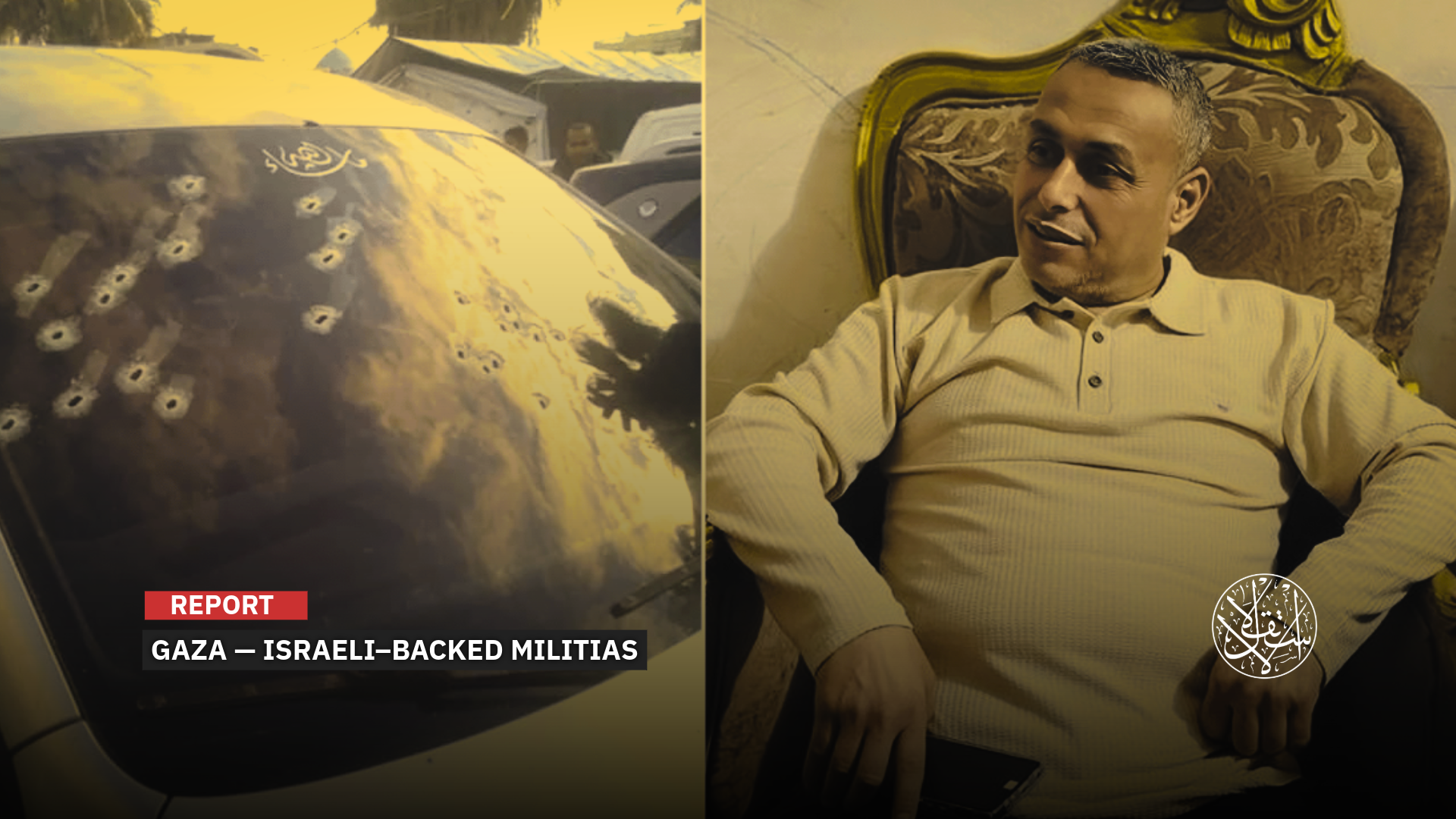
Authorities swiftly detained a suspect and opened an investigation to get to the bottom of the crime.
The assassination of 49-year-old Major Ahmed Zamzam, an official in Gaza’s internal security service, sent shockwaves through the Palestinian street and raised urgent questions about the tactics and new missions of collaborator militias acting as a dirty tool for the Israeli Occupation.
The location of the attack deep within the Gaza Strip, its brutal execution, and its timing in broad daylight served as a stark warning to security forces about the growing threat posed by these militias.
One of the Most Dangerous Operations
The crime took place on the morning of December 14, 2025, when the Ministry of Interior and National Security in Gaza announced that Major Zamzam had been shot at close range by armed assailants in the Maghazi refugee camp.
According to a ministry statement, security forces arrested a suspect immediately and launched an urgent investigation to determine the circumstances and motives behind the assassination. Authorities went to the scene in Maghazi to investigate what has been described as one of the most dangerous crimes carried out recently in the Strip.
Preliminary investigation results revealed that the assassination had been carried out by three agents working for the Israeli Occupation, under direct instructions from its intelligence services.
Resistance forces also joined the investigation. On December 15, 2025, a senior security official disclosed to the al-Haris security platform that one of the three suspects had given detailed confessions following his arrest.
The detained admitted that an officer from Israeli intelligence had met with the three agents and tasked them with assassinating Major Zamzam, claiming he managed a sensitive security file that could expose them and other collaborators working with the Israeli Occupation.
The suspect acknowledged that the operatives had received three silenced pistols, three high-speed electric bikes, clothing equipped with miniature cameras, and phones connected to wireless earpieces, along with precise coordinates tracking the movements of the martyred officer.

Al-Estiklal Investigates
Al-Estiklal visited the scene of the assassination in Maghazi refugee camp, speaking with local residents and recording testimonies from those who witnessed the details of the morning of December 14, 2025.
According to residents, the killing took place in the western part of Maghazi, specifically in the Barakat al-Waz neighborhood, along a side street connecting al-Sikka Street to the heart of the camp—a street densely populated by both locals and displaced families.
Al-Estiklal spoke with Ahmed Ghassan, a young displaced man living with his family near the site, who witnessed the actions of three mercenaries and agents working for the Israeli Occupation.
Ghassan said the assassination occurred between 8 and 9 a.m. on a side street in the eastern part of the road where Major Zamzam lived.
He added that, while sitting outside his tent, he noticed three young men riding electric bicycles—an unusual sight in Gaza due to the high cost and rarity of such bikes.
“These modern electric bikes caught my attention,” Ghassan told Al-Estiklal. “I was talking with my friend sitting next to me, and we were saying that the price of a single bike would be higher than a modern car.”
“We watched them as they moved down the street. Suddenly, one of the bikes appeared to break down, and they pretended to help the rider.”
“They stayed there for about 15 to 20 minutes,” he added, “until the Major got into his car. Suddenly, gunfire started. We couldn’t see them at that moment, but the loud screams alerted us that the assassination was underway.”

“When we approached the scene, we saw two of the mercenaries moving toward the car. They shot the Major and made sure he was dead, while a third stood a few meters away at a crossroads, holding a pistol and securing the area for them,” Ahmed said.
“We saw them take the Major’s belongings, especially his mobile phone—it was clear they were determined to get it. Moments later, local residents began confronting the mercenaries, shouting that special forces were in the area,” the witnesses added.
Ahmed explained that two of the agents who carried out the execution fled immediately upon hearing the commotion, heading east through the camp on their electric bikes.
During the escape attempt, the third agent got into a physical struggle with a local youth, identified only as M.Q., after the agent’s gun jammed following multiple shots fired at anyone approaching him.
“He tried to strangle the young man,” Ahmed said, “until another armed resident arrived and fired a shot into the air.”
At that point, the third agent abandoned his electric bike and ran west toward al-Sikka Street, according to Ahmed.
“Once he tried to flee, a large number of residents gave chase, while members of the resistance arrived and began pursuing him,” he added.
The agent did not get far—less than a kilometer—before being apprehended near Salsabil Hall on Salah al-Din Street, falling into the hands of the Resistance and the Ministry of Interior.
A Week of Surveillance
Al-Estiklal spoke to a security source familiar with the assassination and the investigation of the agent captured during the escape.
The source told Al-Estiklal that investigations confirmed direct involvement by the Israeli Occupation in the crime.
The agents had spent about a week in the area before the assassination, the source said, setting up a tent near the Shomer factory west of Maghazi camp, along a route frequently taken by Major Zamzam.
During that period, the agents monitored his movements closely, noting his comings and goings and the people accompanying him, in order to select the optimal time for the assassination.
The source confirmed that the three agents belonged to the Abu Nasira militia, formed by Shawqi Abu Nasira in November 2025. Abu Nasira holds the rank of brigadier in the Ramallah security apparatus.
According to the source, the Israeli Occupation had hidden a camera in one of the agent’s clothing, broadcasting the assassination live, while monitoring the operation from the air. The camera was extremely well concealed, making it very difficult to detect.
Investigators were able to trace the agents’ infiltration routes from the eastern areas into the heart of the Strip. The captured agent also identified several active members of the Abu Nasira militia.
Motives and Retribution
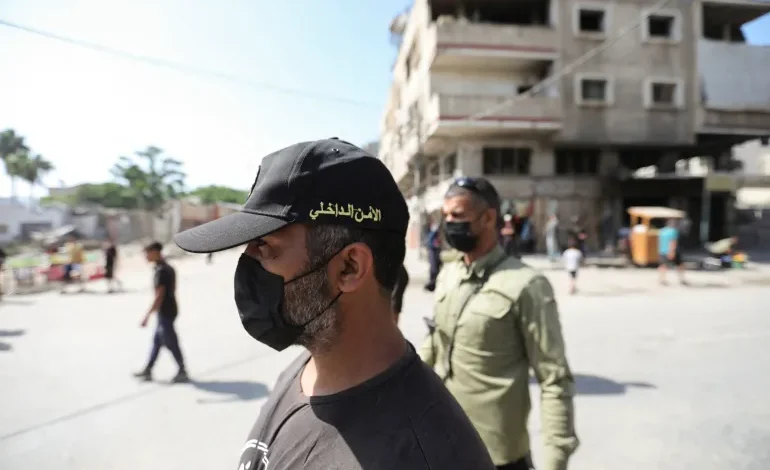
The security source told Al-Estiklal that the assassination of Major Zamzam reflects the Israeli Occupation’s frustration with the return of Gaza’s security forces to their duties—restoring order, ending lawlessness, and striking repeatedly at collaborator networks.
The source said the killings are intended to undermine security, sow fear, and erode confidence in the authorities.
At the same time, the source praised the awareness and courage of residents in the Barakat al-Waz neighborhood, noting that their intervention thwarted the agents’ carefully planned escape, helped capture one of them, and revealed a wide network of information that could lead to the dismantling of other cells.
Regarding the fate of the captured agent, security sources told Al-Estiklal that he was executed on the evening of December 28, 2025.
The sources confirmed that the security forces have drawn lessons from the operation and are now implementing plans to counter any future infiltration attempts by collaborator militias.