From Conflict Trenches to a United List: What Is Behind the Hamas Dahlan Rapprochement?
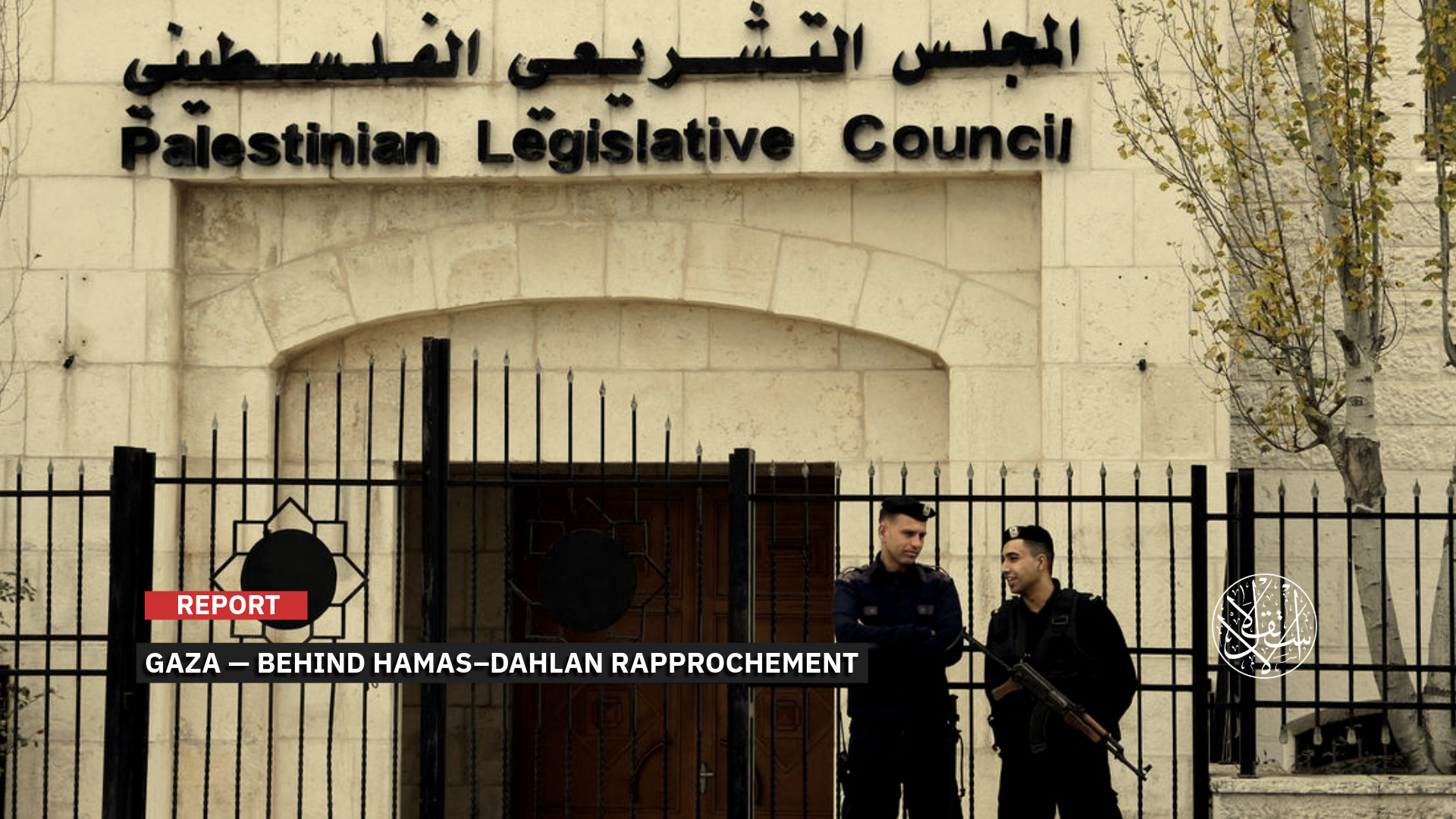
Palestinian factions have agreed to form an alliance to contest the legislative elections scheduled for November 2026.
The rapprochement between Hamas and Mohammad Dahlan’s faction is no longer just a fleeting contact driven by arrangements after the Israeli war on Gaza. It is beginning to take on a political and electoral shape, with discussions of a broad alliance bringing together the two sides, along with Islamic Jihad, leftist groups, and independents, to contest the legislative elections scheduled for November 28, 2026.
Hamas is seeking to preserve its political presence without turning its participation into a direct confrontation over its weapons, while Dahlan is seeking a return to the political arena through electoral legitimacy, laying the groundwork for a bid to succeed Mahmoud Abbas as president of the Palestinian Authority.
The irony is that the potential coalition partners were, until recently, on opposing sides, but the postwar landscape, shifting balances of power, and competing interests have left them with a shared need to find an arrangement that gives each side a foothold in the Palestinian political system taking shape.
That raises a fundamental question: Are Hamas and Islamic Jihad using the alliance to separate the issue of weapons from political participation, allowing Hamas to gradually move from an active armed force in Gaza toward a political movement that takes part in the institutions of the Palestinian Authority?
Does the potential alliance represent a temporary “electoral reconciliation” brought about by the postwar period, or is it an attempt to create a new Palestinian political system that gradually separates those who hold weapons from those who hold political power?
If so, will Dahlan be the bridge through which Hamas returns to the political system, or is the alliance merely a temporary electoral deal, after which disputes over weapons and political power will quickly return to the forefront? More importantly, will the Israeli occupation and the United States even allow Hamas and its allies to take part in this electoral process?
Why Now?
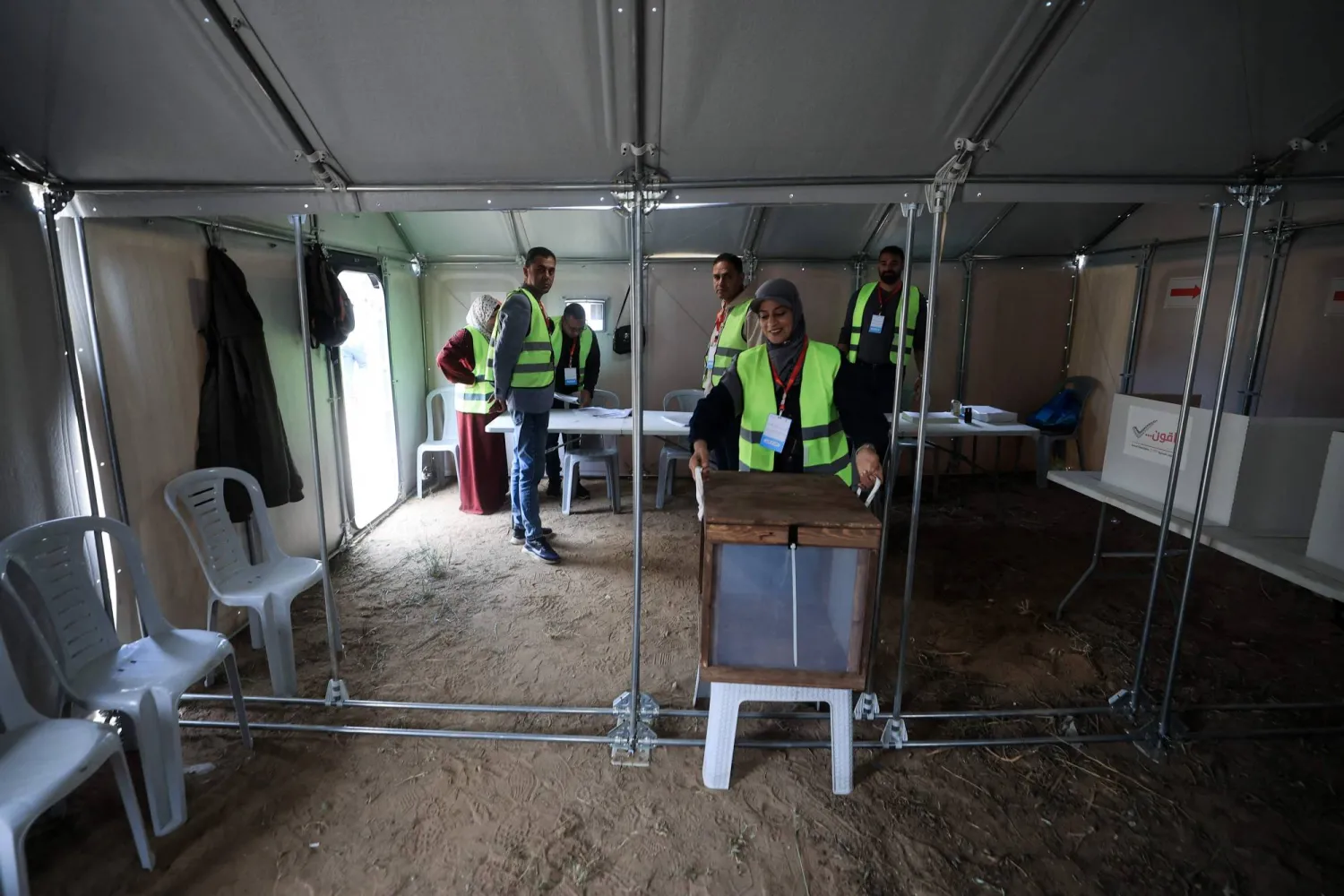
Despite growing political indications that the Palestinian legislative elections scheduled for November 28 could be postponed and held alongside presidential elections in early 2027, talk of an electoral alliance bringing together Hamas, Islamic Jihad, and Dahlan’s faction, possibly alongside the Popular Front and other groups, began as early as August 18, 2026, through Palestinian leaks reported by various newspapers and media outlets.
On August 18, 2026, Almanassa, which has regularly carried statements from Hamas officials in Cairo, quoted a factional source as saying that representatives of Gaza factions and Dahlan’s faction had discussed the possibility of running on a unified list during a meeting in Cairo.
The outlet also quoted Hamas official and head of its National Relations Office, Husam Badran, as saying that the Palestinian Resistance Movement planned to take part in the elections as part of a “broad and inclusive national coalition bringing together a wide range of Palestinian forces.”
Badran said Hamas had recently held meetings and contacts with Palestinian groups, factions, and figures to build the largest possible national electoral bloc, based on an agreed political program.
On August 21, 2026, Alaraby TV likewise reported, citing Palestinian sources, that Palestinian groups had agreed to form an alliance to contest the legislative elections scheduled for November 2026.
It specifically named Hamas, Islamic Jihad, the so-called Democratic Reform Current in Fatah led by Mohammad Dahlan, Nasser al-Qudwa’s faction, and the al-Nasser Salah al-Din Brigades, while saying the Popular Front was considering joining at a later stage.
Hani al-Masri, director general of Masarat, the Palestinian Center for Policy Research and Strategic Studies, said the alliance “did not emerge suddenly” and had roots in years of coordination among the different parties.
He said the cooperation expanded through several meetings in Cairo to discuss how to respond to the Israeli war on Gaza, culminating in the role played specifically by Mohammad Dahlan’s faction in reaching the latest agreement on implementing U.S. President Donald Trump’s plan.
Al-Masri said Dahlan’s faction later found itself in a more independent position after a Fatah conference failed to unify the movement, followed by an attempt by the Palestinian leadership to establish contact with the faction. The faction rejected those contacts.
Imad Mohsen, a spokesman for the Democratic Reform Current, officially confirmed that Mohammad Dahlan had met with a Hamas delegation led by Khalil al-Hayya in Cairo. He said the meeting addressed Palestinian issues, “unity,” and efforts to put the Palestinian political house in order.
Hamas later officially confirmed the meeting with Dahlan, saying the discussions focused on “putting the Palestinian house in order on the basis of partnership and democracy.”
On August 23, Almodon quoted a Hamas source as saying the proposed coalition had effectively been mapped out, but talks in Cairo were still continuing over its political program and final details. The source said there was an initial agreement to form the coalition, pending a meeting to settle the final decision.
But what does Hamas hope to achieve through this electoral alliance? And why has it decided to take part in the elections and form a coalition now, despite its opposition to amendments introduced by President Mahmoud Abbas to the election law, which Hamas says restrict the freedom of resistance activity and force it to recognize the Israeli Occupation?
Palestinian sources told Al-Estiklal that Hamas is seeking to achieve four goals through the electoral alliance at the same time. The most important is to separate its political role from its military one and re-establish itself as an influential political force in Gaza, as efforts continue to exclude it on the grounds that the resistance must be disarmed.
The goals are to preserve its political presence after the Israeli war on Gaza, prevent its exclusion from the emerging Palestinian political system, secure a large electoral bloc by joining forces with Dahlan, Islamic Jihad, and leftist groups, and turn the future of its weapons from a precondition for political exclusion into a bargaining issue within a broader Palestinian settlement.
There is also a fifth reason: Hamas understands that running on its own would expose it to broad regional, international, and political opposition. Entering the election under its own name and banner could also revive the old polarization between Hamas and Fatah and give the Israeli Occupation grounds to obstruct the elections or impose restrictions on its participation.
Hamas also understands that Dahlan, for his part, wants to return to the heart of the Palestinian political system, while Islamic Jihad wants to secure a place in the emerging system. They are all united by an interest in weakening Fatah’s monopoly on political representation under Abbas.
Dahlan also needs Hamas and Islamic Jihad’s electoral, popular, and organizational base in Gaza to build a powerful bloc capable of challenging Fatah’s official leadership. The rapprochement can therefore be seen as an alliance of interests.
Both sides also understand that the proposed alliance matters beyond the election itself, coming at a time when Gaza’s political and security system is being reshaped and each side is seeking to preserve its political presence, particularly Hamas.
Palestinian sources say Hamas sees the elections as a way to maintain its political presence without insisting on retaining direct military and administrative control over Gaza. That would allow it to preserve its popular and organizational weight through parliament and the government.
Its decision to bring Dahlan and Islamic Jihad into the electoral alliance also changes the equation. Their presence, along with leftist groups and independent figures, would give the resistance camp broader political cover and allow the alliance to present itself as a “broad Palestinian national front.”
Before Hamas announced the alliance, expectations had centered on the possibility that the Palestinian elections would either preserve the existing political system or become another step toward further fragmentation and division, given the lack of genuine domestic incentives for change and the absence of any political horizon amid the intensifying brutality of the Israeli Occupation, the Judaization of the West Bank, and cooperation between Abbas’s successors and “Israel” against the resistance.
The announcement of the Hamas alliance and its determination to pursue and participate in it have changed those scenarios. They now range from ensuring that the resistance has a place in the political process and cannot be politically marginalized while its weapons are being sidelined to reproducing temporary alliances that remain dependent on shifting domestic and regional balances of power.
Palestinian analyst Yaseen Izeddeen said the Hamas-Dahlan alliance is a broad Palestinian coalition open to everyone, including Fatah under President Mahmoud Abbas. But Fatah does not want to join, he said, and canceled a meeting with Hamas that had been scheduled to take place in Cairo.
He said Mahmoud Abbas wants to preserve the status quo and hold a largely symbolic election that would strengthen his grip on power, which is why he is seeking to play Dahlan and Hamas off against each other, while all sides share the goal of challenging the current Palestinian Authority.
The elections would be the first of their kind in 20 years, as no legislative vote has been held in the Palestinian territories since Hamas won the 2006 elections in Gaza.

Dahlan’s Goal and Hamas’s Goal
Research centers and Western and regional institutions have begun examining Mohammad Dahlan and his expected role in the Palestinian political landscape. On August 20, 2026, New Lines reported concerns that Dahlan’s goal could be to take control of the Gaza Strip.
The magazine said Dahlan held a closed-door meeting earlier in 2026 with a group of Middle East experts in a European city, where discussions focused on Gaza’s future and his potential role in the Palestinian Authority.
The meeting also examined how Dahlan had become a link between the Emirati leadership and senior officials in the U.S. administration and the Israeli military establishment. His name has for years been floated as a potential successor to President Mahmoud Abbas and, more recently, as a possible figure to take charge of Gaza.
In late May 2026, Dahlan met in Abu Dhabi with David Zini, head of “Israel’s” domestic security agency. The substance of the talks was not disclosed, amid speculation that they were related to the future of Gaza.
New Lines said the United States and “Israel” are considering relying on Dahlan to fill the governing vacuum in Gaza, as “Israel” refuses to withdraw while Hamas retains influence and accuses the resistance movement of obstructing plans to rehabilitate the territory.
The magazine said Dahlan currently has the ability to facilitate the delivery of aid and supplies into Gaza, drawing on his political connections and funding from the UAE, giving him growing influence inside the territory.
That, however, does not necessarily mean Dahlan has decided to take charge of Gaza. But he is increasingly positioning himself as a figure who is difficult to bypass, drawing on his ability to bring together Emirati, U.S., and Israeli sources of influence, alongside his growing presence in Palestinian politics.

Elections Do Not Mean Giving Up Weapons
Talk of a broad electoral alliance does not mean Hamas has automatically agreed to give up its weapons or integrate them into the institutions of the Palestinian Authority, according to sources familiar with the proposed alliance.
The sources said the alliance is primarily about political and electoral participation and coordinating positions in negotiations, while the issue of weapons is separate. It concerns the future of the Palestinian presence and is one of the most sensitive issues in arrangements for the postwar period.
The real shift may be that the elections themselves have become a way to redefine the relationship between the factions, weapons, and political power.
If Hamas enters the elections on a joint list with Dahlan, Islamic Jihad, and leftist groups and wins seats in the Legislative Council, it would return to the political institutions from a different position than it held in 2006.
It would be part of a pluralistic political system rather than a force exercising sole control over Gaza. At the same time, bringing Dahlan into the alliance would give him an opportunity to regain political influence in Gaza without attempting to return to power through a direct confrontation with Hamas.
Hamas insists that any move toward disarmament must begin with a permanent ceasefire, a commitment by the Israeli Occupation to stop attacks and the killing of Palestinians, and a gradual Israeli military withdrawal. It also wants security in Gaza to be managed through transitional Palestinian mechanisms or an international stabilization force, without handing the weapons over to “Israel.”
The Israeli Occupation and the United States, meanwhile, remain skeptical about Hamas’s willingness to dismantle its military arsenal completely. The weapons have historically been a source of the movement’s legitimacy and influence, making the process a complicated test fraught with security and political challenges.
For the Palestinian Authority and Fatah, the prospect is even more complicated: the elections could shift from being a means of renewing the Authority’s legitimacy to completely reshaping the Palestinian political map.
The participation of Hamas, Dahlan, the Popular Front, and other groups could produce a broad electoral bloc capable of challenging Fatah outside the traditional Fatah-Hamas divide.
Palestinian political analyst Hani al-Masri said the announcement that Hamas, Islamic Jihad, Fatah’s Reformist Current, the Democratic National Forum, the al-Nasser Salah al-Din Brigades, and others intended to form a broad political and electoral coalition “hit Fatah like a thunderbolt” and disrupted its electoral calculations.
In a study published by the Masarat for Strategic Studies Center on August 20, 2026, he said the Palestinian Authority’s leadership had been banking on elections that would allow Fatah to renew its legitimacy, taking advantage of the declining popularity of its rivals, Hamas’s weakened position, and the possibility that some factions might not participate or might be barred from doing so.
But events unfolded differently after Hamas decided to participate and began talks to form a broad coalition, while opinion polls showed a noticeable decline in Fatah’s popularity as the Palestinian Authority and its leadership faced mounting political, financial, and organizational crises.
Fatah is also dealing with the financial crisis facing the Palestinian Authority and its fallout, as well as the consequences of its eighth congress and the possibility of multiple Fatah lists emerging, further complicating the electoral landscape.
If the Hamas-led coalition becomes merely an electoral alignment against Fatah, it could deepen the division. But it could also open a window of opportunity if it develops into a broader understanding of how to confront shared risks and challenges, particularly as the Palestinian Authority leadership’s unilateral decision-making and lack of consultation with political and community groups have pushed several factions to seek common ground outside the official framework.
If elections are held without being postponed or canceled, a contest between the Dahlan-Hamas alliance and other Palestinian factions on one side, and Fatah under Mahmoud Abbas and the Palestinian Authority led by Majed and Hussein on the other, could produce surprises for everyone, much as the 2006 elections did when Hamas unexpectedly won, according to Palestinian journalist Abdul Ghani al-Shami, who spoke to Al-Estiklal from Gaza.
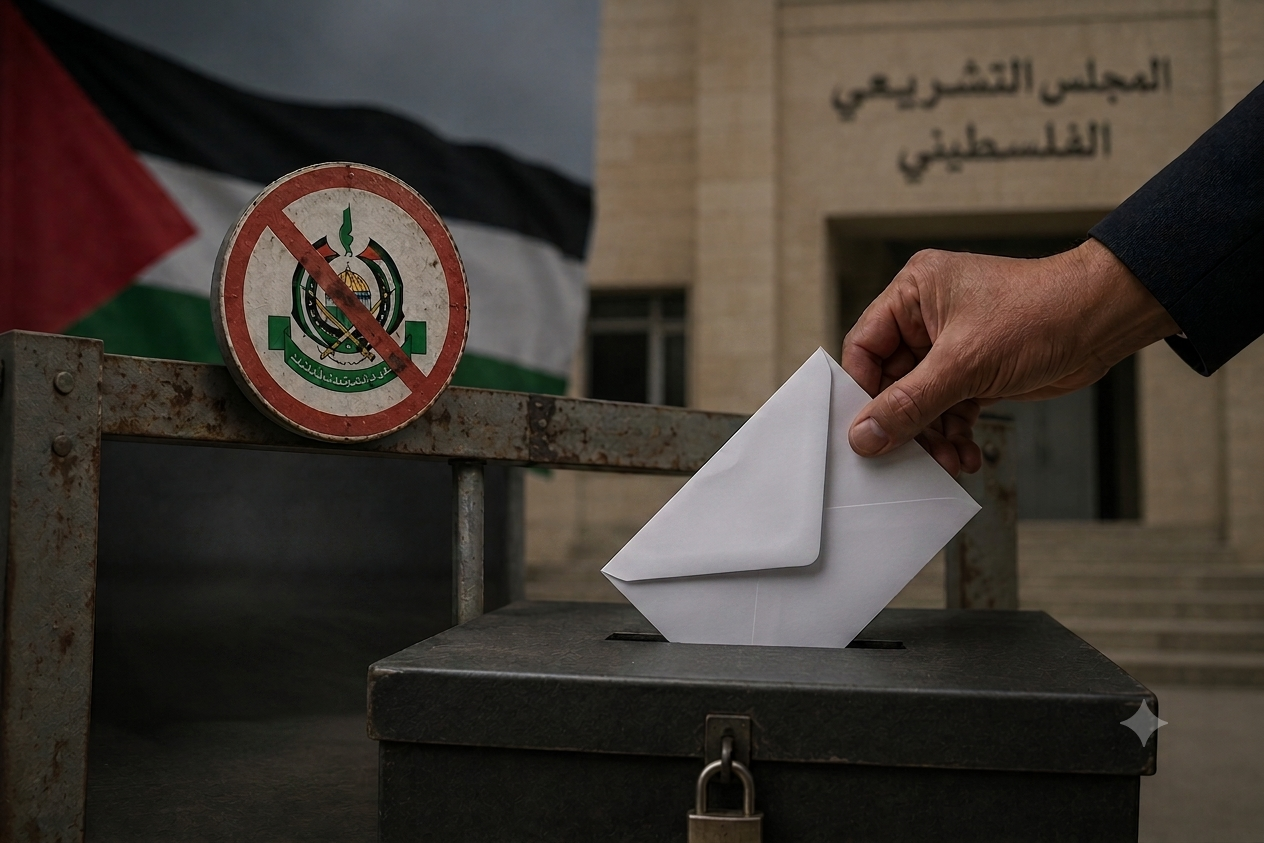
Vice President Hussein al-Sheikh has said Hamas will not participate in the upcoming elections under its official name or with its current symbols but will take part under a different formula. That has put the Palestinian Authority in the position of determining how another major political force will participate.
Political analysts and observers fear that President Mahmoud Abbas could cancel the Palestinian elections, as he did at the last minute in 2021, citing “Israel’s” refusal to allow voting in the occupied Jerusalem. Such a move, they warn, could further deepen the political fragmentation and division among Palestinians.
The Palestinian Legislative Council elections are scheduled for November 28, 2026, marking the first such vote in 20 years since Hamas won 74 seats in the January 2006 elections, while Fatah won 45.

The Israeli Occupation and the United States
There has been no official U.S. announcement barring Hamas from contesting the Palestinian elections, nor has “Israel” issued a final public decision setting out how it would prevent the Palestinian Resistance Movement from participating. But there are strong indications that Hamas’s participation is a major concern for both the Israeli Occupation and the United States, particularly if it enters the elections while retaining its weapons.
Israeli reports suggest that “Israel’s” main concern is not simply the participation of individuals or figures linked to Hamas in Palestinian elections, but the possibility that Hamas, “an armed organization designated as terrorist” by the Israeli Occupation and the United States, could become a political force within the Palestinian Authority while maintaining its military wing.
Israelis see a Hamas bid to enter politics while keeping its weapons as a way of sidestepping disarmament: Hamas could give up direct military rule in exchange for a place in the political system or use political participation to avoid disarmament and withdrawal while preserving its popular and political power.
The Israeli Occupation is also concerned that Hamas intends to contest the upcoming Palestinian elections as part of a broad alliance, raising fears that the movement’s influence could extend into Palestinian Authority institutions.
Hamas is also seeking to make the status quo at al-Aqsa Mosque a priority in its platform, according to the Jerusalem Post on August 13, 2026.
The irony is that the political plan for Gaza put forward by the Board of Peace established by U.S. President Donald Trump calls for a civilian Palestinian administration and elections, while “Israel” first wants to ensure that Hamas does not regain its military influence and is applying political pressure to prevent the Palestinian Resistance Movement from participating in various ways.
The Begin-Sadat Center for Strategic Studies has warned against Hamas participating and returning to political life, arguing that the movement’s return to the Palestinian political system should be prevented through various means.
The center noted that “Israel” cannot simply pass a law declaring Hamas ineligible to run in Palestinian elections, but it has powerful tools at its disposal, particularly in occupied East Jerusalem and through its security and military control over parts of the West Bank, as well as its ability to influence electoral arrangements in Gaza and the West Bank.
On August 26, 2026, an extensive report published by the October Council, a civilian organization representing the families of Israelis killed and wounded in Operation al-Aqsa Flood and including security experts, warned against Hamas participating in the elections or being allowed to rebuild its strength in Gaza while retaining its weapons, according to Yedioth Ahronoth.
It warned of a return to a security reality in Gaza similar to the one that preceded the October 7 operation, pointing to the growth of Hamas’s capabilities even as “Israel’s” policy of containing the movement in Gaza remains in place.
The report quoted a senior security official as saying that “Hamas continues to strengthen its capabilities in the Gaza Strip without receiving the attention it deserves” and complained that the focus on Iran had come at the expense of addressing Hamas’s growing strength.
The report lists seven “warning signs,” including the fact that Hamas has suffered military strikes but has not been disarmed and continues to rebuild its capabilities, while also testing the “Yellow Line” and the Israeli military’s response.
It also points to the weakening of the reserve system and defense forces in settlements near the border, the silencing of criticism and warnings because of what the report described as a “barrier of fear,” and the failure to establish an independent body to comprehensively examine the political leadership’s responsibility and the performance of the various security agencies.
The U.S. position appears more complicated than simply opposing Hamas’s participation. The U.S. plan allows for elections, making it difficult to exclude Hamas, but the Trump administration has placed Hamas’s disarmament and the end of its military rule in Gaza at the heart of its plan.
Statements from the Trump administration suggest that Washington wants elections and a reshaping of the Palestinian political system while also seeking a political system in which Hamas does not return as a military force, creating conflicting signals from the administration.
Reports have circulated claiming that Hamas received positive signals from the United States regarding its participation, including a claim by the “Israel”-focused MEMRI on August 24, 2026. But neither the White House nor the U.S. State Department has confirmed that Hamas has been given approval to contest the elections.
For Washington, the decisive issue appears to be disarmament, according to U.S. reports. If Hamas enters the elections after handing over its weapons or agreeing to place them under the Authority of a unified Palestinian government, Washington could potentially treat its participation as part of a political reintegration process.
But if Hamas enters the elections while retaining an independent military wing, that would directly conflict with the U.S. and Israeli vision for the postwar period, as the Trump plan is tied to disarmament and the transfer of governance to a civilian administration.
That makes the proposed electoral alliance between Hamas, Islamic Jihad, Dahlan, and others potentially significant. It could provide a way around U.S. restrictions by separating political representation from military and security arrangements.
Sources
- Without Fatah: Palestinian Factions Meet in Cairo Tomorrow to Discuss Forming an Electoral Coalition [Arabic]
- Unprecedented Palestinian Alliance: Hamas, Dahlan and Islamic Jihad on a Single Electoral List? [Arabic]
- Hamas, Islamic Jihad, and Dahlan in Electoral Alliance: Could It Reshape the Palestinian Political Landscape? [Arabic]
- Will Dahlan Take Over Gaza?
- Palestinian Elections Under Israeli Occupation: Between Democratic Legitimacy and the Imperatives of National Liberation [Arabic]
- Hamas plans to run in upcoming Palestinian elections, to prioritize status quo at al-Aqsa Mosque
- From Cognitive Victory to Political Exclusion: Hamas and the 2026 Palestinian Elections