Algeria’s New Push to Build Ties With the Sahel: What Is Driving the Shift?
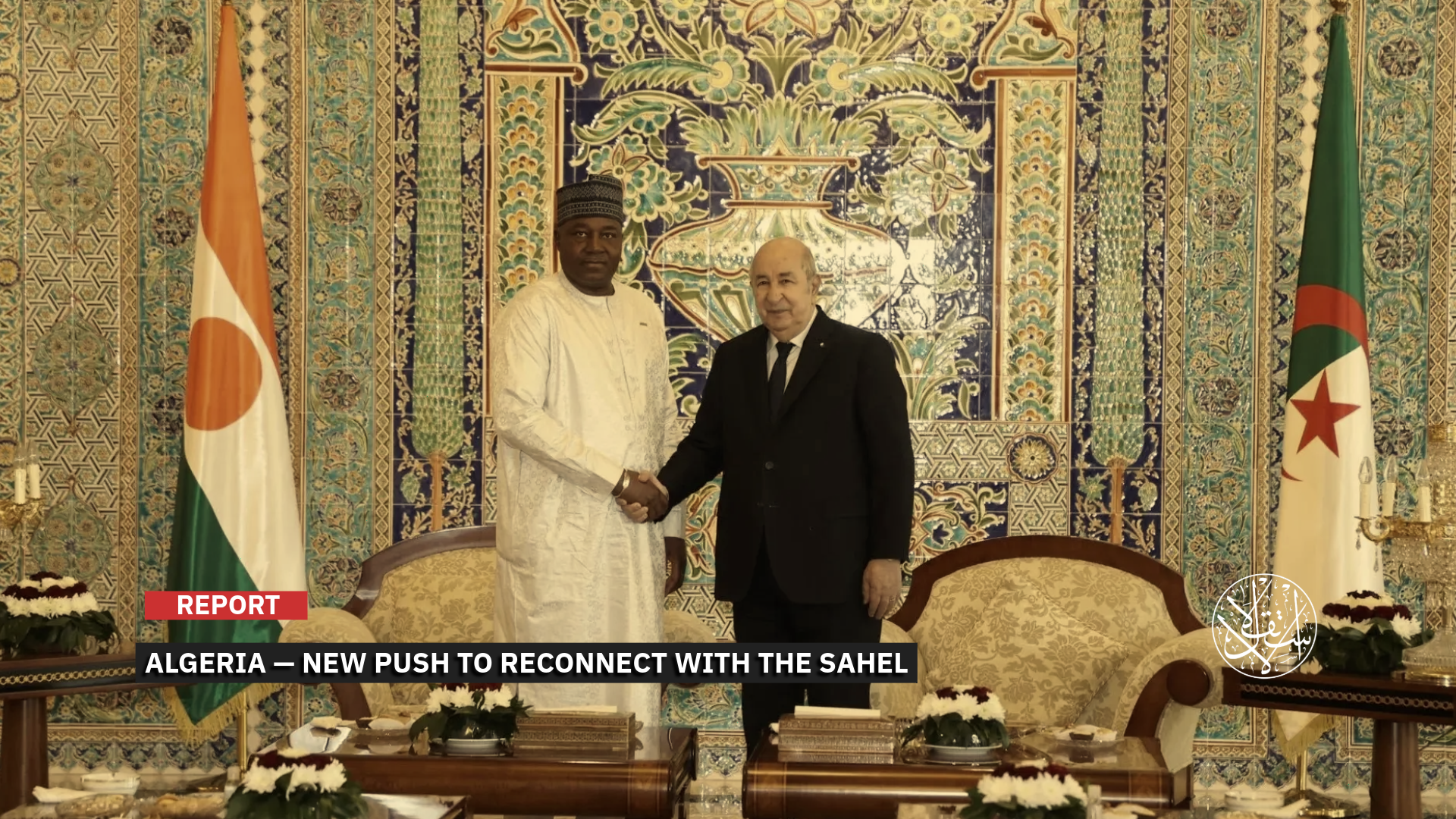
Algeria has clearly sought to turn the page on tensions with Niger and Mali.
After a period of tension with Sahel countries, particularly Mali and Niger, Algeria has begun recalibrating its approach to the region, adopting a new policy aimed at rebuilding ties and turning the page on past tensions.
As part of this effort, Algeria formally invited Mali’s prime minister, Abdoulaye Maiga, to visit the country. He made the visit on August 24, 2026.
A Strategic Dimension
On August 9, 2026, the Algerian government said Prime Minister Sifi Ghrieb had delivered the invitation on behalf of President Abdelmadjid Tebboune during a phone call with Maiga. The two sides expressed their desire to revive bilateral relations and resume cooperation between the two countries.
The same source said the call was an opportunity to reaffirm the deep ties between the Algerian and Malian peoples, as well as their commitment to the principles of brotherhood, solidarity, and good neighborliness. Both sides also expressed a shared desire to give their relations new momentum.
The two sides further affirmed that the leaderships of Algeria and Mali were committed to reviving and expanding bilateral cooperation across various fields in a way that serves their shared interests and supports stability and development in the region.
Relations between Mali and Algeria have improved in recent weeks following a crisis that erupted after Algeria shot down a Malian drone that entered its airspace in April 2025. Tensions then began to ease as the two sides resumed contacts, reopened their airspace, and exchanged ambassadors.
Separately, Algeria provided Niger with four military helicopters, along with ammunition, spare parts, and support and maintenance equipment, as part of what the Algerian Defense Ministry described as a "military donation."
In a statement on August 9, the ministry said the aid included two MI-24V helicopters and two MI-171 helicopters, following instructions from the president and as part of efforts to strengthen defense and security cooperation between Algeria and Niger.
This step comes as Algeria and Niger move to restore closer ties after a period of diplomatic and security tensions in 2025.
In February 2026, Algeria announced that its ambassador to Niamey had resumed his duties, describing the move as a step toward restarting political dialogue and cooperation across multiple areas.
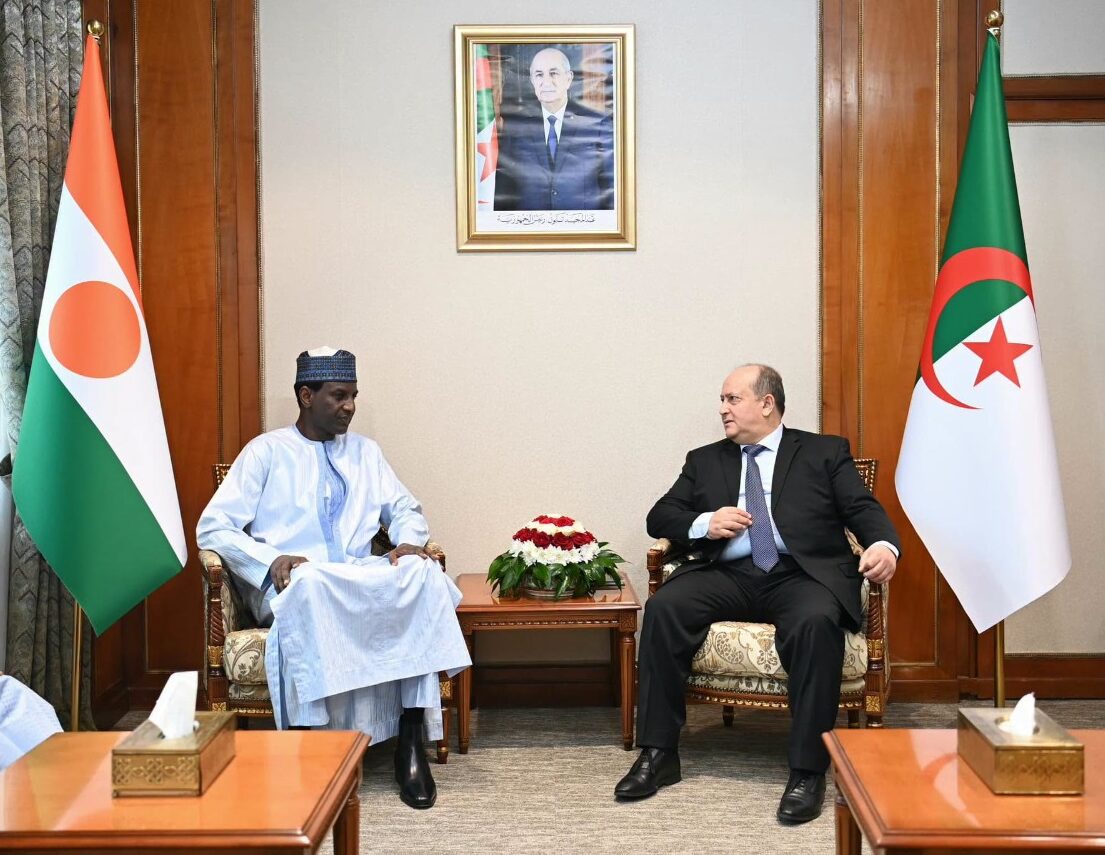
Relations received another boost during Nigerien President Abdourahamane Tiani’s visit to Algeria in February. This was followed by the second session of the two countries’ Joint High Commission for Cooperation, held in Niamey in March 2026. Both sides expressed their desire to deepen cooperation and described their relationship as strategic.
On August 13, 2026, the Algerian prime minister arrived in Niger, where he and his Nigerien counterpart, Ali Lamine Zeine, oversaw the start of drilling for a well at the Kafra South oil field. The field lies in northern Niger and covers about 23,700 square kilometers along the Algerian border, opposite the Tafassasset area near the two countries’ frontier.
Algerian exploration efforts had already led to the discovery of oil at Kafra in 2018, followed by further findings in 2019, before the production-sharing agreement was renewed and the project was revived.
A Positive Reading
Algeria’s moves toward Mali and Niger have drawn considerable attention and analysis. Algerie 54, for example, said the moves toward the Sahel should not be viewed as a temporary diplomatic initiative but as a sign of a deliberate return to an active regional role.
In an analysis published on August 17, the website said Algeria is increasingly seen as a key partner in shaping security and stability across Africa, drawing on its diplomatic record and an approach based on dialogue and political solutions rather than escalation. This gives it a distinct role in addressing the Sahel’s crises.
The same source stressed that the rapprochement Algeria is pursuing with Sahel countries reflects a strategic vision that goes beyond managing immediate crises toward building long-term political and development partnerships.
It noted that successfully restoring Algeria’s presence in the Sahel would strengthen its position as an indispensable regional actor, particularly amid the security and economic crises facing the region.
Hamid Rami, a professor of international relations at the National School of Political Science in Algiers, said restoring relations with the two countries was necessary because Mali, like Niger, represents Algeria’s strategic depth and is an integral part of its national security.
In comments quoted by Ultra Algeria on August 15, Rami said, “Today, we are looking at a highly advanced pragmatic partnership between Algeria and Niger. It appears that relations between the two countries have moved beyond the protocol, procedural formalities, and what is known as ‘assembling the pieces’ to a more advanced stage based on institutionalized economic and political cooperation.”
He added that one indication of this was the signing of more than 20 agreements and memorandums of understanding during the first half of 2026, followed by high-level visits by Nigerien leaders to Algeria.
The political science professor believes that the current equation aims to transform the border areas between Algeria and Niger from security buffer zones into centers of investment and production.

Strategic Cooperation
Political and African affairs researcher Idrissa Ayat said that since Niger and Algeria restored warmer relations after a period of tensions, their bilateral ties have gone beyond simply returning to normal diplomatic relations. Step by step, the relationship has moved from repairing old ties to redefining them.
What stands out, Ayat said in an analysis posted on Facebook on August 15, is that the shift has gone beyond diplomatic courtesies. Algeria’s Defense Ministry has described it as a “strategic partnership.”
The researcher noted that Algeria is not acting in a country far removed from its strategic sphere but directly south of its border, in a Sahel region where security, energy, armed groups, migration, and cross-border trade have become closely intertwined issues that are difficult to separate.
The broader geopolitical picture, he added, shows Algeria seeking to turn its southern border from a troubled security periphery into an extension of its strategic depth, while Niger is seeking to turn its position from a landlocked Sahel country into a hub for energy and economic interests linking West and North Africa.
“These latest developments represent the kind of regional cooperation that we have long called for in the Sahel. Politics can shift, governments can change, and international alliances can come and go,” he added, “but geography does not move.”
Ayat said geography ties the two countries closely together: Niger lies directly south of Algeria, while Algeria is Niger’s closest major gateway to the Mediterranean. They share more than 950 kilometers of border, along with cross-border security threats and overlapping interests in energy, trade, migration, and security.
“I have said more than once that being neighbors is a geopolitical reality, but turning that reality into a strategic advantage is a political decision.”
Broader Implications
Political analyst and African affairs specialist Cheikh Boussaid believes Algeria’s decision to restore its ambassador to Niger, along with its current efforts to strengthen ties, goes beyond direct diplomatic relations and carries broader political implications.
In comments to Al-Estiklal, Boussaid said, “Algeria has clearly sought to turn the page on tensions with Niger and Mali and open a new chapter in its bilateral relations with both countries.” He pointed to Algeria’s earlier invitation to Nigerien President Abdourahamane Tiani to visit Algeria as evidence of that shift.
Boussaid said Algeria’s initiatives have strategic implications, given their multiple economic and political objectives. At the top of the list, he said, is Algeria’s effort to increase exports into Africa through Niger and strengthen its presence on the continent, particularly within the framework of the African Continental Free Trade Area (AfCFTA).
He also noted that Algeria was slow to recognize the changes taking place across the Sahel but said its latest moves now appear calculated and based on an assessment that the region’s balance of influence could be reshaped following France’s withdrawal.
This effort is supported by Niger’s geopolitical position as a link between the crises in Libya and Sudan, irregular migration routes, and the wider Sahel, he added.
Boussaid also sees Algeria’s moves as part of its competition with Morocco for diplomatic influence and economic partnerships, seeking to match the ties Rabat has built with Sahel countries by maintaining positive relations and avoiding direct disputes or crises with them.
Still, the political analyst does not see Algeria’s current moves as posing any real threat to Morocco’s gains or partnerships in the Sahel, including with Mali and Niger. Instead, he believes they could benefit the Sahel countries themselves by giving them greater scope to engage with different countries and powers across the region.