A Battle to Cut off Supplies: How Did Sudan’s War Get Close to Chad?
"The army now possesses the capabilities to track, monitor, and destroy external support directed to the Rapid Support Forces."
Deep within the eastern Ennedi region, a convoy of vehicles was engulfed in flames on August 20, 2026, as detected by satellite imagery. Chad subsequently accused Sudanese aircraft and drones, or forces supporting the army, of pursuing and bombing the convoy more than 100 kilometers inside its territory.
Khartoum did not claim responsibility, but the strike came amidst escalating operations targeting Rapid Support Forces (RSF) supply routes across the western border.
Does this incident reveal the army's shift to an offensive strategy relying on long-range drones and precise intelligence?
Can it sever one of the most vital supply lines to Darfur? Or does pursuing convoys beyond the borders threaten to transform the Sudanese war into a regional confrontation involving Chad and neighboring countries?
Military Aid
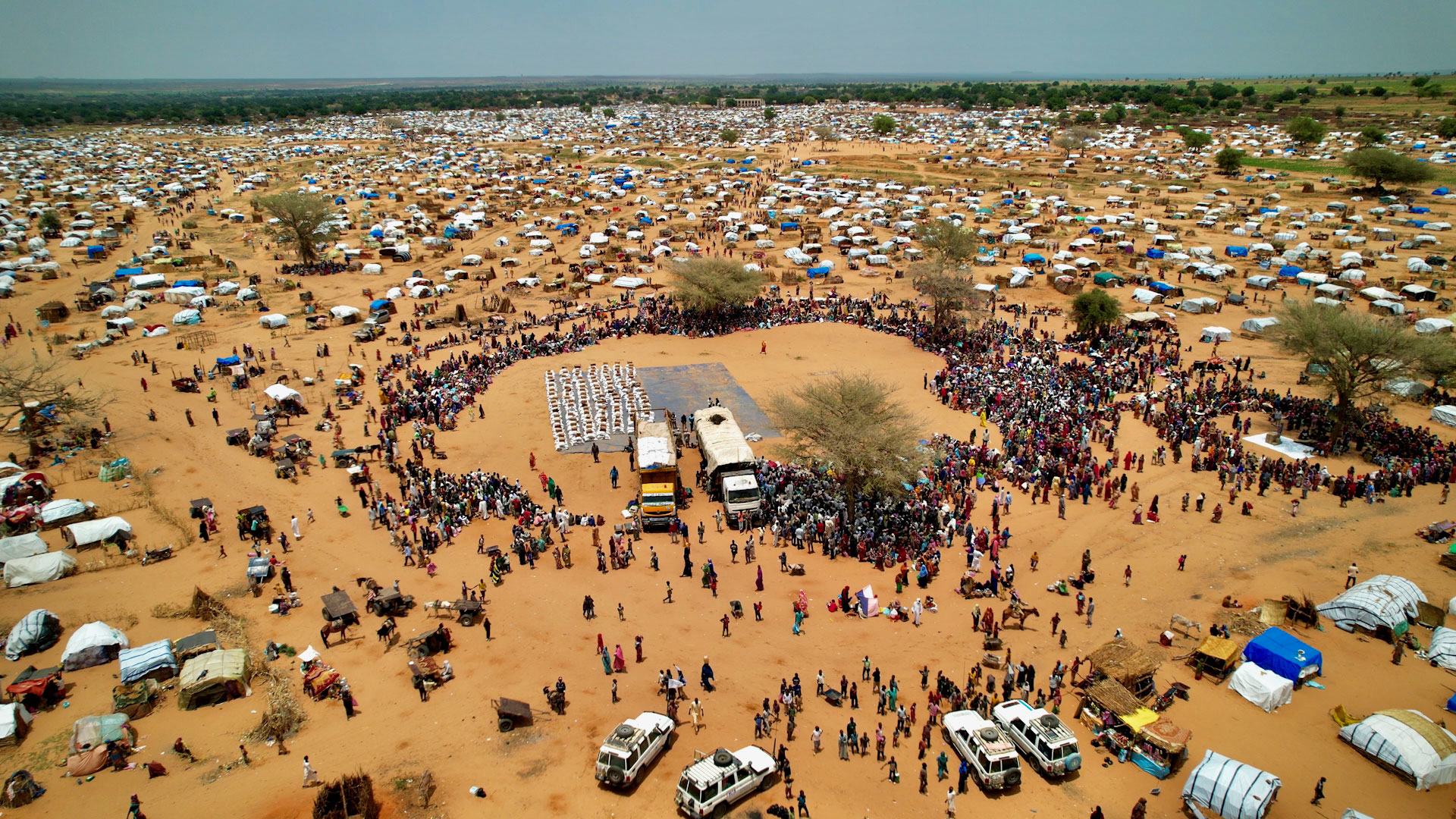
Since the early months of the war that erupted in April 2023, the Sudanese-Chadian border has been central to the mutual accusations regarding the sources of arms for the RSF.
The Sudanese government has consistently accused N'Djamena of allowing the use of its airports and territory to transport logistical and military aid to Hemedti's forces.
The importance of the Chadian front lies in its location within a broader supply network stretching between Chad, Libya, and the Darfur region.
The UN Security Council's Panel of Experts documented cargo flights to the airports of N'Djamena, Amdjarass, and Abeche, as well as the movement of land convoys carrying logistical support and fuel shipments toward RSF-controlled areas.
This route provides the forces with a rear access point, relatively far from the front lines, allowing for the transport of vehicles, ammunition, and fuel before their distribution to the battlefronts within Sudan.
The route's importance increases with the escalation of fighting in Darfur and Kordofan and the RSF's ongoing need to replenish its losses in vehicles and equipment.
The western border is vast and porous, intersecting with desert routes connecting northern Darfur to eastern Chad and southern Libya, making it difficult to monitor using conventional methods.
Furthermore, the tribal and social intermingling on both sides of the border—with estimates suggesting the presence of 13 shared tribes—provides the movement of people and vehicles with a highly complex social and geographical cover.
Therefore, in the Sudanese army's military calculations, the Chadian front is no longer a distant rear area, but rather an integral part of the battlefield itself.
Every convoy that reaches Darfur could later transform into a fighting force on one of the front lines, and every shipment of fuel or ammunition that crosses the border extends the RSF' ability to maneuver and survive.

Rules of Combat
Recent operations reveal a significant shift in the Sudanese army's approach to external supplies for the RSF.
Instead of focusing on engaging convoys after they reach the battlefields, the army is now focused on detecting them in open desert areas and pursuing them before their vehicles disperse or their cargo reaches combat units.
This requires integrated capabilities that go beyond simply possessing the offensive capabilities, encompassing continuous reconnaissance, intelligence gathering, target identification, data transmission, and then executing the strike at the opportune moment.
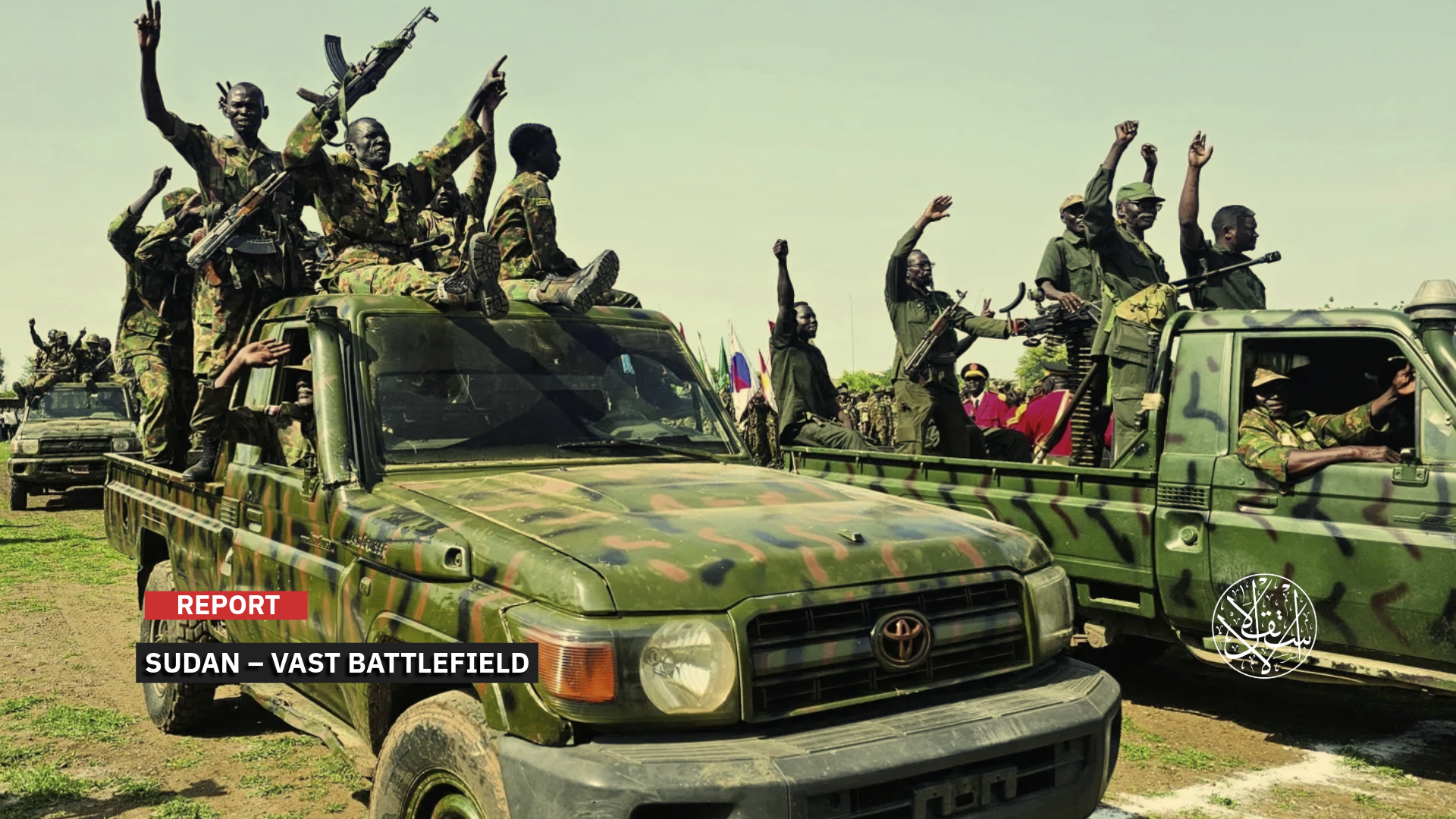
Sudanese military sources, speaking to several local media outlets, believe the army now possesses the capabilities to track, monitor, and destroy external support directed to the RSF.
They stated that their forces have targeted convoys crossing from the border triangle with Libya and Chad in recent times, without crossing into neighboring countries.
The repeated strikes along widely separated routes indicate that the army is no longer relying solely on fragmented ground intelligence, but is developing a broader surveillance network along its western borders.
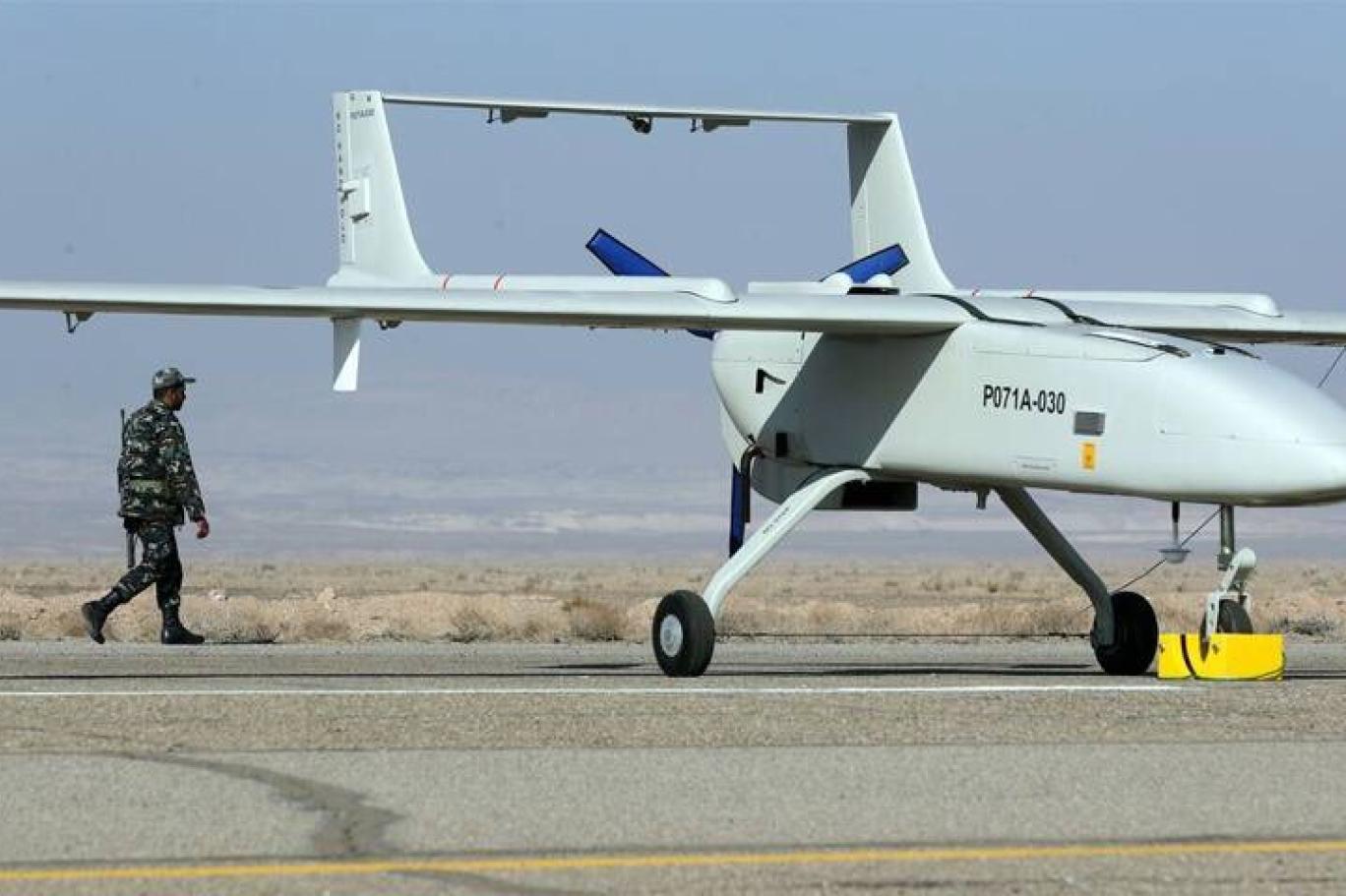
Military researcher Mohamed Al-Amin Al-Tayeb says that the operations carried out in recent weeks indicate the army possesses modern drones capable of reconnaissance, surveillance, and precise target engagement, enabling it to monitor a wide swathe of the border with Libya and Chad.
The importance of these capabilities is highlighted by the nature of the terrain itself; the convoys move across vast desert areas and can change routes or split into smaller groups, making their detection and pursuit a complex task requiring extended aerial presence and precise target tracking.
Supply Lines
The Sudanese army's targeting of convoys is not aimed at achieving limited tactical gains, but rather at weakening the RSF' combat capabilities at their source.
Armed vehicles, ammunition, and fuel are not merely auxiliary supplies, but essential elements in the fighting model upon which the forces rely. This model is based on rapid movement over long distances, deployment in flexible groups, and the transport of fighters and weapons between fronts.
Therefore, destroying a convoy before its arrival can have consequences that extend beyond the number of vehicles burned, potentially disrupting operations that were awaiting that shipment.
Researcher Al-Tayeb points out that targeting supply lines before they reach the theaters of operations is one of the most effective methods for weakening a fighting force, as it deprives them of equipment, fuel, and ammunition before they can be used in combat.
This also necessitates allocating additional resources to protect routes, deploying reconnaissance and early warning units, and moving shipments in smaller groups, which slows down supplies, increases costs, and reduces efficiency.
This explains why the Chad front has become a strategic target; the army does not view convoys as isolated movements outside the theater of war, but rather as a link in a chain that begins with airports and logistical centers in neighboring countries, then passes through desert roads, and ends at RSF camps inside Darfur.
If it manages to disrupt the border loop, it could limit the flow of equipment before it is distributed across multiple fronts, regaining some of the advantage it previously lost due to the vastness and difficulty of securing the border.
However, the success of this strategy cannot be measured by a single strike, even if the targeted convoy consists of dozens or hundreds of vehicles.
The extended border allows for the opening of alternative routes, and RSF can alter the timing of their movements, utilize civilian vehicles, split shipments, or transport them via other routes from Libya and Ethiopia.
Maintaining aerial surveillance also requires continuous resources and the ability to verify targets to avoid striking civilian or humanitarian convoys in an area experiencing significant refugee and aid movement.
Thus, the new battle appears to be a race between two systems: a flexible supply network that relies on multiple routes and the vastness of the desert, and a reconnaissance and strike system that attempts to exploit these open spaces as a vulnerability.
The drones may give the army greater ability to slow down and increase the cost of supplies, but they will not completely close the Chadian route unless they are coupled with control of the Sudanese side of the border, accurate and up-to-date intelligence, and political pressure that limits the use of neighboring countries' territory.
High Alert
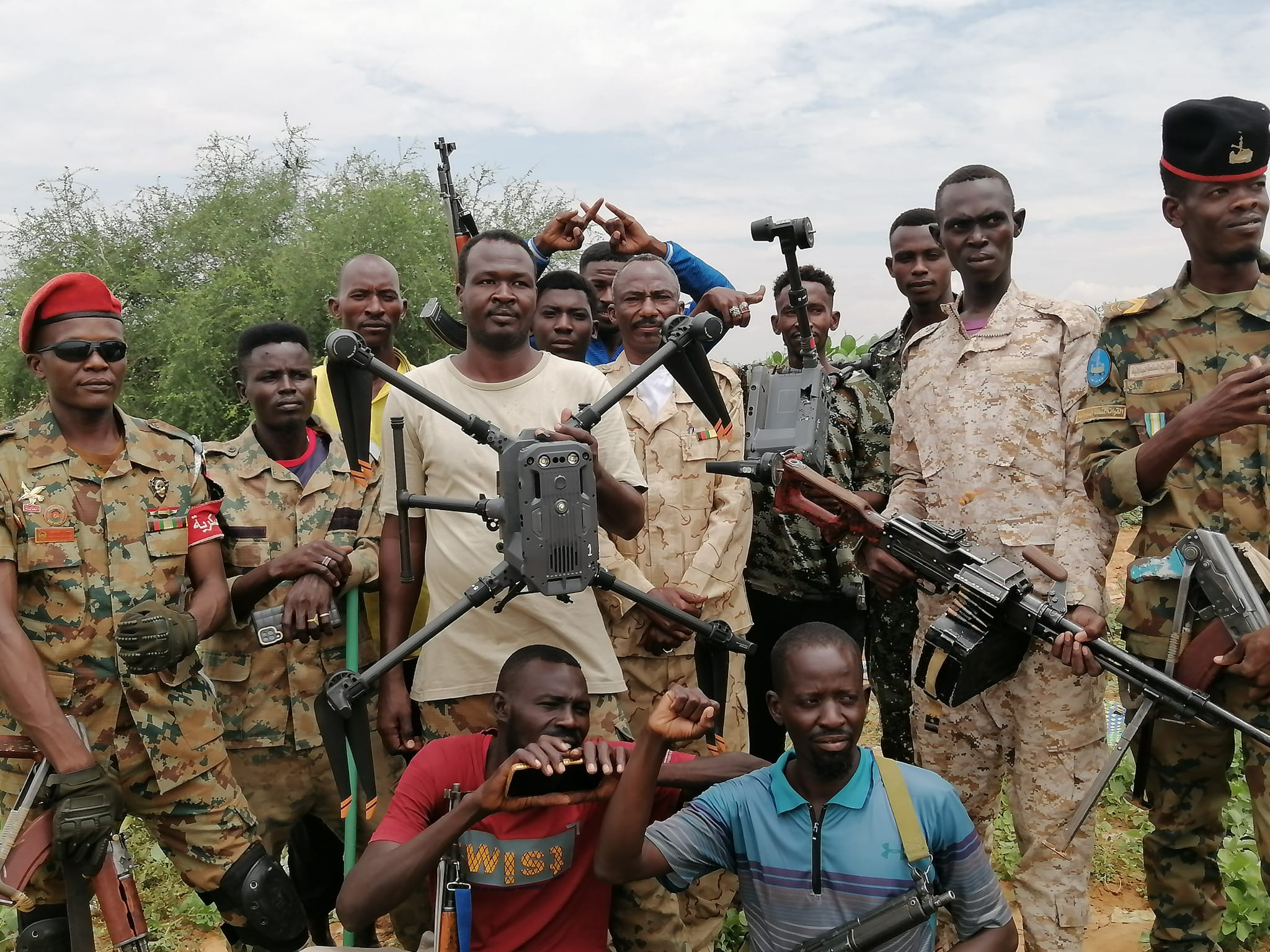
Chad, however, treated the strike that occurred on August 20, 2026, as a potential violation of its sovereignty, rather than merely an extension of the ongoing fighting in Sudan.
The Chadian army's media director, General Chanan Issac Cheikh, announced that military units were on high alert in anticipation of any new developments, emphasizing that the armed forces reserved the right to take the necessary measures to defend the country and counter any threat.
He also warned the parties to the Sudanese conflict against bringing the fighting into Chad or expanding operations across the border.
On August 23, the Chadian National Assembly escalated its stance, condemning the bombing of the Ennedi region and describing it as a serious and unacceptable violation of sovereignty and territorial integrity.
It declared its support for President Mahamat Idriss Deby and the army in taking the necessary measures to protect the country, warning that any further incursions could expand the scope of hostilities to include Chadian territory.
The concern later reached the continental level, with the Chairperson of the African Union Commission, Mahmoud Ali Youssouf, stating that he was following with concern the reports of the airstrikes that occurred in the Ennedi region on August 20.
He reiterated the Union's commitment to the sovereignty, unity, territorial integrity, and inviolability of borders of its member states, calling on all parties to exercise maximum restraint and refrain from any action that could escalate tensions between neighboring countries.
He also offered the Commission's readiness to support initiatives to de-escalate the situation and prevent a recurrence of such incidents.
The crisis between Khartoum and N'Djamena did not begin with this strike.
On December 16, 2023, Chad declared four Sudanese diplomats, including the military attaché, persona non grata after the Sudanese army's deputy commander-in-chief, Yasser al-Atta, accused the Chadian leadership of opening its borders and airports to supply the RSF with weapons.
The following day, Sudan retaliated by expelling three Chadian diplomats, including the military attaché, in accordance with the principle of reciprocity. However, the two sides avoided severing diplomatic relations.
Chad hosts approximately one million Sudanese refugees, necessitating daily coordination regarding border crossings and aid. Furthermore, cross-border tribal ties mean that any direct confrontation could easily spill over into interconnected communities.
Sources
- Washington proposes expanding the UN arms embargo on Darfur to cover all of Sudan [Arabic]
- Statement by the Chairperson of the African Union Commission on the situation at the Chad-Sudan border [Arabic]
- Why did the Sudanese army shell Chad? [Arabic]
- Bombing of vehicles inside Chad and accusations against the Sudanese army... What do satellite images reveal? [Arabic]
- The Border Crisis and Difficult Choices: How the Sudan War Imposes a New Equation on Chad? [Arabic]