Abu Dhabi and Europe’s Far Right: An Alliance Manufacturing the ‘Dangerous Muslim’
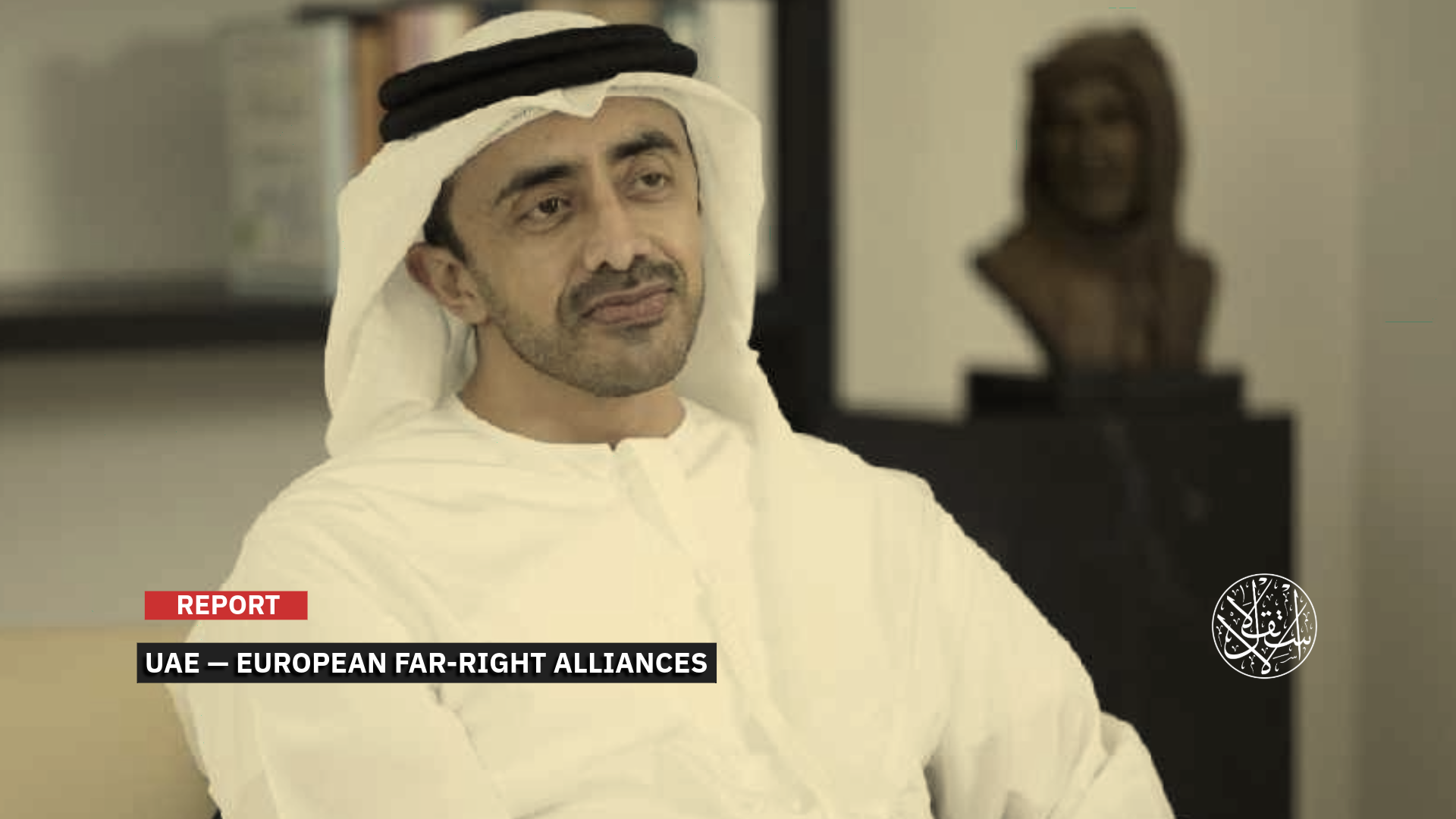
Krieg: The performances of the Emirati disinformation influencers have become more akin to Monty Python sketches.
Emirati activist Omar al-Balooshi appeared in an English-language video posted on August 25, 2026, in which he incited against a broad segment of Muslims in Europe and Britain, claiming that they were being subjected to what he described as “silent extremism” led by a network stretching from mosques to universities.
British researcher Andreas Krieg did not need a lengthy rebuttal. Instead, he responded sarcastically that “the performances of Emirati disinformation influencers are becoming increasingly Monty Pythonesque, and that there are so many good AI bots out there today that could do a better job reading AI-generated scripts.”
Between al-Balooshi’s rhetoric and Krieg’s response, a question emerged that goes beyond a dispute between an activist and a researcher: Are the claims being made about Muslims in Europe and Britain merely individual positions, or do they reflect a broader Emirati campaign that recasts Muslims as an internal threat and links influencers with intelligence firms, think tanks, and elements of the European far right? And how has the Emirati confrontation shifted from targeting political Islam in the region to pursuing its image and perceived extensions within Muslim communities in the West?
An Internal Infiltration
In the video, al-Balooshi presented a broad portrayal of Muslim communities in Europe and Britain, describing them as an environment that, he claimed, was experiencing what he called “infiltration from within.”
He alleged that the issue did not concern any particular organization, but rather a network that, according to him, extended from mosques and charitable organizations to universities, schools, and community centers.
Al-Balooshi linked this network to ideas that, he claimed, denigrate Western women and reject liberal democracy, while alleging that its members simultaneously exploit the mechanisms of the democratic system to gain access to local councils, mayoral offices, and parliaments.
He also claimed that some Muslims deliberately promote isolation through rhetoric portraying Western societies as corrupt and in need of resistance from within.
Emirati journalist Mona alhamoudi endorsed some of al-Balushi’s claims, arguing that extremism begins with ideas that foster division and rejection of society before eventually turning into violence.
British researcher Andreas Krieg, meanwhile, placed this rhetoric within what he described as a network of Emirati influencers promoting Abu Dhabi’s narrative about Muslims in the West.
According to reports and investigations into Emirati activity in Europe, this digital confrontation does not appear to be isolated, but rather part of a broader trajectory dating back years.
Those reports have accused entities linked to Abu Dhabi of targeting Islamic figures and institutions in several European countries as part of a campaign focused on the Muslim Brotherhood and what the UAE describes as “extremist Islam.”
Investigations by Abu Dhabi Secrets, based on some 78,000 leaked documents, revealed that the Swiss private intelligence company Alp Services carried out operations on behalf of entities linked to the UAE targeting individuals and Islamic institutions in 18 European countries.
More than 1,000 people and 400 organizations were reportedly included on suspicion maps linking them to the Muslim Brotherhood or to what the investigation described as an “extremist Islamic network.”
According to the investigations, these operations went beyond intelligence gathering, extending to the production of media materials and attempts to influence journalists and policymakers, actions that could have repercussions for the reputations and professional activities of the individuals and institutions targeted.
In January 2026, the French intelligence publication Intelligence Online added another dimension to this picture, reporting that documents it had reviewed showed discussions about cooperation between the Visegrad 24 platform and the UAE Ministry of Foreign Affairs to support a narrative focused on confronting “radical Islam” in the West, amid growing ties between figures on the European right, including Nigel Farage and Jordan Bardella, and Abu Dhabi.
The platform also published an interview with Amjad Taha discussing the presence of the Muslim Brotherhood in European cities.
In this context, the rhetoric that appeared in al-Balushi’s video can be seen as part of a broader landscape in which multiple tools and platforms, from influencers and digital media to think tanks and intelligence firms, are deployed in a struggle that extends beyond opposition to political Islam to shaping how Muslims are perceived within Western societies.
Crafting a Narrative
One of the platforms that contributed to shaping this narrative is the website European Eye on Radicalization. On July 28, 2019, the European Observatory for Middle East Affairs reported that the site had been launched under the direct management of Ali Rashid al-Nuaimi, who is close to the Emirati leadership, particularly President Mohammed bin Zayed, with the participation of Saudi national Kamel Al-Khatti, while Italian researcher Sara Brzuszkiewicz served as editor.
According to the European organization, the website was allocated more than €1.3 million annually and published content in Arabic, English, French, and Spanish, under a slogan focused on broadening understanding of the phenomenon of Islamic extremism in Europe.
The European Observatory for Middle East Affairs argued that the practical focus of the UAE-funded website was on Muslim migrants and refugees and political Islam organizations.
Its content also took on a research-oriented character through a multinational team that included specialists in security, terrorism, and politics, among them Adrian Shtuni, Shadi Abdel-Wahab Mansour of the Future for Advanced Research and Studies (FARAS) in Abu Dhabi, Alexander Ritzmann, Daniela Pisoiu, and Triantafyllos Karatrantos, as well as researchers specializing in issues related to Muslim identities.
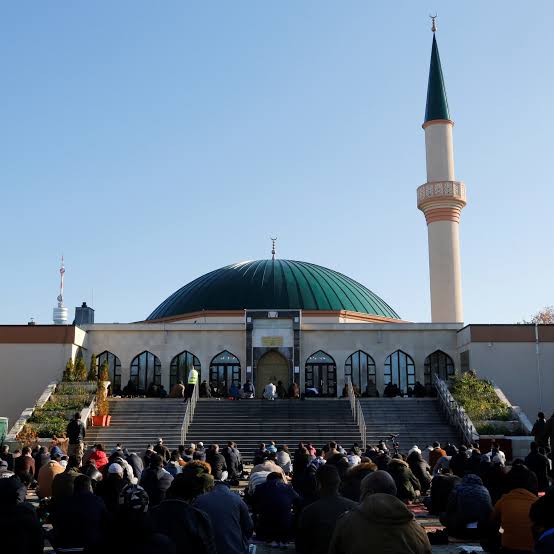
In a report published on January 18, 2018, on the “Muslim Brotherhood in Austria,” the website drew on a study by researcher Lorenzo Vidino to portray the group as an institutional network that manages aspects of Muslims’ lives and exerts influence over the Austrian government, warning that the country could become a preferred destination for its activists.
This Emirati narrative emerged in a political environment marked by the rise of the hard-right in Austria, alongside measures and policies affecting imams, the hijab, and Islamic institutions. This provided a political context conducive to the spread of rhetoric linking political Islam with migration and security.
Ahmed Abu Ziad, an activist in Austria’s Muslim community, told Al-Estiklal that Emirati efforts go beyond targeting any particular group to pursuing Arab and Muslim dissidents who found in Europe a space for human-rights and political activism.
In his view, the rhetoric of combating extremism provided cover for restricting their activities and putting pressure on them.
Destroying Reputations
However, according to the Abu Dhabi Secrets investigations, the operational mechanism used by the UAE to target individuals and Muslims in Europe began with a meeting held on August 7, 2017, at a luxury hotel in Abu Dhabi between Mario Brero, the head of Alp Services, and an Emirati operative known as “Matar.”
The Daraj website, one of the investigation’s partners, reported that the meeting focused on mapping the UAE’s opponents and subsequently working to damage their reputations by secretly and extensively disseminating derogatory information.
In October of the same year, the first contract, worth €5.7 million, was signed and paid for by the Emirati Al-Aryaf Center, which the documents said was used as a cover for security agencies.
The operations were given the names “Arnica” and “Crocus” and, according to the investigations, targeted Qatar, the Muslim Brotherhood, and Abu Dhabi’s opponents.
The case of Hazem Youssef Nada, the American businessman and scholar, illustrates how these operations, according to the documents, moved from information gathering to directly damaging a target’s reputation and business interests.
According to the documents, the founder of Lord Energy was not among the initial targets until Swiss journalist Sylvain Besson proposed his name.
Brero then presented it to the Emirati side in a 48-page memorandum, describing Nada as a potential heir to his father Youssef Nada’s network.
The company’s team examined Nada’s reliance on loans to finance his business before, according to the investigations, turning to a campaign against his reputation aimed at prompting banks to reconsider their dealings with him.
According to the documents, the plan included paying £625 to British journalist Nina May to produce damaging material, alongside the publication of other articles linking the company to terrorism in search-engine results.
According to the account presented by the investigations, the campaign led five financial institutions to withdraw from negotiations with Nada, while UBS closed both his personal account and his mother’s account. Ultimately, according to the same source, the company collapsed, its employees were laid off, and its owner was left with mounting debts.
As the documents came to light, the case moved into the judicial arena. On April 15, 2024, Mediapart and its partners revealed French and Swiss investigations into allegations of unlawful espionage on behalf of a foreign state, defamation, and money laundering.
According to the investigations, the complaints involved French journalist Rokhaya Diallo and French national Sihem Souid, whose home was reportedly photographed as part of an operation codenamed “Constellation,” as well as researcher Farid Hafez, who filed a lawsuit in Washington in March 2024 against the company allied with the UAE.
Thus, according to the published documents and investigations, the Alp Services case reveals a shift from political and media rhetoric toward more organized tools based on gathering information, building dossiers on opponents, and then using that information to influence their reputations and their professional and financial relationships.

The European Right
The influence operations attributed to the UAE did not take place in a political vacuum; rather, they required a European environment receptive to its narrative about political Islam, migration, and security. In this context, an overlap with far-right parties emerged, particularly in France.
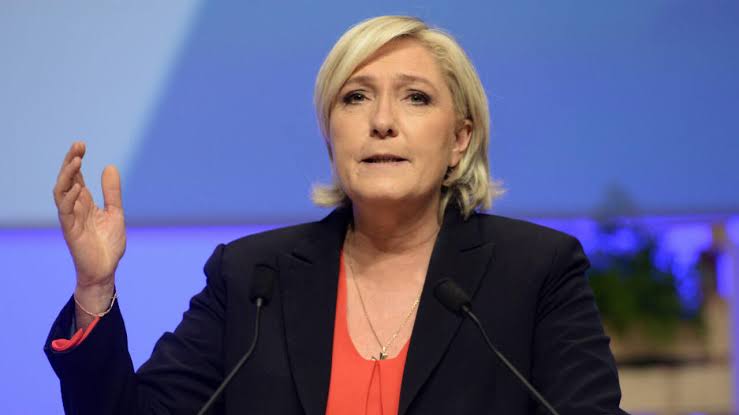
On October 23, 2016, French journalist Marine Turchi reported that an Emirati representative had offered to provide assistance to the National Front, then led by Marine Le Pen, in July 2014, and that Abu Dhabi had funded a trip by Le Pen to Egypt in May 2015, at a time when the party was seeking sources of funding ahead of the 2017 presidential election.
These contacts coincided with Le Pen adopting rhetoric portraying the UAE, Egypt, and Russia as parties with which cooperation was possible in confronting Islamists.
On October 21, 2016, Mediapart reported that the party had sought Emirati funding, before reporting on October 4, 2019, that an €8 million loan provided by French businessman Laurent Foucher and routed through a bank based in the UAE had helped rescue the party from a financial crisis.
This picture is not limited to France, as similar allegations emerged in other European countries. On May 23, 2019, Abdullah Nicholas, president of the Islamic Shura Council in Switzerland, said that Arab countries, including the UAE, were providing information to anti-Muslim parties and encouraging European governments to target figures and organizations they considered close to the Muslim Brotherhood.
Nicholas argues that this approach has helped entrench a binary portrayal of Muslims in European political discourse, based on the distinction between the “good Muslim” and the “radical Muslim,” making the fight against extremism a framework through which broader Islamic currents and figures can be targeted than those groups formally classified as extremist.
Thus, the relationship between Abu Dhabi and certain currents of the European right does not appear to be merely a temporary convergence of views on political Islam.
Rather, according to these reports and allegations, it reveals mutually reinforcing interests: an Emirati narrative seeking to transfer its confrontation with Islamists into the European arena, and right-wing forces finding in that narrative material that strengthens their own discourse on migration, Muslims, and security.
The Islamophobia Scarecrow
On January 28, 2026, the open-source investigations platform Eekad revealed more than 330,000 accounts that it said were part of a network linked to the UAE, carrying out more than 720,000 interactions attacking Islam and Muslims in Europe.
The platform said that some Arab regimes, including the UAE, bear primary responsibility for the spread of anti-Islamic discourse, or what is known as “Islamophobia,” noting that, according to its analysis, this is linked to their cooperation with extremist parties in European countries with the aim of supporting their own regimes and political interests.
These findings intersect with a report by the U.S. magazine Foreign Policy, which said that the UAE spends millions of dollars on think tanks, academic institutions, and lobbying groups, partly with the aim of influencing how Western capitals address local political activists who oppose their governments.
The magazine quoted UAE Foreign Minister Abdullah bin Zayed in an interview with the US channel Fox News, following the 2017 General Debate held in Riyadh, as saying, “Our threshold is very low when we talk about Islamic extremism.”
He added that the UAE could not accept “incitement or funding,” explaining that the definition of terrorism differs from one country to another, and that, for his country, “it goes far beyond that” than simply carrying weapons or terrorizing people.
According to critics of UAE policy, this broad definition of extremism reveals considerable room for the confrontation with armed groups to expand into the targeting of broader Islamist currents, figures, and institutions, particularly when they overlap with political opposition or human-rights activism in Europe.
Foreign Policy concluded by warning of the consequences of anti-Islamic rhetoric, citing the 2019 terrorist attack that targeted two mosques in the New Zealand city of Christchurch.
It estimated that the escalation of rhetoric inciting hostility toward Muslims could have consequences extending beyond political and media disputes to threaten the lives of innocent people.
Thus, the conflict moves beyond the pursuit of specific organizations or ideas to a broader struggle over the very definition of “extremism”: Where does the fight against violence and terrorism end, and where does the targeting of Muslim identity and the political and human-rights activism of Muslims in Europe begin?