How the UAE, Ethiopia, and ‘Israel’ Are Reshaping the Dynamics of Sudan’s War
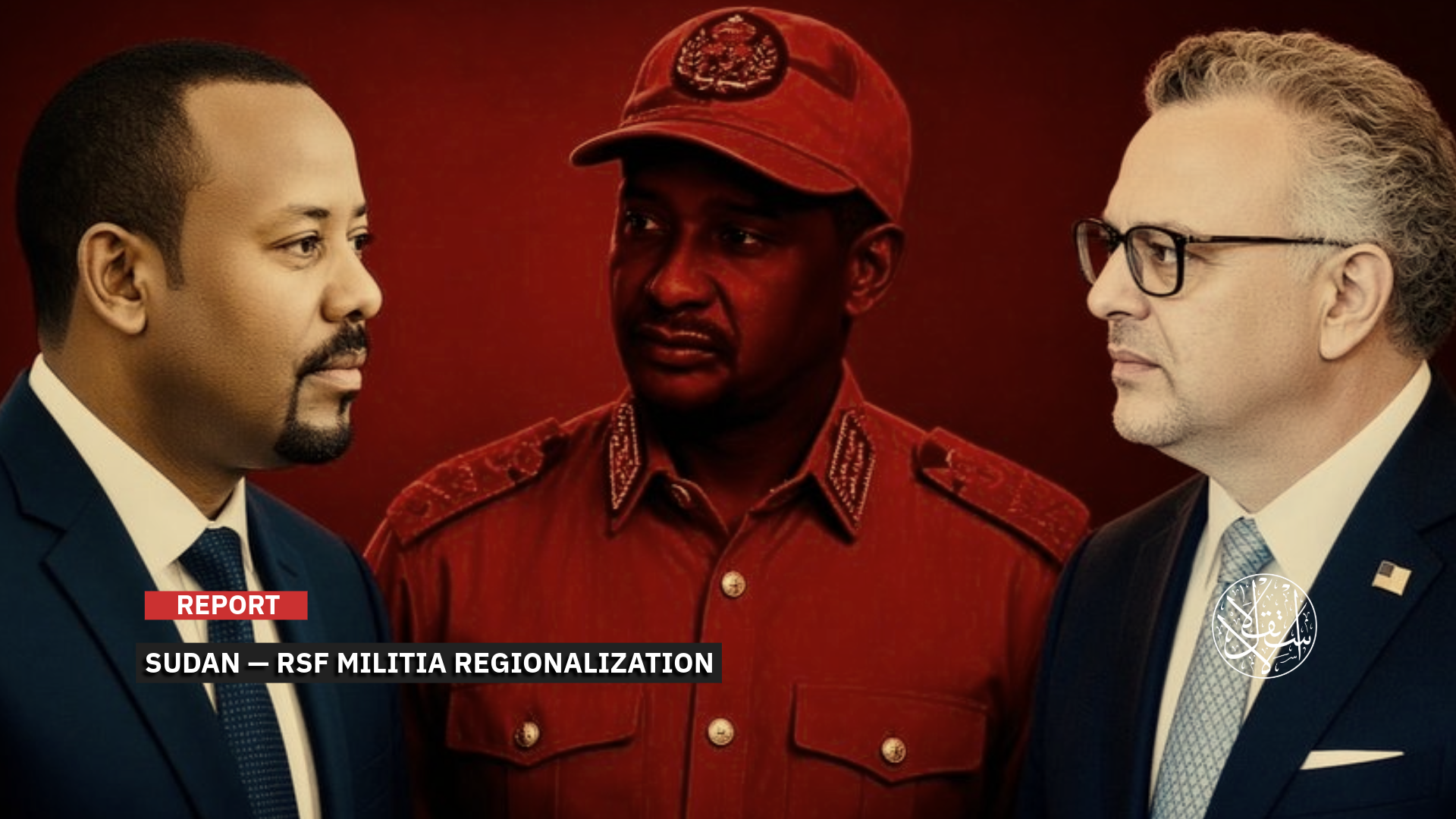
Hemedti’s visit to Addis Ababa comes at a particularly sensitive moment in Sudan’s war.
The visit by Rapid Support Forces (RSF) militia commander Mohamed Hamdan Dagalo, known as Hemedti, to the Ethiopian capital Addis Ababa, coinciding with a military buildup and logistical movements at a military base in the city of Asosa, near the Sudanese border, as well as reports of four UAE arms shipments to the RSF militia, reveals a new development in the course of the Sudanese war, particularly amid the escalation of RSF militia operations in the Blue Nile region.
These developments come amid efforts by the United Arab Emirates to support the RSF militia, which has suffered successive defeats on several fronts, by enlisting Ethiopia, whose interests overlap with the continuation of instability in Sudan. The moves also raise growing indications of military coordination or converging interests among Ethiopia, the UAE, and the RSF militia.
These developments suggest that the Sudanese war is no longer confined to battle lines within Sudanese territory. Movements along the eastern border have increasingly raised questions about the nature of the Ethiopian and Emirati roles in supporting the RSF militia, alongside Chad’s role, gradually broadening the scope of the conflict and opening the door to the spillover of its repercussions into neighboring countries.
This raises questions as to whether Addis Ababa is gradually shifting from being a country affected by the Sudanese war by virtue of its geographic location to becoming a party directly or indirectly involved in the conflict, through providing forms of support or logistical and military facilitation to one of the parties to the conflict.

Hemedti’s Visit to Ethiopia
These questions take on particular importance in light of the visit by Rapid Support Forces (RSF) militia commander Mohamed Hamdan Dagalo, known as “Hemedti,” to Addis Ababa on August 27, 2026, where he met with Ethiopian Prime Minister Abiy Ahmed.
The visit came amid reports of Ethiopian military activity and troop buildups in the Asosa area, as well as UAE-linked cargo flights to Ethiopia, in addition to allegations that Ethiopia has provided territory and military bases that serve as routes for logistical and military support to the RSF militia.
Hemedti’s visit to Addis Ababa comes at a highly sensitive juncture in the Sudanese war, particularly as fighting has spread to new areas in the Blue Nile region and supply lines have shifted following the Sudanese army’s recapture of several key positions and strategic fronts.
The visit also marked Hemedti’s second appearance abroad since the outbreak of the war between the Sudanese army and the RSF militia on April 15, 2023, following his visit to Uganda.
This came after a prolonged period of absence that sparked widespread speculation about his fate, with some figures going so far as to assert that he had been killed.
The significance of the visit also stems from the level of reception and the meeting Hemedti received. His appearance in the Ethiopian capital and his meeting with Prime Minister Abiy Ahmed provide the RSF militia with political and regional space that goes beyond logistical support, while at the same time raising concerns about the implications of any Ethiopian rapprochement with the RSF militia for regional security, particularly for Egypt.
In this context, Sudan’s Sovereignty Council accused Ethiopia of involvement in the ongoing conflict in Sudan and of allowing the RSF militia to launch attacks from Ethiopian territory, coinciding with Hemedti’s arrival in Addis Ababa.
https://x.com/Amgad_Fareid/status/2093430272813416586
In a post on X, Amgad Fareid, adviser to the Chairman of Sudan’s Sovereignty Council on political affairs and foreign relations, said that Hemedti’s arrival in Addis Ababa coincided with an escalation in RSF militia attacks on the Blue Nile region, on Sudan’s eastern front.
Fareid added that the attacks were being launched from Ethiopian territory, specifically from the Asosa base belonging to the Ethiopian army, which he said had been allocated to the RSF militia, amid increasing support provided to the militia by the UAE. He also said that satellite imagery had documented these movements.
Asosa: An RSF Militia Hub
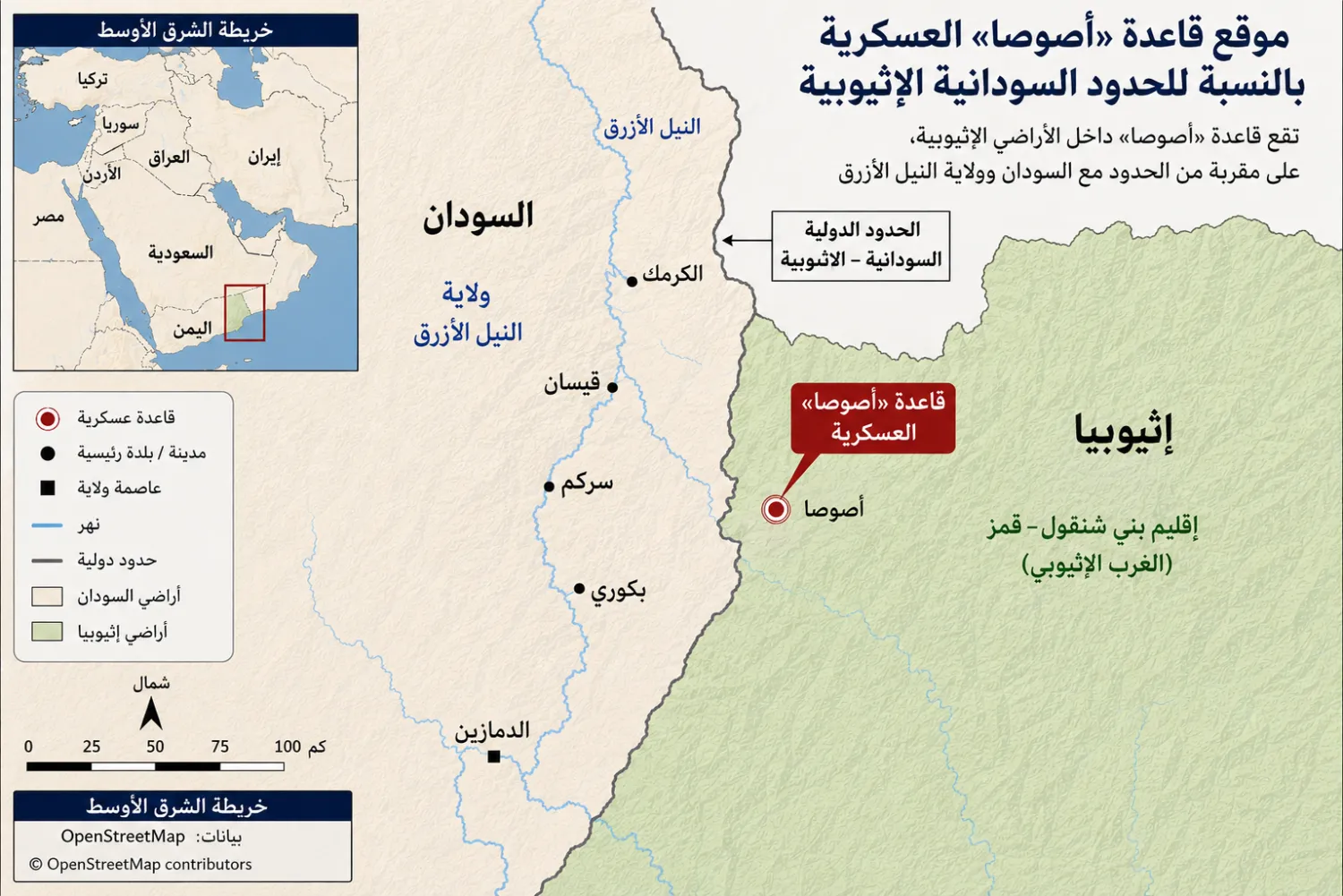
The town of Asosa, the capital of Ethiopia’s Benishangul-Gumuz Region and located near the Sudanese border, is gaining increasing importance in light of reports of a military buildup in the area, coinciding with an escalation in RSF militia operations in the Blue Nile region.
On August 28, 2026, a report by the Yale University Humanitarian Research Lab confirmed that military equipment had been assembled at the Ethiopian Asosa base, located near the Sudanese border, noting that it could potentially be linked to RSF militia movements in preparation for an attack in the Blue Nile region.
The lab said it had detected “the presence of equipment at the Ethiopian army base in Asosa between August 23 and 28,” explaining that the equipment included vehicles sufficient to form a force ranging in size from a large battalion to a brigade, capable of transporting between 750 and 1,000 personnel.
It added that “the increase in military equipment and vehicle supplies at the Asosa base raises the risk of a major and imminent RSF militia attack on Damazin.”
The report concluded that these findings reinforce the Sudanese government’s accusations against Ethiopia of providing supplies to the RSF militia and allowing it to launch attacks from Ethiopian territory.
According to the timeline presented in the report, the buildup at the Ethiopian National Defense Force militia base in Asosa reached its first peak on July 27, shortly before the RSF militia’s attack on Blue Nile State.
The buildup resumed between August 6 and 28, coinciding with the expansion of RSF militia operations and the emergence of UAE-linked cargo flights that arrived directly in Asosa, according to the available reports.
If these findings are accurate, the significance of the developments lies not merely in the presence of Ethiopian forces in a border area, but in the timing of the military buildup alongside the RSF militia’s operations on the ground, which could indicate the provision of logistical and military support to the militia through Ethiopian territory.
This could also mean that the government of Prime Minister Abiy Ahmed has moved closer to becoming involved in the Sudanese war by supporting one of its two sides, particularly amid repeated allegations of Ethiopian-UAE coordination to support the RSF militia.
If these movements continue, the Asosa–Blue Nile axis and the Ethiopian border could become among the most prominent theaters of conflict in the next phase, expanding the scope of Sudan’s war and pushing its repercussions deeper into the Horn of Africa.
Sudanese journalist Diaa al-Din Bilal believes that the growing military activity along the Blue Nile axis through Ethiopia, together with the visit of RSF militia commander Mohamed Hamdan Dagalo, known as “Hemedti,” to Addis Ababa and the simultaneous regional movements, reflects efforts to reshuffle the RSF militia’s cards following the defeats and internal divisions it has suffered.
A Reuters investigation published on February 10, 2026, had previously revealed that a camp in Ethiopia’s Benishangul-Gumuz Region was being used to train the RSF militia with funding and oversight from the UAE. The investigation also traced UAE-linked cargo flights from “Israel” to Ethiopia.
The buildup at the Ethiopian army militia base in the capital of Benishangul-Gumuz Region reached its peak on July 27, 2026, shortly before the RSF militia’s attack on Blue Nile State.
The buildup then resumed between August 6 and 28, coinciding with the expansion of its operations and the beginning of direct UAE cargo flights landing in Asosa.
On August 29, 2026, the Sudanese army announced that it had deployed military reinforcements from its elite forces toward the Bakori area in Qeisan locality in Blue Nile State, hours after the RSF militia announced that it had taken control of the strategic base there, amid Sudanese allegations that the militia was receiving Ethiopian and Emirati support.
Massad Boulos’s Suspect Role
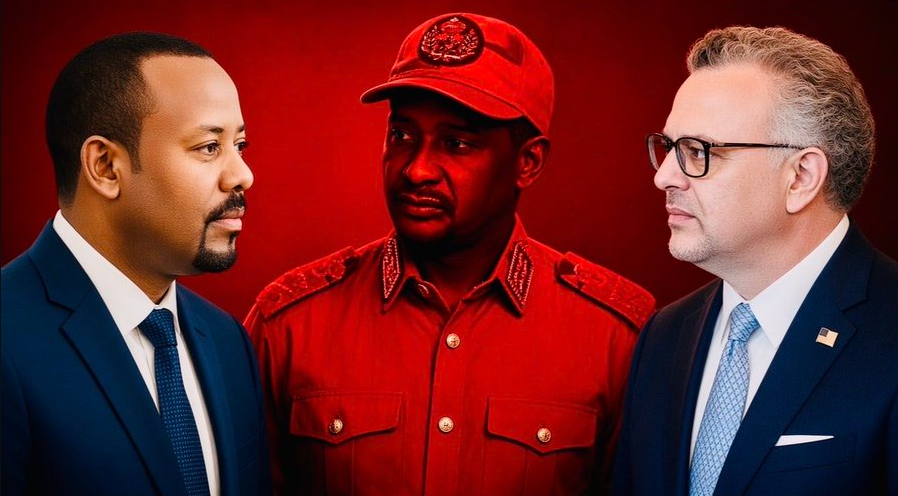
The seriousness of these developments is compounded by the U.S. position. Sudanese sources accuse the UAE of waging an intense lobbying campaign within U.S. policymaking circles to support its allies and proxies in East Africa through the U.S. administration and its envoy, Massad Boulos, senior adviser to the U.S. president on Arab and African affairs.
Alongside a number of advisers to President Donald Trump, Boulos has faced allegations concerning funding and investments in private companies, as well as business relationships and commercial interests with the UAE, according to claims raised by Sudanese sources in the context of their monitoring of U.S. and Emirati activities in the region.
In documenting these allegations, semi-official Sudanese sources point out that Washington ended in May 2026 the arms embargo imposed on Ethiopia since 2021 in connection with the Tigray war.
The U.S. Department of War, the Pentagon, also hosted an Ethiopian military delegation for a week. The visit culminated in the announcement, on August 21, 2026, of a military agreement between Washington and Addis Ababa aimed at “strengthening their defense and security cooperation through a new strategic framework,” according to U.S. newspapers.
In another move, Washington put forward a draft resolution at the UN Security Council to expand the arms embargo to cover all of Sudan, including drones obtained by Sudanese parties from countries including Turkiye and Iran.
Sudanese sources view this as placing the Sudanese army and the RSF militia on an equal footing despite their different legal statuses, potentially giving the UAE, which is accused of supplying weapons to the RSF militia, greater room to strengthen the forces it supports.
Amgad Fareid, adviser to the Chairman of Sudan’s Sovereignty Council on political affairs and foreign relations, had previously questioned in a post on X why Massad Boulos had made no statement regarding the “aggression against Sudan” or concerning the country whose territory is being used as a launchpad for the attacks.
Fareid concluded his post by saying, “It seems that satellites can see what U.S. diplomacy prefers not to see, or perhaps the news has not yet reached Mr. Boulos.”
This prompted Sudanese residents in the United States to file a class-action lawsuit in U.S. courts against the government of the United Arab Emirates (UAE), over its alleged role in supporting the war effort of the Rapid Support Forces (RSF) militia, according to Sudan Tribune on August 29, 2026.
In the lawsuit, the plaintiffs accused the UAE of being “responsible for providing supplies to the RSF militia,” which has faced allegations of committing abuses and crimes against humanity during its fighting against the Sudanese Armed Forces since April 2023.
The RSF militia is facing mounting accusations of involvement in genocidal crimes in the cities of Geneina and Al Fashir in Sudan’s western Darfur region, as well as allegations of murder, sexual violence, forced displacement, looting, and humiliation, acts that could amount to crimes against humanity.
At the same time as these developments in the United States, Ethiopia has also intensified its rhetoric toward Egypt, announcing its intention to build several new dams. On August 28, 2026, Ethiopia’s Minister of Water called on Egypt to make annual payments to his country as compensation for the Nile water it uses.

A Regional Proxy War
The development involving Ethiopia’s alignment with Hemedti, with clear Emirati backing, does not merely represent a shift in the course of Sudan’s war. It could instead move the conflict into a new phase, closer to a regional proxy war, particularly amid indications of deeper Ethiopian involvement in training thousands of fighters linked to the RSF militia, with Emirati funding, trainers, and logistical support.
Under this development, Ethiopian territory is becoming something akin to the RSF militia’s “strategic depth” and a relatively secure geographic area behind its lines inside Sudan.
This would allow fighters to be trained, forces to be reorganized, equipment to be stored, and supply operations to be managed away from the battlefields, thereby providing the conditions needed for the war to continue.
The Benishangul-Gumuz Region, particularly Asosa, has taken on special importance because of its proximity to the Sudanese border. A Reuters report published on February 10, 2026, had previously linked the presence of a camp for training the RSF militia to the development of Asosa Airport, while sources said the facility was being used to support the forces’ logistical operations.
According to African assessments and reports, the Ethiopian factor could prolong Sudan’s war rather than contribute to bringing it to an end. If the RSF militia becomes able to regularly obtain new fighters, along with training and supplies from outside Sudan, its ability to replenish its losses would increase, while the prospects for a swift military resolution would diminish.
The war could thus shift from an internal struggle for power into a war of attrition with regional extensions, in which every advance made by the Sudanese army could be offset through external supply lines, further complicating prospects for reaching a military or political settlement.
The United States has already warned that external military and financial support for both sides of the conflict is contributing to the continuation of the war, while Washington is pushing to expand the arms embargo on Sudan.
However, its practical position toward external supply networks and the countries accused of supporting the parties to the conflict remains the subject of questions and criticism from Sudanese sources.
Blue Nile: A New Front
Sudanese military experts fear that Ethiopian involvement could lead to the most dangerous direct military consequence: the opening of a new front in the Blue Nile region. Signs of this have already begun to emerge with the escalation of RSF militia attacks and its capture of new areas in the region.
Providing the RSF militia with manpower and military support from western Ethiopia would give it an opportunity to turn Blue Nile State into a new strategic area, taking advantage of its geographic proximity to the Ethiopian border.
Instead of concentrating its operations on the Darfur and Kordofan fronts, the Sudanese army could find itself facing a new theater of operations extending eastward and into southeastern Sudan.
This would impose an additional military challenge on the Sudanese army: defending a broad eastern and southeastern front while fighting continues on the other fronts. This could lead to the dispersal of its forces and the depletion of its manpower and logistical capabilities.
Blue Nile would thus become a strategic priority for the RSF militia and its allies, whereas in earlier stages it was closer to a secondary axis that could be used to divert the army’s efforts away from Kordofan. Now, however, developments on the ground suggest that it could become one of the main theaters of the conflict.
In this context, the Asosa base is becoming increasingly important amid reports that the airport is being developed to shorten supply lines, rather than relying on other bases deeper inside Ethiopia, in addition to allegations that military facilities in Benishangul-Gumuz are being provided to serve the RSF militia.
This shift could compel the Sudanese army to redraw its plans in the region, turning this axis into a major theater of attrition for the RSF militia and the forces supporting it, rather than leaving it as a peripheral front in the conflict.
Ethiopia: Playing With Fire
By contrast, Western reports warn that Ethiopia’s involvement in the Sudanese war carries significant risks, most notably the possibility that the conflict could spill over into Ethiopian territory itself.
Continued use of Ethiopian territory as a platform for training, supplying, and conducting operations could gradually transform Addis Ababa from a supporting party into a direct party to the war.
Just as the Sudanese army previously targeted RSF militia bases inside Chadian territory, it could find itself facing the option of striking Ethiopian bases or airports that provide the militia with the capability to launch drones or serve as a conduit for transporting weapons and fighters into Sudan.
On May 4, 2026, the Sudanese army had already accused Ethiopia of allowing drones to be launched from its territory. Reuters reported that this development was linked to the UAE’s development of Asosa Airport for use in supporting RSF militia operations.
The scenario becomes even more serious given the location of the training camp uncovered by Reuters in Ethiopia, which lies approximately 101 kilometers from the Grand Ethiopian Renaissance Dam.
This raises concerns that an expansion of the war could bring military operations closer to a facility of exceptionally high strategic sensitivity.
Egypt: The Threat Extends Beyond Sudan
This is where the significance of these developments for Egypt becomes clear. Any widespread military instability in the area surrounding the Grand Ethiopian Renaissance Dam would add a new security dimension to the dam issue, on top of the existing disputes between Cairo and Addis Ababa over the Nile waters and the mechanism for operating the dam.
Accordingly, the repercussions of possible Ethiopian involvement in the Sudanese war would not be confined to Sudan; they could extend directly to Egyptian national security, particularly given that Cairo views Sudan as a strategic extension of its national security.
Any transformation of eastern Sudan or the Blue Nile into a sphere of influence for a hostile armed force, such as the RSF militia, backed by regional powers including Ethiopia and the UAE, could represent an extremely sensitive security development for Egypt and could potentially prompt it to increase its involvement in the conflict.
More dangerously, a new regional triangle of influence could emerge comprising Ethiopia, the UAE, and the RSF militia, facing a regional network supporting the Sudanese army that includes, to varying degrees, Egypt and Turkiye.
At that point, Sudan may no longer be merely a theater for an internal power struggle, but could become part of a broader contest for influence in the Horn of Africa and a theater where regional and international interests intersect, making the Sudanese war increasingly resemble a miniature international struggle for influence in a region of acute strategic sensitivity.
Hemedti and ‘Israel’
The Israeli involvement further increases the risks of the conflict becoming internationalized. On August 28, 2026, the Africa Intelligence website reported that the leadership of the RSF militia has maintained high-level ties and contacts with “Israel” since the outbreak of the war in Sudan, with security ties that date back to before the war.
The intelligence website said that RSF militia commander Mohamed Hamdan Dagalo (Hemedti) has been strengthening his ties with “Israel”, noting that several military commanders and members of Hemedti’s family have visited “Tel Aviv” several times as part of cooperation whose roots predate the outbreak of the war.
The report revealed that a delegation from the RSF militia made two secret visits to “Israel”: the first in May 2025 and the second in February 2026. During the two visits, the delegation met officials in the African Affairs Division of the Israeli Foreign Ministry, as well as officers from intelligence agencies.
The first visit included Abdel Rahim Hamdan Dagalo and his younger brother, Al-Goney Hamdan Dagalo. During the second visit, they were joined by Ezz el-Din al-Safi, the RSF militia’s legal adviser.
According to Africa Intelligence, the Mossad maintained a separate channel of communication with the RSF militia dealing with security and intelligence matters following Sudan’s signing of the Abraham Accords in 2021. According to the report, this included providing the RSF militia with Israeli surveillance technologies and military technology.
Earlier, in October 2021, Abdel Rahim Dagalo visited “Israel” accompanied by Lieutenant General Mirghani Idris, as part of contacts that were taking place during efforts to normalize relations between Sudan and “Israel”.
In November 2022, Haaretz reported that an Israeli private jet landed at Khartoum Airport and remained there for approximately 45 minutes. The aircraft was owned by Israeli businessman Tal Hanan? No, the source text identifies the owner as Israeli businessman Tal Dilian, a former Israeli intelligence officer, and it was reportedly used to transport surveillance equipment to the RSF militia.
The report also points to the role of “Israel-linked” aviation networks in logistical operations related to the RSF militia.
According to the report, Bar Aviation, owned by Israeli businessman Barak Orland, regularly assisted in transporting weapons to countries neighboring Sudan as part of a regional supply chain linked to the RSF militia.
Thus, the war did not sever the channels of communication between the RSF militia and ‘Israel’. Rather, these channels remained active, with the forces relying on their external network of relationships in the fields of intelligence, surveillance, weapons, and military technology.