52 European Companies Under Scrutiny: How US Investments Are Penetrating the European Defense Industry
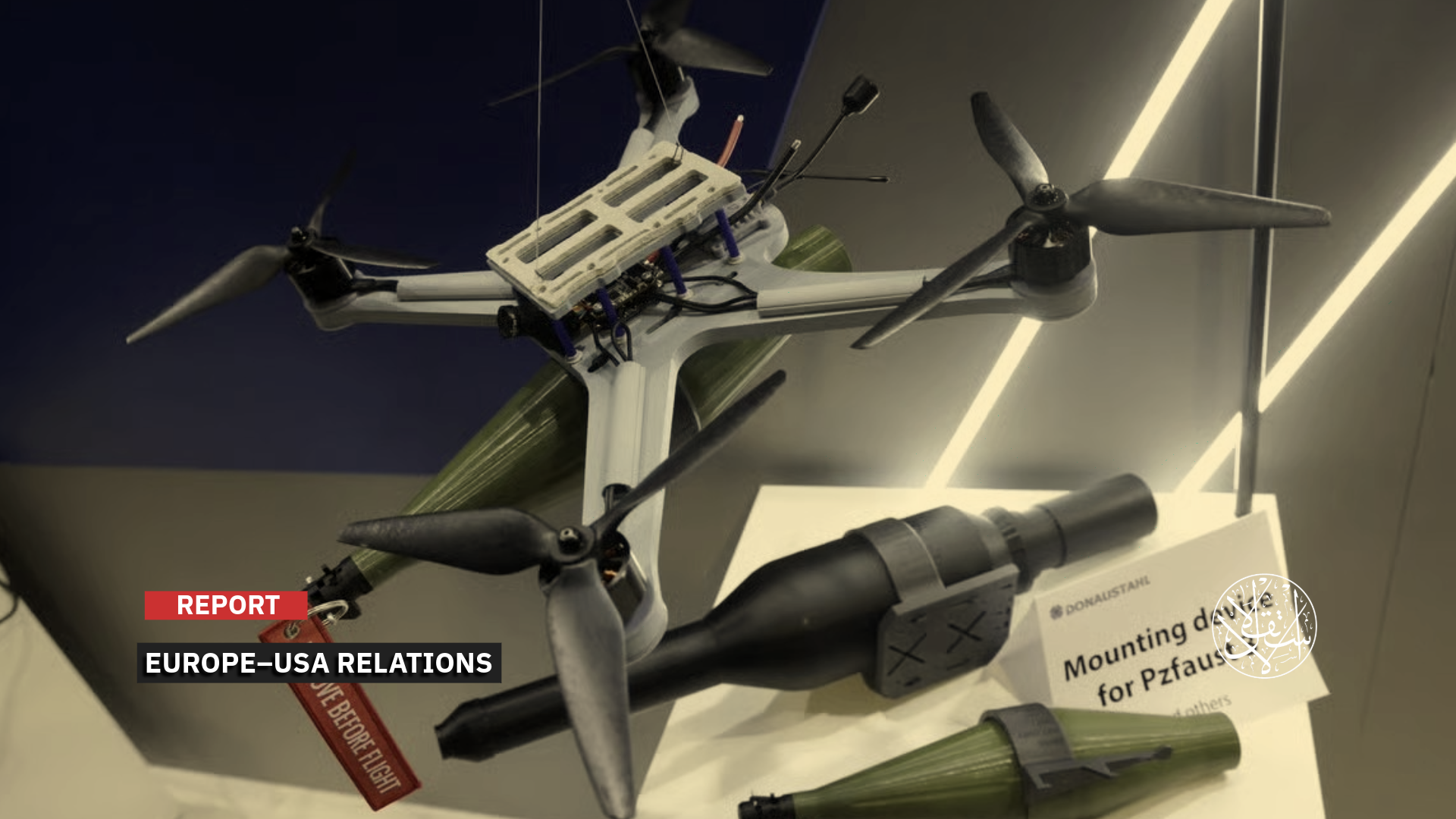
“EU military spending is expected to reach nearly half €1 trillion this year.”
As Europe strives to build a more independent defense base and reduce its dependence on the United States, another factor stands out that could limit this ambition: American capital and the technology and investment networks linked to Washington.
EU countries are expected to spend €454 billion on defense this year. But much of the technology Europe needs still comes from the United States.
As joint European projects stall and governments buy American fighter jets, missiles and intelligence systems, does rearmament make Europe more secure or deepen its dependence on Washington?
The experience of the German drone manufacturer Quantum Systems reveals one aspect of this paradox. During its initial expansion in the United States, the company benefited from the support of the investment firm In-Q-Tel, which has close ties to US intelligence agencies.
The significance of this relationship lies not only in the size of the funding but also in its ability to open doors for European companies to access US government institutions and military clients. This could grant Washington indirect influence over the emerging European defense sector.
The most important question remains: Can Europe truly build an independent defense industry if the companies leading this transformation still need American capital, technology, and influence networks?
American Investors
Europe is striving to reduce its military dependence on the United States and build a more independent defense industry. However, a striking paradox lies at the heart of this project: some European companies expected to develop the next generation of weapons and military technologies receive funding and support from an investment network linked to US security and intelligence agencies.
The story of the German drone company Quantum Systems reveals the extent of this contradiction. In an investigation published by Reuters on August 31, 2026, the agency revealed that In-Q-Tel, a company with ties to the CIA, helped the German company enter the US market and establish connections with government and security institutions there.
Quantum Systems' co-CEO, Sven Kruck, told Reuters that the presence of American investors, including In-Q-Tel, facilitated the company's launch in the United States and paved the way for access to government clients, including the CIA and the FBI.
He added that the company had to establish factories and teams in the United States to comply with Washington's requirements for foreign suppliers.
The significance of In-Q-Tel lies in the fact that it is not a traditional investment fund.
It was founded in 1999 at the initiative of US intelligence officials with the goal of discovering technologies that could serve national security and accelerating their access to government agencies.
The company explains on its official website that it invests in areas including artificial intelligence, cybersecurity, aerospace, and drones, and collaborates with a number of US security and intelligence agencies.
Although its investments are usually limited compared to the size of commercial investment funds, its true value lies in the network of relationships it has within the US government, defense, and intelligence sectors.
The company has invested in a number of well-known technology and defense companies, including Palantir Technologies and Anduril Industries, as well as the German defense company STARK.
As its operations expanded, Quantum Systems became one of the leading startups in the European defense sector, reaching a market capitalization of approximately $8 billion.
The company also secured a reconnaissance contract with US intelligence agencies. While the direct revenue from the contract was limited, its significance far outweighed its financial value, as it helped bolster the company's credibility within the US defense market.
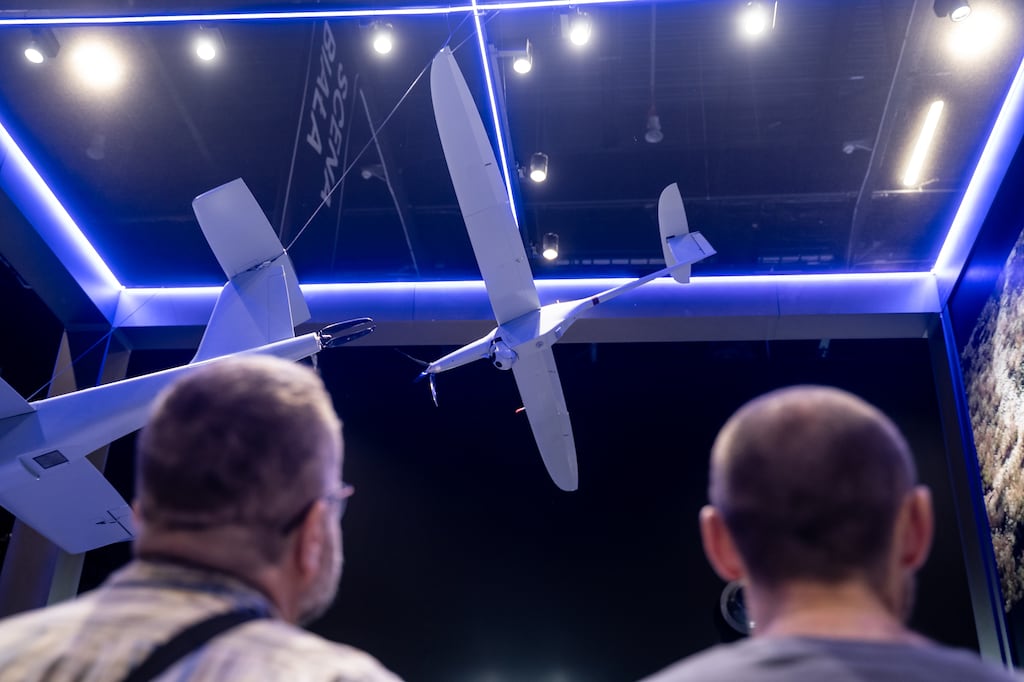
Quantum Systems produces drones and reconnaissance systems used by entities including the German and Ukrainian militaries.
This experience demonstrates that access to the US defense market depends not only on possessing advanced technology but also on the ability to cultivate a network of relationships with government agencies, investors, and major defense companies.
Government Contracts
These developments come at a sensitive time for Europe, which has intensified its efforts to build independent defense capabilities and strengthen its military industries, especially given concerns about the future of the US commitment to NATO.
Germany and other European countries are seeking to increase defense spending and develop local companies capable of producing drones, missiles, air defense systems, and other military technologies.
Ironically, many of these companies still rely on US capital, US technology, US customers, and the networks of relationships that grant them access to the US defense market. Quantum Systems itself is a prime example of this entanglement; it must obtain US approval before exporting certain technologies developed in the United States to other countries.
Thus, a European company's development of military technology does not necessarily mean that Europe has complete control over it, especially when parts of the technology, funding, or production are linked to the United States.
This situation is causing concern among a number of European lawmakers, who believe that investments linked to US intelligence agencies could have repercussions that extend beyond the traditional investor-company relationship.
Marie-Agnes Strack-Zimmermann, chair of the European Parliament's Committee on Security and Defense, warned that In-Q-Tel's nature differs from that of a traditional commercial investor due to its ties to US intelligence agencies.
She argues that equity stakes, technology agreements, development arrangements, and access to government contracts can grant investors strategic leverage that far exceeds their financial contributions.
The issue becomes even more sensitive when American technology is incorporated into European products.
European Technology
Quantum Systems is not an isolated case. An investigation published by the Dutch platform Follow the Money in July 2025 concluded that N-Q-Tel had invested in at least 52 European startups, including the Austrian satellite imagery analysis company Black Shark and the German data storage company Serabit.
According to the investigation, In-Q-Tel's investment in Europe rose from approximately $5 million in 2017 to $35 million in 2023, reflecting a clear expansion of the presence of US security-linked capital within the European technology sector.
However, In-Q-Tel's investment does not imply that the CIA owns European companies or directly controls their decisions.
Quantum Systems is a German company, and available data does not indicate that the US agency owns it.
But the issue goes beyond the size of the financial stake. In the defense industry, investment can open doors to government institutions, provide market insights, and help companies secure contracts and field-testing opportunities.
According to the same investigation, Quantum Systems cannot sell certain technologies developed in the United States to other countries without American approval.
The company may be German and headquartered in Europe, but some of its technology or production processes may be subject to American regulations that determine where the product can be sold.
This issue presents the European defense independence project with a dilemma that extends beyond the weapons themselves.
A study by the German Institute for International and Security Affairs (SWP), titled "With, Without, Against Washington: Redefining Europe’s Relations With the United States," warned that Europe's reliance on American technology could become a tool of political pressure, especially since the continued strength of the American security umbrella is no longer guaranteed.
The study argues that strengthening European independence requires not only increased military spending but also building more resilient capabilities in technology and cybersecurity, alongside bolstering European military capabilities and reducing strategic dependence on the United States.
This perspective gains particular importance given the expansion of American investments in European companies. The issue is not simply who manufactures the drone or missile, but also who finances the technology, owns the rights to it, sets the terms for its licensing and export, and provides access to markets and government contracts.

Defense Independence
In a related development, European lawmakers are calling for stronger funding mechanisms for defense startups, so that promising companies are not forced to rely on American capital to reach the growth stage.
Europe currently lacks a model similar to In-Q-Tel that combines funding, technological expertise, and access to defense and intelligence institutions.
The Quantum Systems experience reveals a fundamental contradiction in the European defense independence project.
Europe wants to produce more weapons and develop its military capabilities independently of Washington, but its most innovative companies may simultaneously need American funding, technology, partnerships, and access to the US defense market to grow.
This creates a new form of strategic dependency, not only on who sells weapons to Europe, but also on who finances its companies, owns the core technology, controls export licenses, and opens doors to government contracts.
For Washington, investing in European defense companies is a way to maintain its presence within the European defense architecture, even as the continent seeks to reduce its direct military reliance on the United States.
For Europe, however, achieving true defense independence will require not only producing drones, missiles, and fighter jets on the continent, but also building an independent European system for defense financing, technology, and procurement.
Observers believe that Europe may succeed in producing European weapons, but it will not achieve complete defense independence if certain key technologies, capital, supply chains, and export rights remain tied to entities outside the continent.