Will Mauritanians Accept a Violation of the Constitution to Keep Mohamed Ould Ghazouani in the Presidency?
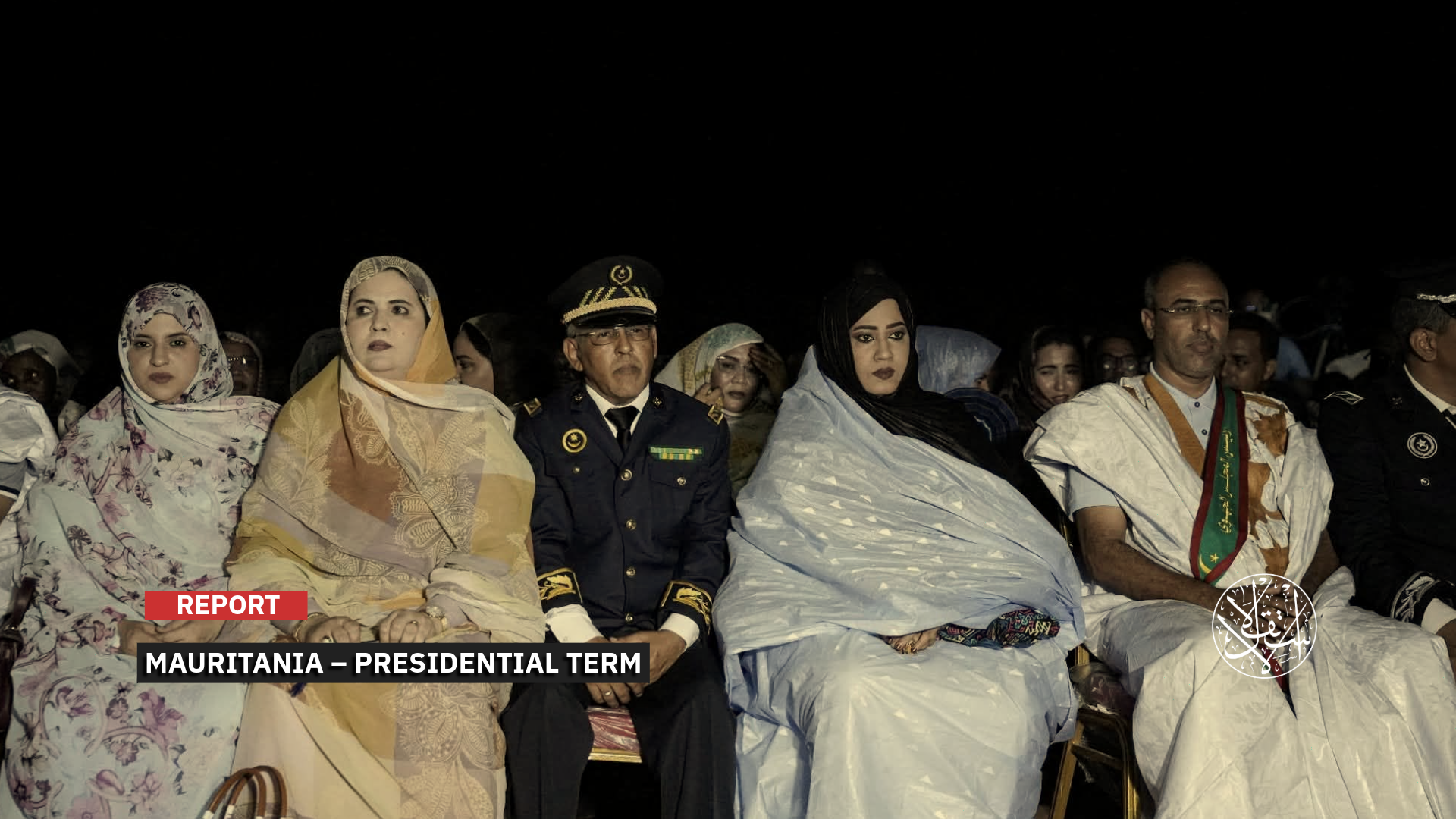
"The head of the Dialogue Party boldly urged Ghazouani in June 2026 to pursue a third term through public referendum."
Calls from pro-government supporters to amend the constitution to increase the number of presidential terms in Mauritania have sparked widespread debate between supporters and opponents, amid warnings about the repercussions of this move on the country's democratic transition.
Supporters of President Mohamed Ould Cheikh Ghazouani no longer hesitate to demand that he be allowed to run for a third presidential term, despite the Mauritanian constitution clearly stipulating that the presidency is limited to two terms only.
Repeated Demands
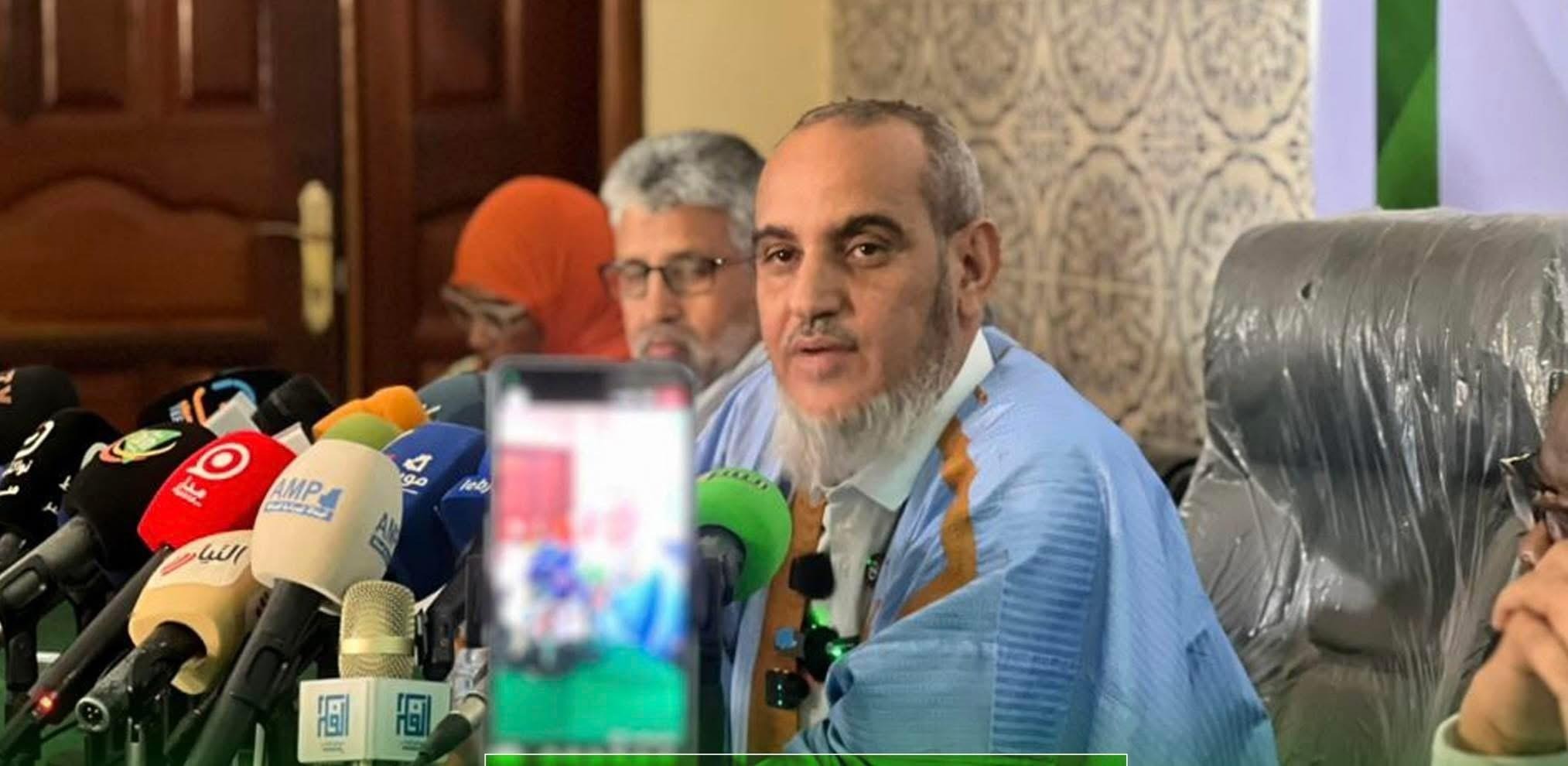
In this context, the opening events of the tourist season in Kiffa on August 16, 2026, witnessed political calls for President Ghazouani to remain in power, through speeches by the Minister of Trade and Tourism, Zeinebou Mint Ahmednah, and the President of the Regional Council of Assaba, Mohamed Mahmoud Ould Habib.
In her address at the event, Mint Ahmednah called for the launch of a comprehensive national movement aimed at supporting the continuation of the approach led by President Ghazouani, asserting that this approach deserves to continue and be given sufficient time for its fruits to take root and its effects to be fully realized.
The minister stated that it is the right of Mauritanians, indeed their national duty, to demand the continuation of this path, calling for a conscious and responsible movement that places the country's interest above all else.
Mint Ahmednah emphasized that the future of nations is determined by "the enlightened will of the people," noting that the people are "the source of legitimacy and have the final say; they alone decide."
In the same context, Ould Habib called for a constitutional amendment to allow President Ghazouani a third term, arguing that the achievements of the past seven years have reinforced his conviction of the necessity for the president to remain in power.
Ould Habib said, "We demand a third term for him, in our general opinion, or a constitutional amendment, according to legal experts, or a complete rewriting, in political terms.
He added that he supports President Ghazouani remaining in power by any means necessary.
In a related matter, Falla Mint Mini, head of the Dialogue Party, had previously called on President Ghazouani, during a press conference held in June 2026, to run for a third presidential term with complete confidence and without hesitation.
Mini emphasized that her call for a third term for the president stems from what she described as seeking the best interests of the average citizen.
The party leader criticized the constitution in place since 1992, questioning its continued relevance and noting that the debate surrounding it remains relevant more than three decades after its adoption.
She stated that President Mohamed Ould Cheikh Ghazouani would receive sufficient support if a referendum were held regarding a third term, urging young people to demand his candidacy for another term.
The Dialogue Party is the first party within the ruling coalition to call on the president to run for a third term, describing it as the people's choice, and emphasizing that it does not authorize any other party within the coalition to relinquish this demand.
This is not the first time the Mauritanian constitution, particularly its entrenched articles, has been the subject of controversy. It has undergone extensive debate and significant amendments since its adoption in 1991.
The constitution saw its first major amendment in 2006 when the Transitional Military Council proposed a package of amendments that were put to a public referendum held on June 25 of that year, and were approved by a large majority of voters.
The most prominent of these amendments included reducing the presidential term to five years, renewable only once, and barring anyone over the age of 75 from running for office.
It also stipulated the entrenchment of the number of presidential terms, with the addition that the oath of office includes a clause in which the president pledges not to seek to amend the article concerning the number of terms, either directly or indirectly.
This comes after Ould Ghazouani took the oath of office in August 2024 for a second five-year presidential term, following his victory in the presidential elections held in June of the same year.
During the inauguration ceremony, Ghazouani pledged to respect the constitution and not to initiate or support any action that would lead to a revision of the constitutional provisions related to term limits and the conditions for their renewal.
The Opposition Revolts
In turn, the Mauritanian Democratic Opposition Foundation issued a statement affirming that it is following with grave concern all the positions and statements issued by certain individuals and entities, including high-ranking officials in the state, which have included, directly or indirectly Directly, there are calls to violate certain provisions of the Constitution, particularly those related to presidential term limits and the restrictions imposed upon them.
In a statement issued on August 19, the opposition stressed that the stability of political life and the strengthening of trust in institutions necessitate dealing with constitutional texts responsibly, avoiding interpretations that could create ambiguity or open the door to differing readings of their provisions.
The opposition affirmed that the provisions regulating the transfer of power and term limits constitute a fundamental guarantee for the continuation of political stability and the preservation of democratic gains, which are the product of decades of struggle by national political forces and the fruit of numerous national dialogues that contributed to consolidating these principles.
It declared its rejection of constitutional rules becoming a subject of political wrangling or held hostage to circumstances and situational calculations, and asserted that any attempt to undermine or circumvent them requires a clear and responsible national stance.
The opposition called upon all state institutions, officials, and political actors, especially those holding high-ranking positions in the state, to adhere to the provisions of the Constitution in their positions and statements. Their initiatives should preserve the dignity of institutions and uphold constitutional principles.
She emphasized that the peaceful transfer of power is a fundamental pillar of a democratic system, and that respecting the terms and limits stipulated by the constitution guarantees the stability of the state and the continued trust in its institutions.
Imminent Danger
In a letter published on August 21st, MP Biram Ould Dah Ould Abeid, head of the Opposition for Change and Alternation 2029 coalition, asserted that Mauritania has entered a phase of imminent danger due to calls for constitutional reform.
Ould Abeid emphasized that the country is already experiencing a multifaceted crisis, encompassing poverty, unemployment, a sense of hopelessness among young people, systemic corruption, chronic state dysfunction, violations of public freedoms, and a decline in trust in democratic processes.
He added, "The authorities claim to want dialogue, consensus-building, and establishing trust with the country's political forces, yet simultaneously tolerate and even support ministers and officials openly discussing the idea of a third term, in clear violation of the constitution."
He questioned, "How can trust be built around political dialogue when those in power are simultaneously working to undermine the very constitutional gains that this dialogue is supposed to strengthen?"
In this context, Ould Abeid said, "Calls for a coup are emerging from some citizens, and I largely agree with the assessment of those making these calls, but I disagree with their conclusion. A coup is not a solution. It's a dangerous dead end."
He noted, "The best way to prevent a coup is not to wish for it to happen against an authority we reject. Rather, it is about building the political conditions that make his pretext impossible, through transparent elections, an organized opposition, and a civic mobilization determined to defend every vote and every ballot."
Frenzied Race
In an editorial on the Al-Fikr website on August 19, he observed that the transformation of some leaders and members of the ruling Justice and Development Party into a frantic race to demand a third term for President Ghazouani is deeply troubling in the Mauritanian political landscape today.
He added, “It is as if the country is not suffering from thirst, darkness, poverty, the collapse of education, and rampant unemployment, and as if it is not facing challenges that deserve the attention of the political elite. It is as if the greatest thing the party cadres can offer the president is to present him with a new political battle he did not request, and which, according to what has been publicly stated, he has not said he wants.” "Embark on it."
The website emphasized that the invitations extended to the Kiffa Festival, with the participation of the Minister of Tourism, revealed the extent to which partisan practice can degenerate when politics shifts from serving the state project to manufacturing loyalties, and from defending the achievements of governance to seeking a position in a phase that has not yet begun.
It continued: "The problem begins when demands to change the number of presidential terms turn into a collective bidding war against the president himself, and when proving loyalty becomes linked to the height of the demands, as if the loudest in demanding a third term is the most loyal, and as if remaining silent on this demand is a lack of loyalty or a failure to serve the regime."
It added: "The worst thing that political elites can do to the president they support is to besiege him with slogans he cannot respond to, and to gradually push him into a political corner were rejecting a third term becomes more difficult than accepting it, not due to his personal conviction, but due to the pressure created by the machinery of loyalty and vested interests. Even worse is if the president is persuaded by their arguments despite their blatant hypocrisy and mismanagement, for some loyalty is hypocrisy and some "Boldness is foolishness."
The website noted: "What's more dangerous is that this behavior shifts the political debate from the question of what we have accomplished."
The editorial addressed the question: "How do we remain in power? It stressed that the leaders and members of the Justice and Equality Movement (PEM) in Kiffa, and in other cities across the country, should engage with the public to discuss the results of their seven years in office."
It emphasized that respecting the president does not mean demanding he remain in power indefinitely, but rather respecting his political project, respecting state institutions, and allowing him the space to determine his own future.
Therefore, the website argues that the PEM must prove itself to be a party of the state, not a party of individuals; that it is capable of boldly discussing its record; that it can generate new ideas and leaders; and that it can remain an influential political force even as faces, schedules, and circumstances change.
The editorial concluded that it is high time the leaders and members of the PEM realized that the best service they could offer President Ghazouani is not to demand a third term, but to help him succeed in the remainder of his term, allowing history to judge his experience and the president himself to decide what he wants to do in the future.
In this context, the head of the Citizenship and Justice Front (JMAA) party, Mohamed Jemil Ould Mansour stated that calls to change presidential term limits are disruptive and provocative.
In a Facebook post dated August 20, Ould Mansour added, "The President of the Republic has made it clear and specific: the priority today is work and achievement, implementing programs and fulfilling commitments."
The Mauritanian party leader emphasized that any talk of the 2029 elections, regardless of the enthusiasm or fanfare, is unacceptable, as they are calling for something no one has asked them to do.
He concluded that the videos and initiatives circulating online from the final days of former President Mohamed Ould Abdel Aziz's term offer many lessons and insights. He urged reflection on these points.
Constitutional Analysis
In a constitutional analysis of this debate, Mohamed El Mokhtar, Dean of the Faculty of Law at the University of Nouadhibou, affirmed that the principle of democratic rotation of power is a fundamental principle. This is an explicit constitutional provision within the Mauritanian constitutional system, not merely a political custom or a moral agreement among political actors.
In an article published on his Facebook page, El Mokhtar emphasized that the rule of electing the president for a five-year term, renewable once, enjoys special constitutional protection, as Article 99 includes it among the principles that cannot be subject to review.
The university professor pointed out that the prohibition stipulated in Article 99 of the 1991 Constitution is substantive in nature. It not only emphasizes the required majority vote but also fundamentally prevents the initiation of any review procedures that might undermine the protected principle.
He added that while Parliament has the right to initiate constitutional review, it does not have the authority to exercise this power in areas explicitly prohibited by Article 99.
In this context, El Mokhtar emphasized that a referendum cannot, in principle, rectify the constitutional prohibition against initiating such a review, because a referendum is a constitutional mechanism for exercising popular sovereignty, not an original constituent power existing outside the constitution.
The author noted that the will of the people remains the source of all powers, but this will is exercised within the existing constitutional system according to the forms and limits established by the constitution itself.
Therefore, the professor of constitutional law continues, "Article 29 adds a specific personal obligation to the substantive protections for the President of the Republic. It requires him not to initiate or support, directly or indirectly, any initiative that could lead to a revision of the constitutional provisions relating to the term of office and the conditions for its renewal."
He added, “Constitutionally, the President of the Republic cannot circumvent this obligation by claiming that the final decision will be made by the people, because the oath of office pertains to the initiative and support, not merely to the outcome of the referendum.”
El Mokhtar emphasized that, in light of the current Mauritanian Constitution and a comprehensive reading of its articles, the normal constitutional procedure for amendment does not permit the removal of the two-term limit or any infringement upon the principle of democratic alternation of power, which is protected by Article 99.
He added that this prohibition is particularly reinforced for the President of the Republic due to the oath stipulated in Article 29, which not only pledges not to seek a third term but also extends to refraining from taking or supporting any initiative that could lead to a revision of the constitutional provisions concerning term limits and the conditions for their renewal.
El Mokhtar concluded that the core issue is not the number of votes required to pass the amendment, but rather the constitutional authority to initiate the amendment process in the first place.