Despite Withdrawal Claims, Is Abu Dhabi Concealing the Reality of Its Military Presence in Yemen?
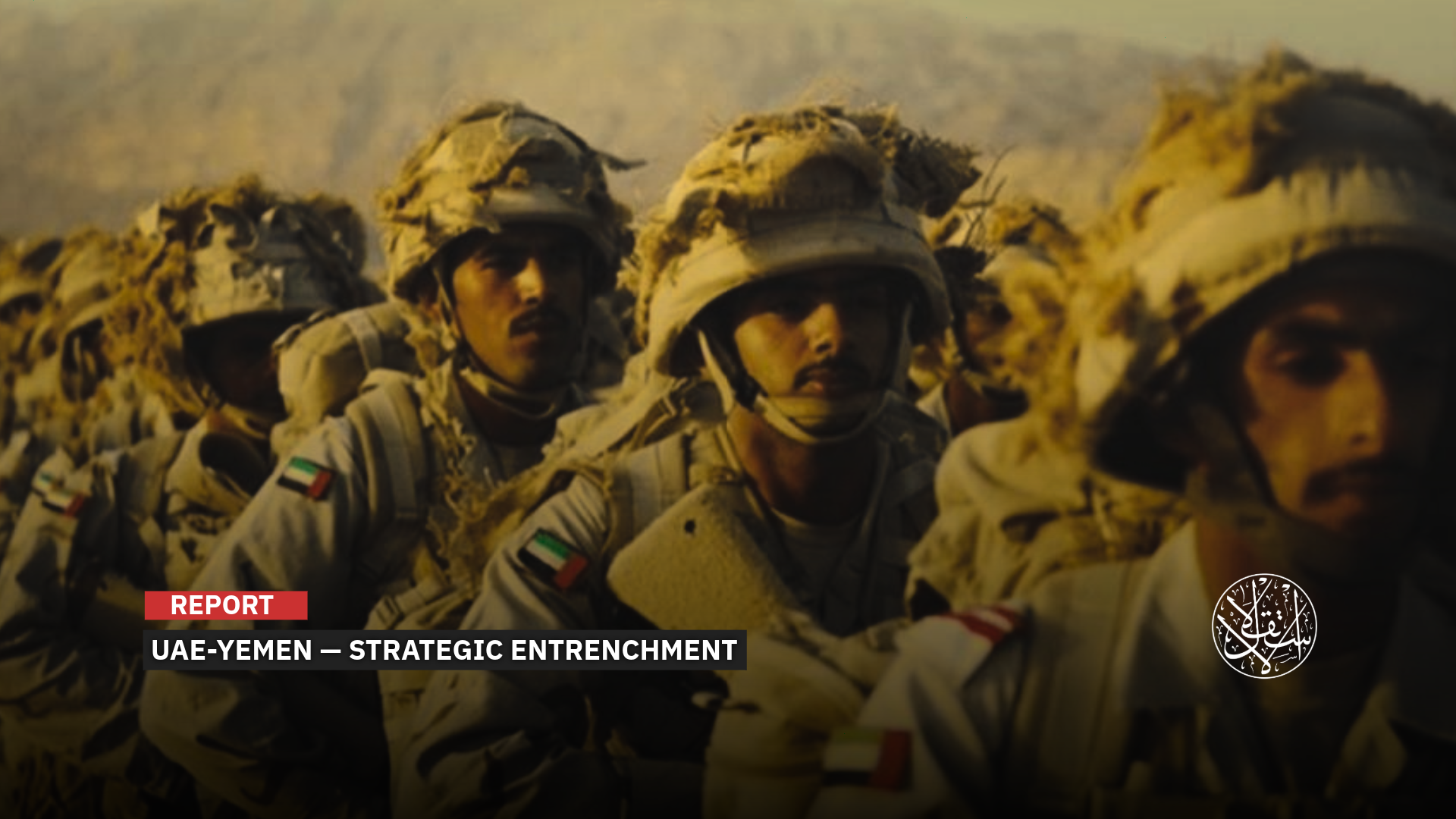
The UAE practices deception by vacating certain areas in Yemen while reinforcing its foothold elsewhere.
On December 30, 2025, the United Arab Emirates announced its intention to withdraw its forces from Yemen, following Saudi Arabia’s insistence earlier the same day that it would pull back at the request of the internationally recognized Yemeni government.
Despite the UAE’s announcement coming just eight hours after the 24-hour deadline set by Saudi Arabia for troop withdrawal, Yemeni and international sources insist that the pullback has not been complete.
Instead, the UAE is reportedly expanding the airports under its control, engaging in deception by evacuating certain areas while consolidating its presence in others, and delaying the withdrawal of its allied militias from occupied territories, maintaining positions even alongside Saudi-aligned forces.
Reflecting these doubts, a Saudi source told Agence France-Presse on December 31, 2025, “Now with the withdrawal, we have to wait and see what it really means, and whether they [the UAE] are serious about pulling out.”
Saudi Arabia welcomed the UAE’s announcement to withdraw its remaining forces from Yemen, but continues to monitor the situation closely to verify Abu Dhabi’s commitment to ending its support for separatists, according to a source close to the Saudi government.
Five Key Sites
UAE forces control five strategic sites in Yemen, which are:
Abd al-Kuri Island (Socotra Archipelago): Considered the “crown jewel” of the UAE’s strategy, the island sees intense military and infrastructural activity. Emirati officers directly manage it, and it is a restricted military zone, with local fishermen barred from approaching parts of it. By mid-2025, advanced runways and a naval pier capable of accommodating large military vessels had been constructed.
Balhaf Gas Facility (Shabwa): One of the most important sites directly held by the UAE, it serves as an operations hub for movements in Shabwa and Hadramawt, and functions as a logistical and training center, with gas exports strictly prohibited.
Mayun Island (Perim) in the Bab al-Mandab Strait: Located in a critical global maritime passage, the UAE maintains a fully integrated airbase here, including a runway and troop accommodations. Its purpose is to assert direct control over navigation through the strait, operating independently of local authorities in Taiz.
Zuqar Island (Red Sea): Satellite imagery has revealed that UAE forces have begun constructing a new airstrip on the island.
Al-Rayyan Airport (Al-Mukalla, Hadramawt): Serving as an intelligence hub and regional operations center, the airport hosts a permanent Emirati military presence overseeing counterterrorism operations in the governorate. Although partially open to civilian flights, the military retains direct control.
On December 31, 2025, four UAE military transport aircraft departed Al-Rayyan Airport in Al-Mukalla carrying officers, soldiers, and equipment, while three other transport planes arrived and left loaded with troops.
According to Hadrami journalist Abdel Jabbar al-Jariri, UAE forces began dismantling equipment and devices at Balhaf, Socotra, Al-Rayyan, and Dhubba from the early hours, preparing for departure.
However, UAE influence has not ended entirely despite the official troop withdrawals, according to Yemeni sources, as the country maintains an undeclared military presence and continues to exert political and military influence through support for local factions such as:
- The Southern Transitional Council (STC), which controls parts of southern Yemen and receives Emirati funding and support.
- The Security Belt Forces, local units operating in Aden and Abyan.
- The National Resistance Forces, led by Tariq Saleh and closely aligned with the UAE.
Thus, the UAE withdrawal represents a direct, official pullback of combat forces, but does not necessarily signal the complete disappearance of military or political backing.
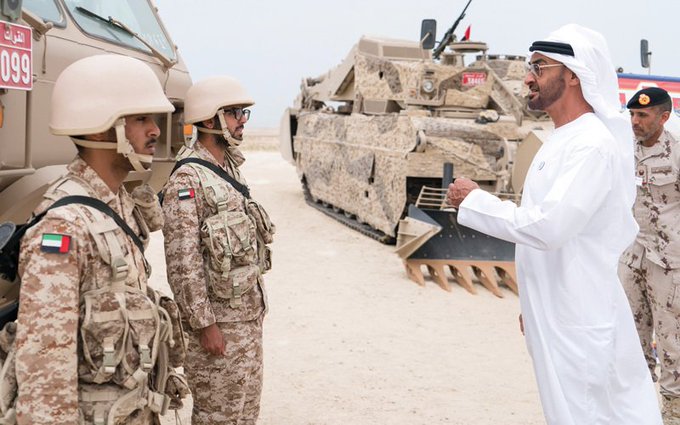
Withdrawal or a Ruse?
According to Yemeni reports, satellite imagery, and maps, the UAE has indeed withdrawn forces from some of the five bases it occupies in Yemen, yet at the same time executed maneuvers in other areas, even transferring troops and equipment to the UAE-aligned Southern Transitional Council militia.
The official announcement of the UAE withdrawal came in response to a Saudi warning that gave Abu Dhabi a 24-hour deadline.
However, this withdrawal does not concern only “counter-terrorism forces,” but represents a major geographic, military, and economic loss of assets in which the UAE had invested.
Previously, the Emirati presence controlled the southern coast of the Gulf of Aden in Yemen, effectively overseeing the vital Bab el-Mandeb Strait, and was meant to complement UAE control over the opposite shore in “Somaliland,” where an Emirati military base recognized by “Israel” is located, with expected bilateral cooperation.
Consequently, with the loss of strategic sites such as Socotra Island, which the UAE transformed into a military base, the strategic port of Al Mukalla, and Aden, a vital artery for Dubai’s ports, Abu Dhabi delayed its withdrawal and executed maneuvers to offset potential losses.
This supposed withdrawal is set to affect UAE influence in the Horn of Africa and will impact weapons and equipment supplies to the Rapid Support Forces militia in Sudan and Haftar’s militia forces in Libya, where delays or refusals to withdraw or reinforce positions have been observed.
Yemeni sources confirm the continued presence of Emirati forces, including officers and personnel, at the Balhaf gas facility in Shabwa and at Al Rayyan camp on the Hadhramaut coast.
These forces, alongside a Western team, oversee military operations and militia logistics in the Al Khash’a area.
So far, the withdrawal has been limited to removing some communications and surveillance equipment, alongside a partial reduction of military hardware and a few personnel.
Satellite imagery reveals that Abu Dhabi has moved on the ground contrary to claims of withdrawal, as it develops the “Bani Al-Hakam” runway on the western coast, a 560-meter airstrip with aircraft fortifications, through militias loyal to it, suggesting that the pullout is tactical and deceptive.
Dr. Hussain Al-Yafai, head of the opposition Southern National Movement critical of the UAE, said that the exit of the Southern Transitional Council from Hadramawt, Al-Mahrah, and Shabwa has become inevitable, describing the current situation as “media deception and a bid to buy time in order to extract political or symbolic gains after the council lost its main leverage.”
He added that the council will only be allowed a limited presence in certain western provinces and in the capital, Aden, under arrangements overseen by the Yemeni presidency and coordinated with the Arab Coalition.
The Yemeni presidency in Aden is expected to soon take charge of both the security and political files, signaling a transition from chaos toward state restoration.
The UAE has also rushed to upgrade the Bani Al-Hakam airstrip on Yemen’s western coast along the Red Sea, where forces loyal to Tariq Saleh, a UAE-backed militia, maintain control, according to satellite imagery.
This reinforces the hypothesis that the UAE’s withdrawal is largely a media tactic, with the reality being a repositioning in preparation for the next phase, Yemeni activists on social media suggest.
Yemen expert Mohammed Basha highlighted that, despite withdrawing its forces, the UAE continues to maintain influence through local partners numbering around 200,000 personnel, according to the U.S.-based Foundation for Defense of Democracies (FDD) on December 31, 2025.
A senior Gulf officer told Basha Report that UAE soldiers had begun dismantling sites and preparing for withdrawal, yet local sources in Shabwa confirmed that UAE forces remain at the Balhaf liquefied natural gas facility in Radum and the Marah base in Ataq.
The troop withdrawal involved the removal of intelligence materials, including operational files, digital storage devices, maps, and planning records, as well as the dismantling of communications systems, including encrypted radios, satellite equipment, and command and control devices.
Journalist Faisal Al-Jaafari noted that the UAE dismantled the military base at “Morra Camp” northeast of Ataq, the capital of Shabwa, one of the largest and most strategically sensitive bases relied upon by the UAE and “Israel” for operations.
He explained that “Site C” was an operational hub for UAE intelligence, directly linked to Abu Dhabi’s State Security apparatus, located in a fortified mountainous area with restricted access, which allowed only a high-level official permit.
“Site C” currently oversees the procurement, transport, and smuggling of weapons for the Rapid Support Forces militia in Sudan, moving them to the Shabwa coast through smuggling routes using military vehicles via Eritrea, then South Sudan, and onward to Nyala in Darfur, the Hemedti-controlled region.
Open-source analyst Rich Ted confirmed that the UAE withdrew from this base in early January 2026, after aerial footage was captured showing a UAE Air Force C-295W transport plane departing from the “Morra” base in Shabwa.

A Loss of Trust
Because Saudi Arabia is serious about confronting the UAE in Yemen, it followed its warning with close monitoring of the Emirati withdrawal, as well as that of its allies and their equipment, a determination evident in a series of coordinated moves.
Three indicators highlight Riyadh’s surveillance and lack of trust in Abu Dhabi’s withdrawal:
First, despite announcing its pullout, the Yemeni government informed Saudi Arabia in early January 2026 that an Emirati force had taken control of Socotra port, a move constituting a blatant violation of Yemen’s sovereignty.
In response, Saudi Arabia demanded the immediate and unconditional withdrawal of UAE forces from the port and full compliance with the decision to leave Yemeni territory without restrictions.
Riyadh made it clear that any force refusing to leave Socotra would be considered a legitimate military target for the Saudi Air Force, as part of efforts to preserve security, stability, and prevent the imposition of facts on the ground by force, emphasizing that sovereignty is a red line and regional security is not a space for adventurism.
Meanwhile, a UAE ship carrying military equipment for its allied militias entered Socotra despite the withdrawal order, without completing legal procedures or obtaining official entry permits from the Saudi-led coalition.
The vessel was escorted by Abu Dhabi-aligned militias under direct supervision from Transnational Council officers present in Socotra, effectively blocking any Saudi forces from intervening, amid heightened tension.
Second, in early January 2026, Saudi Arabia ordered inspections of Yemenia Airlines flights arriving from the UAE, amid fears they might transport weapons or equipment, provide financial support, or enable the smuggling of funds looted by UAE-backed militias from Yemeni banks to Abu Dhabi, according to Yemeni reports.
Aviation sources revealed that Riyadh required flights to and from Aden airport from the UAE to pass through Bisha Airport in Saudi Arabia for inspection, with passenger identities thoroughly checked.
Third, Saudi Arabia continued its media campaign against the UAE, despite Abu Dhabi’s apparent compliance, suggesting Riyadh possessed intelligence pointing to risks beyond those in Yemen and Sudan.
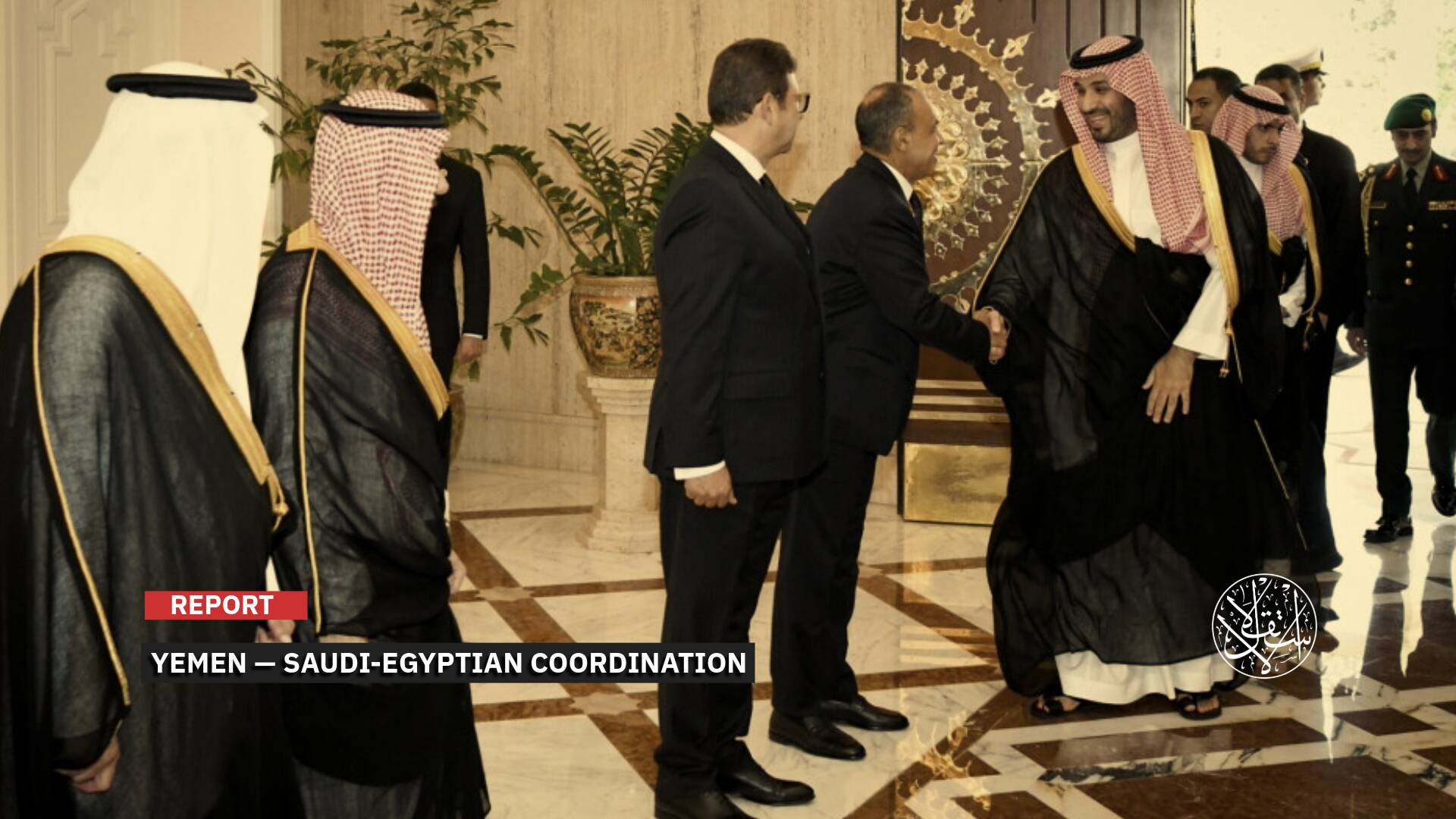
Previously, on July 18, 2023, the Wall Street Journal reported that Crown Prince Mohammed bin Salman had said, "The UAE has stabbed us in the back," warning that the crisis with Abu Dhabi could surpass the Qatar dispute if his demands were not met.
Attendees recalled bin Salman telling local journalists in Riyadh, during a rare off-the-record briefing, that Abu Dhabi, a decades-long ally, had acted against Saudi interests, adding, "They will see what I can do."
The report also noted that UAE President Mohammed bin Zayed resented his marginalization amid the Saudi Crown Prince’s rise and had warned bin Salman against undermining bilateral ties through rapprochement with Iran and oil policy coordination with Russia.
According to Gulf officials, bin Salman accused the UAE president of provoking disastrous conflicts serving UAE, not Saudi, interests, saying to advisors, "I no longer trust them," following talks with Tahnoun bin Zayed on Yemen.
A Gulf source told Reuters on December 31, 2025, that UAE officials were angered by "misleading information" suggesting bin Salman had asked former U.S. President Donald Trump to impose sanctions on them for supporting Hemedti’s militia forces, which was later denied.
The Economist, on December 30, 2025, noted that the UAE’s escalation in Yemen may have been a response to increasing Saudi diplomatic pressure regarding Sudan.
Meanwhile, the Financial Times reported on December 31, 2025, that the UAE had pushed the Southern Transitional Council to take control of southern governorates after mistakenly believing bin Salman had requested U.S. sanctions over its Sudan role during a November 2025 Washington meeting.
However, Emirati academic Abdulkhaleq Abdullah called linking the Yemen developments to Sudan disputes "wild speculation."
Ahmed Nagi, senior Yemen analyst at the International Crisis Group, told The Times on December 31, 2025, that Saudi strikes on Emirati-supplied military vehicles were "a political, not a military, message," explaining, "They could have targeted the ships at the port before unloading, but allowed the vehicles to be placed at a staging point, signaling to the UAE that we are watching everything they do, and they cannot claim the Southern Transitional Council is acting alone."

Will Abu Dhabi Strike Sack in Sudan?
A report in The Economist suggests that Saudi Arabia’s escalation against the UAE in Yemen could prompt Abu Dhabi to retaliate in Sudan, deepening tensions across Africa.
Signs point to a potential military buildup, with growing reports that the UAE is establishing another launch zone across the border for Sudan’s Rapid Support Forces militia in Ethiopia, including Emirati arms shipments.
The picture is further complicated by “Israel’s” recognition of the breakaway Republic of Somaliland, followed by what amounted to implicit Emirati recognition through the acceptance of Somaliland visas and the entry of their holders into the UAE.
According to The Guardian on December 30, 2025, Saudi control over Yemeni ports would sever a vital supply line the UAE had used to support its allies on the opposite shore of the Red Sea, including in Somaliland and Sudan.
Losing access to Yemeni ports would isolate Emirati vessels bound for bases in Berbera and Bosaso in Somaliland and Puntland, facilities that have relied on logistical support and protection from UAE bases in Yemen, particularly Socotra and Mayun.
From Berbera and Bosaso, weapons and mercenaries were often shipped onward to militias in Sudan, via Libya or through Umm Jaras.
Dan Shapiro, a former U.S. diplomat now at the Atlantic Council, warned that the escalation was “deeply concerning because it undermines efforts to address multiple flashpoints across the region, from Yemen and Gaza to Syria, Lebanon, and Sudan.”
As quoted by the Financial Times, Shapiro said, “Resolving each of these crises becomes far harder if Saudi Arabia and the UAE are not aligned, and if each side comes to see its interests as directly at odds with the other.”
Firas Maksad, managing director for the Middle East and North Africa at the Eurasia Group, argued that the real danger is that the Yemen crisis “could turn the geopolitical rivalry between Saudi Arabia and the UAE into a personal confrontation between the two most powerful men in the region.”
Sources
- A lightning advance by separatists has reshaped Yemen’s civil war
- UAE to pull remaining forces from Yemen in crisis with Saudi Arabia
- UAE forces to depart Yemen after Saudi demands, strikes
- How the UAE-Saudi Arabia alliance ruptured
- Saudi Arabia needs to know UAE ‘serious’ about Yemen pullback – source
- The Best of Frenemies: Saudi Crown Prince Clashes with U.A.E. President
- Tensions between Saudis and Emiratis over future of Yemen reach boiling point