How the Houthis Are Benefiting From the Conflicts Among Their Opponents in Hadramout
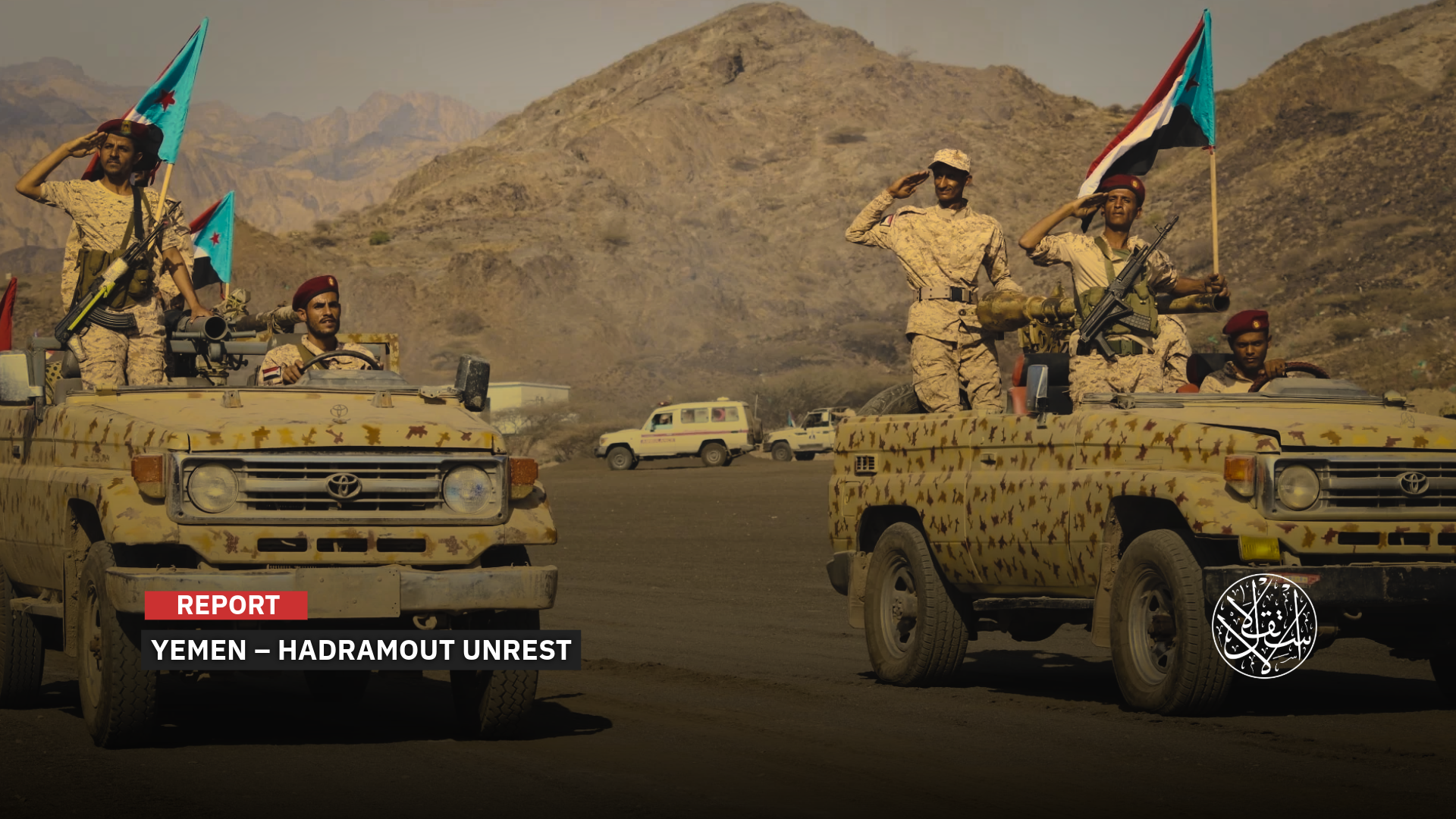
“The divisions in Hadramout contribute to strengthening the Houthis' negotiating position by freezing the ceasefire.”
Hadramout, by virtue of its geographical location and economic weight (oil, ports, supply lines), represents one of the most important arenas of conflict in Yemen.
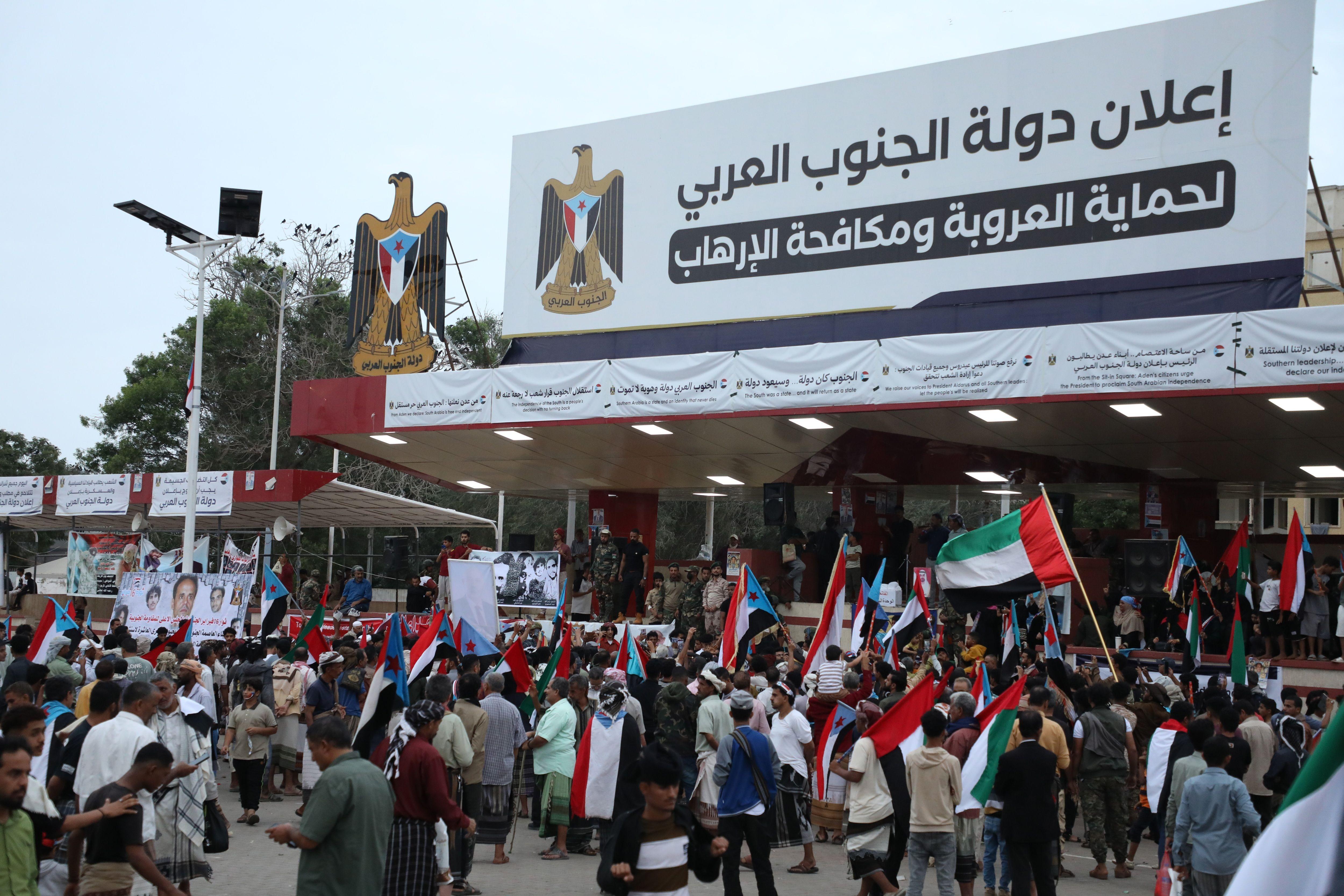
With the recent escalation of tensions related to the expansion of the Southern Transitional Council (STC), and the intensification of disputes within the anti-Houthi camp, a central question arises: Who is the real beneficiary of the Hadramout unrest?
Data indicate that the Houthi group, despite its direct military absence from the Hadrami scene, is considered the biggest strategic winner from these developments.
While local and regional powers are preoccupied with the power struggle in Hadramout, the Houthi group is taking a step forward without firing a single shot.
The escalating tensions in Yemen's largest governorates do not represent an isolated event, but rather a new episode in the series of dismantling the anti-Houthi camp, an outcome that the group has long sought and invested in politically and militarily.
National Narrative
One of the most prominent ways the Houthis benefited from the events in Hadramout is propaganda and media investment.
The Houthi media has exploited the current unrest to establish a specific political image, based on the fact that the group is the only party standing in the face of external division projects.
In contrast, the rest of the Yemeni forces - including the legitimate government and the Southern Transitional Council - are presented as local tools within external influence struggles.
The Houthi Al-Masirah Channel went on to say that what is happening in Hadramout clearly reveals that the issue is a conflict between two occupying countries competing for the share of influence and interests.
What is happening there, according to the channel, is far from being a liberation battle, and is deeper than the allegations of fighting Ansar Allah, which are raised as a peg to justify every military move.
For his part, the spokesman for the Houthi group, Muhammad Abdul Salam, said: What the south is witnessing represents, as he described it, a dangerous project that targets the region as a whole, and goes beyond the local framework.
He pointed out that this path - as he put it - leads to deepening division and tearing apart the national fabric, and does not serve the stability of Yemen or its regional surroundings.
Through this media discourse, the Houthis seek to strengthen the cohesion of their internal front and to impart political legitimacy within the areas of their control, despite the nature of their unilateral rule.
Through this method, the Houthi discourse redraws a political scene that shows the Houthis as the exclusive bearer of the idea of a unified Yemeni state.
At the same time, the Houthi discourse relies on portraying the conflict in Hadramout as a purely external (Saudi-Emirati) will, ignoring any local complications or demands, to appear as a national response to the external threat.
A neutral reading indicates that this media strategy may have a broad impact on public opinion, especially in areas controlled by the Houthis.
While the group is presented as the only national party capable of preventing the division of the country, the rest of the Yemeni forces are viewed as silent or inactive parties in the face of what is happening.
Strategic Exposure
The Houthi group is taking advantage of the events in Hadramout as an accelerating factor in the division of the camp opposing it.
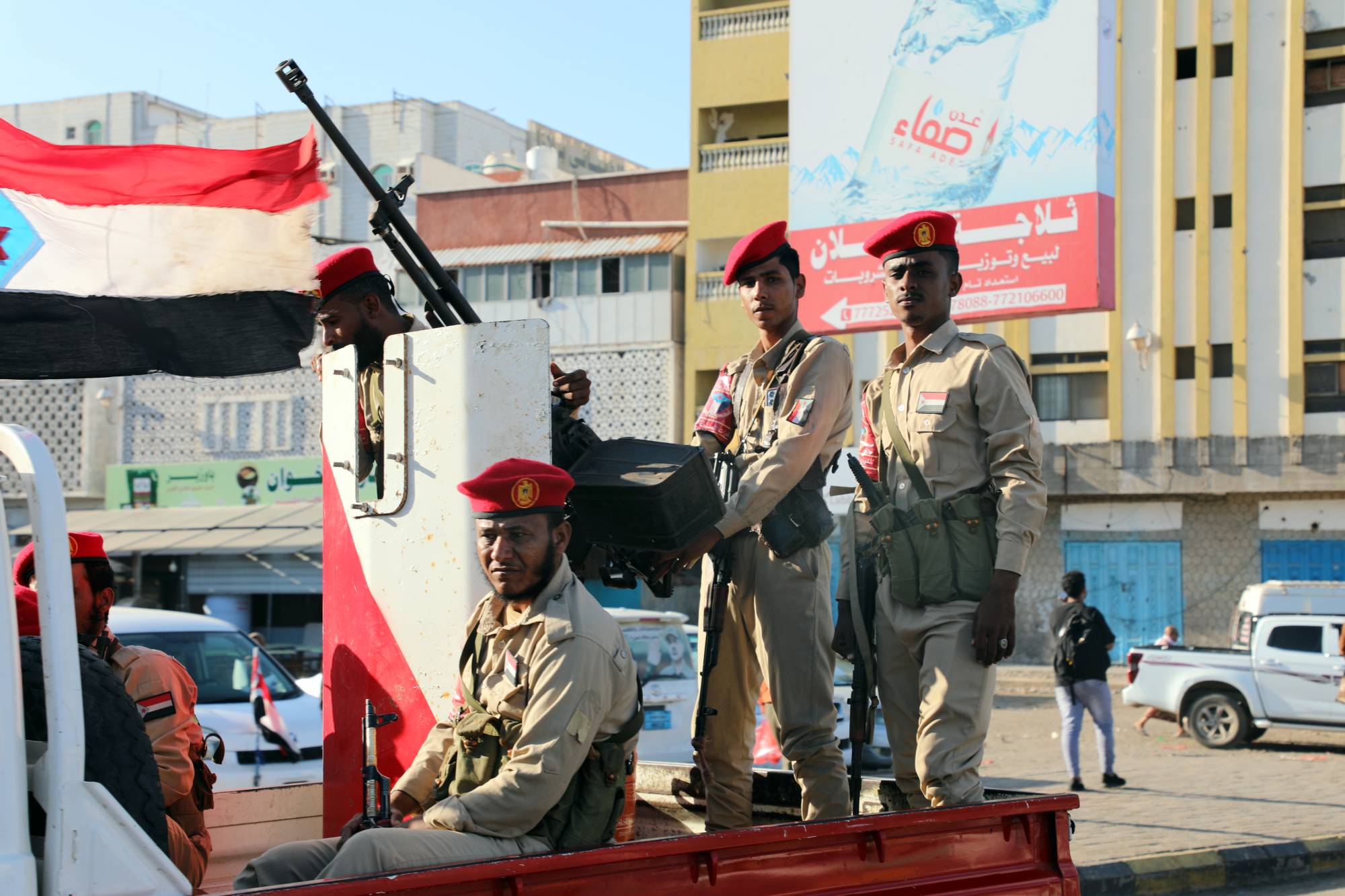
The conflict between the Southern Transitional Council (STC), the internationally recognized government, and the Hadramout tribal alliance not only produces local tension, but also leads to a mutual depletion of military and political capabilities within the camp itself.
The events in Hadramout represent a golden opportunity for the Houthis on the military level due to the following factors:
1- Dispersing the capabilities of opponents: The Houthis are monitoring the depletion of the capabilities of the forces opposing them in zero-sum conflicts in the east, which leads to strategic exposure on the main confrontation fronts.
This internal preoccupation gives the Houthis a rare opportunity to rearrange their ranks and strengthen their positions on the sensitive fronts, especially Marib and Taiz, without real military pressure.
Political analysts believe that the Houthis benefit from any tension within the legitimacy camp, and work to fuel divisions by amplifying media discourse and pushing secret movements to create fears among local parties, in an attempt to confuse the anti-Houthi front and increase pressure on it.
2- Weakening the rear defense lines: The disintegration of the first military region (Sayun) or its preoccupation with the conflict in Hadramout weakens the rear defense line of Ma’rib Governorate, which may make it easier for the Houthis to launch a sweeping attack to impose a new military reality, using the rhetoric of protecting national sovereignty as a cover for their military movements.
During the past few days, the Houthi group pushed new military reinforcements from Sanaa and Dhamar towards the contact lines in Dhale and Taiz governorates, in a move that raised fears of a new round of fighting.
While Tariq Saleh accused the Houthis of mobilizing their groups on various fronts, especially on the western coast and Taiz, which forces all forces in this theater of war to intensify and coordinate their efforts and confront this common threat.
3- Exploiting the security vacuum: Analysts believe that any security vacuum resulting from the conflict between the STC and the Hadramout tribal alliance gives the Houthis loopholes to infiltrate or build alliances with disgruntled tribes, with the aim of reaching oil areas and vital ports.
They pointed out that the Iranian-backed group seeks to impose a more pressing military reality on the ground, which would guarantee it additional strength in any future negotiations.
4- Strengthening their secret relationship with the Emirates: The Emirati-Saudi hostility caused by the conflict over Hadramout is likely to push the Emirates to strengthen its secret relationship with the Houthis and secretly provide them with weapons and money to harm Saudi interests and perhaps tempt them to strike it deep within Saudi Arabia.
In addition to pushing them to put forward new conditions to obstruct the Saudi peace map. It is also expected that the UAE will instruct its transitional ally to coordinate its efforts and secretly intensify its cooperation with the Houthis to facilitate arms smuggling operations to them, and they may even abandon some positions on the group’s contact lines to spite the legitimacy and its Saudi ally.
Political Implications
The escalation in Hadramout coincided with a stalemate in the UN-backed roadmap, and the continued internal conflict within the liberated areas gives the Houthis an opportunity to obstruct any political progress, while blaming their opponents for the failure.
The more divided and incapable the anti-Houthi camp appears in managing its territories, the greater the group's ability to negotiate from a position of strength, or to impose the equation of either accept our terms or the chaos will continue.
The divisions in Hadramout contribute to strengthening the Houthis' negotiating position by freezing the ceasefire, as the conflicts in Hadramout weaken the chances of consolidating the faltering ceasefire. This keeps the peace process stalled and gives the Houthis time to strengthen their military capabilities.
The continued fighting within the anti-Houthi camp will also keep ceasefire talks frozen, undermine the broader peace process, and put the Houthis in a better position to exploit these divisions, benefiting from their growing military capabilities and continued Iranian support.
Instead of Hadramout being an economic engine for the state, its oil wealth has become a bargaining chip in the conflict. The Houthis are well aware that any attempt to export oil without national consensus will remain vulnerable to blackmail or attack.
Therefore, the Houthi threats to target oil export facilities remain, making any other party's control over the fields a political bargaining chip with Riyadh rather than an economic gain; the Houthis are demanding a share of the revenues.
With conflicting local forces controlling the oil fields of Hadramout, these resources are transforming from an economic asset into a political and security burden, benefiting the Houthis by preventing their opponents from utilizing the national wealth.
According to observers, the Houthi group is a strategic winner in the events unfolding in Hadramout, exploiting the volatile situation their opponents find themselves in to redraw the map of influence in their favor.
While the group is actively preparing for new rounds of fighting by sending reinforcements to Taiz, Dhale, and Marib, they are also taking advantage of the disarray within the anti-Houthi front to advance their political agenda under the guise of protecting national unity and sovereignty.
According to analysts and experts, what is happening in Hadramout is not merely a local conflict, but a strategic gift to the Houthi group. Every day that passes amid division and chaos brings the Houthis closer to establishing themselves as the primary de facto power in Yemen.
If the anti-Houthi forces continue, according to experts, to expend their energy on internal conflicts and divisions, the question will not be: Will the Houthis benefit? But rather: How far will they go in exploiting this collapse?
Observers believe that this collapse, which pleases the Houthis, could paradoxically become a source of strength for the opposing side due to the unification of decision-making power following the UAE's withdrawal from the Yemeni political scene and Saudi Arabia's sole focus on rearranging the internal Yemeni situation in favor of the legitimate government, making it a stronger party in confronting the Houthis.
Sources
- How did Houthi media outlets cover the events in Hadramout? [Arabic]
- Analysts: The Houthis are the primary beneficiaries of any division in Hadramout [Arabic]
- The UAE is drawing new maps of influence in the southern Arabian Peninsula [Arabic]
- The Houthis are sending military reinforcements towards Al-Dhale' and Taiz [Arabic]
- Military mobilization is underway between the government and the Houthis... Are the drums of war beating again in Yemen? [Arabic]
- Map of armed control in Yemen: the eastern part of the country is turning into a regional conflict zone [Arabic]