Water and Energy: The New Weapons in the US-'Israel' War on Iran
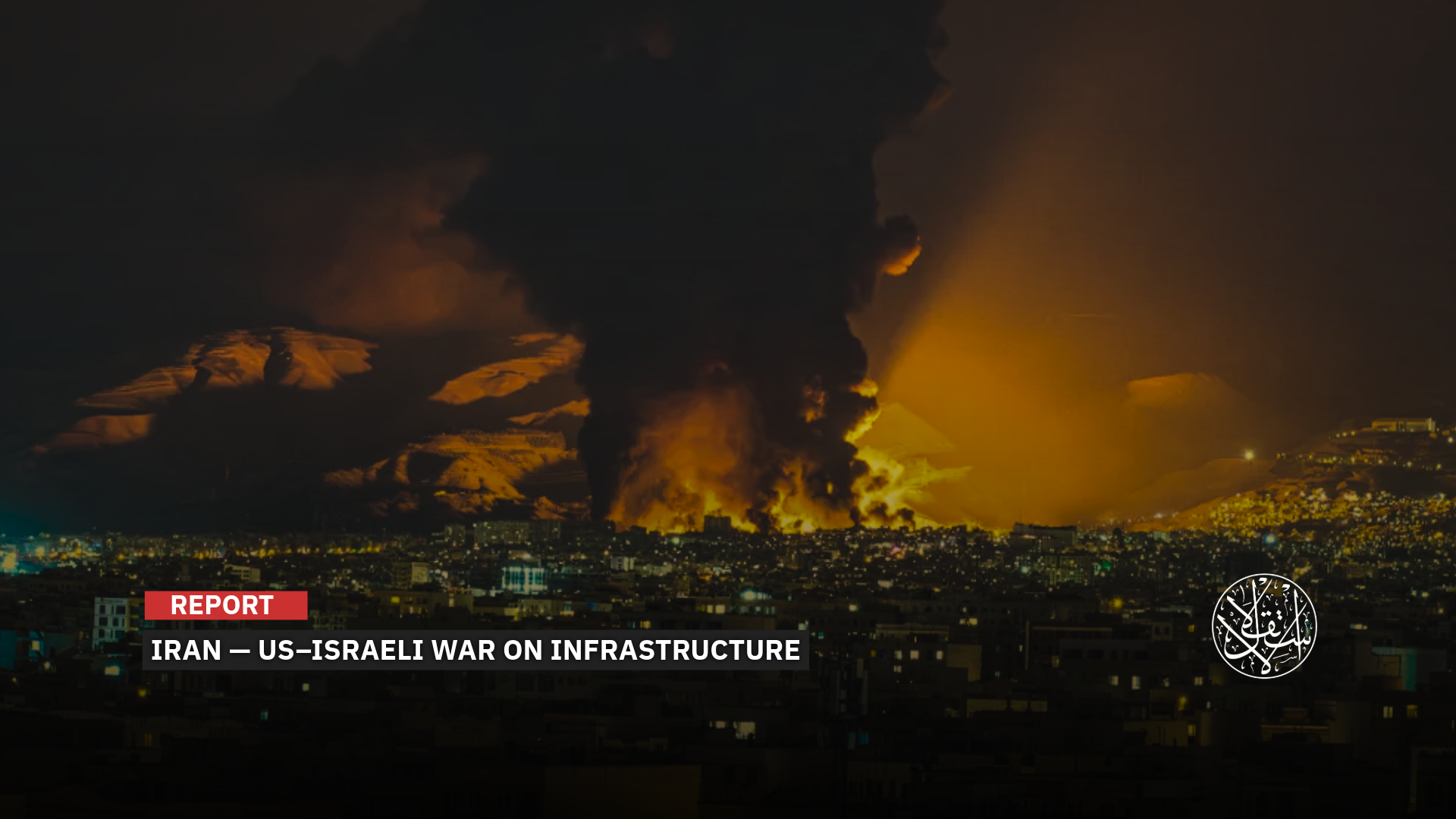
The strikes on Iran hit water desalination plants, oil tanks, and civilian facilities, including hospitals.
After U.S. President Donald Trump warned on March 7, 2026, that Iran would face a very powerful strike with a wider range of targets, it quickly became clear this was no ordinary military operation. The strikes went straight for Iran’s critical infrastructure.
Water desalination plants, oil storage facilities, and civilian sites—including hospitals—came under fire, signaling a dramatic escalation in the war.
The United States and “Israel” launched what analysts are calling a “war on infrastructure,” hitting a desalination plant on Qeshm Island and bombing around 50 fuel tanks at the Shahram depot on Tehran’s northern outskirts, one of the country’s largest gasoline storage hubs.
Tehran responded by targeting the Haifa refinery in the Israeli Occupation with “Kheibar Shekan” missiles, marking a dangerous shift: both sides now striking each other’s vital energy facilities.
In a first for the region, Bahrain reported that one of its desalination plants had been hit, highlighting the conflict’s widening scope during what is being called the “Nine-Day War.”
The attacks have fueled speculation about who carried them out, with some analysts warning that they could be part of a broader strategy to expand the conflict and drag Gulf states into a direct confrontation with Iran.
Targeting infrastructure, especially water facilities, marks a chilling new phase. Desalination plants across the Gulf, which supply most of the region’s drinking water, could now become legitimate military targets.
With hundreds of desalination stations lining the Gulf coast, any escalation against these facilities threatens the water security of millions, transforming the conflict from a traditional military confrontation into a battle that touches the lives of ordinary civilians.
Strikes on Oil Refineries
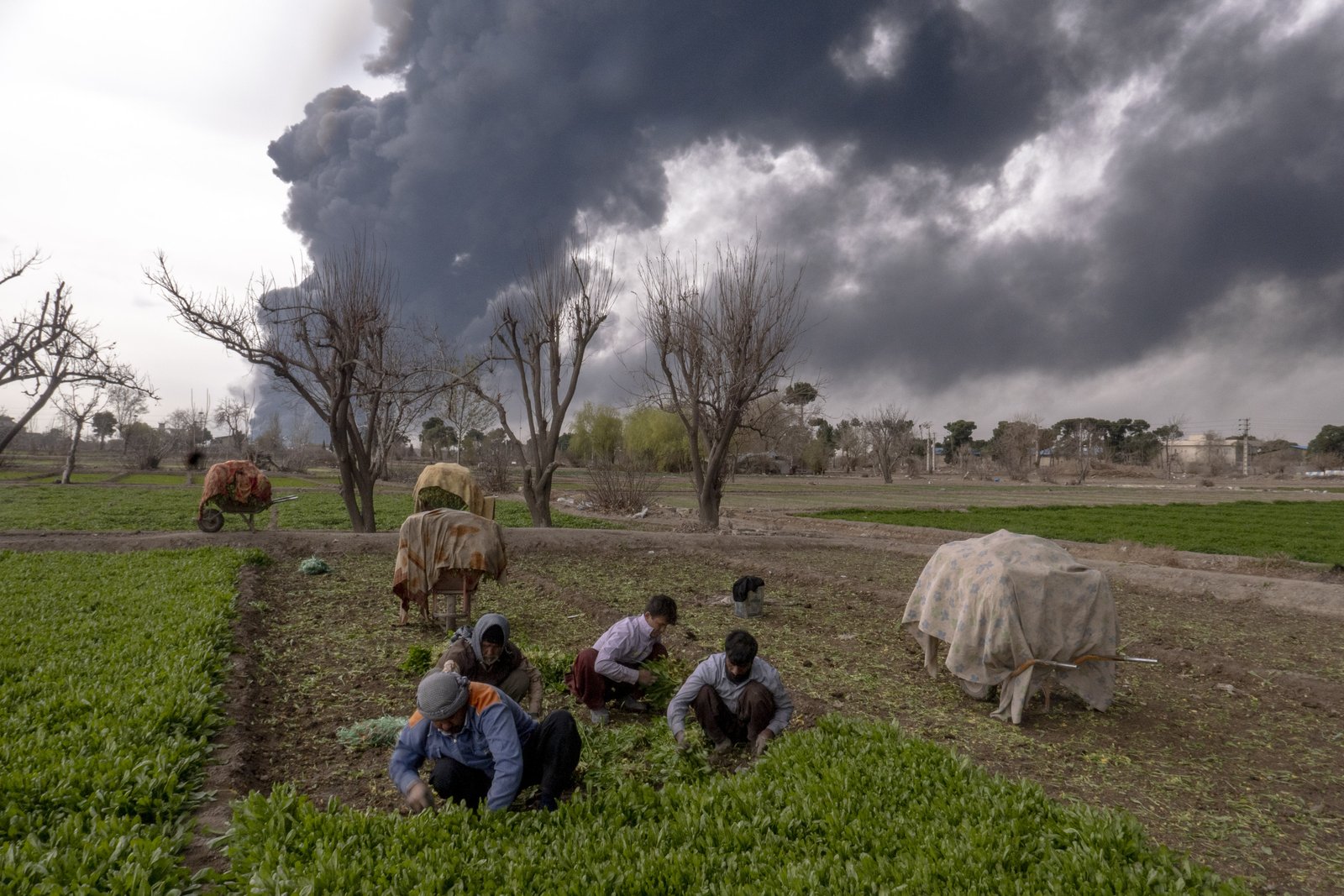
The contours of what many now call a “war on infrastructure” began to take shape on March 7, 2026, when the United States and the Israeli Occupation launched a series of strikes on critical civilian facilities inside Iran, focusing heavily on energy sites and fuel depots. The attacks triggered massive fires and thick black plumes of smoke that spread across large areas. Analysts warned that if these emissions mix with rainfall, they could produce harmful acidic fallout, a scenario some likened to a form of environmental or indirect chemical warfare.
Israeli strikes targeted oil storage facilities in Tehran, while Iran retaliated by hitting energy infrastructure in “Israel,” most notably the oil refinery in Haifa. Tehran launched ballistic missiles and drones toward the Israeli Occupation as well as toward U.S. bases across the Gulf region.
One of the most significant sites struck was the Shahran fuel depot on the northern outskirts of Tehran, one of the capital’s largest gasoline and fuel storage centers. The facility supplies the local market and supports some military needs. Its location in a metropolitan area of roughly 13 million people raised serious concerns about potential risks to civilians.
Reports indicated that at least two of the depot’s eleven storage tanks caught fire, sending dense black smoke into the air and causing cases of respiratory distress among residents. Burning fuel also leaked from damaged tanks, spreading the flames and damaging nearby homes.
In response, Iran’s Revolutionary Guard Corps (IRGC) said it had targeted the Bazan oil refinery in Haifa Bay using Kheibar Shekan solid-fuel ballistic missiles. Iranian officials described the strike as retaliation for the U.S. and Israeli attacks on Iran’s energy sector.
The refinery, operated by the Bazan Group, is “Israel’s” largest oil-processing facility, supplying roughly 50 to 60 percent of the country’s fuel needs. The same site had previously been hit during the June 2025 war, when Iranian missiles killed three workers, injured dozens, and forced the refinery to shut down for several months.
Yet the most striking element of the first wave of attacks on Iran’s oil infrastructure was the choice of targets. Rather than hitting major production or export hubs, the strikes focused on storage facilities inside the capital. Key sites such as Kharg Island—Iran’s primary oil export port—remained untouched, as did the major oil fields in Khuzestan Province in the country’s southwest.
This suggests that the initial phase of the attack aimed less at crippling Iran’s export capacity and more at disrupting domestic fuel supplies and unsettling the internal front. Kharg Island remains the most sensitive node in Iran’s oil network. Nearly 90 percent of the country’s crude exports pass through the island before tankers head to global markets, usually via the Strait of Hormuz, one of the world’s most critical energy corridors.
Oil from inland fields is transported to the island through a network of pipelines, stored in massive tanks, and then loaded onto supertankers from deep-water terminals capable of receiving the world’s largest vessels. Every day, millions of barrels are shipped from these facilities, making Kharg Island the central hub linking Iran’s oil fields to international markets.

The U.S. Hit Before Iran
Because most of Iran’s oil export infrastructure is concentrated in one place, Kharg Island, energy experts say the island represents one of Tehran’s biggest economic vulnerabilities. U.S. officials have hinted that shutting down the port could deliver a heavy blow to Iran’s economy.
Yet despite having the military capability to strike the island, both the United States and “Israel” have so far avoided doing so. Knocking out Iran’s main oil export hub could remove Iranian crude from global markets for an extended period, potentially driving oil prices toward 150 dollars per barrel or higher and inflaming international tensions. The risk is especially sensitive after roughly 120 countries condemned the recent attacks.
Instead, the strikes have focused on disrupting Iran’s domestic fuel supply. One of the main targets was the Shahran fuel depot in Tehran, a critical hub that supplies fuel for trucks delivering food to markets, vehicles used by the IRGC, and generators that keep hospitals and water treatment plants running during power outages.
Targeting sites like Shahran does not directly shake global oil prices, but it has an immediate impact on the daily lives of nearly 13 million residents in Tehran. The city is already enduring heavy airstrikes that international reports describe as some of the most intense bombardment faced by a major city since the 2003 invasion of Iraq.
Striking the export infrastructure on Kharg Island, by contrast, would likely remove Iranian oil from global markets for a long time. Rebuilding offshore loading facilities under international sanctions could take years. The stakes are even higher given that a large share of Iran’s crude flows to China, which imports around 1.4 million barrels per day from Iran.
Energy analysts warn that cutting off these supplies could push Brent crude toward 150 dollars a barrel, potentially triggering a global economic slowdown and deepening geopolitical divides. It could also rally countries across the Global South against the operation and hand Beijing a justification for escalation that it currently lacks.
For this reason, some analysts say Kharg Island has effectively become an undeclared red line for the U.S.-Israeli alliance inside Iran. Hitting the island would not only damage Tehran but could ripple across the global economy and international energy markets. Financial analyst Shanka Anselm Pereira warns that destroying Iran’s oil export capacity at this stage could trigger a large-scale energy shock for the world economy.
Ground Invasion
Analysts say the United States has avoided targeting Kharg Island or Iran’s oil fields, despite their strategic importance and relative vulnerability, because of the risks of escalation.
A strike on the island could push Iran to retaliate directly against oil facilities in “Israel” and neighboring Gulf states, threatening global energy supplies and amplifying oil price volatility at a time when markets are already unstable. Destroying Iran’s main export terminal could also weaken the country’s economy for years, potentially complicating any future political transition.
For these reasons, Kharg Island has long been viewed as a sensitive red line in regional conflicts. That is why some strategists have floated the idea of seizing the island through a U.S. ground or air operation. Controlling it would likely require a military landing rather than simple airstrikes, a step Washington remains reluctant to take, according to experts cited by Axios on March 8, 2026.
U.S. officials have discussed several options for dealing with the war in the region, including the possibility of capturing the island. Michael Rubin, a senior Pentagon adviser on Iran and Iraq in the George W. Bush administration, said last week he had discussed the idea with White House officials, arguing it could be a way to cripple the Iranian government economically. “If they can’t sell their own oil, they can’t make payroll,” he said.
Others urge caution. Former U.S. official Richard Nephew warned that attacking the island could spark broad escalation and destabilize global energy markets. Analysts at JPMorgan have also cautioned that a U.S. or Israeli takeover of the island could trigger a major shock in energy markets and push Tehran to retaliate by targeting oil facilities across the region or disrupting shipping in the Strait of Hormuz.
The result is that any move against Kharg Island remains fraught with risk, combining military, economic, and geopolitical dangers that make direct intervention an exceptionally complex strategic decision.

A Chemical Weapon
The strike on the desalination plant on Qeshm Island marks a sensitive turning point in the rules of engagement between the United States and Iran. The confrontation is shifting away from conventional military targets toward critical civilian infrastructure, opening the door to a far more dangerous phase of the conflict.
Experts warn that chemical reactions caused by burning fuel at the targeted refineries could produce acid rain. Exposure to airborne compounds may also raise the risk of cancer, skin and eye irritation, and cardiovascular disease, according to a report published by Global Witness on March 9, 2026.
Pollutants carried by rainfall could also seep into water sources, directly affecting aquatic life and drinking water supplies, deepening the humanitarian and environmental crisis in affected areas.
These attacks highlight the environmental and climate dimensions of modern warfare. Armed conflicts often cause long-term damage even when oil infrastructure itself is not directly targeted. The Russian invasion of Ukraine, for example, produced roughly 120 million tons of carbon dioxide emissions in its first twelve months alone, illustrating the environmental toll of war.
Against that backdrop, the fallout of oil and thick black smoke over Tehran is more than an isolated incident. It may be an early warning of the major environmental and health consequences that could follow a prolonged war involving the United States and “Israel,” with direct risks to civilians and public health.
Both Iran and Gulf states rely heavily on desalination plants to secure drinking water supplies. That dependence makes attacks on such facilities an exceptionally sensitive escalation, one that could drive regional tensions to new heights and pull the conflict into an unprecedented civilian, military, and economic confrontation.
On March 9, 2026, Iran accused the United States of striking a desalination plant on Qeshm Island. Foreign Minister Abbas Araghchi described the attack as a clear and desperate crime against civilian infrastructure.
He said the strike disrupted water supplies to thirty villages and warned that targeting critical infrastructure directly harms civilians and could have serious consequences for regional stability, particularly amid the continuing tensions between Washington and Tehran.
Trump appeared to acknowledge the bombing indirectly. Asked whether the United States had struck a desalination plant in Iran, he said the Iranians were among the most evil people on Earth.
He claimed he didn’t know anything about a desalination plant but added that if Iranians were complaining about it, the U.S. was complaining that they shouldn’t be cutting off children’s heads.
Observers say targeting water facilities—widely seen as a red line in any conflict—may be part of an Israeli strategy, according to some Israeli media, to pull Gulf states into the war instead of facing Iran directly.
Meanwhile, the United Arab Emirates (UAE) firmly denied any involvement, saying “Israel” is trying to drag regional states into the war by spreading rumors and inaccurate claims—a reflection of just how sensitive and complex the issue of water resources has become in the region.
The development is highly sensitive. It signals a shift in the rules of engagement between the United States and Iran, from striking conventional military targets to hitting critical civilian infrastructure, potentially paving the way for a far more dangerous phase of the conflict.
Historically, water infrastructure in the Gulf has not been immune to attacks during armed conflicts. In June 2019, the Saudi-led coalition in Yemen said the Houthis launched a projectile toward a desalination plant in southern Saudi Arabia.
Qatar also reported that a water tank at a power station in Mesaieed was hit by a drone attack.
These incidents show that desalination plants are not just potential military targets; they are also strategic weak points in the region’s civilian water security.
The General Secretariat of the Gulf Cooperation Council held an emergency meeting of its Water Resources Committee on March 3, 2026, to discuss strengthening water security systems amid the current regional tensions—a move reflecting growing concern that desalination plants could become targets in ongoing conflicts, especially as the region faces an already severe water crisis.
Analysts say strikes on water facilities in Iran and across the Gulf would not only affect civilian life but could also trigger wider political escalation, increasing tensions between states, pulling more regional players into the conflict, and opening new paths of escalation that could include attacks on other strategic infrastructure.
In short, this development shows how vital resources, especially water, are increasingly becoming targets in modern warfare. Any attack on water infrastructure can carry humanitarian, economic, and environmental consequences that reach far beyond the battlefield, reflecting how today’s conflicts are shifting toward civilian life and critical infrastructure.
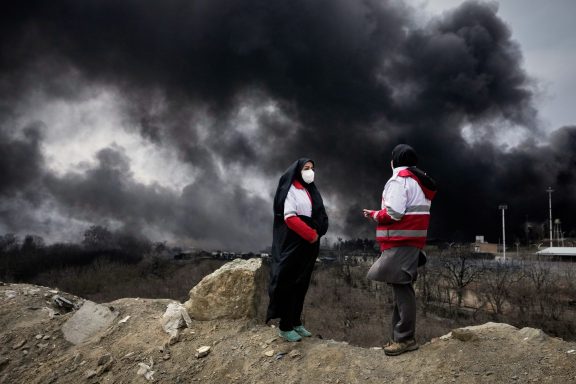
Reports by the World Bank confirm that many Gulf states rely almost entirely on seawater desalination, which provides between 50% and 90% of the population’s water needs and remains essential to sustaining civilian life in major cities.
Major desalination plants, such as the Jubail Desalination Plant in Saudi Arabia, help supply up to 90% of the drinking water used in the capital Riyadh alone, making them critical facilities whose targeting could directly threaten millions of residents.
These plants are also tightly linked to energy infrastructure, transport networks, and pumping systems, increasing their vulnerability and turning any damage or disruption into a broader security threat.
Recent studies show that risks to desalination plants are not limited to direct military attacks. They also include non-military threats such as oil spills, environmental disasters, or even nuclear incidents that could send contaminated clouds toward Gulf states in as little as 15 hours—highlighting just how fragile the region’s water systems are and how closely they are tied to the stability of civilian life.
Sources
- Iran war puts at risk key pipelines, terminals and refineries that supply the world with oil and gas
- The true price of the Iran war for oil, people and the environment
- Attacks on Desalination Drag Water Supplies Into the War With Iran
- Iran continues striking civilian infrastructure and US bases in the Gulf (March 7–8 updates)
- Kharg Island: Why Has Iran’s Oil Export Hub Drawn So Much Attention? [Arabic]
- Why Iran’s vital Kharg Island oil hub is still untouched by US-Israel bombers