Sudanese Army Recaptures Bara: How Far Will It Shift the Balance of Power in North Kordofan?
Abu Dhabi is forced to rethink its security and regional priorities under direct pressure.
The Battle of Kordofan is no longer merely limited clashes over a city here or a road there, but in recent days it has turned into a real test of the balance of power in Sudan, and a test of the army’s ability to overturn the equations of the war.
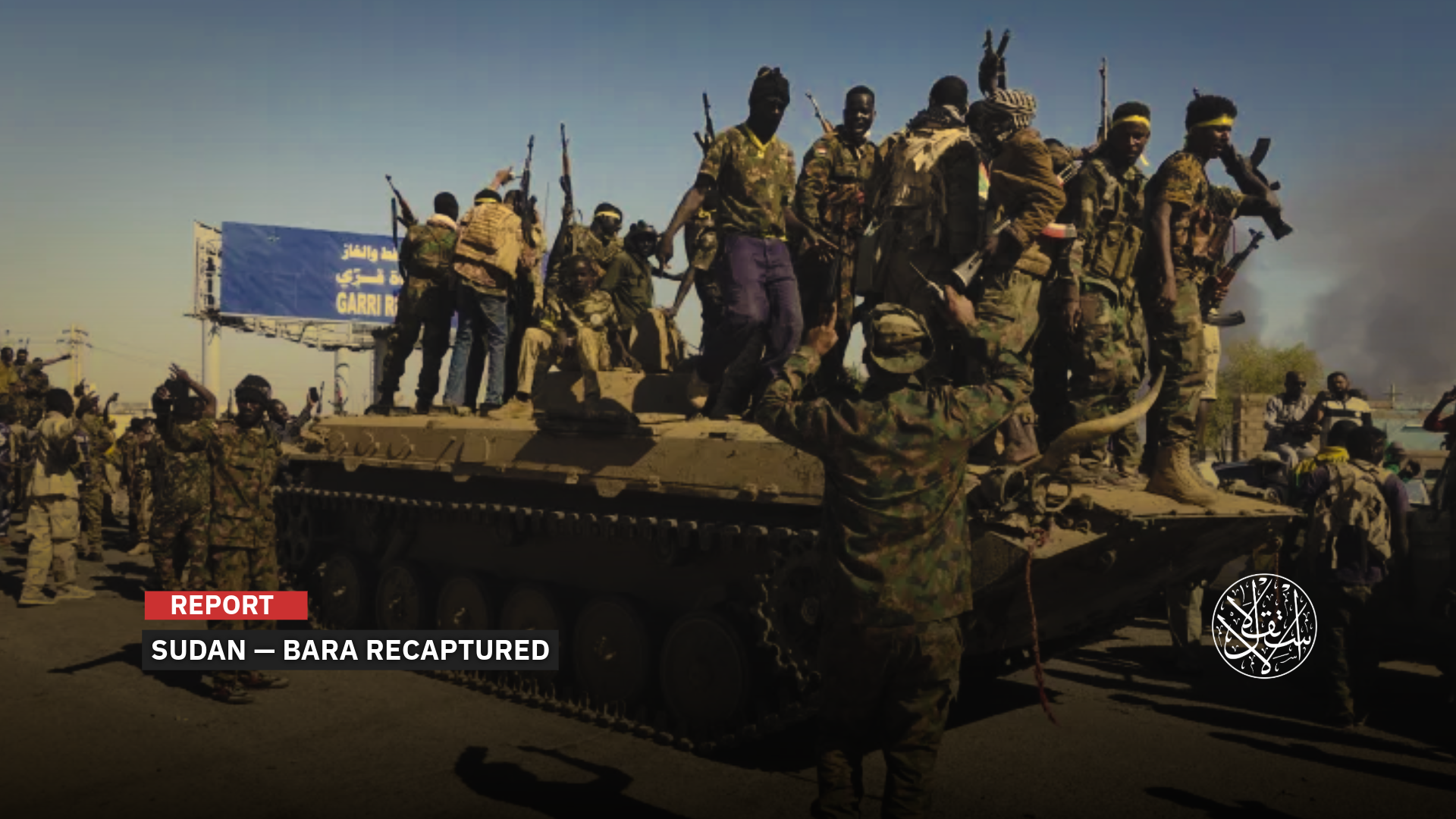
The Sudanese army’s recapture of the city of Bara, the second-largest city in North Kordofan State, on March 5, 2026, was not just a field victory, but a strategic shift that disrupts the plans of the Rapid Support Forces militia and reshapes the geography of control in the state.
The force that was known for rapid expansion and shock pressure, and that terrified cities and rural areas alike, has begun for the first time to face a noticeable retreat on one of the most sensitive fronts.
This loss is not incidental, it indicates the fragility of the Rapid Support Forces’ militia capabilities in the face of the Sudanese army’s new strategy that combines calculated air strikes with coordinated ground advances.
The scene gains additional depth at the regional level, as the United Arab Emirates, which provides military and logistical support to the Rapid Support Forces militia, now finds itself at the center of an unprecedented security crisis, with the escalation of the American-Israeli war against Iran, and the resulting direct tensions that threaten the stability and security of the Gulf.
Amid this environment, intertwined between an internal front where the Rapid Support Forces’ militia ability to hold their areas of control is eroding, and rising external pressure on their backers, a central question emerges that will shape the coming phase: Is the fall of Bara a sign of the beginning of the Rapid Support Forces’ militia gradual military decline in Kordofan, or merely a temporary setback in a long and complex war that will continue for months and perhaps years?
Liberation of Bara
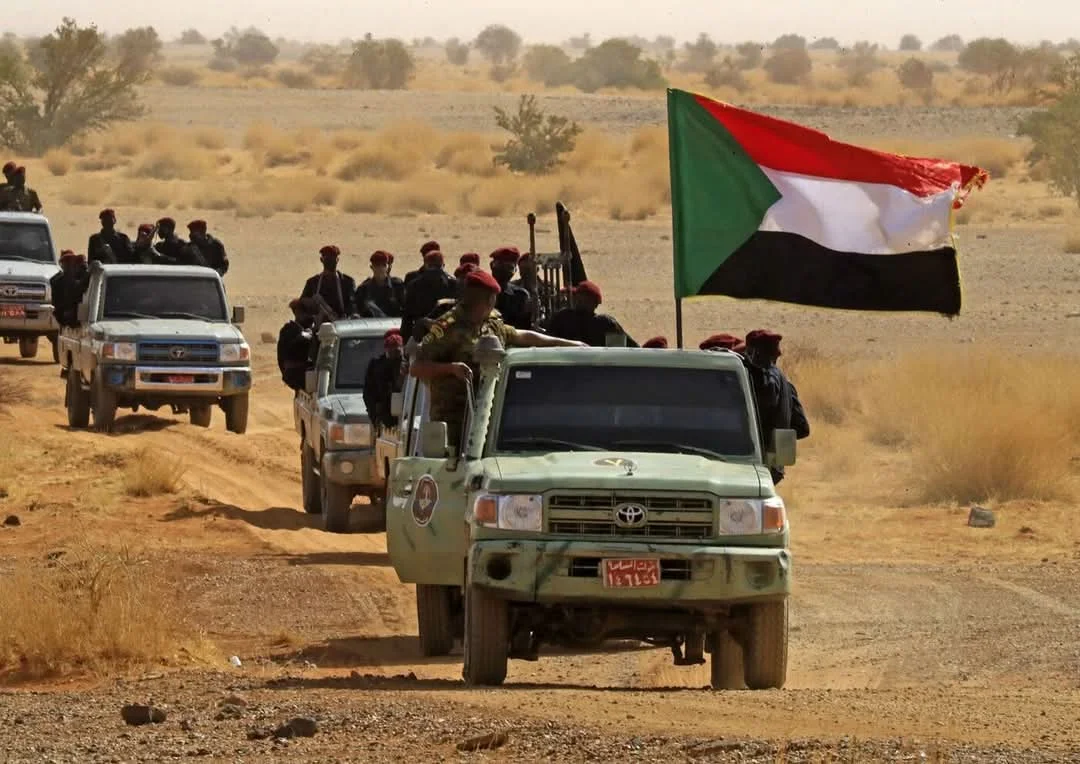
The Sudanese Armed Forces announced the recapture of the strategic city of Bara after a joint military operation with allied forces, most notably the joint force allied with it.
According to military sources cited by the local newspaper Sudan Tribune, the operation was not merely a conventional ground attack, but began with a series of airstrikes and drone attacks targeting the deployment positions of the Rapid Support Forces militia and their heavy vehicles inside the city.
This was followed by a ground advance launched from the Dankoj axis north of el Obeid toward Bara, before the forces were able to seize control of its main entrances and expel the Rapid Support Forces militia from it.
The same information indicates the destruction of 32 combat vehicles and the seizure of 10 others, in addition to the killing of dozens of fighters, reflecting that the battle directly targeted the hard power of the Rapid Support Forces militia inside the city, rather than a symbolic presence or scattered guard points.
This detail carries particular importance, because Bara was not merely a city under the control of the Rapid Support Forces militia since October 2025, but was one of the pivotal nodes in the equation of threatening the city of el Obeid.
The city lies on a strategic road linking Khartoum with North Kordofan, and by virtue of its geographic location it forms a pressure gateway on el Obeid, the capital of North Kordofan State and its largest city.
Therefore, the fall of Bara to the army does not merely mean seizing another point on the map of fighting, but removing one of the most important tools of threat against el Obeid, expanding the defensive belt around it, and reducing the Rapid Support Forces’ militia ability to maneuver in central Sudan.
For this reason, Sudanese military figures believe that the recapture of Bara represents a fundamental step in securing el Obeid, as press reports indicated that the city had represented an advanced staging point for any attempt to choke the state or open wider corridors toward the west.
The military importance of Bara is tied to the nature of the war in Kordofan itself. After the successive losses suffered by the Rapid Support Forces militia in Khartoum and its surroundings during 2025, the force reorganized its military weight westward, benefiting from a wider geographic space and cross-border supply lines, particularly through Chad and Libya, in addition to controlling cities and towns that give it greater flexibility to maneuver between Darfur and Kordofan.
But what happened in Bara indicates that the army is no longer content with defending the major cities of Kordofan such as el Obeid, Kadugli, and Dilling, but has moved to a strategy based on exhausting the military structure of the Rapid Support Forces militia, and targeting its logistical centers and its ability to establish positions inside cities.
This shift intersects with what the armed forces announced in recent weeks regarding breaking the siege of Dilling and Kadugli, developments that Associated Press described as important gains for the army in South Kordofan after long battles.
In this context, the Battle of Bara does not appear to be an isolated event, but rather part of a broader operational pattern. On February 15, 2026, the army announced the destruction of an air defense system belonging to the Rapid Support Forces militia in the Abu Zabad area of West Kordofan.
Military sources told Sudan Tribune that the system was a Chinese short-range model “FB-10,” designed to deal with low-altitude targets, including drones, helicopters, and aircraft flying at low altitudes.
The destruction of this system means that the army is no longer targeting only combat vehicles or moving convoys, but is also working to strike the capabilities that enable the Rapid Support Forces militia to protect their tactical airspace from airstrikes and drone attacks.
This largely explains why the Battle of Bara appeared to be decided to a significant degree by fire coming from the air, before being settled on the ground.
Rapid Support Forces Militia Mode
Not only that, on March 9, 2026, the Sudanese army was able to destroy two main supply sites for the Rapid Support Forces militia on the border with Libya and Chad, in addition to carrying out about 21 preemptive strikes targeting convoys that were on their way inside Sudan through the northwestern and western borders.
Some of these supplies included jamming devices and drones. If this development is placed in the context of the recapture of the city of Bara and the destruction of the air defense system in Abu Zabad, the picture becomes clear: the army is seeking to choke supply lines and strip the Rapid Support Forces militia of their advantage of mobility and flexibility, before striking the civilian centers and urban nodes that the militia had relied on to consolidate its control.
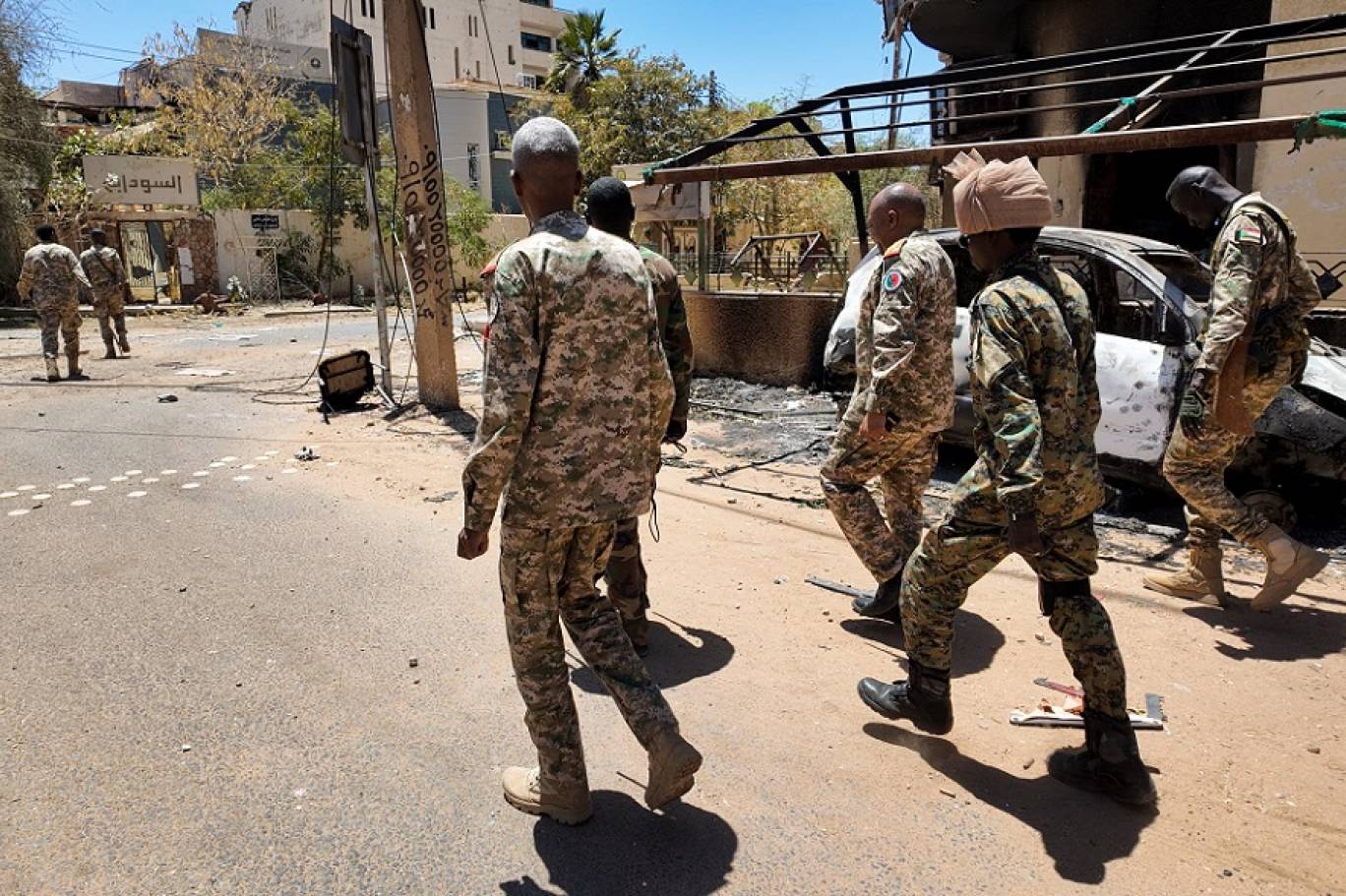
From here it can be said that the retreat of the Rapid Support Forces militia in Kordofan is no longer merely a political impression or wartime propaganda, but has become a tangible field reality.
The force that was able to impose a continuous threat on the city of el Obeid through Bara months ago found itself unable to hold the city despite recognizing its strategic importance.
The loss of heavy vehicles, defensive systems, and supply sites also indicates that the retreat is not limited to the front lines alone, but includes the military structure that makes control of territory possible and sustainable.
Despite this, it does not mean a complete collapse of the Rapid Support Forces’ militia power. They still maintain influential positions in Darfur and parts of western Sudan, according to analyses by the American research organization Armed Conflict Location & Event Data Project (ACLED), which noted continued mobilization in North Darfur during February 2026 and the militia’s use of drones on other fronts.
However, the difference in Kordofan is clear: the army appears to be operating with a more coherent and systematic plan, as it is not content with defending major cities but is seeking to exhaust the militia’s military capability by striking supply lines and logistical support centers.
A decisive element in this shift is the role of the United Arab Emirates as a backer. The American-Israeli war against Iran has added a new layer of pressure, as Abu Dhabi has become involved in supporting the Sudanese civil war, providing the commander Mohamed Hamdan Dagalo, known as “Hemedti,” with various forms of military and logistical support.
On March 9, Reuters reported that the UAE’s envoy to the United Nations called for de-escalation in the war with Iran, while other reports showed that the conflict had affected the UAE’s security and economic infrastructure, from the oil region of Fujairah to shipping and supply chains.
This means that Abu Dhabi is compelled to reorder its security and regional priorities under direct pressure, especially with fears of the conflict expanding or disrupting trade and energy. It is difficult to assume that secondary files such as the war in Sudan will remain at the same level of focus.
Although there is no declared evidence of a reduction in Emirati support for the Rapid Support Forces militia because of the war with Iran, the coincidence between Abu Dhabi’s preoccupation with a major regional crisis and the emergence of militia losses in Kordofan makes this possibility a subject of monitoring and analysis.
More importantly, the Rapid Support Forces, as a militia that relies on mobility, continuous funding, ammunition, and constant renewal of capabilities, are more affected than regular armies by any disruption in the external support network. With strikes on western supply lines, the destruction of its air defense systems, and rising political pressure on the United Arab Emirates, the militia’s ability to hold urban centers under coordinated attacks is declining, as was seen in Bara.
From this perspective, the latest battle cannot be read only within the limits of the city, but extends to Abu Zabad and the Libyan and Chadian borders, all the way to the Gulf, where regional calculations are rapidly changing, adding a new dimension to evaluating the course of the war in Sudan.

The Present Moment
In a careful reading of the Sudanese scene in light of recent regional developments, Sudanese researcher Mohamed Nasr said in a statement to Al‑Estiklal that the current moment cannot be understood only from the perspective of battles inside Sudan, but must be placed within the broader regional context, particularly the unprecedented pressures facing the United Arab Emirates.
Nasr points out that Abu Dhabi has found itself in recent weeks at the center of a dangerous military escalation in the Gulf after being subjected to increasing Iranian attacks in the context of the ongoing war between the United States and Israel on one side and Iran on the other. He adds that this escalation represents direct security challenges the UAE has not experienced for many years.
The researcher stresses that these pressures come after a period of sharp political tension with Saudi Arabia, placing the UAE before a series of simultaneous regional crises it has not faced on this scale before. As a result, this state of instability has been reflected in other files in which the UAE had been active, foremost among them the war in Sudan.
Tensions in the Gulf and the preoccupation with complex security and economic issues have disrupted the regional environment from which the Rapid Support Forces militia had benefited to strengthen their field influence, creating uncertainty about the future of the external support on which the militia had relied.
Nasr notes that the battle of Bara represents a turning point compared with many previous confrontations because it came after a series of accumulated indicators in recent weeks, including the recapture of important positions, breaking sieges on major cities, targeting air defense systems belonging to the Rapid Support Forces militia, striking supply lines coming through the western borders, and securing the city of el Obeid.
He adds that the loss of cities in civil wars does not carry only a military dimension but also a major psychological and political impact.
The Rapid Support Forces militia built part of their image on being the fastest-moving force and the most capable of storming cities and expanding within them.
Therefore, losing a city such as Bara in this way represents a strong blow to that image the group tried to consolidate over the past two years.
Nasr also indicates that these developments send important signals to local communities, tribal forces, and hesitant armed groups that the balance of power on the ground is not as fixed as it appeared during some stages of the war.
In complex conflicts such as Sudan’s, alignments and alliances often change when local actors feel that the balance has begun to tilt in favor of one side over another.
The researcher concludes by saying that the real question in the coming phase will not be limited to whether the balance of power has begun to tilt in favor of the Sudanese army, but goes beyond that to the army’s ability to turn this shift into gradual and sustainable progress, and to exploit the difficult position of the United Arab Emirates, which could redraw the map of military control in Sudan in the coming period.
Sources
- Sudan: The RSF Mobilizes to Consolidate Its Control over North Darfur
- Sources: Sudanese Army Destroyed RSF Supply Sites on the Western Border [Arabic]
- Sudanese Army Recaptures Bara and Secures El Obeid in North Kordofan [Arabic]
- Sudanese Army Announces Destruction of RSF Air Defenses [Arabic]
- Sudanese Army Says It Destroyed RSF Air Defense System in West Kordofan
- Darfur Governor Announces Sudanese Army Control over the City of Bara [Arabic]