How the Hunger Strike in Prisons Exposed British Double Standards Towards Palestine
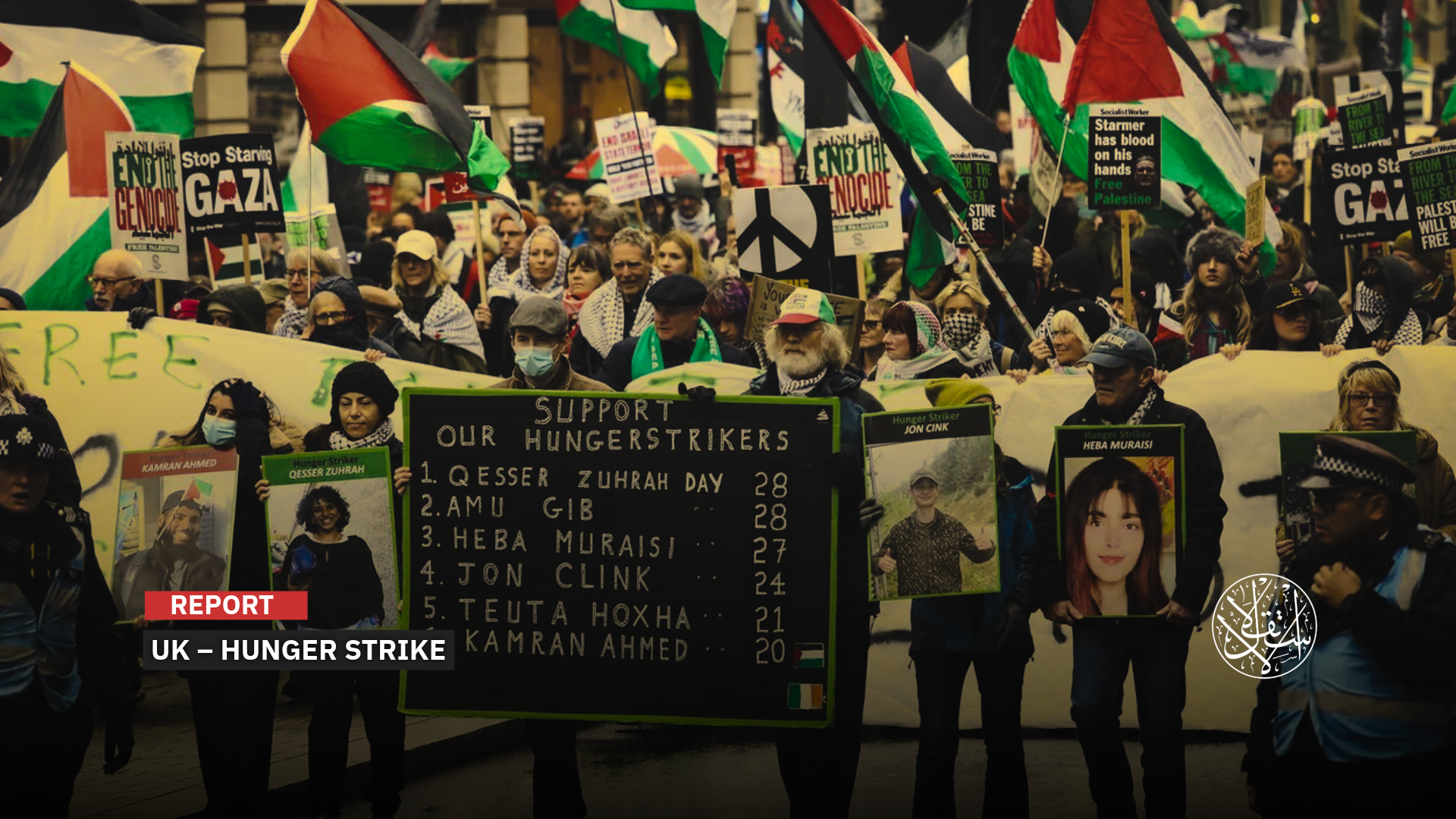
“UN experts raised grave concern over treatment of Palestine Action-linked hunger strikers.”
Britain is witnessing a surge in solidarity campaigns with Palestine Action activists on hunger strike in prisons in support of Gaza, while the British government's silence faces sharp criticism both on the street and in legal circles.
The deteriorating physical condition of some of the detained Palestine Action members, warnings from human rights organizations, and protest marches outside government institutions have raised serious questions about London's claims to defend freedom of expression and human rights.
British media have described this hunger strike as the longest and most widespread in the country's prisons since 1981, when 10 prisoners died, including strike leader Bobby Sands (the Irish Republican Army fighter).
According to the Prisoners for Palestine campaign, four of the Palestine Action activists have ended their hunger strike, while four others are continuing: Teuta Hoxha, Kamran Ahmed, and Lewis Chiaramello.
Deliberate Hunger Strike
As part of the Prisoners for Palestine campaign, several pro-Palestinian activists detained in various British prisons are continuing their open-ended hunger strike to protest British support for the events in Gaza, demanding that the government halt the activities of arms companies, particularly Elbit Systems.
The hunger strike began on November 2, 2025, initiated by a number of Palestine Action activists who had been arrested by the authorities in recent months.
Some of them were arrested even before the movement was officially banned last July, suggesting that the security approach preceded the legal cover, revealing underlying intentions.
The hunger strike began with just eight detainees before gradually expanding, now approaching its sixtieth day.
The detainees' health has deteriorated significantly, including severe weight loss and frequent fainting spells, requiring several strikers to be hospitalized since the strike began.
The first to begin the strike were Qesser Zuhrah (20 years old) and Amu Gib (30 years old) inside Bronzefield Prison, before being joined by Heba Muraisi (31 years old) from New Hall Prison.
Several other detainees have been forced to suspend their participation due to serious health complications, reflecting the escalating human cost of this protest.
The hunger strikers are calling for five main demands: their immediate release on bail, the removal of Palestine Action from its designation as a terrorist group, and the lifting of restrictions on their telephone and postal communications.
They also call for a fair trial that includes the release of documents concerning the security crackdown on activists, as well as the closure of the Israeli company Elbit Systems' factories in the UK, which they are accused of targeting in protest against its role in supplying the Israeli army with weapons used in Gaza.
The hunger strikers believe that their peaceful form of protest, despite its political and humanitarian harshness, does not achieve a direct breakthrough or immediate results in the existing balance of power. However, abandoning it would mean accepting the logic of compliance that the state seeks to impose.
From this perspective, continuing the hunger strike becomes a conscious and deliberate act to confront the British government's violations and its complicity in the wars of extermination against the Palestinians, even if the price seems high and the immediate benefits limited.
The hunger strikers emphasize that the standard of absolute victory is not always measured by direct material results, but rather by the political and moral norms instilled within the community.
This practice, as they say, reminds them that choices are not entirely taken away, and that political imagination remains alive even under the harshest conditions of oppression. This gives meaning to perseverance and makes resistance an act of life itself.
It should be noted that the striking activists face charges related to the storming of RAF Brize Norton in June 2025, while others are being prosecuted in connection with the 2024 storming of Elbit Systems facilities (Israel's main arms supplier). All those detained have denied these charges.
Blatant Contradiction
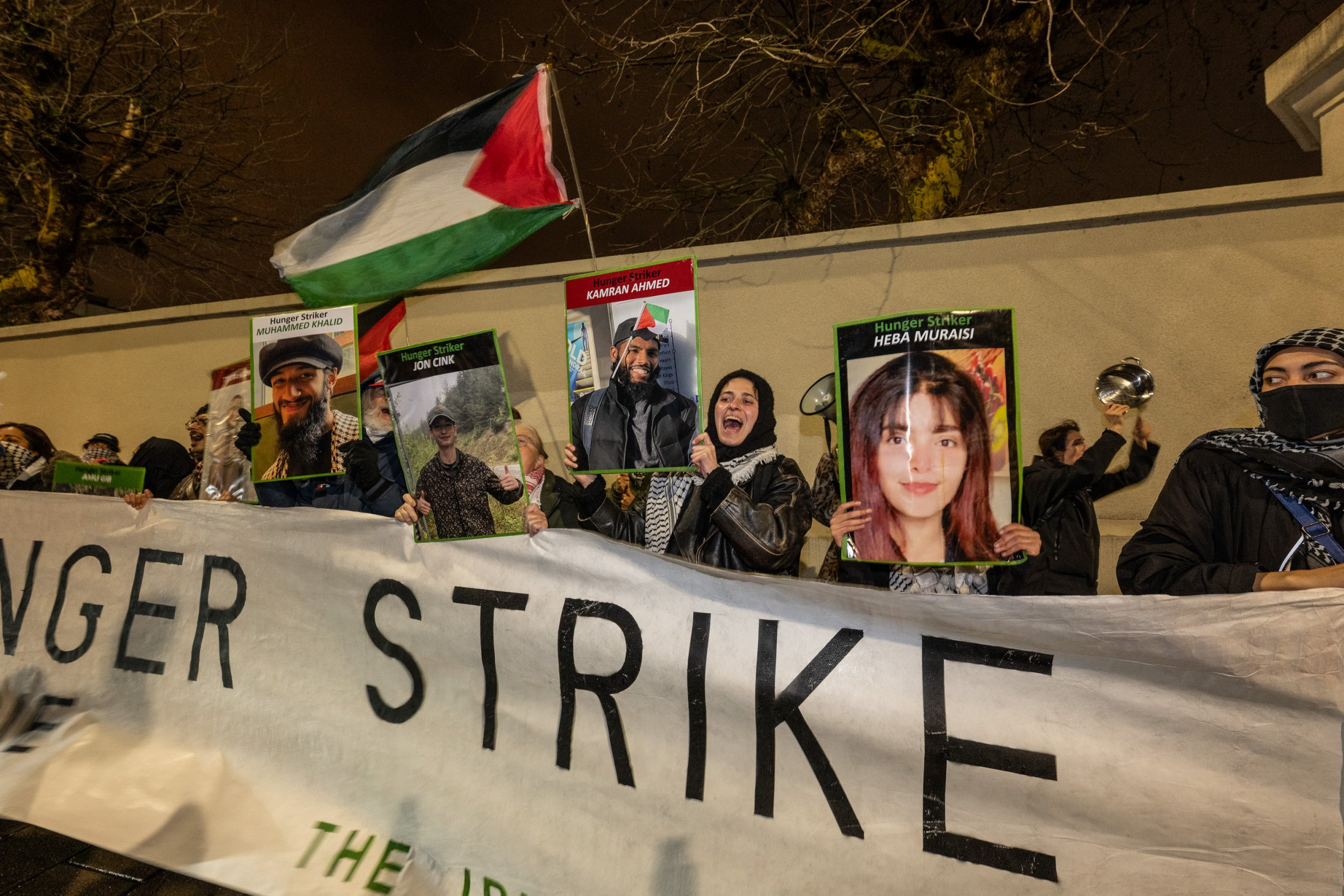
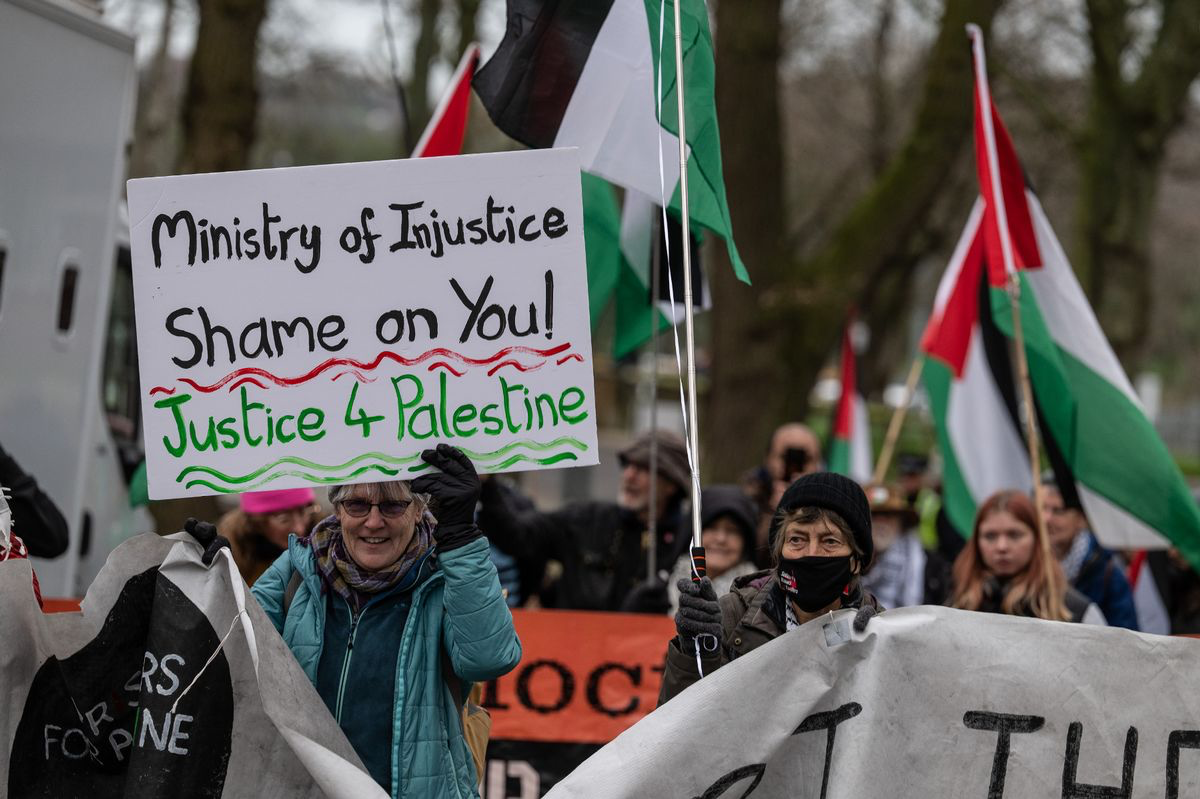
In response to this peaceful protest inside prisons and the authorities' handling of it, dozens of activists in several British cities held demonstrations in support of the hunger-striking detainees, most notably in front of the Ministry of Justice and other government institutions.
They affirmed the justice and legitimacy of the hunger strikers' demands, condemning the British government's policy of dealing with anyone who dissents and its reliance on repression as the only option for confronting those with differing opinions.
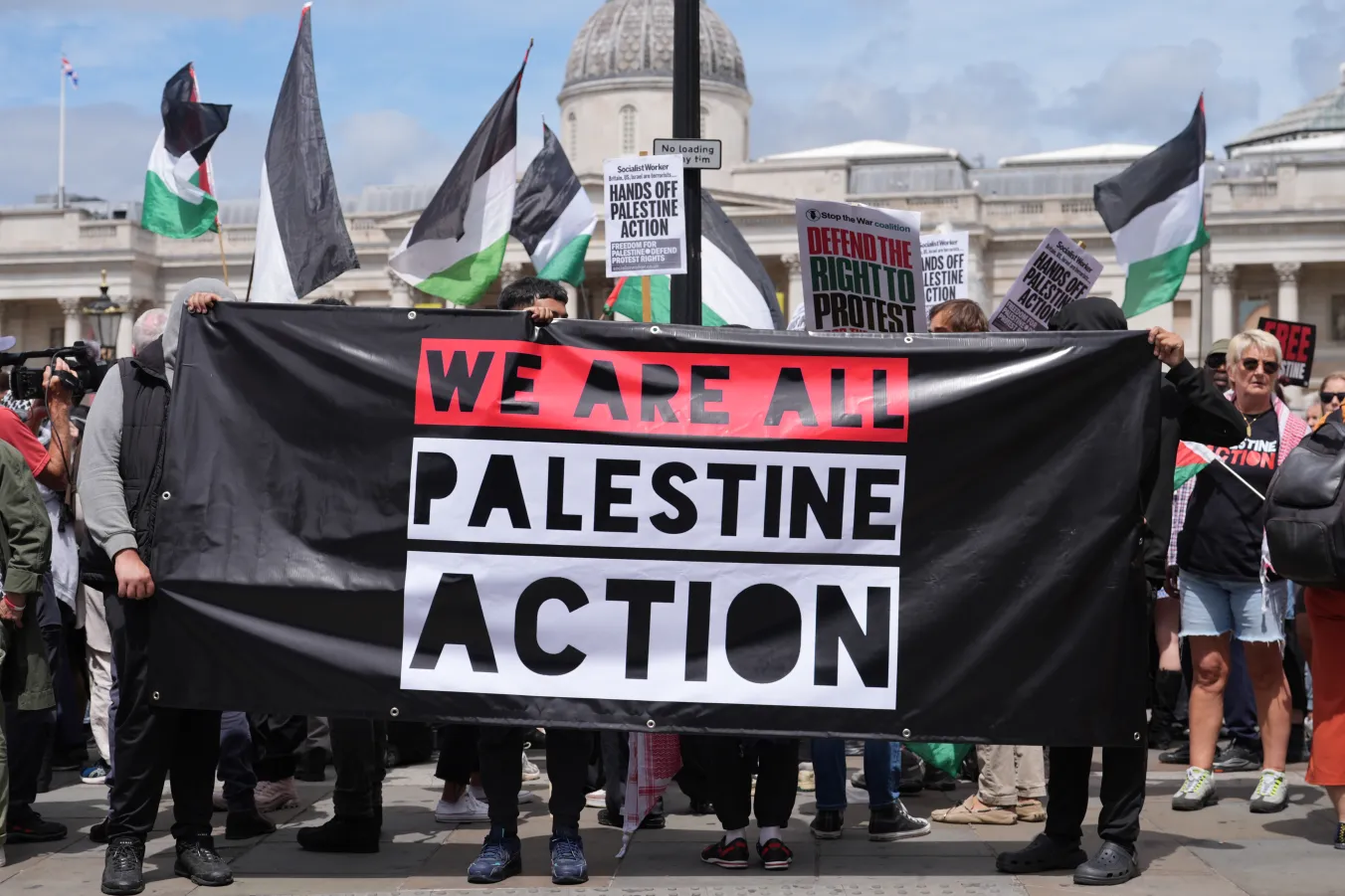
In a demonstration held in Piccadilly Circus in central London, protesters demanded the release of the hunger-striking activists or the opening of official channels of dialogue with them, holding the British authorities responsible for endangering their lives.
On social media, criticism of British Prime Minister Keir Starmer intensified, with activists arguing that his failure to take a humanitarian stance, despite his background as a human rights advocate, constituted a blatant contradiction.
Meanwhile, the Defend the Jury campaign, a group of lawyers, activists, and citizens critical of the pressure exerted on the courts in cases related to Palestine, launched calls for civil disobedience.
In a parallel development, the hunger strikers' lawyers announced their intention to initiate legal proceedings against Foreign Secretary and Justice Secretary David Lammy, indicating that the case could be taken to the Supreme Court after the deadline given to the government expires.
The lawyers asserted that the authorities violated established prison procedures regarding hunger strikes, deeming this a violation of human rights.
They based their argument on prison policies stipulating that the government must make every effort to understand the reasons behind a prisoner's refusal of food and work to address those reasons.
In response, the British Ministry of Justice merely confirmed that the hunger strikers are receiving medical care in accordance with established protocols, without commenting on the legal basis for their detention or the political and human rights demands of the strikers.
To date, more than 20,000 people have signed a petition calling on Lammy to intervene, while more than 50 members of Parliament have called for an emergency session.
But according to sources in the Ministry of Justice, the government fears setting a precedent that could encourage hundreds of other detainees facing similar legal delays to take similar action.
A spokesperson for Bronzefield Prison stated that all prisoners are managed according to UK policies and procedures, including individual risk and security assessments conducted through a multi-agency process.
Lord Timpson, Minister of State for Prisons, Probation and Reducing Reoffending, said: “We have extensive experience dealing with hunger strikes, and our procedures are well-established and highly effective.”
“Prisons work closely with the National Health Service to ensure the robustness and efficiency of our systems, that all prisoners are treated equally, and that an independent judiciary is the cornerstone of the UK justice system,” he added.
Dangerous Precedent
Several human rights organizations have warned that the hunger strikers' situation has reached a critical point, stating that they are victims of the widespread and politically motivated use of counter-terrorism laws in the UK.
CAGE, an independent British human rights organization dedicated to defending civil liberties and human rights, considers the detainees' willingness to risk their lives in official custody a moral and legal alarm bell that extends beyond the circumstances of these individuals, impacting the integrity of the justice system and the rule of law in the Kingdom.
It warned that ignoring the case of the Palestine Action activists could set a dangerous precedent that undermines the duty of care in places of detention and makes hunger strikes a last resort for securing basic rights.
Francesca Nadine of the Prisoners for Palestine campaign confirmed that the hunger strikers are continuing their protest without taking a break, calling for the Palestinian people not to be forgotten during the Christmas holidays.
“The British government is celebrating Christmas while these young people are dying in their cells. We will not stop until justice is served,” she said.
UN experts raised grave concern over treatment of Palestine Action-linked hunger strikers. Special rapporteurs said that handling of prisoners raises questions over the UK's obligations under human rights laws.
In a related context, critics said that London has continued its political and military support for Tel Aviv while simultaneously intensifying its crackdown on pro-Palestinian campaigns within its own borders.
They stated that this pressure has made the hunger strike of pro-Palestinian prisoners a new focal point for criticizing this contradiction and questioning the official narrative of the Labour government.
They pointed out that this situation has also widened the gap between Starmer’s government and some segments of British society.
Observers said that continuing on this path could exacerbate mistrust between ethnic and religious minorities and reinforce the impression that the government is indifferent to the right to protest.
For his part, London-based lawyer Bassam Tablieh explained to Al-Estiklal that “this hunger strike has transcended being merely a protest within British prisons; it has entered the historical consciousness of the Kingdom.”
He considered the hunger strike in British prisons a practical test of Britain's commitment to the standards it proclaims regarding human rights, freedom of expression, and independent oversight of detention conditions.
He pointed out that the symbolic measures taken by the Starmer government, such as suspending talks on some trade agreements with Tel Aviv or imposing limited sanctions on illegal settlers in the West Bank, are more like failed attempts to improve Britain's image and absorb public anger over this complicity.
Sources
- I’m on hunger strike in a British prison. This is why
- Prisoner on Palestine Action hunger strike ‘losing the ability to speak’, say campaigners
- Pro-Palestine activists target UK Labour offices over hunger strikers
- “Witch Hunt”: Jailed U.K. Palestine Action Activists Continue Hunger Strike Despite Health Risks