Haftar Meets Pakistan’s Army Chief, Sending Strategic Signals Through Military Agreement
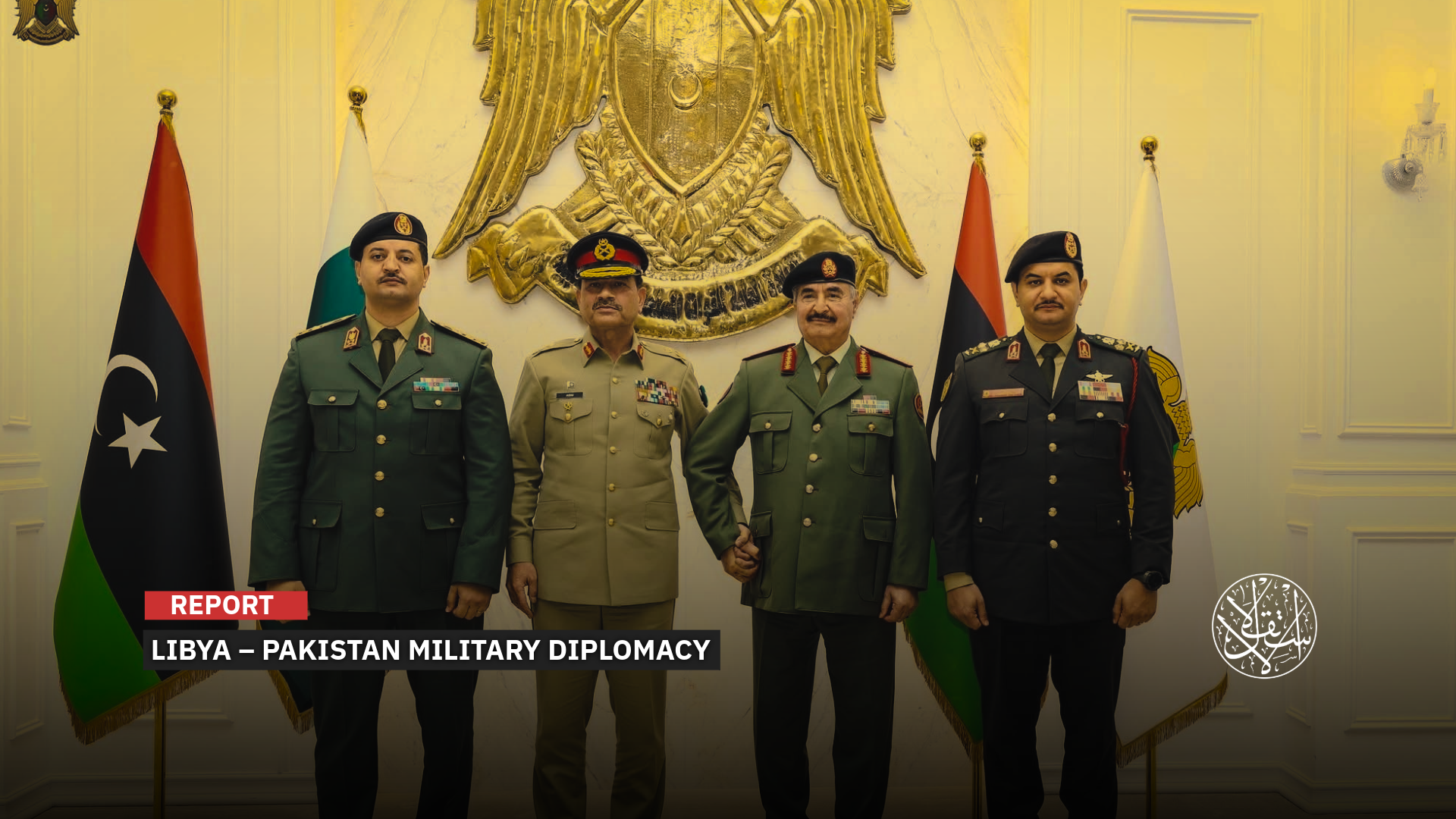
The visit lets Haftar portray himself as a national military leader, not just a local commander.
Pakistan’s army chief, General Asim Munir, arrived in Benghazi on December 17, 2025, at the head of a high-level military delegation, in what sources loyal to eastern Libya’s militia forces described as the first visit of its scale and rank.
Hours after his arrival, he was received by Khalifa Haftar at the headquarters of eastern Libya’s militia forces, amid formal ceremonies and extensive media coverage, in a scene laden with political and security significance.
The following day, the visit culminated in the signing of a joint military cooperation agreement between the Pakistani army and eastern Libya’s militia forces, signed by Saddam Haftar in his capacity as deputy commander-in-chief, according to official statements from eastern forces.
At first glance, the announcement appeared to be a routine step in ongoing military cooperation between states, but within the complex Libyan context, where the country is divided between competing political authorities and security institutions, it raises a weighty political question: is this merely limited training and ceremonial collaboration, or a calculated move to break the isolation imposed on Khalifa Haftar, who is internationally unrecognized, and to consolidate a parallel military legitimacy that could undermine efforts to unify the armed militia forces under a civilian authority?
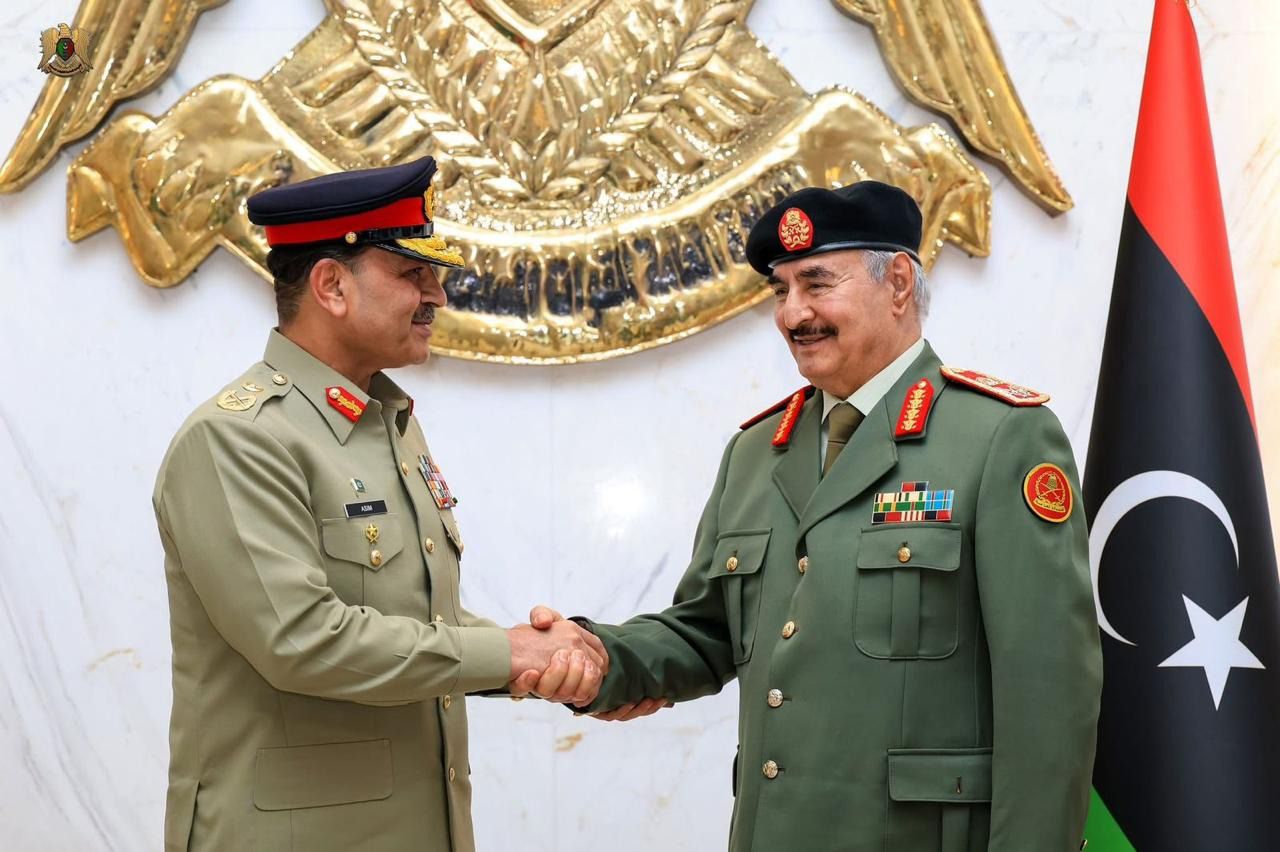
Why Pakistan?
A statement issued by eastern Libya’s militia forces said the agreement signed with the Pakistani army was aimed at “strengthening cooperation in security and military fields, and opening broader avenues for joint coordination, thereby supporting regional stability efforts.”
The statement carries a dual message. Domestically, it seeks to present Khalifa Haftar and his sons, particularly Saddam Haftar, as institutional actors capable of signing agreements on a “state-to-state” level.
Internationally, it aims to reassure the global community that the cooperation is part of stability efforts rather than new military adventures.
However, Haftar’s opponents in western Libya argue that stability in a divided country cannot be built through agreements with a single party.
Rather, it requires an inclusive political process led by the internationally recognized government in Tripoli, namely the Government of National Unity under Abdul Hamid Dbeibeh, contrasted with a parallel authority in the east based in Benghazi.
It is precisely this context that underscores the sensitivity of Pakistan’s army chief Asim Munir’s visit, according to a report by the local site Libya Review on December 17, which noted that the meeting did not involve a unified military institution, but rather a force controlling eastern Libya and competing politically and militarily with Tripoli’s authority.
For many in western Libya, Haftar receiving the chief of staff of a major country in Benghazi and signing a defense cooperation agreement amounts to a de facto recognition of the situation on the ground, even if it does not rise to the level of formal political recognition.
The Italian private news agency Agenzia Nova, which covered the visit, highlighted terms such as “training, capacity building and counter-terrorism,” vocabulary common in modern military diplomacy, particularly when a state seeks to expand external partnerships without engaging in overt political alignments.
Yet in a report dated December 19, the agency noted that behind this diplomatic language lie more practical motivations, including Pakistan’s growing military industry and its ambitions to expand its presence in export markets.
Despite Libya’s ongoing chaos and division, the country remains an open arena for actors capable of providing training, arms, and technical services, especially in regions with financial resources and security influence.
Islamabad, like many capitals, can separate political recognition of Tripoli’s government from maintaining channels of communication with the party that holds field control in the east.
This approach is reinforced by the fact that Pakistan welcomed the formation of the Government of National Unity in 2021, yet today engages militarily with Benghazi through the top leadership of its army.
Moreover, Libya offers any external partner a significant window onto the Mediterranean and issues of migration and maritime security, matters that intersect with Pakistan’s broader interests in its extensive and interconnected relations with the Middle East.
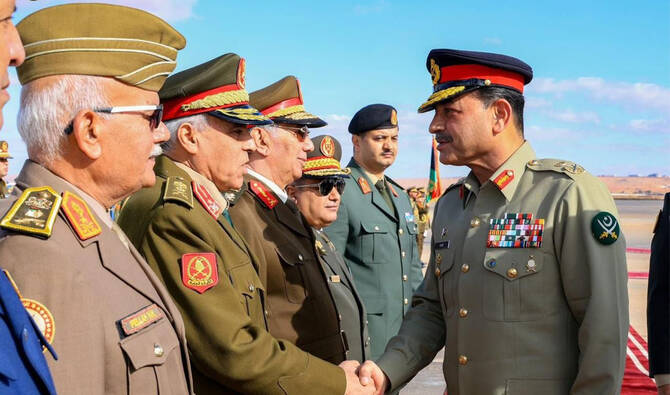
July Thread
To understand the significance of Pakistan’s army chief Asim Munir’s visit to Khalifa Haftar, it is necessary to return to a pivotal moment on July 18, 2025, when Saddam Haftar met in Islamabad with Pakistan’s Prime Minister, Muhammad Shehbaz Sharif.
On that day, Haftar’s son held a series of separate meetings, including a session with Pakistan’s army chief at the General Headquarters in Rawalpindi, as well as a meeting with the chief of Pakistan’s naval staff, Admiral Naveed Ashraf, at the navy’s headquarters.
The Pakistani newspaper The News International reported on July 19, providing details of the meetings, noting that they covered defense cooperation, collaboration in military industries, technical expertise exchange, and training programs.
These developments indicate that Saddam Haftar’s visit was neither merely ceremonial nor a fleeting diplomatic courtesy. It positioned him, both domestically and internationally, as a figure operating with the logic of a “statesman”: a meeting at the prime minister’s office, followed by a session at army headquarters, and then a third with the navy’s leadership.
At the same time, the visit placed Pakistan in direct contact with the Haftar family at a moment when their influence within eastern Libya’s militia forces was rapidly expanding, gradually bringing Saddam Haftar to the forefront of military decision-making.
It can therefore be argued that the events of July served as a “rehearsal for legitimization” for Saddam Haftar on the international stage.
Once he met with the prime minister and the heads of military branches of a major country, it became easier for him to later host the chief of that military institution in Benghazi and sign a cooperation agreement.
Yet the official statements regarding the cooperation agreement signed by Asim Munir with Khalifa Haftar offer no details on the types of weapons, the nature of the programs, or implementation timelines, relying instead on general language referring to “cooperation, coordination and training.”
However, the Libyan experience, as noted by the Italian news agency Agenzia Nova, shows that opening the door to “training” often quickly expands into broader avenues, including maintenance and upgrade contracts, exchanges of military experts and advisers, the provision of communications and reconnaissance equipment, and potentially, at later stages if political conditions allow, the supply of more sophisticated military systems.
It is precisely here that concern intensifies, as any transition from symbolic or training cooperation to explicit arms support raises a highly sensitive question: how could such a pathway intersect with the international framework governed by UN resolutions regulating arms in Libya, and with the reality of a divided country where weapons remain one of the most complex elements of the political and security conflict?
From this perspective, a central question emerges: how does Tripoli view this growing rapprochement between Islamabad, and Benghazi?
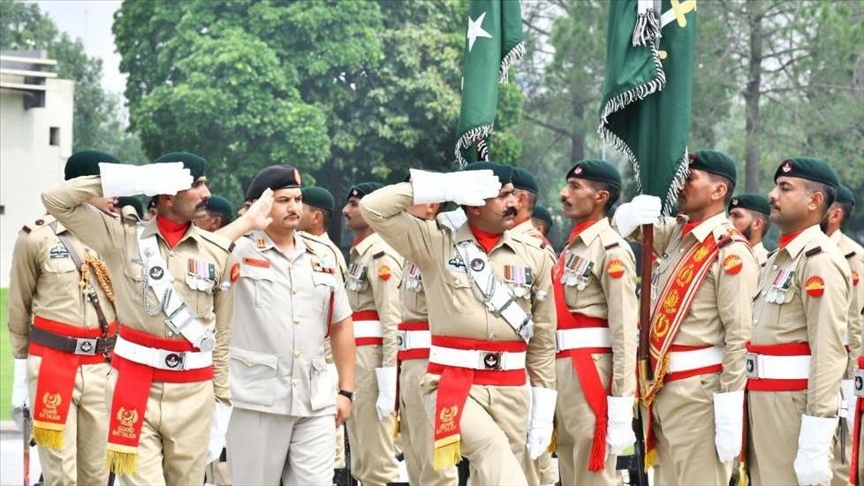
Real Test
Libyan journalist and international affairs specialist Emad Ismail said that the visit of Pakistan’s army chief, Field Marshal Asim Munir, to Benghazi, and the signing of military understandings with Khalifa Haftar, raises political and security debates far deeper than the content of the official diplomatic statements, particularly against the backdrop of Libya’s entrenched division.
Speaking to Al-Estiklal, Ismail noted that sources reporting on the visit did not relay any detailed official positions from Tripoli directly responding to Munir’s visit or the cooperation agreement signed in Benghazi.
He stressed that this absence does not necessarily indicate tacit approval, but rather reflects a cautious approach adopted by Tripoli to avoid inflating the significance of the visit or granting it more political weight than it merits.
Ismail explained that the expected approach of the Tripoli government, based on its conduct in similar cases, relies on several principles, foremost among them the rejection of entrenching any parallel army outside the framework of unifying the military under a legitimate, internationally recognized civilian authority.
This approach also includes a warning against reshuffling the political cards at a highly sensitive moment, as the rapprochement could be interpreted as a political signal that Haftar is seeking to expand what might be called “military diplomacy” in search of backers to increase the cost of his political isolation.
There is also concern that any substantive cooperation could shift the balance of power politically or militarily, even if it does not immediately translate into direct battlefield confrontation.
From an opposing perspective, Ismail argued that the real significance of Asim Munir’s visit lies less in the content of the agreements than in the symbolic image it produced: the head of a nuclear-capable Islamic state’s army visiting Benghazi, meeting Haftar, and signing defense understandings.
He added that the image provides Haftar with an important propaganda tool, allowing him to present himself as the commander of a formal military institution rather than merely a local force leader, constituting a de facto recognition of engagement, even if it falls short of full political recognition.
Ismail also noted that Pakistan’s selection carries additional symbolic weight, as it allows Haftar to frame the rapprochement as part of a network of Islamic military cooperation rather than an alliance with regional or international capitals previously accused of direct interference in Libya, potentially reducing the step’s sensitivity among segments of public opinion.
At the same time, the Libyan journalist stressed the need to treat the development with balance, noting that some observers fear the visit’s significance may be overstated, particularly as the announced agreement remains general and contains no reference to specific advanced arms transfers.
He added that Pakistan may primarily be interested in opening economic and defense cooperation channels rather than taking a political stance in Libya’s complex landscape.
Ismail concluded, “The real test begins now,” emphasizing that what needs to be monitored is whether Pakistani technical delegations will appear in Benghazi to assess training programs or arms requirements, whether Eastern forces will announce manufacturing, assembly, or major maintenance projects, and whether the Tripoli government will request official clarifications from Islamabad or prefer silence to avoid granting the move additional political momentum, as well as the potential evolution of this cooperation to include a maritime dimension along Libya’s eastern coast.
Sources
- Libya and Pakistan sign military cooperation agreement in Benghazi
- Pakistan, Libya vow to strengthen defence ties
- Gen. Haftar of eastern Libya discusses defense cooperation with Pakistani military chief
- Pakistan Army Chief Arrives in Benghazi
- “New Alliance Map”… Haftar Opens Military Channels with Pakistan [Arabic]