Somaliland at a Geopolitical Crossroads: Israeli Recognition and Global Silence
The Israeli move cannot be viewed in isolation, but as part of a wider strategy to reshape the Arab and Islamic world.
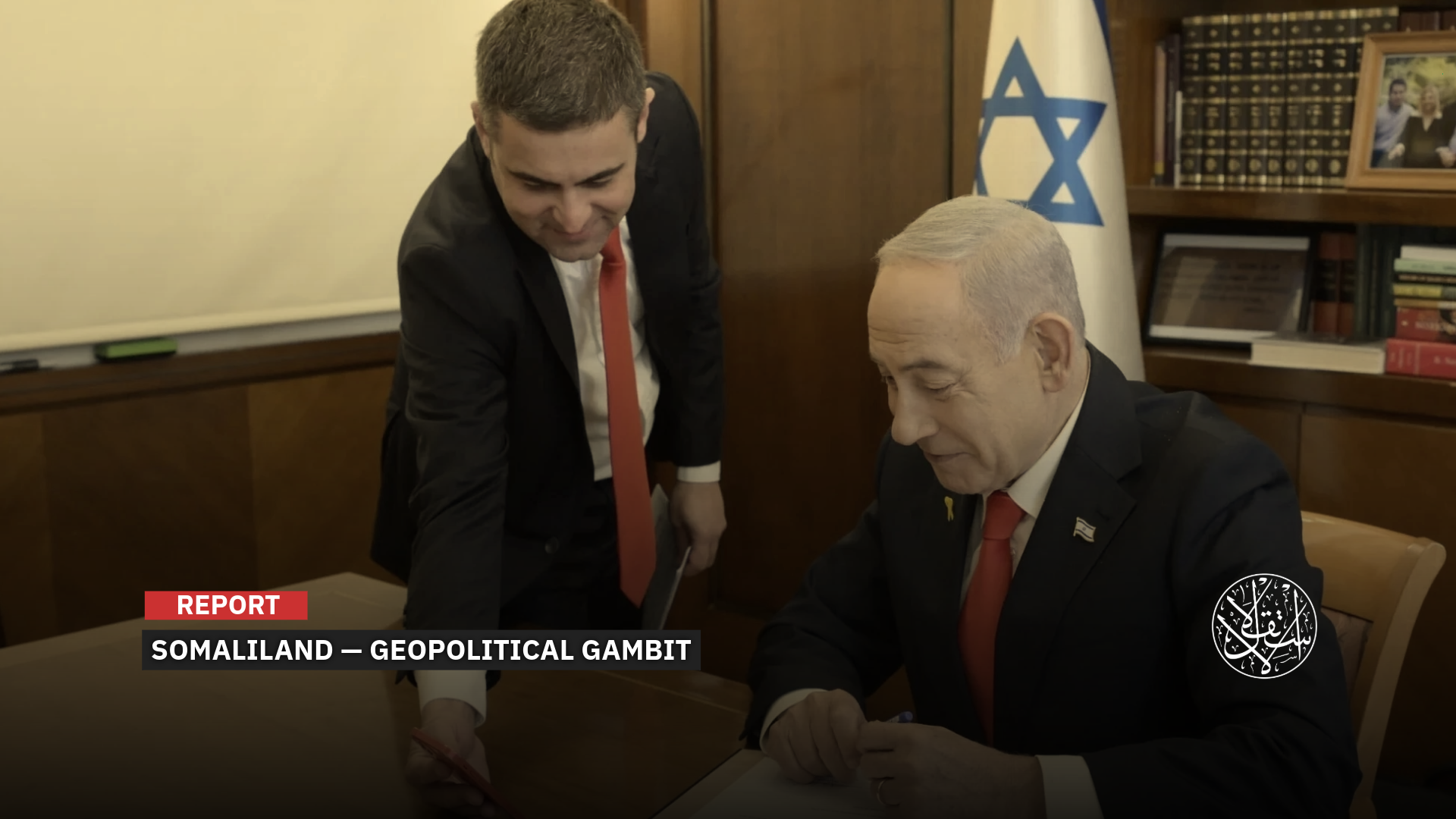
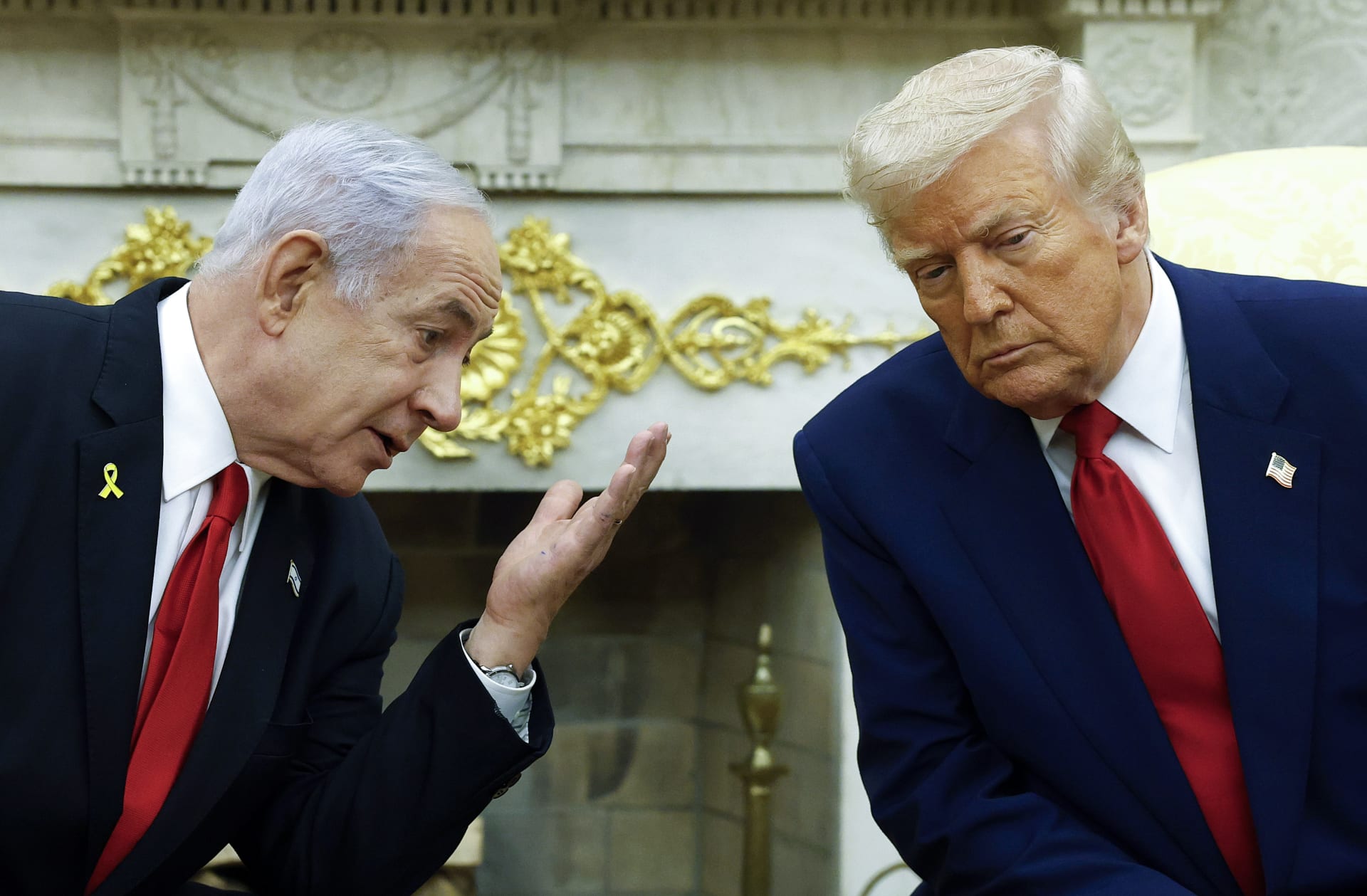
In a move many have described as provocative and dangerous, Israeli Prime Minister Benjamin Netanyahu announced on Friday, December 26, 2025, that his government would recognize the self-declared region of Somaliland, which broke away from the Federal Republic of Somalia, as an independent and sovereign state.
The step is unprecedented and runs directly counter to the long-standing international, African, and Arab consensus, upheld for more than three decades, on the unity and territorial integrity of Somalia.
The announcement was made in an official statement posted on the social media platform X, in which Netanyahu linked the recognition of Somaliland to the spirit of the Abraham Accords.
Since their signing in 2020, he has promoted those accords as a framework for regional peace. Critics argue, however, that this latest move points to shifts that go beyond diplomatic normalization, signaling an attempt to redraw lines of influence and sovereignty in the Horn of Africa, a region widely regarded as one of the most fragile and complex in the world.
Historic Breakthrough
Israeli Prime Minister, Benjamin Netanyahu, did not conceal the practical dimensions of recognizing Somaliland, saying that Israel planned to expand its ties with the region through broad cooperation in agriculture, health, technology, and the economy.
Subsequent remarks by Israeli foreign minister, Gideon Sa’ar, suggested the move went well beyond developmental cooperation.
He announced that the agreement included the establishment of full diplomatic relations, including the opening of embassies and the appointment of ambassadors.
Sa’ar added that he had instructed his ministry to move immediately to institutionalize relations between the two sides across a wide range of fields.
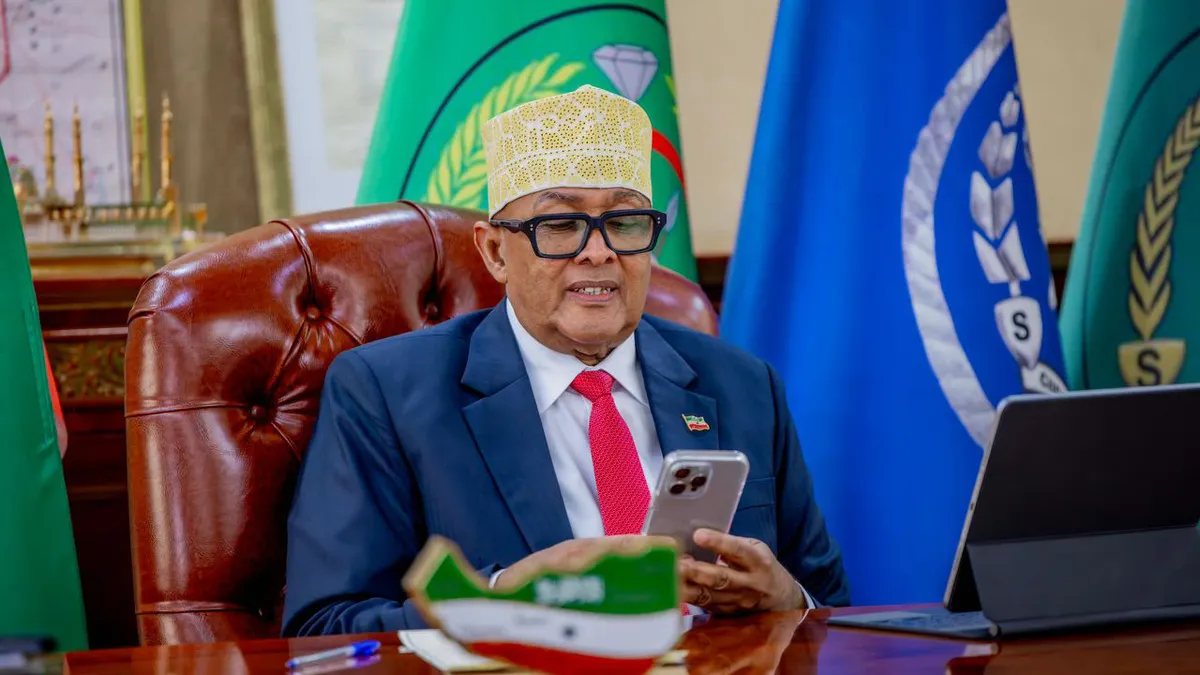
Underlining the advanced and formal nature of the step, the Israeli statement said that Netanyahu, Sa’ar, and the president of Somaliland, which remains internationally unrecognized, Abdirahman Mohamed Abdullahi, had signed a joint declaration of mutual recognition.
The government in Hargeisa described the move as a historic breakthrough in its long-standing efforts to secure international recognition for the breakaway entity it has administered since 1991.
For his part, Abdullahi announced that Somaliland would join the Abraham Accords, portraying the step as progress towards regional and global peace.
He stressed the region’s commitment to building partnerships, promoting shared prosperity, and supporting stability in the Middle East and Africa.
Yet this rhetoric, borrowing heavily from the language of Western diplomacy, has been met with widespread skepticism, particularly given the timing and the broader political context.
That skepticism has raised questions over whether the announcement represents a step with real impact or merely a tactical political maneuver.
Widespread Rejection
No sooner had Israeli Prime Minister Benjamin Netanyahu announced the recognition of Somaliland as an independent state than a wave of rejection poured in from regional and international actors.
Foremost among these responses was a firm stance from Egypt. The Egyptian foreign ministry described the move as a “dangerous precedent” that threatens international peace and security and violates established principles of international law and the UN charter.
According to the ministry’s statement, Egypt’s foreign minister, Badr Abdel Atti, held phone calls with his counterparts in Somalia, Djibouti and Turkiye.
During the talks, the ministers reaffirmed their support for Somalia’s unity, sovereignty, and territorial integrity, and categorically rejected any unilateral measures that could undermine Somali sovereignty or destabilize the country.
Saudi Arabia also expressed its rejection of the recognition, describing it as an entrenchment of unilateral secessionist actions, and reiterated its commitment to Somalia’s unity and sovereignty.
The Palestinian foreign ministry said the Israeli announcement constituted a threat to regional and Arab security, and amounted to unconditional support for any attempt to undermine the unity of states.
At the regional level, the Arab League described the move as “provocative and unacceptable”, viewing it as a blatant assault on the principle of territorial integrity and state sovereignty. A similar position was taken by the Gulf Cooperation Council, which condemned the recognition and described it as “a dangerous breach of international law principles and a flagrant violation of Somalia’s sovereignty”.
In Ankara, Turkiye’s foreign ministry adopted a sharply worded stance, arguing that the recognition represented a blatant interference in Somalia’s internal affairs.
It also pointed to what it called a stark contradiction in “Israel’s” policy, which continues territorial expansion while simultaneously blocking recognition of a Palestinian state.
At the continental level, the African Union reaffirmed its rejection of any recognition of Somaliland as an independent entity, renewing its commitment to Somalia’s unity and sovereignty.
The chairperson of the African Union Commission, Mahmoud Ali Youssouf, warned that any attempt to undermine Somalia’s unity and territorial integrity could set a dangerous precedent, with far-reaching consequences that might threaten peace and stability across the African continent as a whole.
Regional Arrangements
The announcement of “Israel’s” recognition of Somaliland has coincided with the continuing assault on the Gaza Strip and an escalation in remarks by the U.S. president, Donald Trump, about the displacement of Palestinians from their land.
Within this context, signs have begun to emerge of a troubling convergence between politics and geography, with Somaliland increasingly viewed as a potential component of new regional arrangements.
In early March 2025, Israel’s public broadcaster KAN revealed that authorities in Somaliland had sought to exploit the situation in Gaza and the broader Palestinian arena in order to secure political gains with the United States and “Israel.”
These reports were accompanied by growing questions about a possible undeclared deal, one based on international recognition in exchange for opening the region’s territory to security and strategic projects. Among the scenarios discussed was the potential resettlement of displaced Palestinians from the Gaza Strip.
Israeli media circulated reports suggesting that Hargeisa had shown openness to receiving displaced Palestinians, on the condition that Somaliland be formally recognized.
On March 11, 2025, the Jerusalem Post quoted US officials as saying they were in contact with governments in East Africa to discuss the possibility of relocating Palestinian displaced people from Gaza.
The following day, Israeli public broadcasting authority cited comments attributed to Somaliland’s foreign minister, Abdirahman Dahir Adan, who said the region did “not rule out absorbing Gaza’s population”.
He stressed, however, that any discussion of such a move would first require the establishment of formal diplomatic relations with Hargeisa.
Strategic Location
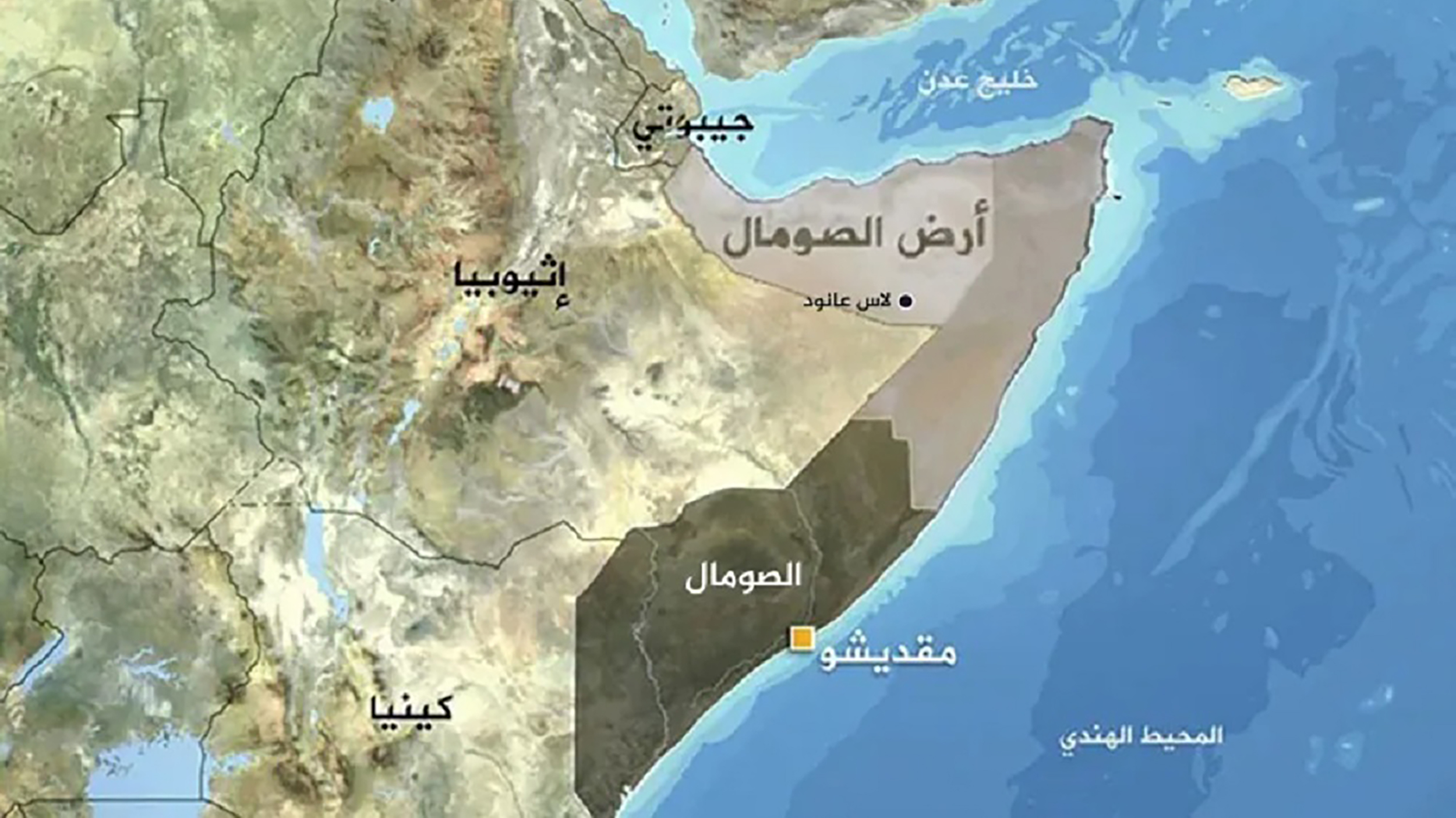
Somaliland’s significance lies above all in its highly sensitive strategic location, stretching along a 740km coastline on the Gulf of Aden, at the junction of the Indian Ocean and the Red Sea, a vital position in the Horn of Africa.
Despite its de facto separation from the Federal Republic of Somalia since 1991, Somaliland has yet to secure formal international recognition as an independent state.
On February 6, 2025, a report published by the BBC said Somaliland, alongside Morocco, was among the territories being considered to receive Palestinians whom the U.S. administration is seeking to displace from Gaza, as part of what it described as a long-term policy aimed at asserting control over the enclave.
The region covers an area of roughly 212,000 sq km and has a population of about five million. In 2024, it declared its intention to operate as a functionally independent state, amid ongoing constitutional disputes within Somalia and intensified efforts to forge international alliances that could pave the way for formal recognition.
Project 2025
The formal recognition of Somaliland does not appear to be detached from broader U.S. military and political calculations in the region.
The territory is explicitly mentioned in “Project 2025”, a U.S. presidential transition blueprint drafted by about 140 members and supporters of the Republican Party ahead of the 2024 election.
The document proposes formal recognition of Somaliland and argues for leveraging its strategically vital location.
In December 2024, U.S. Congressman Scott Perry introduced a bill to Congress calling for the official recognition of Somaliland as an independent state.
The Financial Times reported on March 15, 2025, that talks had taken place between Washington and Somaliland’s leadership over the establishment of a US military base at the port of Berbera.
The discussions came amid rising American concern over China’s expanding influence, following Beijing’s construction of a military base in Djibouti.
“Israel,” for its part, appears to view Somaliland as more than a diplomatic card. In a report published on December 3, 2024, under the headline “All eyes turn to Somaliland”, the Israeli newspaper Haaretz described the region as a key element in “Israel’s” confrontation with the Houthis in Yemen, within efforts to establish a military base there with Emirati backing.
According to the UK-based website Middle East Monitor, which cited diplomatic sources in November 2024, the United Arab Emirates has been acting as a mediator between “Israel” and Somaliland.
The report said Abu Dhabi’s role goes beyond persuading Hargeisa to accept the military base, extending to fully financing the project as well.
Blood Borders
In comments to Al-Estiklal, the Egyptian political researcher Mohamed Maher warned of what he described as the grave repercussions of “Israel’s” recognition of Somaliland.
He said the danger extended well beyond a blatant violation of Somalia’s sovereignty and territorial unity, amounting instead to a dangerous precedent that could later be invoked to justify the recognition of other separatist entities across Africa and the Arab and Islamic worlds.
Maher argued that the timing of the recognition, coinciding with escalating discussion about the displacement of Palestinians from the Gaza Strip, could not be dismissed as a mere coincidence.
Rather, he said, it reflected a political and geographic convergence that pointed to a broader Zionist vision for redistributing roles and strategic locations across the region.
He added that the recognition of Somaliland appeared to be part of a comprehensive political and security bargain that could include the resettlement of Palestinians displaced from Gaza or the establishment of foreign military bases.
Such a scenario, he warned, would amount to a double violation, first of the Palestinian people’s rights to their land, and second of Somalia’s sovereignty and territorial integrity, turning humanitarian crises into tools in dangerous geopolitical deals.
The political researcher cautioned that the move could not be separated from a wider project aimed at dismantling and reshaping the Arab and Islamic world.
He traced this to older ideas that have been revived with new methods and instruments, including so-called “blood borders” projects designed to fragment multi-ethnic and multi-sectarian states into smaller, weaker entities.
Maher said colonial Zionism stood to gain significantly from the disintegration of neighboring states and their transformation into divided and fragile entities, a process that would secure its long-term strategic superiority.
Encouraging separatist tendencies in Africa and the Arab Mashreq, he argued, fits squarely within this framework, turning geography into a stage for the re-engineering of political and security arrangements that serve the interests of specific powers.
He stressed that the real challenge facing Islamic states today lies in their ability to forge a unified and effective response, one that goes beyond rhetorical condemnation and translates into political and diplomatic strategies capable of protecting state unity and preventing humanitarian causes, foremost among them the Palestinian question, from being exploited as bargaining chips in high-risk geopolitical negotiations.
Maher concluded with a stark warning that “the road from Gaza to Hargeisa”, if opened, would not simply mark a new geographic route, but would symbolize the onset of a phase of managed chaos, one for which the entire region could pay a heavy price in both the short and long term.
Sources
- Arab and Islamic States Condemn Israel’s Recognition of the Breakaway Somaliland Region [Arabic]
- Egypt and Turkey vs. Ethiopia and Israel: What Explains the Recognition of Somaliland? [Arabic]
- Israel becomes first country to officially recognise Somaliland
- Israel becomes first country to recognise Somaliland as sovereign state
- US and Israel approach African countries to resettle Gazans