To What Extent Has ISIS Been Able To Rebuild Its Security Structure in Syria?
“ISIS does not have areas of control that can be considered traditional targets.”
The marked escalation in security operations against ISIS in Syria cannot be interpreted as a routine security measure or a situational response to emerging threats.
Rather, it comes within the context of a broader shift in Damascus's approach to counterterrorism and its ability to control the security situation and maintain its grip on Syrian territory.
The increased focus on ISIS movements indicates a clear effort to prevent any security setbacks that could reproduce the scenes of past chaos.
Simultaneously, it opens a window for advanced coordination with the US-led international coalition at a time when Syria is redefining its security and political priorities.
Preemptive Strikes
In a clear shift in Damascus's confrontation with ISIS to a more in-depth and organized phase, the Syrian Ministry of Interior, in cooperation with the General Intelligence Directorate and in joint coordination with the international coalition forces, announced on December 25, 2025, the killing of Muhammad Shahada, also known as Abu Omar Shaddad, in the town of al-Buwayda of rural Damascus.
Shaddad is a prominent leader in ISIS in Syria, holding the position of what is known as the Governor of Hauran (southern Syria) within the organization's structure.
Concurrently, the Syrian Ministry of Interior carried out another significant security operation in the town of Hatita al-Turkman of rural Damascus, resulting in the arrest of the leader of an ISIS cell, whose name was not disclosed.
It stated that the operation followed surveillance and monitoring efforts and resulted in the seizure of various weapons and ammunition, along with documents proving his direct involvement in terrorist activities aimed at destabilizing security and stability in the region.
On December 24, 2025, the Syrian Ministry of Interior also announced a separate security operation in the town of al-Moadamiya of rural Damascus, which resulted in the arrest of the ISIS Governor of Damascus, Taha al-Zoubi, nicknamed Abu Omar Tabia, along with several of his aides.
It explained that these operations confirm the effectiveness of joint coordination between national security agencies and international partners, clearly indicating the improved level of security and intelligence cooperation in the fight against ISIS.
During Syrian President Ahmed al-Sharaa's visit to Washington in November 2025, Syria officially joined the international coalition, established in 2014 under US leadership, to combat ISIS.
This step presented an unprecedented opportunity for the Syrian authorities since the overthrow of Bashar al-Assad's regime on December 8, 2024, to move forward in confronting ISIS, whose cells still operate in several areas within Syrian territory.
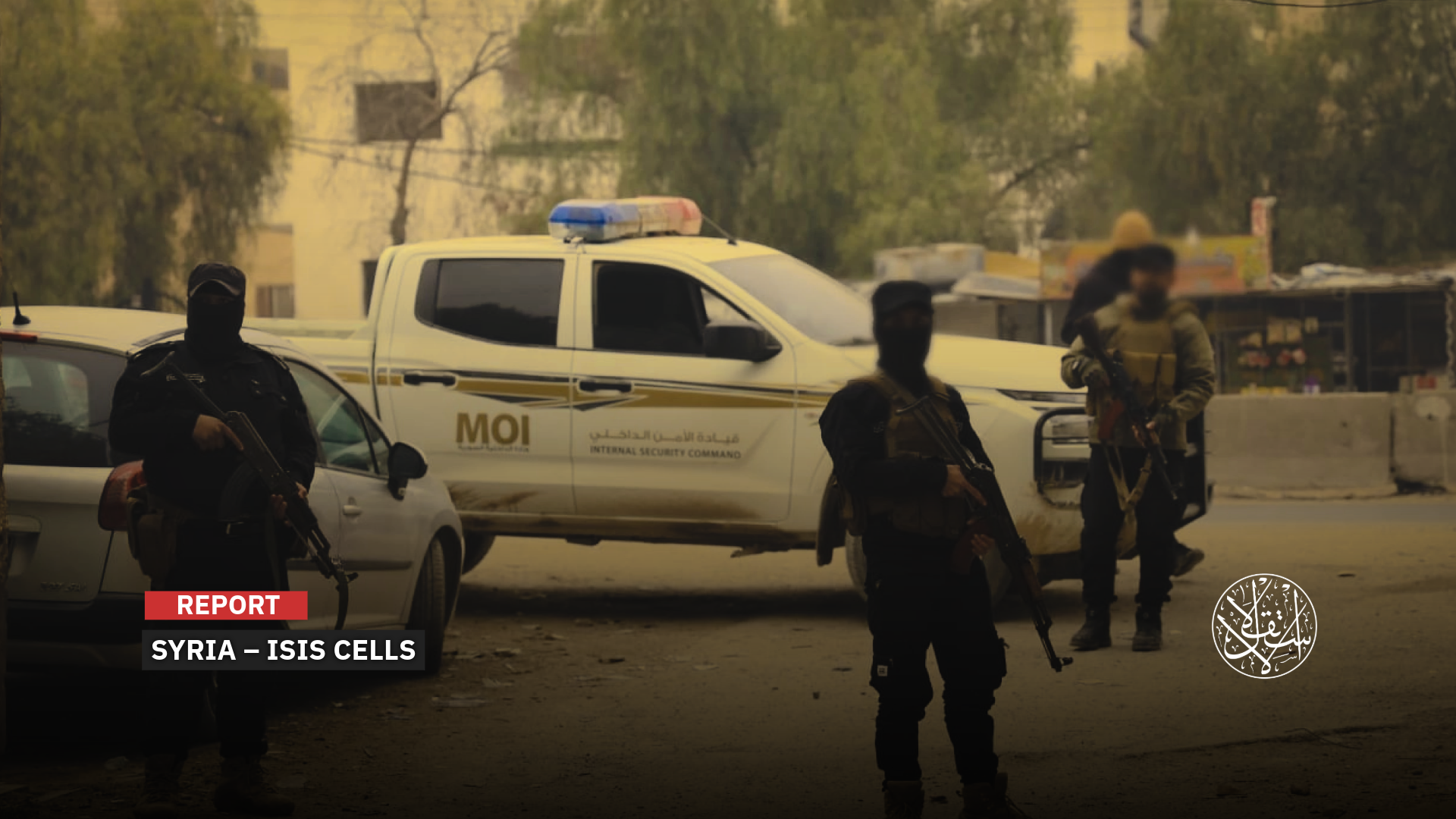
In this context, the new Syrian state, since the fall of Assad, has focused on pursuing ISIS, carrying out a series of security operations targeting its cells. These operations have resulted in the killing and arrest of a number of its members and the confiscation of weapons and logistical supplies.
In parallel with the Syrian effort, the US-led international coalition has continued to conduct sporadic airstrikes against ISIS positions in Syria, targeting its remnants and preventing the reconstitution of its fighting structure.
Despite Syria's official membership in the international coalition, the security situation witnessed a significant breach on December 12, 2025, in the vicinity of Palmyra in the Homs countryside. The attack, which Damascus and Washington attributed to ISIS, resulted in the deaths of three Americans, including two soldiers and a translator.
Following the attack, US President Donald Trump vowed to retaliate against the organization, stating that the attack occurred in a highly dangerous area of Syria not fully controlled by the Syrian government.
On December 20, 2025, US Central Command (CENTCOM) announced that it had conducted airstrikes targeting more than 70 locations in various parts of central Syria, using fighter jets and attack helicopters. This came just one week after the Palmyra attack.
According to CENTCOM's statement, these strikes resulted in the deaths of a number of ISIS members and the destruction of weapons depots and logistical infrastructure belonging to the group.
This large number of strikes carries multiple implications, relating to the nature and type of targets, as well as the geographical spread of ISIS elements and the areas covered by the bombing, given the absence of clear areas of control for the organization within Syrian territory and its shift to secret cells and operations.

Qualitative Blow
Experts and analysts view the recent joint security operations between Damascus and the international coalition as having achieved a high level of success, particularly since they targeted first-tier leaders in ISIS within Syria, which constitutes a qualitative blow to the organization's ability to reorganize its ranks.
According to experts, ISIS has recently returned to adopting a strategy of geographical divisions within Syria, similar to its previous attempts when it sought to impose what it so-called ‘the caliphate’, by dividing the country into virtual provinces and areas of influence, in an attempt to reproduce its organizational structure.
Accordingly, the recent killing and capture of several senior leaders within the organization clearly indicates an increase in intelligence coordination, particularly regarding the flow of high-quality information provided by the international coalition to Damascus.
This move by Damascus marks a significant shift in Syrian regional and international policy within a highly volatile regional context.
It also reflects a clear desire on the part of the Syrian state to rebuild its relations with the international community through cooperation in the fight against terrorism.
Experts indicate that this expansion in the pace and nature of security operations reflects a growing convergence between Damascus and the international coalition's operations command.
Syria is now receiving vital intelligence that is being used directly in confronting the organization on the ground, demonstrating a development of mutual trust between the two sides after years of estrangement and discord.
In light of these developments, questions have been raised about ISIS's ability to restructure its leadership hierarchy in Syria after the fall of Bashar al-Assad's regime, particularly given the successive strikes targeting its field and security leaders.
This question becomes even more important given that the organization currently lacks fixed installations, clear command centers, and areas of control that can be classified as traditional targets, forcing it to rely on secret cells and operations.
The Syrian desert provides the organization with a relative ability to conceal itself and maneuver. It is a vast area that is not entirely open desert and lacks high elevations, with the exception of the Palmyra mountain range, making monitoring movements there a complex task, especially in the absence of drones.
This reality compels the United States to play a pivotal role in providing intelligence and air cover for any potential military operations in the Syrian desert.
Therefore, the international coalition's strikes focus on targeting weapons depots, secret hideouts, or small gatherings of ISIS elements scattered deep within the Syrian desert.
Conversely, Syrian security forces are tasked with striking ISIS hideouts within residential neighborhoods and populated areas, especially since these cells represent a direct security threat, given their ability to carry out surprise attacks whose timing and targets are difficult to predict.

Security Efforts
Observers believe that the Palmyra incident was treated by both Damascus and Washington as a highly sensitive security event, necessitating a comprehensive review of the security and military policies adopted in confronting ISIS, particularly in the period following Syria's official accession to the international coalition against terrorism.
The escalation of ISIS cell activity within Syrian territory coincided with a significant intensification of military and security efforts aimed at denying the organization any opportunity to rebuild its capabilities or exploit any field vacuums or security gaps that could create a conducive environment for its renewed activity.
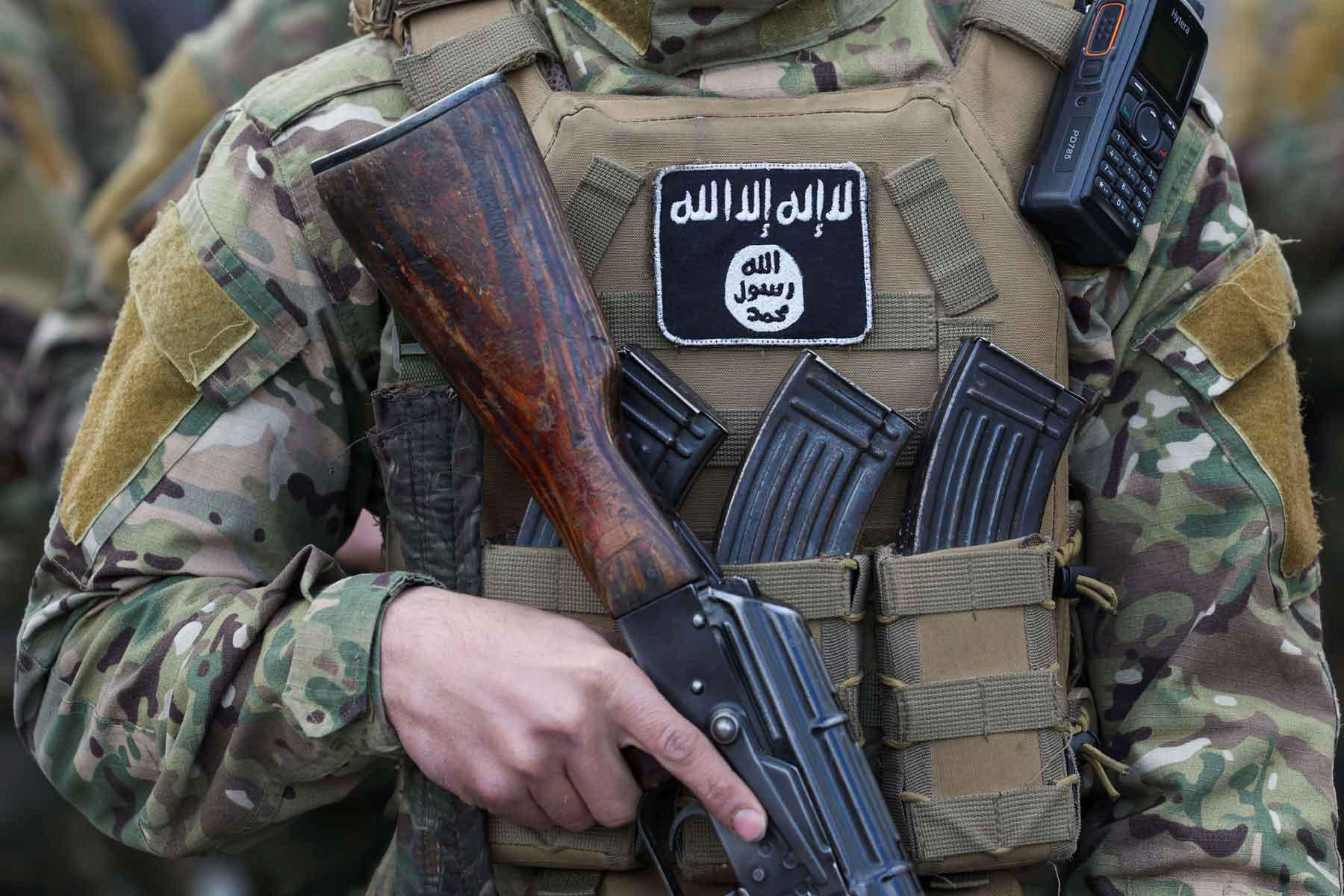
In this context, available data indicates that what is currently happening in Syria does not amount to a complete restructuring of ISIS's security or military apparatus, but rather falls within what have been described as failed attempts to destabilize the country.
Within this framework, Brigadier General Abdullah al-Asaad, head of the Syrian Center for Strategic Studies (Rasad), told Al-Estiklal that ISIS's recent movements in Syria do not reflect the establishment of a new security structure, but are limited to existing cells attempting to carry out limited operations aimed at undermining security and stability in the country.
“ISIS cells are now feeling a real threat and are living in a state of apprehension as a result of intensified pursuit, monitoring, and intelligence operations against them, especially after the Syrian state—militarily, security-wise, and politically—became an active member of the international coalition to eliminate terrorism,” he added.
He pointed out that the rapid field results recently achieved against ISIS reflect a proactive step taken by the Syrian army and security forces in cooperation with the international coalition to thwart the organization's plans to rebuild its security or military structure in what are known as the country's vulnerable areas.
“These operations indicate the ability of the new Syrian state to deliver decisive blows to ISIS and eliminate even the remnants left over from the Assad regime, which provided the organization with indirect support through various means,” he said.
He emphasized that the strategic military vision of the new Syrian state, in coordination with the international coalition, has succeeded in establishing a new phase that prevents the re-emergence of such entities.
“Currently, all eyes are on eliminating ISIS and preventing any local, regional, or international party from exploiting it to implement its agendas in the region, or to launch attacks targeting the Syrian state or its partners in the international coalition,” he concluded.