Why Bill C-12 Represents a Dangerous Shift in Canadian Asylum Policy
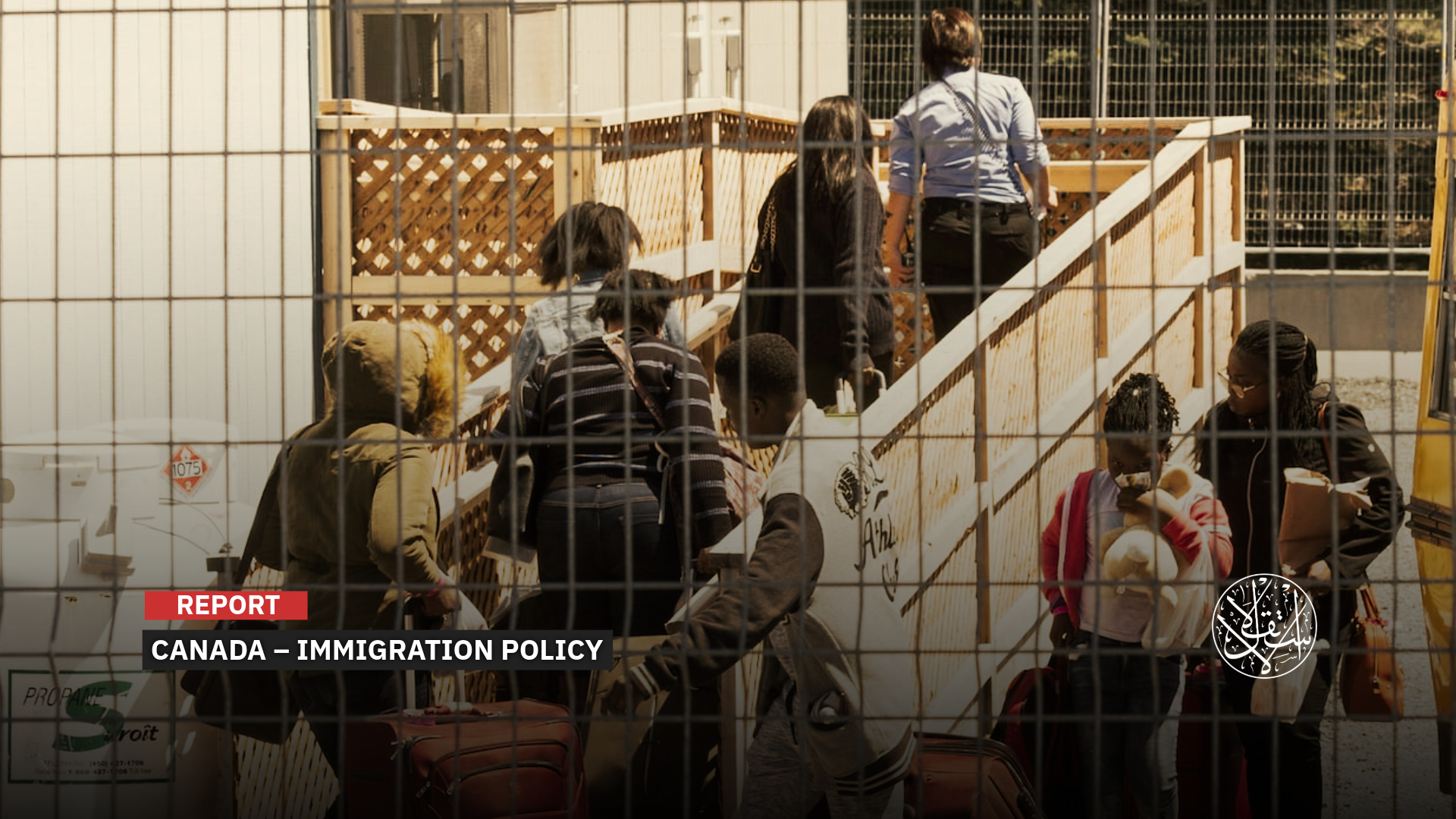
“Critics said that Bill C-12 could fuel xenophobia and make refugees and immigrants political scapegoats.”
A new bill in Canada raises profound questions about the direction of asylum policies, amid concerns about increasingly strict border management similar to the American model, and the potential humanitarian and legal repercussions.
If adopted in its current form, the bill would allow the governor general, acting on the advice of Cabinet, to halt the intake of certain immigration applications and to suspend or terminate the processing of applications already in the system.
This move has sparked growing concern among human rights activists and academics, who see it as a worrying trend reminiscent of the exclusionary policies Canada implemented in the early 20th century, when specific ethnic groups, such as those from South Asia, China, and Japan, were targeted.
The bill comes at a time when Canada has recorded its highest number of deportations in years, amid increasing criticism from human rights organizations.
These organizations argue that the bill undermines Canada's international obligations and damages its image as a welcoming country for refugees, warning that protecting refugees is not a political choice but a moral and legal responsibility.
Unprecedented Powers
Canada’s Liberal government is pushing forward with Bill C-12, which includes a sweeping package of changes to border security and the refugee system, along with other rules that could fuel xenophobic rhetoric and blame them for economic and social crises.
In an extraordinary session held on December 23, the House of Commons passed Bill C-12, officially known as the Strengthening Canada's Immigration System and Borders Act, after a committee review that lasted only six weeks.
This bill will go to the Senate in February, where it is expected to become law if passed.
According to The Guardian, refugee experts say Bill C-12 represents the biggest overhaul of Canada’s refugee status system since the early 2000s, describing it as a step backward in terms of protecting the rights of asylum seekers.
Idil Atak, a professor of refugee and human rights law at Toronto Metropolitan University, believes the bill represents a serious setback in refugee protection, warning that it grants the executive branch unprecedented powers.
Aside from asylum issues, the bill grants the Minister of Immigration the power to suspend, restrict, or cancel any visa category for up to two years during an emergency—a provision criticized by some as potentially being used to freeze international student programs or work permits without prior notice or adequate oversight.
It also allows the Canada Border Services Agency (CBSA) to collect and share more biometric data and travel history with U.S. authorities and provincial police, raising privacy concerns.
One of the bill’s most controversial amendments is that asylum claims submitted more than a year after a person’s arrival in Canada will no longer be referred to the Immigration and Refugee Board, as is currently the case, but will instead be reviewed by a single immigration officer for what is known as a pre-removal risk assessment (PRRA).
According to an opinion piece in the Toronto Star signed by 40 lawyers and legal experts, this process, conducted by only one officer, is characterized by high rejection rates, jeopardizing due process guarantees.
Audrey Macklin, a professor of immigration and refugee law at the University of Toronto, stated that the PRRA system does not give asylum seekers a fair chance, but rather aims primarily to remove them from the country as quickly as possible.
“Bill C-12 borrows ideas from the United States to make asylum applications more difficult,” she said.
Applications and documents that could be affected by these powers include permanent resident visas, work permits, study permits, temporary resident visas, electronic travel authorizations, and permanent resident cards.
Human Rights Concerns
Another provision in the bill has raised concerns among civil rights organizations, as it stipulates that asylum applications submitted at the land border with the United States will not be referred to the Immigration Board if submitted after 14 days.
Amnesty International criticized the bill last month, warning that it could bar some people from making refugee claims that receive a full assessment.
Under the Safe Third Country Agreement between Canada and the United States, refugees are required to seek protection in the first safe country they reach.
But Audrey Macklin asserted that the United States has never met the criteria for being a safe country for asylum seekers.
With the increasing frequency of US immigration raids and deportations without adequate legal safeguards, the United States, she says, has become blatantly unsafe for those seeking protection.
Macklin argued that it is unfair to reject asylum seekers simply because they did not feel safe making their claims in the United States.
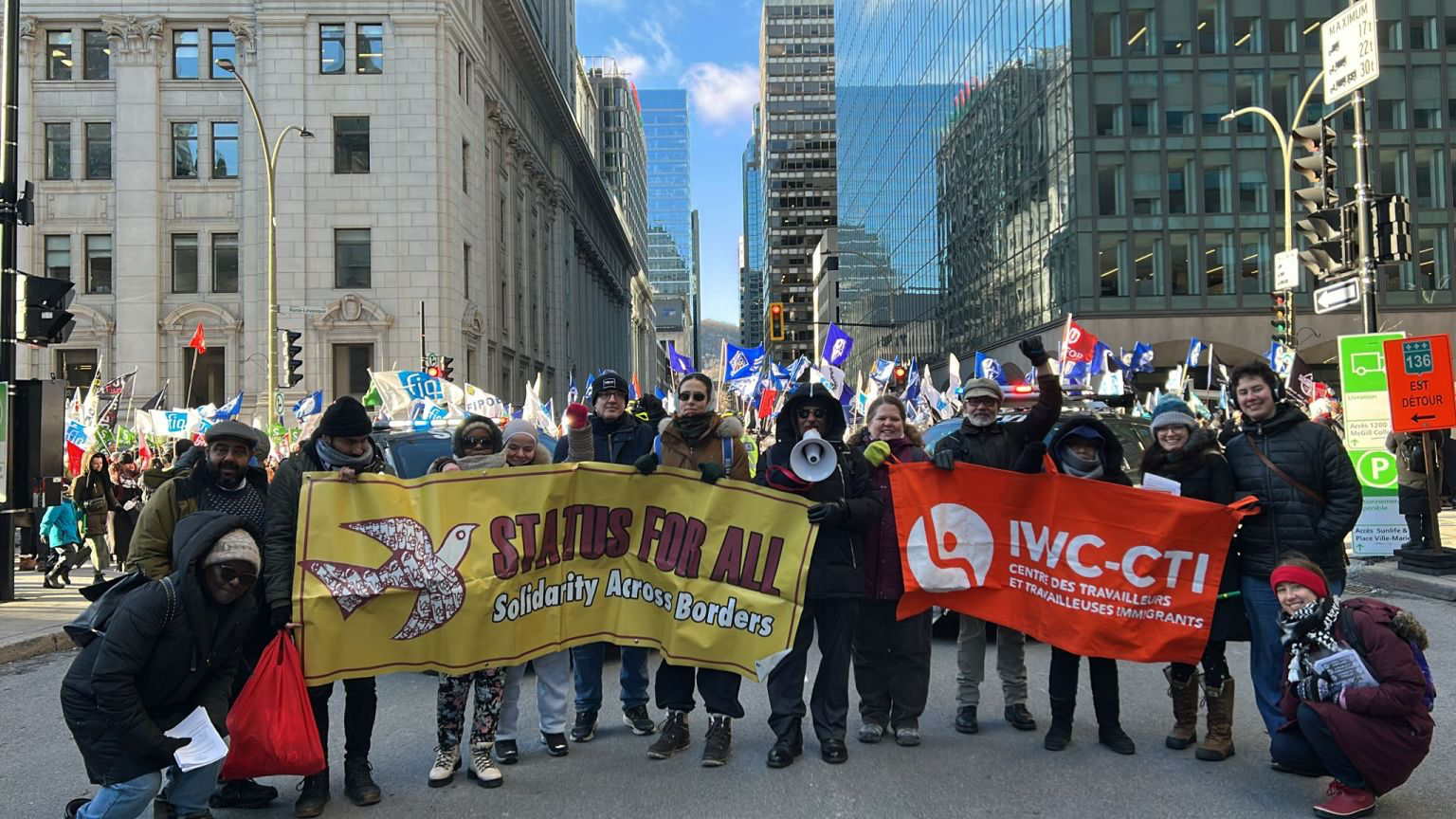
For his part, Syed Hussan, executive director of Migrant Workers Alliance for Change, said the legislation reflects rhetoric adopted by both the Liberal and Conservative parties, blaming immigrants for Canada’s cost-of-living crisis.
“Instead of holding CEOs or businesses accountable, people are being tricked into blaming immigrants,” he added.
Idil Atak pointed out that the new measures also appear to be an attempt to appease the administration of US President Donald Trump by tightening border controls at a time when Canada has yet to reach a trade agreement.
But she emphasized that the actual result is to undermine Canada’s image as a welcoming country and renege on its international obligations toward asylum seekers.
In contrast, the Liberal government says the reforms are necessary to ease the pressure on the Immigration and Refugee Board and to deter court proceedings at Canada-US border crossings.
However, business groups fear that the minister’s broad powers could create regulatory uncertainty for employers who rely on the Temporary Foreign Worker Program and global skills transfer.
Conversely, human rights organizations warned that the Safe Third Country Agreement with Washington already restricts access to protection, and that Bill C-12 could violate Canada’s obligations under the 1951 Refugee Convention.
If the bill becomes law, businesses should expect increased compliance inspections at points of entry, expedited deportations for rejected applications, and the potential freezing of certain categories of work permits with limited consultation.
Immigration Crisis
According to the Toronto Star, Canada deported 18,000 people in 2024, the highest number since Stephen Harper's administration from 2006 to 2015.
The newspaper reported that the cost of these deportations reached $78 million, a 50% increase compared to 2019.
It is worth noting that Canada imposed significant restrictions on the number of international students starting in 2024, which may lead some to seek asylum, although they will face considerable obstacles under the new laws.
Canada’s population declined by 0.2% in the third quarter of 2025, reaching 41,575,585, marking the first contraction since 2020, according to the national statistics agency. Observers attributed the decline primarily to the departure of international students.
Gauri Sreenivasan, co-executive director of the Canadian Council for Refugees, accused Canadian politicians of exploiting a global wave of migration concerns by blaming immigrants for a range of challenges, including housing shortages and strain on healthcare systems.
She stated that Canada’s population is declining and that immigration is essential for the country’s future prosperity, warning against resorting to xenophobic narratives that fuel hostility toward newcomers.
The data also indicates a shift in public opinion. In 2022, 27% of Canadians believed the country was accepting too many immigrants, a figure that subsequently rose to 56%, according to the Environx Institute.
Canada plans to grant 380,000 new permanent residents in 2026, compared to 395,000 this year, after reaching half a million in 2024.
The number of temporary resident permits will also be reduced by nearly 50%, with a target of 385,000 for next year, while the issuance of visas to international students will be significantly restricted.
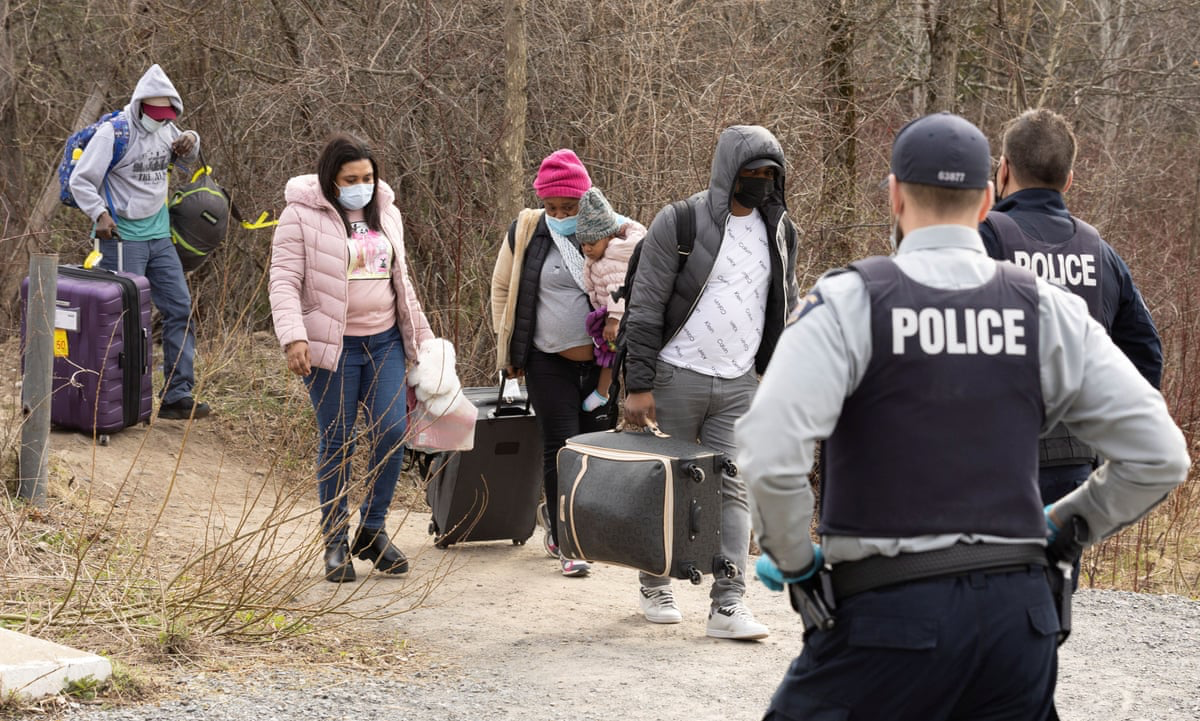
For decades, Canada has been considered one of the world's most attractive destinations for immigrants, especially those from developing countries.
But Liberal Prime Minister Mark Carney has curbed immigration levels, a move similar to that of his predecessor Justin Trudeau, who acknowledged last year that Canada had allowed too many people in to address a labor shortage caused by the COVID-19 pandemic.
“We will take back control of immigration and bring it back to sustainable levels,” Carney said during his government's budget presentation last November, which was passed by a narrow margin.
Sources
- Canada bill targeting refugees feared to signal new era of US-style border policy
- Canada accepting fewer asylum-seekers from US
- Bill C-12 — Strengthening Canada’s Immigration System and Borders Act
- House of Commons rushes Bill C-12, tightening asylum rules and expanding border powers
- Canada: Asylum seekers and migrants at risk