Who’s Blocking Iraq’s Sunni Parliament Candidate?
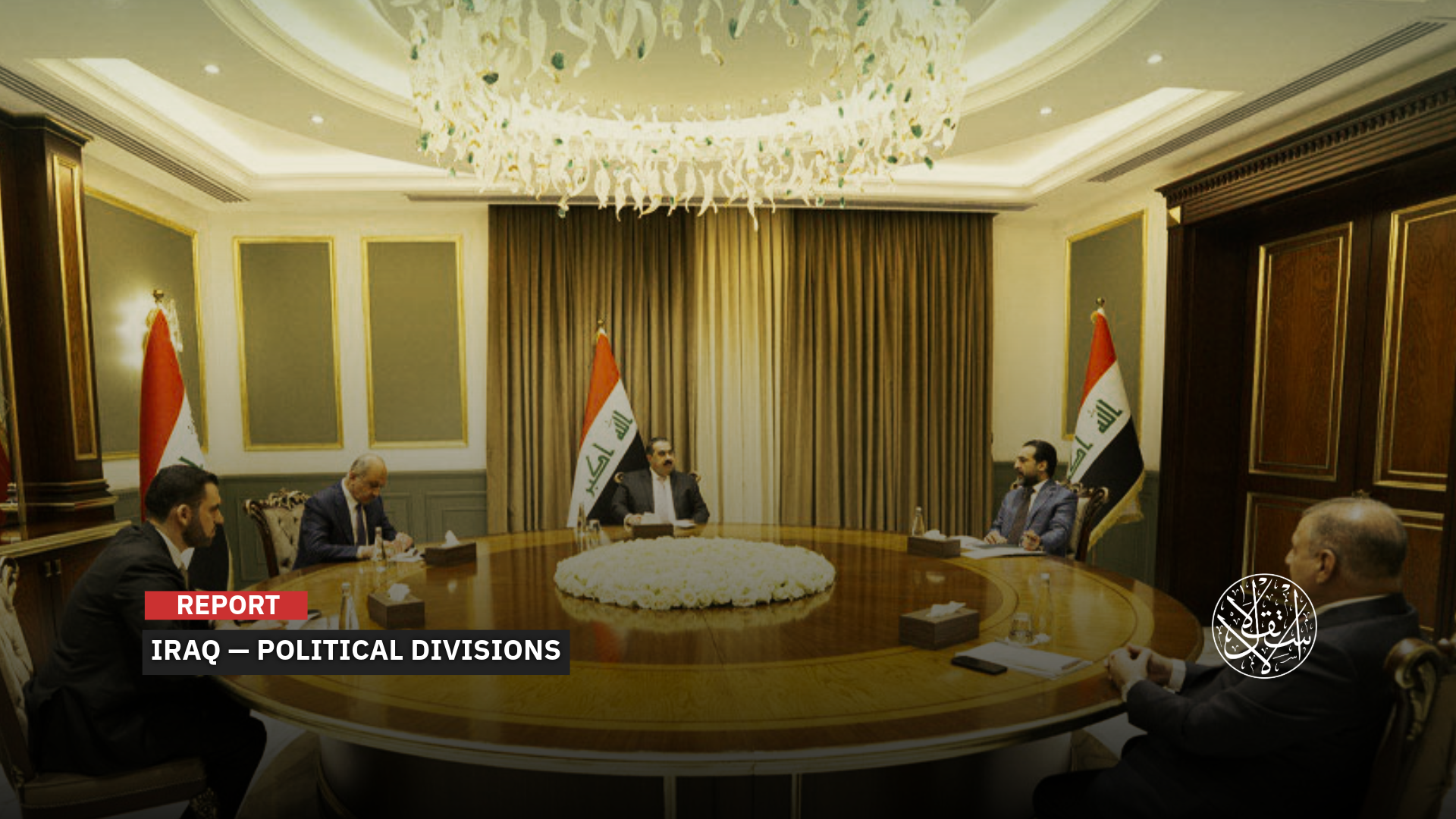
The bloc has failed three times to announce its candidate for the parliament speaker post.
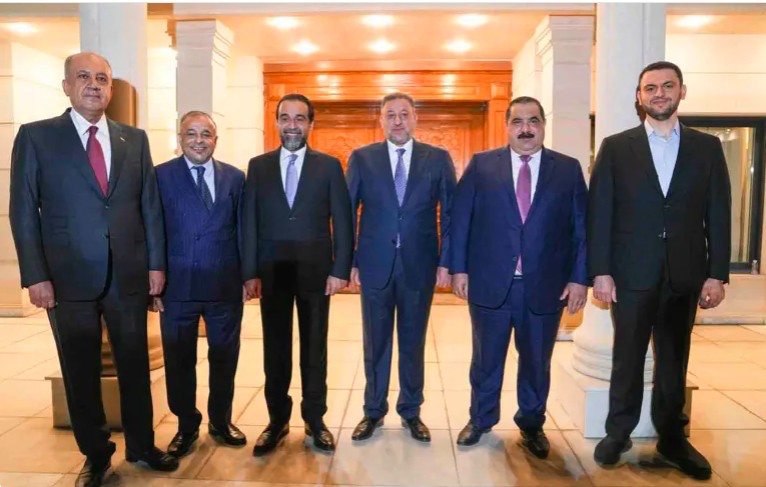
Over three consecutive meetings, Iraq’s National Sunni Political Council has failed to agree on a single candidate for the post of parliament speaker, the highest office representing the Sunni bloc under the country’s political norms since 2003.
The so-called “Sunni Council” brings together five political forces holding a combined total of around 75 seats in parliament: the Taqaddum Party (Progress Party), led by former Parliament Speaker Mohammed al-Halbousi; the Azm Alliance, led by MP Muthanna al-Samarrai; the al-Siyada Coalition (the Sovereignty Coalition), led by Khamis al-Khanjar; the National Resolution Alliance (al-Hasm al-Watani), headed by Defense Minister Thabet al-Abbasi; and the National Masses Party (al-Jamaheer al-Wataniya), led by former MP Ahmed al-Jubouri.
Postponing the Decision
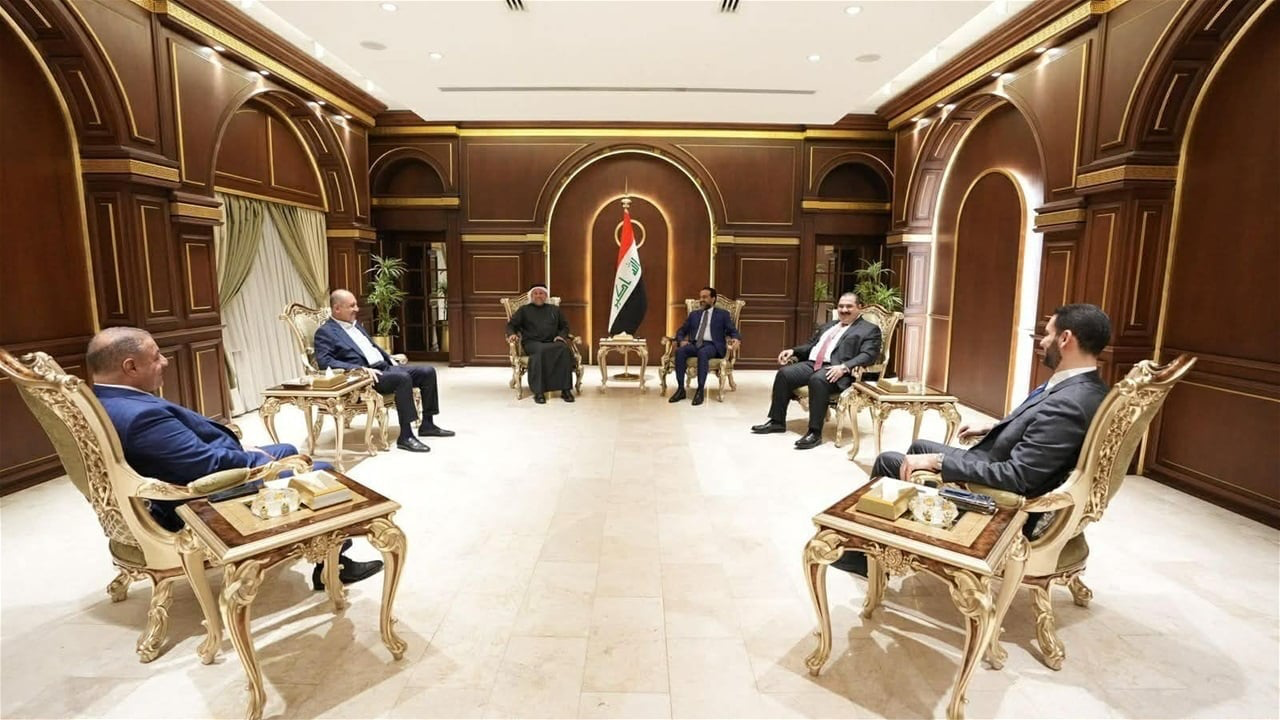
At its latest session on December 21 at the headquarters of the al-Hasm leader Thabet al-Abbasi in Baghdad, the council issued a statement noting discussions on constitutional entitlements and the importance of resolving them in the coming period, while agreeing to continue talks at another meeting scheduled two days later.
The statement added that attendees reaffirmed their commitment to the constitutional timetable for the parliamentary session set for December 29 at the invitation of the president, particularly regarding the selection of the speaker and deputy speakers.
Meanwhile, Iraq’s Alaalem al-Jadeed reported on December 21, citing an unnamed political source, that the National Sunni Political Council had witnessed sharp disagreements over candidates for the parliamentary speakership.
The newspaper noted that Progress Party leader Mohammed al-Halbousi left the meeting in anger after no consensus was reached on his candidacy, with the majority reportedly unwilling to nominate him.
The council appears to be leaning toward supporting Muthanna al-Samarrai, head of the Azm Alliance, for parliament speaker, as consultations continue among Sunni forces to finalize a position ahead of the upcoming parliamentary session at month’s end.
However, Taqaddum Party member Anwar al-Alwani denied these reports, claiming that four out of five council factions had agreed to nominate al-Halbousi for the speakership.
In a televised interview on December 22, al-Alwani accused what he called “ideologized Islamic” political factions, alongside Iraqi politician Jamal al-Karboli, of attempting to disrupt the council’s work, dismissing any real disagreement over the nominee.
Al-Karboli himself weighed in on the council’s meeting in a post on X on December 21, writing, “There is no agreement, because consensus was never the goal. From the start, the aim was to gather all the cards into one hand, to bend necks with them, and to rule the horizon.”
“And in the end, there will be no chair, no gavel, and no allies. The veto burned the cards in his own hands,” he added, an unmistakable reference to blocking Mohammed al-Halbousi’s return to the speakership.
On November 14, 2023, Iraq’s Federal Supreme Court annulled Mohammed al-Halbousi’s membership in parliament after convicting him of falsifying a motion to dismiss a fellow lawmaker, a charge the judiciary described as dishonorable and punishable under the law.
Chaos and Maneuvering
On who is blocking the National Sunni Political Council from agreeing on a nominee for parliament speaker, a political source told Al-Estiklal that Mohammed al-Halbousi joined the council of Sunni parliamentary blocs with one overriding objective: to secure the speakership.
The source, speaking on condition of anonymity, explained that al-Halbousi received clear signals that he would not get the post, prompting him to form the National Political Council so he could join as the leader of the largest Sunni parliamentary bloc and present himself as the most eligible candidate for parliament speaker.
“Al-Halbousi fears political isolation, as the other Sunni blocs could form a larger coalition within parliament, allowing them to divide Sunni-designated posts, including the speaker’s seat and six ministries. For this reason, he was keen to be part of the National Political Council,” the source added.
“Al-Halbousi is facing a veto from the Coordinating Framework over the speaker’s post, but the Framework prefers to keep him as an influential and disruptive force within the Sunni camp. In the end, this clears the way for the position to go to another Sunni figure who is less controversial, honors agreements, and does not seek to monopolize political leadership.”
The source also noted that the Kurdistan Democratic Party, representing the largest Kurdish parliamentary bloc, also opposes al-Halbousi for speaker due to his repeated attacks on the party in the media, especially during election campaigns.
Al-Halbousi reportedly mediated with Khamis al-Khanjar to arrange a meeting with Qatar’s Emir Sheikh Tamim bin Hamad Al Thani in an attempt to pressure Iran and the Coordination Framework to reinstate him as parliament speaker, explaining a recent meeting in Doha, though the source expressed doubt that these efforts would yield results.
The source revealed that Sunni forces are leaning toward nominating two candidates for speaker and leaving the final choice to parliament members, with al-Samarrai and al-Halbousi as the leading contenders.
Separately, Mohammad al-Fahdawi of the United Anbar Alliance told Almasalah on December 20 that al-Samarrai rejected all tempting offers from al-Halbousi to withdraw his candidacy for parliament speaker.
Al-Fahdawi said al-Halbousi sent an intermediary to al-Samarrai with proposals of government leadership positions in exchange for stepping aside, but al-Samarrai “refused all offers and insisted on remaining in the race.”
According to al-Fahdawi, al-Samarrai informed al-Halbousi’s intermediary that Shiite and Kurdish political forces oppose al-Halbousi becoming parliament speaker.
Timing Is Key
The National Sunni Political Council faces a major challenge in finalizing its nominee, particularly after the head of Iraq’s Supreme Judicial Council, Faiq Zaidan, stressed that the first session of the new parliament, scheduled for December 29, must settle the election of the speaker and his two deputies. Constitutionally or legally, this process cannot be postponed or extended.
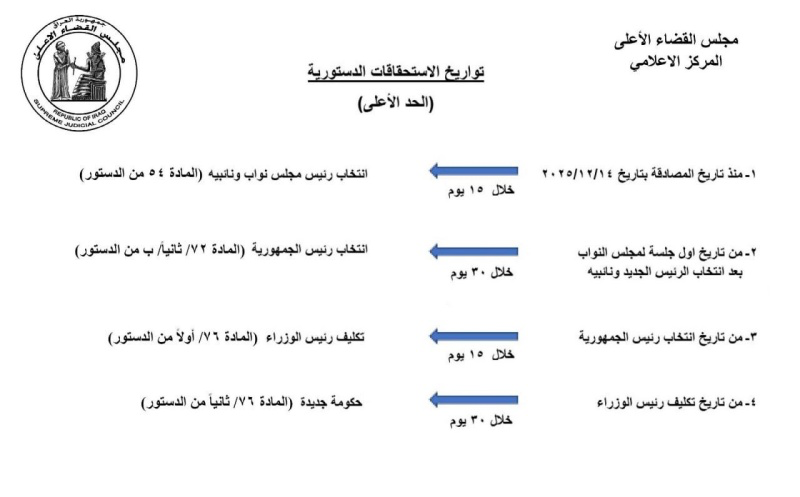
The Supreme Judicial Council had previously outlined the maximum constitutional deadlines for completing presidential and legislative tasks and forming the government, starting from the date the Federal Supreme Court ratified the parliamentary election results on December 14.
The council published a clarifying schedule stating that the first task is the election of the parliament speaker and deputies, which must be completed within 15 days of ratifying the final election results, based on Article 54 of the constitution.
The schedule also specifies that the presidential election must occur within 30 days of the first parliamentary session after the speaker and deputies are elected, and the president must appoint the prime minister within 15 days of his election.
The formation of the new government must be completed within 30 days of the prime minister’s appointment.
In its founding statement on November 23, the National Sunni Political Council emphasized that it was established as an umbrella organization for Sunni political forces, tasked with coordinating positions, unifying visions and decisions on major national issues, and promoting joint work among leaders and parliamentary blocs in the interest of the public and to enhance political performance.
The statement stressed that the council would continue holding regular meetings throughout the sixth parliamentary term, remain open to all national partners, and uphold core principles that safeguard Iraq’s unity and stability while protecting the rights of all its communities, guided by a national vision to build a strong and just state inclusive of all.
Reflecting Sunni unity, the Iraqi Fiqh Council, the country’s top Sunni religious authority, officially endorsed the formation of the National Sunni Political Council on November 24, describing it as “a positive step to strengthen unity and coordinate efforts in the national interest.”
The council praised “every national effort” contributing to unity and the formation of a competent, professional government, while urging all political actors to uphold the public interest and fulfill their national responsibilities in service of Iraq and its citizens.
Sources
- Supreme Judicial Council Sets Out Constitutional Deadlines [Arabic]
- Al-Halbousi Storms Out of Sunni Bloc Meeting. Is Samarrai Set to Take the Speaker’s Gavel? [Arabic]
- Meeting Exposes Divisions: al-Halbousi Rejected, Samarrai Clings to Post Despite Lucrative Offers [Arabic]
- Iraq’s National Political Council: A True Sunni Platform or Just a Power-Sharing Alliance?
- Iraq’s National Political Council: Council Holds Meeting in Baghdad with Sunni Leaders Present [Arabic]