French Influence: Why the MAK Movement Officially Declared the Independence of the Republic of Kabylia From Algeria

“What the country needs most at this stage is to deepen the rapprochement between Algerians.”
The declaration of a new entity in the Maghreb through the partition of Algeria sparked widespread reactions, amid official accusations from Algeria that France was exploiting the internal unity of the country.
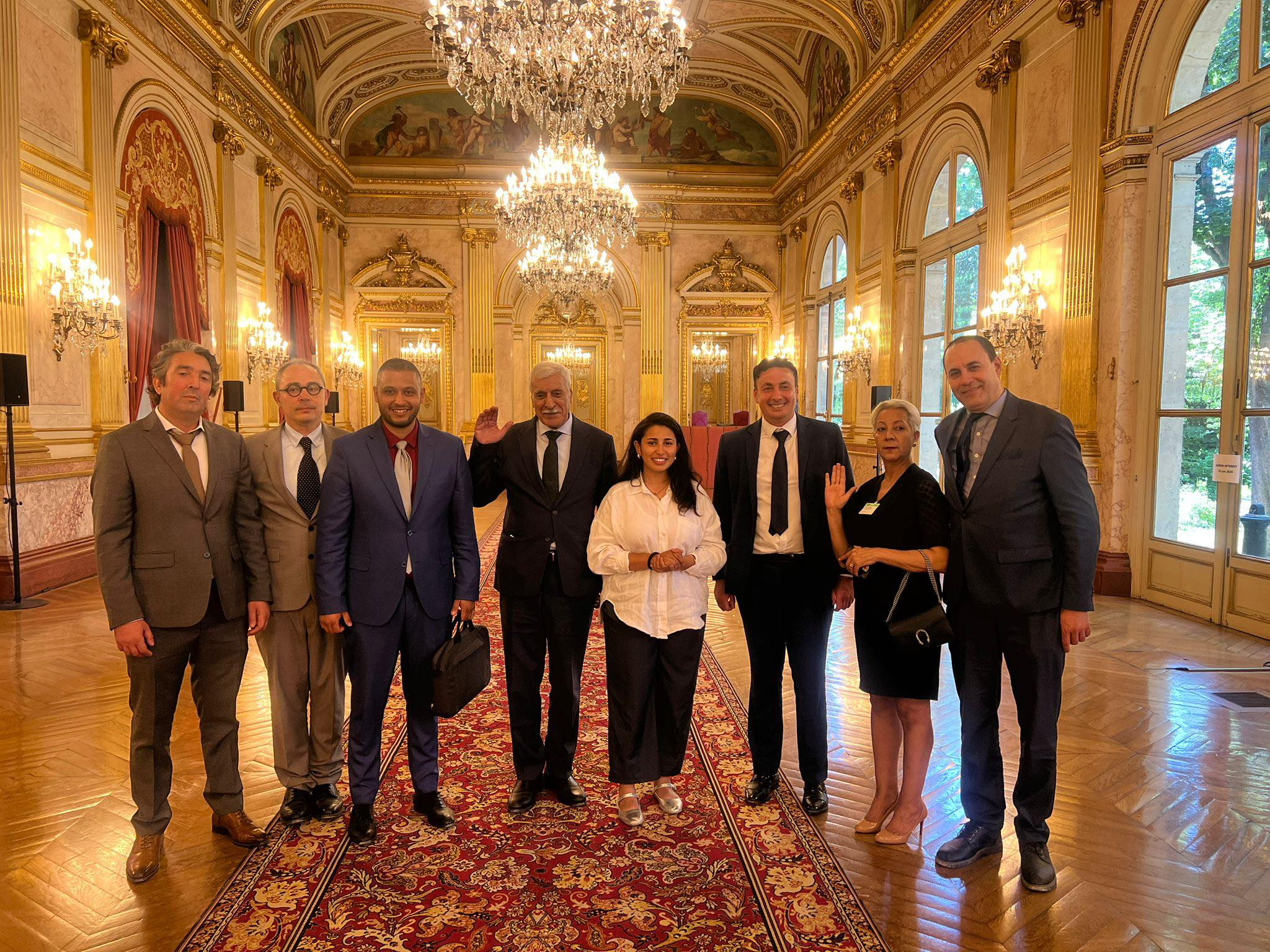
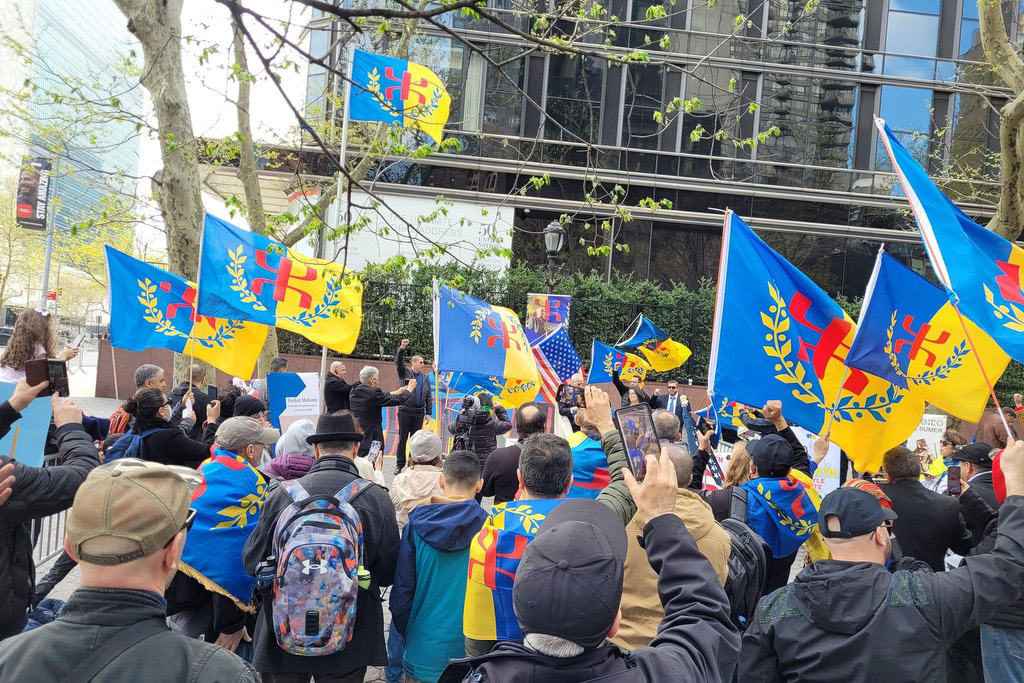
In a pivotal moment in the history of the Maghreb region, Ferhat Mehenni, head of the Movement for the Self-Determination of Kabylia (MAK), officially announced the birth of the Federal Republic of Kabylia on December 14, declaring its independence from Algeria.
This announcement came during a conference held in Paris, after French authorities banned it from being held at the Versailles Convention Center for security reasons. However, the movement successfully overturned this decision through an urgent legal appeal.
The movement affirmed that its conference was proceeding despite the organizational obstacles and political pressure it said the Algerian authorities had exerted to thwart the event.
According to Mehenni, this declaration represents the culmination of a long struggle linked to previous international initiatives, and marks the beginning of the internationalization of the issue despite the political and legal challenges.
He emphasized the support of the local population for this choice, noting that the movement is continuing its efforts to gain international recognition, amid tensions with the Algerian authorities, who have designated MAK as a terrorist organization since 2021.
Hostile Campaign
Despite the absence of any official reaction from Algeria to MAK's declaration, figures close to the authorities attacked the movement, claiming it was supported by foreign colonial powers. This included statements made by Abdelkader Bengrina, head of the National Construction Movement party, which supports government policies.
In a meeting with his party members on December 13, Bengrina asserted that MAK's actions are a desperate attempt to revive colonial ambitions that were buried decades ago and have no future given the awareness and sacrifices of the Algerian people.
He saw this movement is not based on popular support, historical context, or logic, and lacks any representation or credibility.
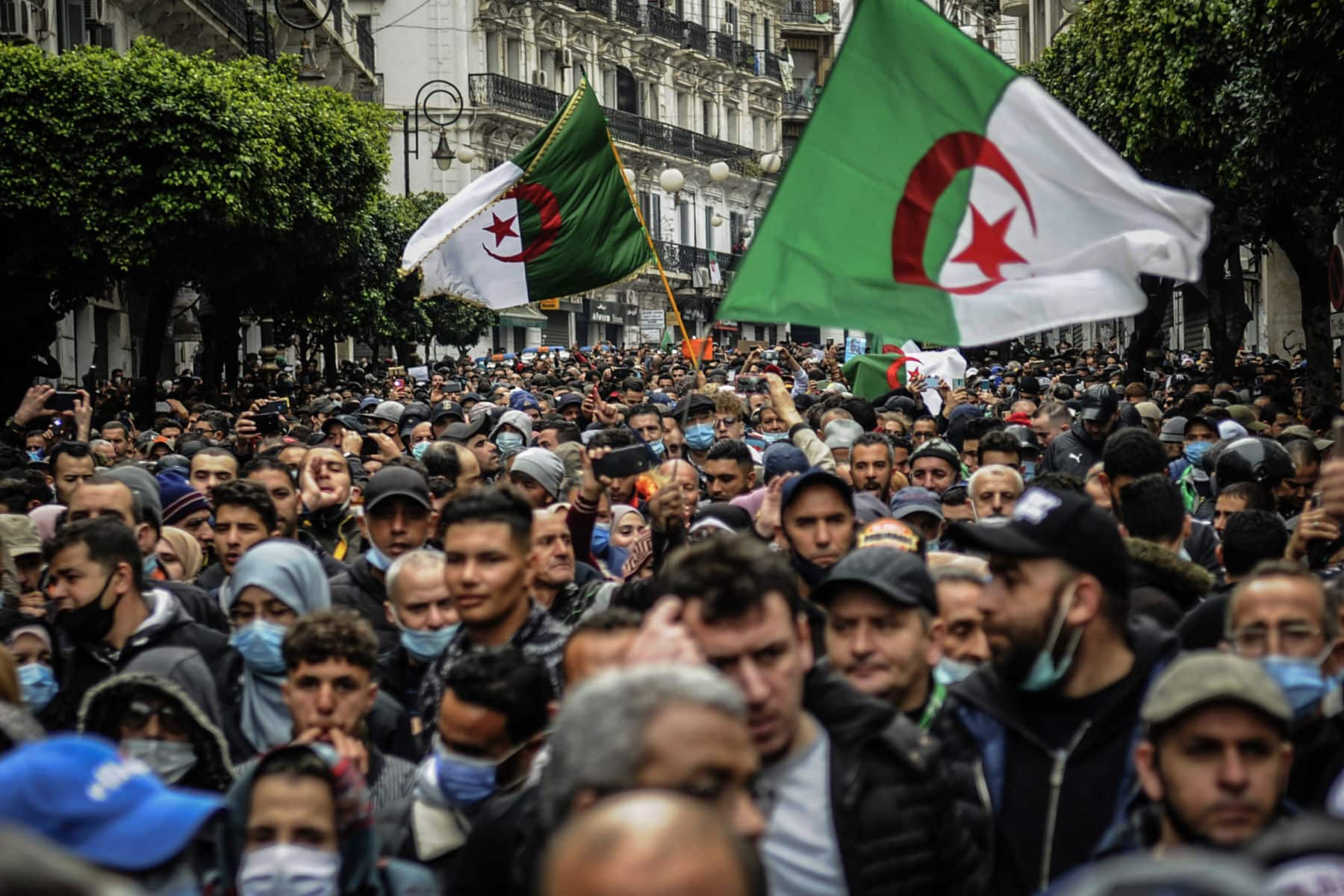
He stressed that national unity is capable of thwarting all subversive projects aimed at undermining the country's unity and tarnishing Algeria's image.
Similarly, the Secretary-General of the National Liberation Front (FLN) party, Abdelkrim Benmbarek, asserted that there is an escalating French campaign of hostility against Algeria, stemming from the clear policy Algeria has pursued for years: rejecting all pressure, dictates, and attempts to impose guardianship over its decisions, and declaring a complete break with all colonialist ideology.
He added, in a press statement on December 13, that certain elements within the former occupying power are plotting in their laboratories to provoke our country in a desperate attempt to destabilize it and distort its image.
He described France as hypocritical, accusing it of plundering the wealth of the Algerian people and openly supporting the terrorist MAK movement, as he put it.
He considered France's harboring of individuals classified as belonging to terrorist entities an irresponsible act aimed at exploiting the national unity of the Algerian nation.
He also criticized the MAK leadership, describing them as traitors, bankrupt, and terrorists, and as alien and mercenary voices, emphasizing the failure of the colonial project based on the logic of divide and rule.
In turn, the Islamic Movement of Society for Peace (MSP) stated that Ferhat Mehenni's remarks affirmed the unity of the Algerian people in defending their homeland and its sacred unity, and rejected all malicious and abhorrent calls.
In a Facebook post on December 16, MSP vice president Ahmed Sadok said that Mehenni had declared his moral bankruptcy and engaged in projects of treachery and betrayal, becoming merely a tool in the hands of Algeria's enemies, from the old colonial power to the criminal Zionist entity.
He stressed that the most important thing the country needs at this stage is to deepen the rapprochement between Algerians, reconcile among them, and declare a complete repentance for the rhetoric of hatred and the logic of revenge.
He pointed out that serious dialogue restores trust between citizens and state institutions and narrows the space for those who tamper with national unity and exploit the natural differences among Algerians.
Algerian reactions to the event focused on France as the host of the MAK movement, accusing it of playing on the issue of territorial integrity and attempting to exert political pressure on Algeria by exploiting this issue.
Similar headlines appeared in Algerian state-run and pro-government private newspapers, most notably the official news agency, directly accusing France of hypocrisy regarding the sovereignty issue.
The Algerian press turned its attention to France, viewing any MAK activity on French soil as complicity or tacit support from Paris, even though French authorities have not issued any official statement regarding the movement's declaration, and the Elysee Palace has shown no indication of supporting it.
Moroccan Reaction
The event garnered significant attention in the Maghreb region, with most reactions focusing on rejecting the move and emphasizing that division is not in the interest of the region and its people.
In this regard, Khalid Samadi, the former Moroccan Secretary of State for Higher Education and Scientific Research, announced his rejection of the declaration, stating: “I strongly oppose any separatist tendencies in any Muslim country, especially in neighboring Algeria.”
Aziz Hanaoui, secretary general of the Moroccan Observatory for Anti-Normalization, wrote in a Facebook post: “The story of the declaration of a Kabyle state by the Zionist sympathizer Ferhat Mehenni strongly confirms the credibility of reports regarding Zionist subversive agendas carried out through agents of separatist Amazighism throughout the Maghreb region.”
Researcher and media figure Samir Shawqi argued that no rational person in Morocco could support a separatist movement, even one in Algeria, a country whose ideology is founded on supporting secession.
In a Facebook post, he added, “Our country is preparing for a pivotal moment in its history, and this requires significant mobilization and foresight, not recklessness and sinking into the quagmire of retaliation, which does not reflect our human and religious values.”
Similarly, Tunisian political analyst Suhaib Mazriqi believed that the MAK movement is primarily seen as a symbolic gesture rather than a viable project.
In a statement to Euronews on December 13, he said that the internal political and social situation in Algeria does not provide the objective conditions for the emergence of a separate entity.
“Whether in terms of the lack of a broad popular base of support, or in terms of regional balances that do not grant this path any room for maneuver,” he added.
He emphasized that the majority of Amazigh people in Algeria, including the inhabitants of the Kabylie region, see themselves as part of the Algerian state and demand cultural and linguistic rights rather than secession, which limits the influence of the MAK within the Amazigh spectrum.
He pointed out that separatist experiences around the world show that the success of any such project requires three essential elements: a broad popular base, a weak central authority of the parent state, and international recognition.
“These conditions are not present in the Algerian case. Therefore, any declared independence would be an isolated step doomed to immediate failure, similar to the experiences of Catalonia and Kurdistan, which were met with international rejection and the strength of the central state,” he said.

Complete Independence
On the other side supporting the MAK movement, the Amazigh movement directed The Libyan Autonomous Movement, along with representatives of the Libyan Amazigh community, sent a message of support to the Kabyle movement and its leader, Mehni.
According to the local news website Al-Dar on December 12, the message was characterized by a symbolic and celebratory tone, presenting the declaration as the birth of a new era of political liberation.
Representatives of the Libyan Amazigh movement also expressed their hope that the Republic of Kabylia would enjoy complete freedom and independence.
This message, considered one of the most prominent Amazigh stances transcending borders, highlights the resonance of the Kabyle declaration of independence outside Algeria, with its political and cultural symbolism.
On December 14, the Tunisian far-right nationalist party also affirmed its support for the MAK movement and its declaration, praising its sacrifices for cultural and political independence.
In a statement signed by its leader, Helmi Melian, the party expressed its support for the move, calling for a review of the borders inherited from colonialism in the best interests of the peoples of North Africa.
The party announced its initiative to register its recognition of the Kabyle state and its president, stating that its position was based on national interest. The strategy for Tunisia, calling for the redrawing of the Tunisian-Algerian border.
From another perspective, Moroccan writer and journalist Abdelhadi Mezrari believes that the declaration of independence by the Kabyle people represents a highly significant turning point, revealing the fragility of the geopolitical balance in the region and posing major political, legal, and security challenges to the Algerian regime.
In an analysis published on the Maghrebna website on December 15, he stated that what puts the Algerian regime in the most precarious position is the rhetoric it has consistently adopted regarding the defense of peoples' right to self-determination.
“Algerian officials have consistently presented their country as a beacon for revolutionaries and a haven for liberation movements against colonialism and authoritarian regimes,” he said.
“For more than five decades, the Algerian regime has supported the Polisario Front separatist movement against Morocco, under the banner of self-determination for the Sahrawi people. It has embraced the Polisario since the early 1970s, providing it with military, political, and diplomatic support, and leveraging its international relations to defend it in international forums,” he added.
The writer believed that “Algeria is now facing the repercussions of the very policies it sought to impose on its neighbor, Morocco. Current data indicates that the MAK movement is in a position to gain unprecedented international sympathy and support.”
“The Algerian regime is criticized for its failure to grasp these transformations, its continued isolation, and its repeated disregard for calls for reform from both within and outside the country, which have demanded political openness, the achievement of social justice, and the strengthening of regional integration,” he noted.
Internal Disintegration
Political sociology researcher Dr. Ahmed Wehman believed that the declaration issued by Ferhat Mehenni falls within an old disintegration project being revived with new tools, targeting nation-states from within by exploiting sub-national identities.
He emphasized to Al-Estiklal that the logic of hegemony in its contemporary form no longer relies solely on direct occupation, but rather on the re-engineering of societies along ethnic, racial, and cultural lines, thus opening the door to Internal fragmentation weakens the state's resilience, paving the way for its political and strategic penetration.
He linked the current separatist movement to a highly significant regional and international timing, coinciding with the resurgence of the discourse of partition as a humanitarian solution to crises primarily created by foreign interventions.
“We saw this in the Sudanese case, where the partition project culminated in a bloody reality that continues to cast a shadow over the region,” he added.
Wehman recalled Ferhat Mehenni's 2012 declaration of what he called a tribal state from within the Israeli Knesset, alongside officials of the Israeli legislative body.
He considered this event a political document inseparable from the nature of the separatist project itself, emphasizing that seeking legitimacy from an institution representing a settler-colonial entity based on occupation negates any claim to liberation or democracy.
“It also reveals a structural correlation between the discourse of secession and the normalization process, where secession becomes the gateway, and normalization its logical outcome,” he added.
He pointed out that “separatist discourse often invokes language, culture, and identity to justify its projects. However, historical experience demonstrates that cultural rights are not achieved outside of homelands, nor through their dismantling, but rather within the framework of a unified nation-state.”
He emphasized that “the tribes are not the antithesis of Algeria, nor is Algeria a prison for the tribes. Rather, they share a common history of resistance against colonialism and a national memory in which sacrifices have been made without ethnic or cultural discrimination.”
He noted that “the convergence of separatist agendas with Zionist lobbying groups in the West is not arbitrary. It reflects the essence of the Zionist project, which is based on fragmenting the surrounding region and transforming states into weak entities that seek protection beyond their borders and lose their sense of sovereignty.”
The political activist noted that “Western media platforms are being opened to some separatist voices, while the discourse of unity, resistance, and sovereignty is being suppressed. This paradox reveals the double standards and the duplicity of the human rights discourse, which is only used when convenient.”
He emphasized that the discussion surrounding these issues, despite differing approaches, converges on a central truth: transforming partial identities into separate sovereign projects opens the door to foreign infiltration and serves the logic of fragmentation, not liberation.
Dr. Wehman concluded that separatism fragments geography, and normalization fragments the compass, and the result is the same: the same ruin, regardless of the slogans and banners, pointing out that those who seek a state in the Zionist Knesset will ultimately find themselves outside of history.
Sources
- The MAK movement declares Kabylie's independence from Algeria: Is the region heading towards a new geopolitical map?
- Does the "MAK" project affect the Amazigh people of North Africa?
- Algeria preempts the MAK movement's announcement with a broad media campaign targeting France
- A message of Libyan solidarity with the declaration of tribal independence