Ali al-Shukry Emerges as a Consensus Candidate Challenging al-Maliki and al-Sudani for Iraq’s Premiership
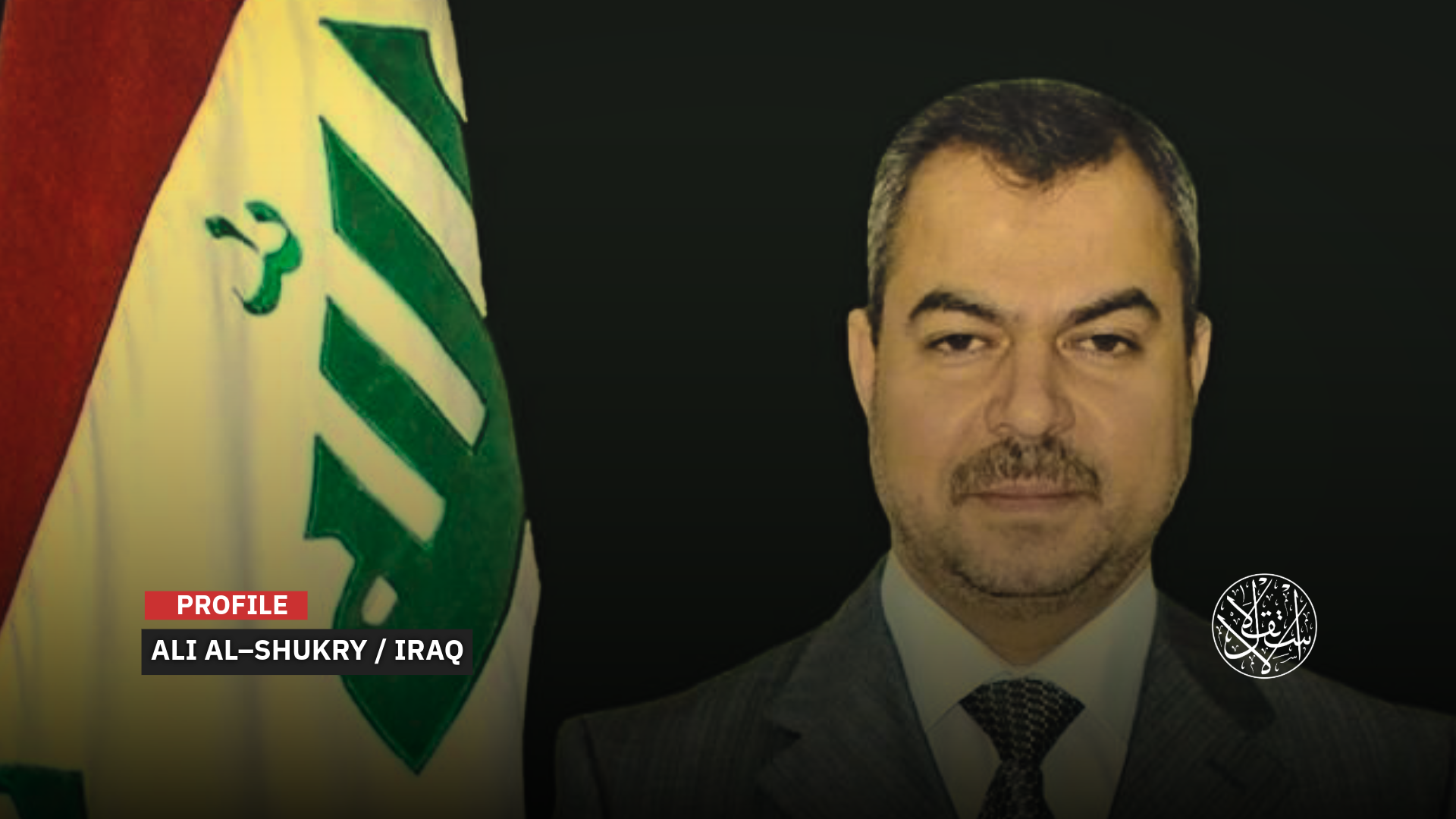
Ali al-Shukry is competing with Nouri al-Maliki and Mohammed Shia’ al-Sudani for the post of Iraq’s prime minister.
As Iraq’s political maneuvering intensifies over the choice of a new prime minister, attention has focused on the Shiite Coordination Framework, which holds the largest bloc in parliament. Several names are circulating, but Ali al-Shukry has emerged as a leading compromise figure, increasingly discussed as a potential consensus choice for the country’s top executive post.
Al-Shukry’s rise reflects a deadlock within the Coordination Framework between two heavyweight contenders: former prime minister Nouri al-Maliki, head of the State of Law coalition and seeking a third term after governing from 2006 to 2014, and the current prime minister, Mohammed Shia’ al-Sudani, leader of the Construction and Development Alliance, who is aiming for a second term. With neither side able to tip the balance, the idea of a compromise candidate has returned to the center of the political conversation.
Compromise Candidate
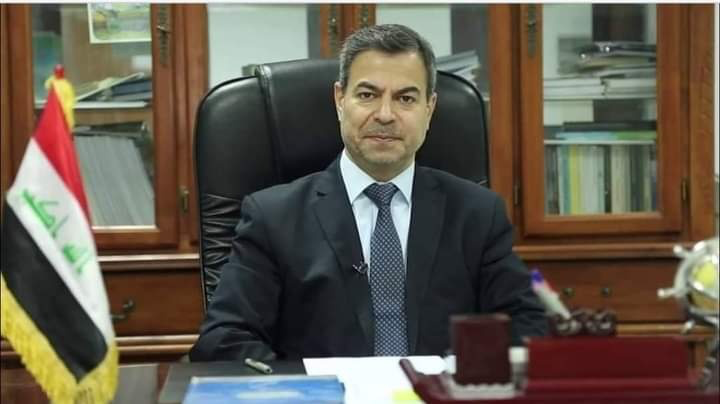
As his name circulates more widely in political circles, Iraqi outlets have reported that Ali al-Shukry has been active outside the country, part of a broader effort to present himself as a consensus candidate for the premiership and a way out of the paralysis gripping the Shiite Coordination Framework.
On December 23, 2025, Iraq HuffPost reported that Ali Youssef al-Shukry, head of the advisory authority at the Iraqi presidency, had arrived in Beirut on what was described publicly as an academic visit, though one carrying clear political weight. According to the report, the trip was part of a carefully orchestrated political marketing campaign, backed by Iraqi and Lebanese businessmen, religious figures, and a former prime minister with strong ties in Beirut, aimed at quietly building regional support for his candidacy.
The report said al-Shukry sought to meet a prominent Iraqi figure linked to the supreme religious authority (the Marja’iyya) in Najaf who resides largely in Lebanon, an attempt that ultimately failed amid the Marja’iyya’s long-standing refusal to intervene in political appointments. It added that al-Shukry did meet an influential Shiite figure in Beirut as part of an effort to sway leaders of the Coordination Framework to rally around him as a compromise choice. These meetings were part of a broader round of discussions with Iraqi and Lebanese Shiite figures connected to decision-making circles in Baghdad, during which al-Shukry presented himself as the most suitable consensus candidate at this stage.
The site also pointed to intense Iraqi political activity in Lebanon tied to the prime ministerial file, involving powerful Lebanese economic figures with major investments in Iraq and an eye on future large-scale projects. Through influential Shiite Lebanese channels, the report said, al-Shukry has sought to convey a message to Tehran that he represents the most viable option to manage Iraq’s next phase amid a highly complex political landscape.
Abbas al-Ardawi, a political analyst close to the Coordination Framework, wrote on X on December 22 that Prime Minister Mohammed Shia’ al-Sudani had failed to secure the bloc’s confidence in recent meetings. He noted that some factions continue to oppose renewing al-Sudani’s term, despite his detailed explanation of the financial crisis and his pledge to overcome it if his mandate were extended quickly.
Al-Ardawi added that as the Construction and Development Alliance came to recognize the difficulty of securing a second term for al-Sudani, a new narrative began to take shape around the qualities required in the next prime minister. This, he said, has fueled calls among some forces to reopen nominations, introduce new names, or revisit two figures already in circulation: Ali al-Shukry and Hamid al-Shatri, the current head of Iraq’s intelligence service.
On December 16, the Sowtiq Center for Electoral Affairs reported what it described as near consensus within the Coordination Framework to limit contenders for the next premiership to three names: Ali al-Shukry, Mohammed Shia’ al-Sudani, and Nouri al-Maliki.
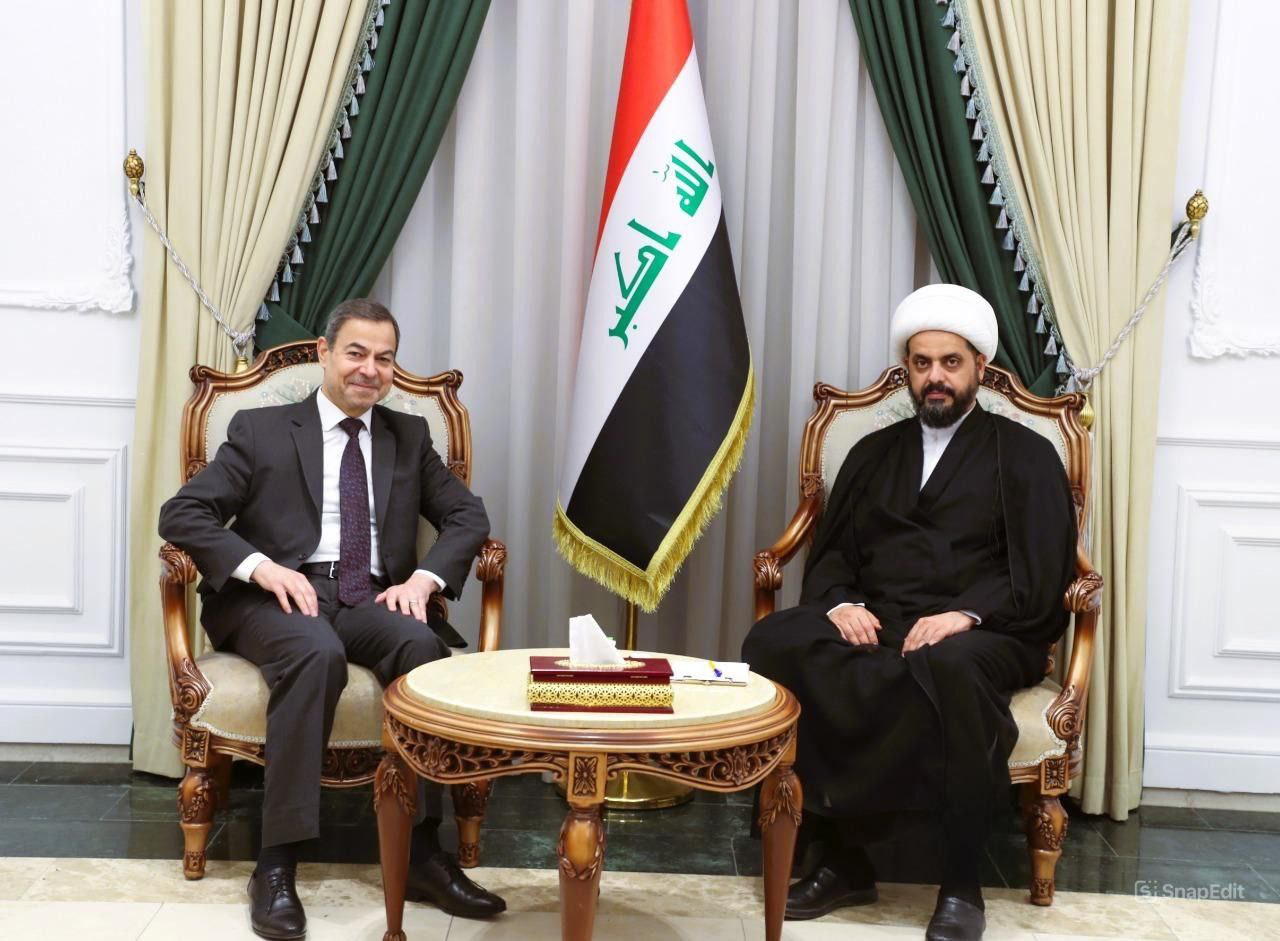
Speculation around al-Shukry’s bid intensified after his recent visit to Qais al-Khazali, the leader of Asa’ib Ahl al-Haq and a senior figure in the Shiite Coordination Framework, on December 2. The meeting was notable as the first of its kind since al-Shukry’s name resurfaced prominently in discussions over potential candidates in recent weeks.
Publicly Rejected
Ali al-Shukry’s name is not new to Iraq’s premiership debates. It first surfaced after the resignation of Adel Abdul Mahdi’s government in late November 2019, amid the mass October protest movement that swept central and southern Iraq and left around 800 demonstrators dead at the hands of security forces and armed groups.
On January 20, 2020, protesters in Baghdad’s Tahrir Square made their opposition unmistakable, hanging banners rejecting the nomination of Ali Youssef al-Shukry and Mohammed Tawfiq Allawi. The scene captured a broader public backlash against candidates seen as products of the political class at the time.
That rejection quickly spread beyond the capital. Similar slogans appeared in several provinces, including Samawah in southern Iraq, where demonstrators warned against recycling familiar political faces tied to the ruling system.
Before that episode, al-Shukry was known for his affiliation with the Sadrist movement led by Muqtada al-Sadr. He served as minister of planning from 2011 to 2014 and later held the post of finance minister for roughly a year during the same period.
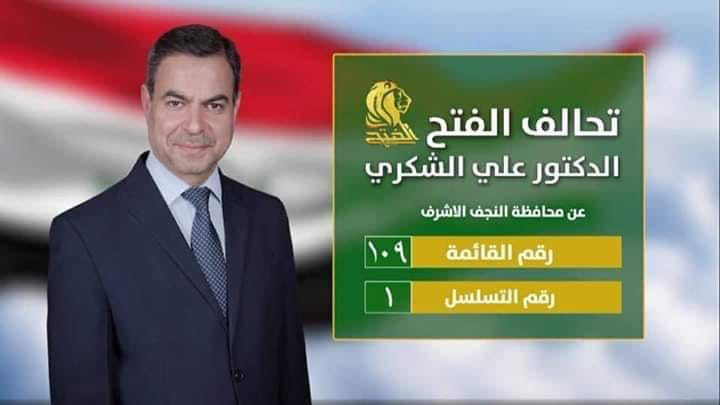
In 2014, al-Shukry won a seat in parliament as a Sadrist lawmaker but later broke with the movement. He ran again in the 2018 elections as part of the Fatah Alliance, led by Hadi al-Amiri of the Iran-aligned Badr Organization, but failed to secure a parliamentary seat.
Chief Adviser
Ali Youssef al-Shukry currently serves as the president’s chief adviser and heads the Board of Advisers and Experts at the Iraqi presidency, having previously worked as a legal adviser during the term of former president Barham Salih.
Born in 1969 in Najaf, al-Shukry earned his bachelor’s degree in law from the University of Baghdad in 1990, followed by a master’s degree from the same institution. In 1998, he completed his PhD in law at the University of Baghdad with a dissertation titled The Head of State in a Federal Union: A Comparative Study.
Al-Shukry has held a wide range of academic posts inside and outside Iraq. He began his career as director of student affairs at the College of Administration and Economics at the University of Baghdad between 1995 and 1996, before becoming rapporteur of the business administration department at the same college in 1998.
In the early 2000s, he left Iraq for Libya, where he served as head of the public law department at Omar Al-Mukhtar University from 2001 to 2002, then as head of the private law department until 2003, followed by a one-year term as head of postgraduate studies. Between 2004 and 2005, he was appointed dean of the College of Law at al-Sahel and al-Sahara University in Libya.
After returning to Iraq, al-Shukry was named assistant dean for academic affairs at the College of Law at the University of Kufa on August 11, 2006, before assuming the post of dean on November 1 of the same year.
Academically, al-Shukry has authored several books, including International Organizations, Principles of Constitutional Law, The General Theory of Constitutional Law, Principles of Libyan Maritime Law, The Mediator in Comparative Political Systems, and Diplomacy in a Changing World.
He has also published numerous academic studies addressing topics such as constitutional law and political systems, international criminal law in a changing world, human rights under globalization, and international terrorism within the framework of the new global order.
Sources
- Ali al-Shukry’s Beirut Efforts: Mediating with Lebanese and Iraqi Figures to Secure Coordination Framework and Tehran Support for Premiership [Arabic]
- Ali Youssef al-Shukry [Arabic]
- Protesters Reject al-Alawi and al-Shukry as Iraq’s Prime Minister Candidates [Arabic]
- Political Forces Push al-Shukry to Accept Premiership and Continue Talks with al-Kadhimi [Arabic]
- Sadrist Movement’s List of Positions Since 2003 [Arabic]
- the Sowtiq Center for Electoral Affairs : Near Consensus Within the Coordination Framework to Limit Next Government’s Candidates to Three Names – Ali al-Shukry, Mohammed Shia’ al-Sudani, Nouri al-Maliki [Arabic]