Egypt’s Warning of ‘Red Lines’ and Potential Military Intervention in Sudan: Who Is the Message For?
Egypt’s national security is closely tied with that of Sudan.
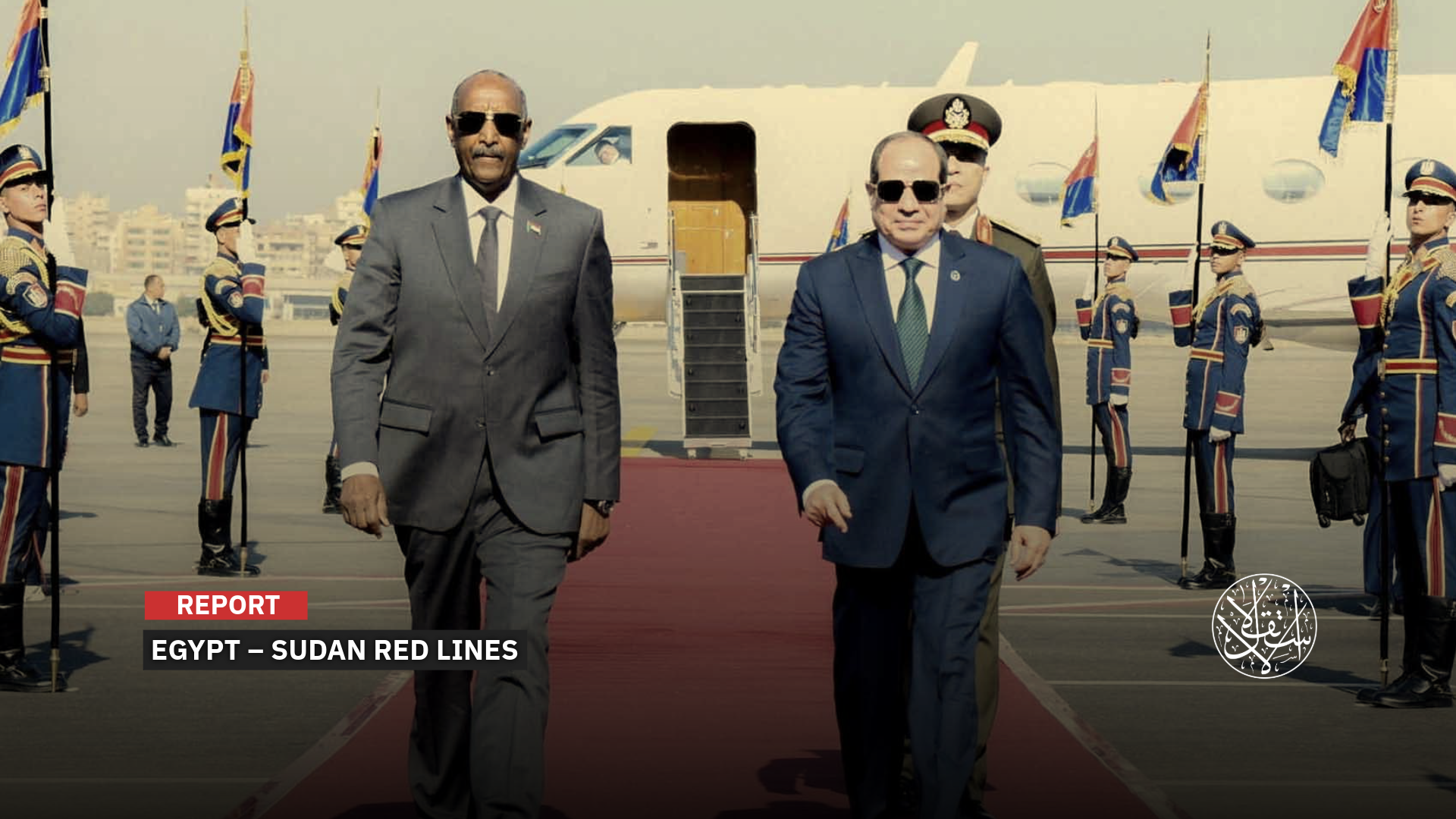
Egypt has drawn a new red line for its national security, declaring on December 18, 2025, that any infringement on Sudan’s territorial unity, its legitimate state institutions, or any attempt to undermine Sudanese sovereignty would constitute a direct threat to Egypt’s own national security.
The warning coincided with a visit to Cairo by Sudan’s transitional Sovereignty Council leader, Abdel Fattah al-Burhan.
In a statement issued by the Egyptian presidency, officials said there were “red lines that cannot be crossed”, language that observers interpreted as a clear signal that formal military intervention remains an option.
Analysts noted that the wording of the statement appeared sharper and more forceful than in previous pronouncements, suggesting a message directed at both internal and external actors shaping the Sudanese conflict.
The implication, they argued, was that Cairo could move from what has been described as tacit or indirect support for the Sudanese army in its confrontation with the Rapid Support Forces (RSF) militia to open and direct military involvement if circumstances require it.
The statement stressed that “Egyptian national security is directly linked to Sudanese national security”, adding that Egypt reserves the right to “take all necessary measures in accordance with international law and the joint defense agreement with Sudan to ensure respect for these red lines”.
The position has raised questions about the intended recipient of the Egyptian warning. Some analysts have dismissed the idea that the message was aimed primarily at the Rapid Support Forces militia itself, instead suggesting it was directed at the United Arab Emirates, which they accuse of backing the militia with weapons and mercenaries.
Further questions have been raised about Cairo’s capacity to deter Abu Dhabi in the Sudanese arena, and about the pressure points Egypt might be able to use in confronting the UAE, particularly given the close relationship that has existed between the Emirati leadership and Egypt’s current political system since the 2013 military takeover.
Analysis of the Statement
The significance of the Egyptian presidency’s statement rests on two central points. The first is the clear delineation of “red lines” against any actors seen as undermining Sudan’s security, which Cairo regards as a direct extension of its own national security.
The second is the explicit suggestion that Egypt could resort to direct military intervention under the framework of a “joint defense agreement”.
While the statement did not identify specific parties, it alluded to actors operating in what Egypt described as its “backyard”, and posing a threat to the security of both countries.
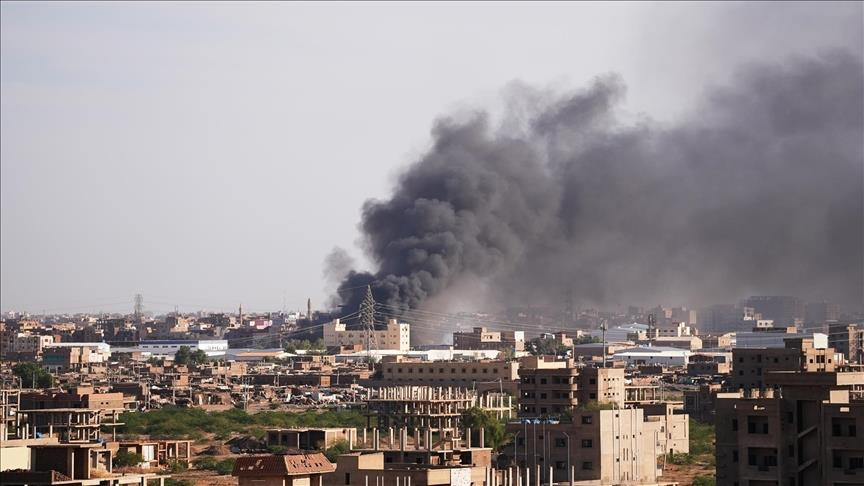
This Egyptian signaling on red lines and the joint defense agreement came at an exceptionally sensitive moment, following the collapse of Sudanese army defensive positions in the Kordofan region and the Rapid Support Forces militia’s takeover of additional cities and strategic locations, including Babanusa and Heglig. These battlefield developments were widely described as deeply alarming.
Historically, Sudan and Egypt signed a joint defense agreement in July 1976, an accord that was never put into practical effect. It was followed by a series of military agreements between the two states, the most recent of which was concluded in March 2021 and focused on “protecting the national security of both sides”.
The joint defense agreement was signed by the late presidents Anwar Sadat and Jaafar Nimeiry. Subsequent military cooperation agreements were concluded at the level of the two armies’ chiefs of staff, covering joint exercises, military training, border security, and the exchange of military and security expertise.
What is striking in this context is that the joint defense agreement was revoked by a decision of the former Sudanese prime minister Sadiq al-Mahdi on April 2, 1989, without any formal Egyptian announcement.
According to later analyses, al-Mahdi believed the agreement had been designed primarily to protect the regime of President Nimeiry, with the backing of President Sadat, rather than to safeguard Sudan itself.
This interpretation was cited by the Sudanese analyst Faisal Abdel Rahman Ali Taha in an analysis published by Sudan Tribune on December 18, 2025.
That decision was preceded by the signing of a “charter of brotherhood” between Sadiq al-Mahdi and the Egyptian prime minister Atef Sedky on February 21, 1987, a document that made no explicit reference to the joint defense agreement or to its cancellation.
In July 1987, Egypt’s then defense minister, Mohamed Abdel Halim Abu Ghazala, said Cairo had not been officially informed of the announcement made in Khartoum regarding the cancellation of the agreement. He argued at the time that the joint defense pact served Sudan’s interests before it served Egypt’s.
More recently, the head of Egypt’s State Information Service, Diaa Rashwan, told the television channels Al Arabiya and Al Hadath that the joint defense agreement between Egypt and Sudan “remains in force” and provides a framework for confronting any risks or threats to the security of both countries.
Analysts argue that Egypt’s reference to the possible activation of the “joint defense agreement” at this juncture amounts, in itself, to a form of practical activation.
This view was echoed by the writer and political thinker Abdel Moneim Said, who told MBC Masr on December 19 that “it has been activated by announcing it, the announcement itself is the activation”.
Even so, no concrete steps have yet been announced, such as the deployment of joint forces or clearly defined movements on the ground.
Egypt’s position has so far been limited to formally signaling its readiness to invoke the provisions of the agreement to defend its security interests in Sudan should the situation deteriorate further.
Sudanese and Egyptian reports suggest that Egypt’s declaration that it is activating the joint defense agreement with Sudan represents a highly significant political and strategic development, both in terms of bilateral relations and within the broader framework of regional security arrangements.
The move reflects a shift toward building a formal and operational security alliance between the two countries, strengthening coordination and strategic alignment, and sending clear deterrent messages in the face of mounting security challenges and threats across the region.
It also underscores that the joint defense agreement is not merely a symbolic framework or an inactive political document, but a legal basis that can be relied upon to provide support or intervention if security conditions worsen.
When Egypt announces the activation of a joint defense agreement, it signals a transition from a procedural or symbolic phase to an operational one.
This entails mutual obligations should either party face a shared security threat, including the exchange of intelligence and military information, the conduct of joint exercises, and potentially the coordination of plans to defend borders and vital interests.
The statement issued during the visit of Sudan’s Sovereignty Council leader, Abdel Fattah al-Burhan, to Cairo stressed that there are “red lines that cannot be allowed to be crossed or treated lightly”, warning that any breach would “directly affect Egyptian national security, which is closely linked to Sudanese national security”.
The statement outlined four main pillars underpinning these red lines: preserving Sudan’s unity and territorial integrity, preventing any tampering with the country’s resources and those of the Sudanese people, rejecting the secession of any part of its territory, and safeguarding Sudan’s state institutions.
These red lines carry implicit signals of Cairo’s rejection of, and concern over, scenarios involving the secession of the Darfur region, which would mark a third partition of Sudan following the independence of South Sudan. Egypt views such a development as a direct threat to regional stability.
The statement reinforced this stance by stressing the “categorical rejection of the establishment of any parallel entities or the recognition thereof”, arguing that such moves would undermine Sudan’s unity and territorial integrity.
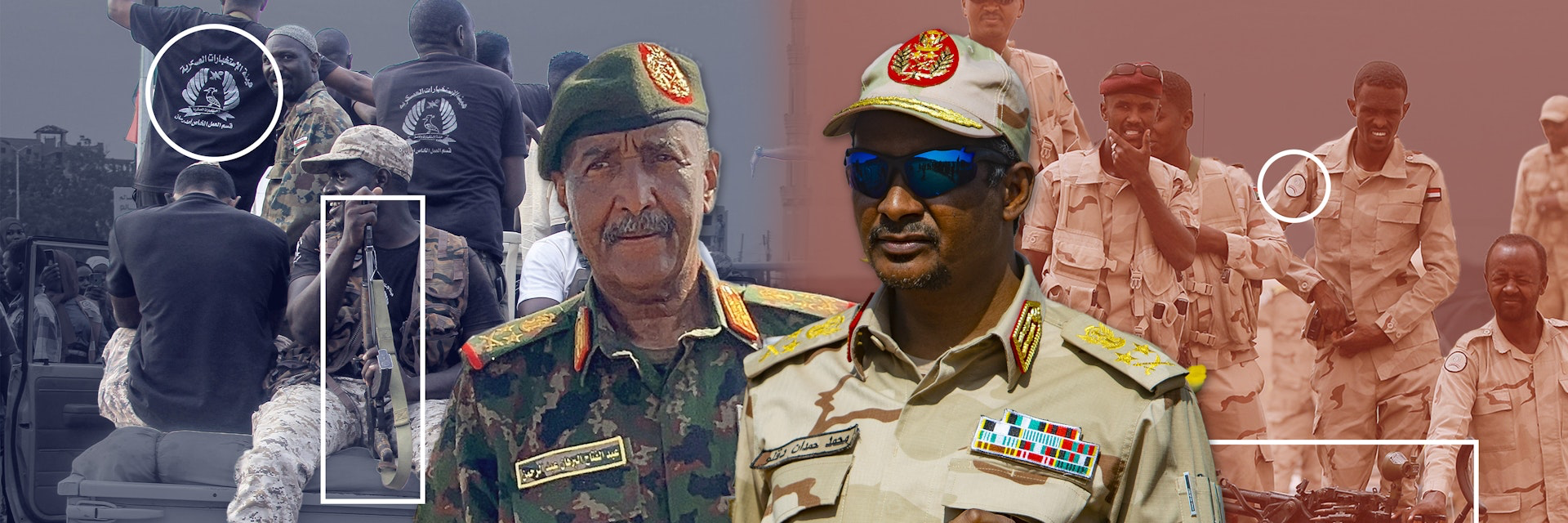
This comes against the backdrop of an announcement by the leader of the Rapid Support Forces militia, Mohamed Hamdan Dagalo, known as Hemedti, declaring the formation of what he called the “Sudan Founding Alliance” as a parallel authority to the official government, and designating the city of Nyala in South Darfur as its headquarters. The move was met with widespread regional and international rejection.
On the ground, the Rapid Support Forces militia control five Darfur states in western Sudan, except for parts of North Darfur that remain under army control.
The Sudanese army, meanwhile, maintains control over most of the remaining thirteen states, including the capital, Khartoum.

Directed at Whom? And How?
The central question raised in the aftermath of the Egyptian statement has revolved around the intended target of this military warning and the delineation of “red lines”.
Was the message directed at the commander of the Rapid Support Forces militia, Mohamed Hamdan Dagalo, known as Hemedti, and his militia, particularly given that Egypt is already reported, in multiple accounts, to be providing undeclared support to the Sudanese army in its confrontation with them?
Or does the message extend beyond that to a more influential regional actor, namely the United Arab Emirates? If so, what pressure points or “red lines” does Cairo actually possess in confronting Abu Dhabi within the Sudanese arena?
Officially, neither Cairo nor Khartoum has mentioned the UAE by name in their statements, nor have any Egyptian officials issued remarks explicitly confirming that the warning was aimed at Abu Dhabi.
This interpretive vacuum, however, has fuelled a wave of online campaigns, circulating videos and posts promoting the narrative that “Egypt is threatening the UAE in Sudan”, or that it is “issuing a direct warning to Abu Dhabi”.
Observers argue that these campaigns do not necessarily reflect Egypt’s official position. Rather, they exploit the deliberate ambiguity of the statement’s wording, which relied on broad and elastic language that allows the message to be directed at more than one party at the same time, without triggering a direct political confrontation or naming a specific adversary.
According to analysts, this approach gives Cairo a wider margin for maneuver and keeps the door open to either escalation or containment, whether in relation to domestic actors in Sudan or regional players involved in the conflict.
Egypt’s rhetoric on Sudan has undergone a noticeable shift in recent months, reflecting a rising tone of anger and a simmering tension that had previously been hinted at by unofficial sources but never openly articulated through diplomatic channels or state media.
According to an Egyptian diplomatic source who spoke to Al-Estiklal, the repeated visits of Sudan’s Sovereignty Council leader, Abdel Fattah al-Burhan, to Cairo, along with trips by senior Egyptian officials to Sudan, particularly the foreign minister and the head of general intelligence, have each time been accompanied by increasingly blunt discussions about Cairo’s anger over foreign interference in Sudan.
The source said these exchanges were a clear reference to the United Arab Emirates, but added that the warnings failed to produce tangible results.
The source explained that raising the ceiling of the warning this time, and openly signalling the possibility of military intervention, amounted to a “harsh” and direct message to Abu Dhabi.
At the same time, the source predicted that the UAE was unlikely to respond, pointing to its previous disregard for U.S. pressure.
The Egyptian warnings, the source added, are not directed solely at the UAE. They also extend to Chad, which is accused of serving as a transit route for Emirati weapons destined for the Rapid Support Forces militia, as well as to Ethiopia, which Egyptian assessments increasingly view as a new channel for supplying Emirati arms to Hemedti’s militia forces. This, according to the source, explains the decision to spell out clear “red lines” in Egypt’s latest statement.
In parallel, Egyptian activists on social media argue that the UAE has been the most prominent backer of Egypt’s current political system since the July 2013 military takeover, whether through political support or financial deposits in Egypt’s central bank.
In their view, this relationship constrains Cairo’s ability to engage in a direct confrontation with Abu Dhabi, despite what they describe as direct harm to Egypt’s national security stemming from the Emirati role in Sudan.
According to these voices, the most realistic option available to Egypt is to intensify its support for the official Sudanese army and to strengthen its international standing and relationships, positioning it as a strategic counterweight to the externally backed Rapid Support Forces militia, foremost among them the UAE.
At the same time, groups known online as “El-Sisi committees” have limited themselves to vague suggestions that Abu Dhabi will “pay a price”, without naming it explicitly.
The Sudanese political analyst Makkawi Elmalik expects the coming hours or days to witness “urgent Emirati attempts and visits, or direct contacts, aimed at easing tensions with Egypt”.
He said that Ethiopia’s entry into the confrontation, the growing proximity of the threat to the core of Egyptian national security, and the fact that the Emirati project, in his assessment, enjoys Israeli backing, are all factors that mean Abu Dhabi’s billions and promises will no longer be sufficient to contain the crisis.
Elmalik described what is currently unfolding between Cairo and Abu Dhabi as “not a passing disagreement or a diplomatic misunderstanding, but a direct collision with major national security interests”.
He added that “the equation has changed, and time is no longer on the side of what he describes as the Emirati project of chaos”, concluding that “the coming days are heavy with developments, and we may witness decisive and influential operations and strikes”, as he put it.
French intelligence reports have suggested that Egypt’s president, Abdel Fattah el-Sisi, issued a direct warning to the United Arab Emirates following threats by the commander of the Rapid Support Forces militia, Mohamed Hamdan Dagalo, known as Hemedti, to target Egyptian airports and military bases.
According to those reports, Cairo made clear that any move toward Egypt’s borders would be treated as a declaration of war.
The French publication Africa Intelligence reported on November 7, 2025, that Egypt is acutely aware of the dangers posed by arming militias backed by Abu Dhabi with drones and air defense systems that could threaten its national security.
This assessment, the report said, has driven Cairo to intensify military coordination with the Sudanese army to a level approaching a full defensive alliance.
In the same context, Egypt’s former ambassador Fouad Ashmawy said that “Emirati policies and interventions, particularly in Sudan, Ethiopia, Libya, and Gaza, represent serious risks to Egyptian national security”.
Writing on his Facebook account, Ashmawy argued that Egypt’s declaration of red lines in Sudan signals the launch of a new approach in dealing with these files.
Responding to questions about what Egypt is doing, and what priorities and pressure tools it possesses in confronting the UAE, he said Egyptian decision-making rests on three core pillars.
The first, he explained, is calm and restraint, avoiding haste or adventurism in direct military action, or even overt threats of it, while maintaining a steady emphasis on Egypt’s interests and red lines.
He said this was the same approach Cairo adopted in confronting Turkiye in Libya five years ago, and one that continues to shape its gradual handling of Ethiopia over the Grand Ethiopian Renaissance Dam, as well as its position on Sudan in the face of foreign interference, as reflected in the latest presidential statement.
The second pillar is complete secrecy, with the state and its institutions careful not to disclose any plans, measures, or parameters related to national security.
The third is centralized decision-making, with no popular role, either in a general sense or through parliamentary institutions.
Instead, the public is left with what is conveyed through presidential speeches and carefully timed statements from the State Information Service or the foreign ministry, offering limited clarification at calculated moments.
Sudanese and Egyptian activists argue that the Egyptian statement, and its explicit setting of “red lines”, would not have been issued in the face of the United Arab Emirates without Saudi Arabia’s own entry into a confrontational track with Abu Dhabi.
In their view, the significance of Egypt’s “red line” statement lies less in any immediate desire for direct military intervention than in its timing and regional context.
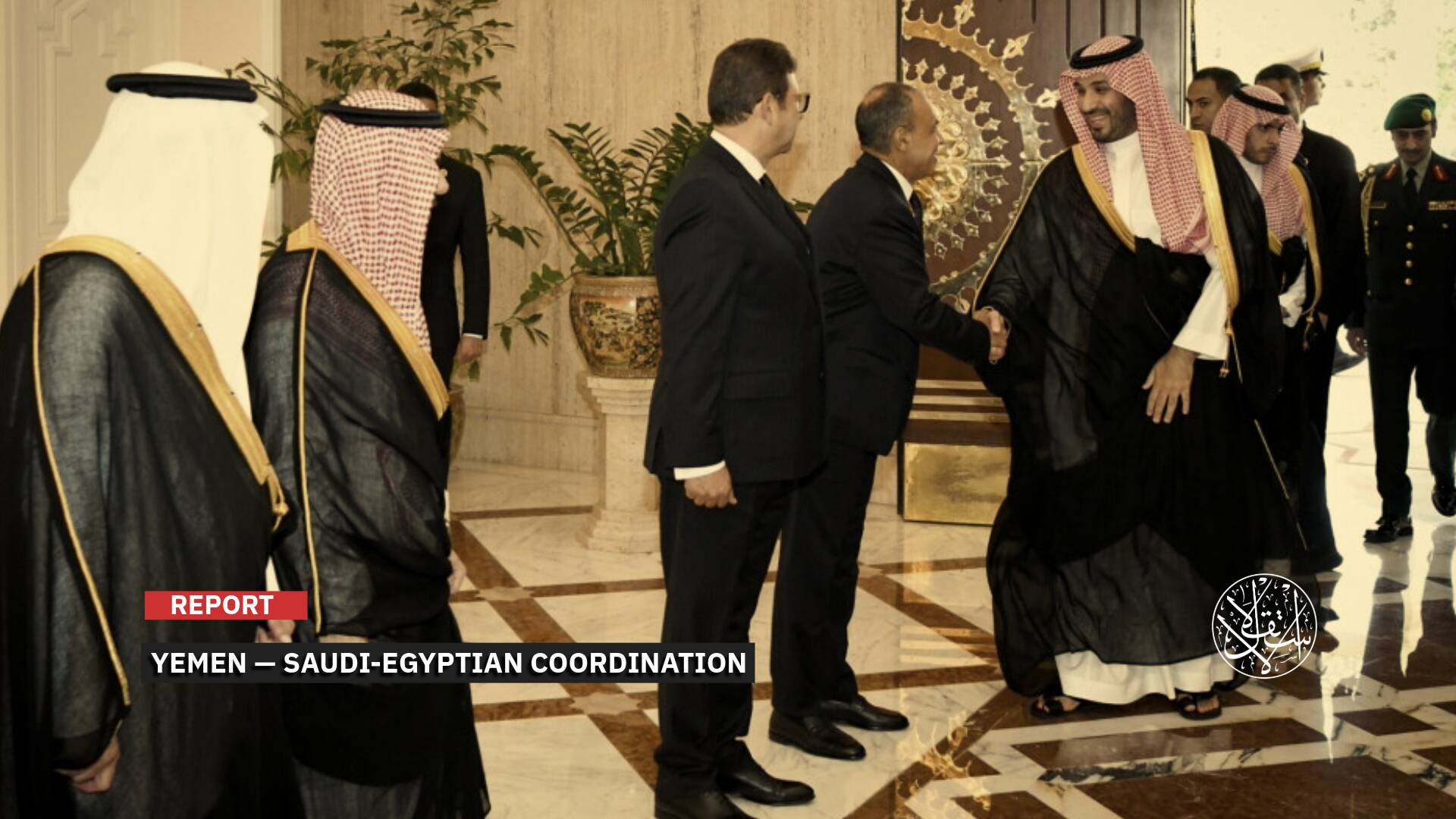
It came alongside moves by Saudi Arabia, led by Crown Prince Mohammed bin Salman, to curb the Emirati role across several arenas of influence, most notably in Sudan and Yemen.
The Egyptian presidency’s invocation of the joint defense agreement and the setting of “red lines” came shortly after Sudan’s Sovereignty Council leader, Abdel Fattah al-Burhan, met with Saudi Crown Prince Mohammed bin Salman, amid reports from Sudanese sources of growing Saudi concern over the expansion of Emirati influence along the Red Sea coast.
In the same context, Egyptian online committees engaged in skirmishes on social media with the adviser to the president of the United Arab Emirates, AbdulKhaliq Abdullah, using language that implicitly suggested that Abu Dhabi’s actions in Sudan amounted to little more than a “symbolic display of political muscle” and a bid for regional influence.
These accounts further asserted that the Egyptian people are “a proud nation that does not turn its back on its brothers”, a clear nod to popular support for the official Egyptian position.
On October 28, 2025, U.S. intelligence agencies confirmed that the United Arab Emirates had stepped up its supply of Chinese drones and other weaponry to the Rapid Support Forces militia, according to reporting by the Wall Street Journal.
The newspaper noted that the UAE maintains two bases on Sudanese soil, one in the city of Nyala in South Darfur, and the other in the Malha area, approximately 200 kilometers from el Fashir. Both facilities are reportedly used for logistical support and intelligence-gathering purposes.
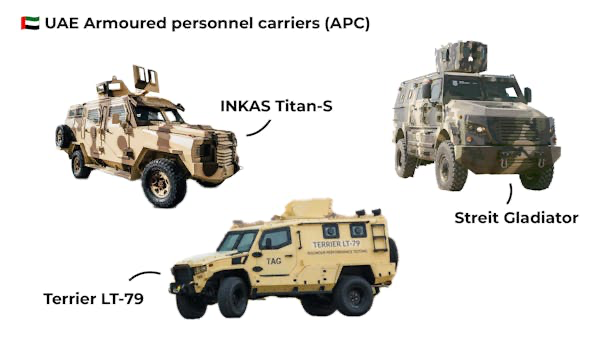
In addition, the UAE reportedly uses a base in the Somali city of Bosaso to move Colombian mercenaries and carry out regular transport flights and multiple shipments.
The Egyptian journalist Manal Ahmed argued that Egypt’s “red lines” in Libya, Ethiopia, and Sudan do not constitute a threat of war, but are intended to exert diplomatic pressure on the international community to intervene and safeguard Egypt’s regional interests.
Egypt has explained its recent escalation in tone toward the situation in Sudan, particularly in relation to the UAE, by several factors.
Chief among them is the perceived danger of “normalizing with the militia”, as attempts have emerged to present Hemedti as a peace partner, a step Cairo regards as a genuine red line.
There are also concerns over repeating the Libyan scenario, where a militia controls territory and resources with external backing, creating a distorted state, which Egypt is determined not to allow south of its borders.
The messaging serves a dual purpose: signaling to the West that the legitimate state must not be undermined, while implicitly warning the UAE that there is a ceiling that cannot be crossed.
Additionally, the Nile issue remains central, as the presence of a parallel entity in Sudan could open the door to water and security arrangements outside Cairo’s calculations, further complicating the Grand Ethiopian Renaissance Dam crisis.
Sources
- A Second Look at the 1976 Egypt-Sudan Joint Defense Agreement [Arabic]
- Three Stages and Eight Articles… The Course of the Egypt-Sudan Joint Defense Agreement [Arabic]
- Before Sudan… Three Red Lines Egypt Set That Changed the Landscape [Arabic]
- How U.A.E. Arms Bolstered a Sudanese Militia Accused of Genocide
- Sissi's delicate balancing act since the fall of El Fasher
- Sudan’s civil war: A visual guide to the brutal conflict