Trump Threatened Iran Before Maduro’s Arrest: Could Protests Pave the Way for Khamenei’s Overthrow?
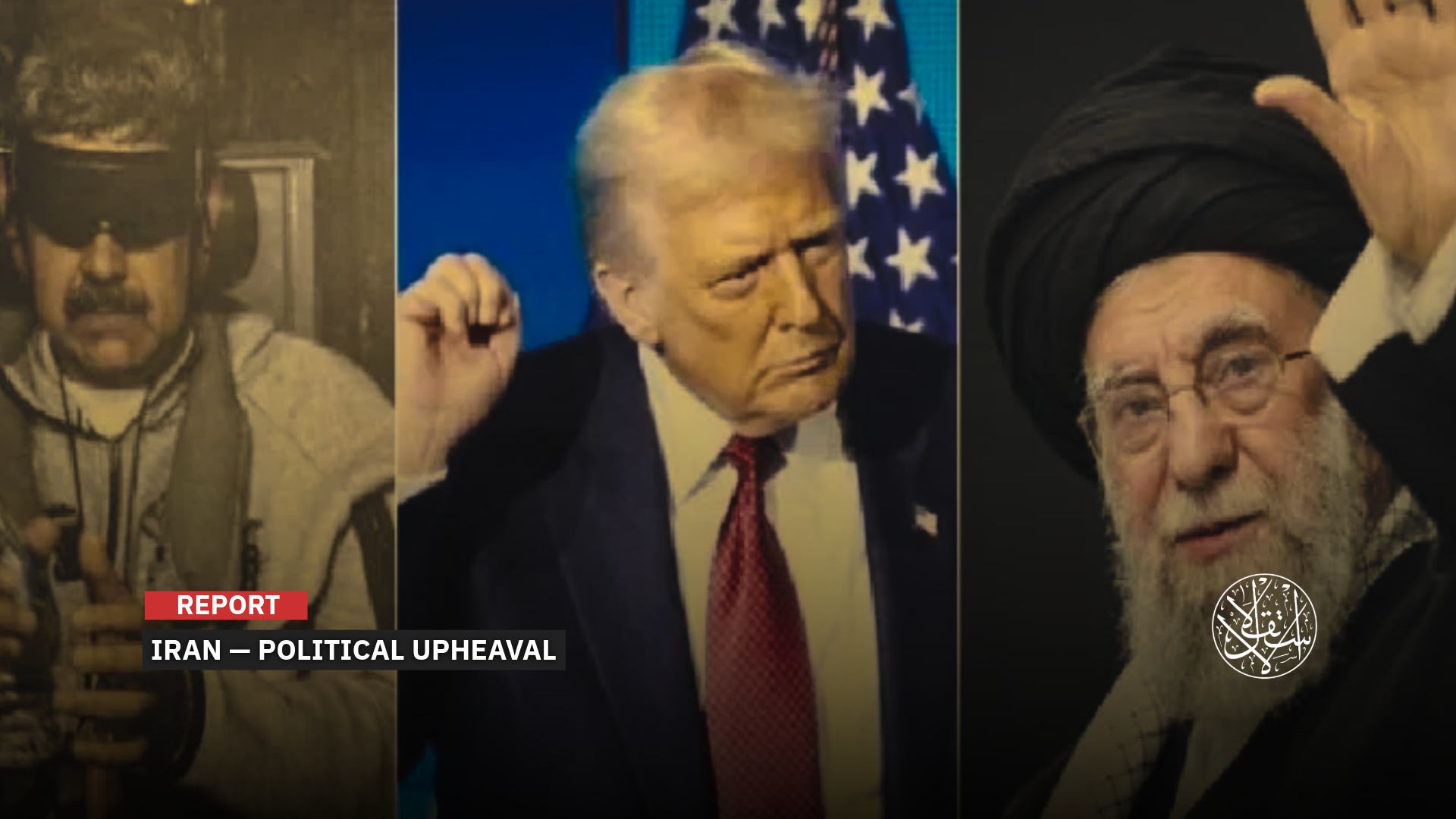
Iran is weighing every possible option.
Threats by U.S. President Donald Trump to intervene in Iran if authorities open fire on protesters in Iranian cities have raised a central question about how the velayat-e faqih system will respond, given its long record of crushing previous protests by force after branding them as foreign-driven and a threat to national stability.
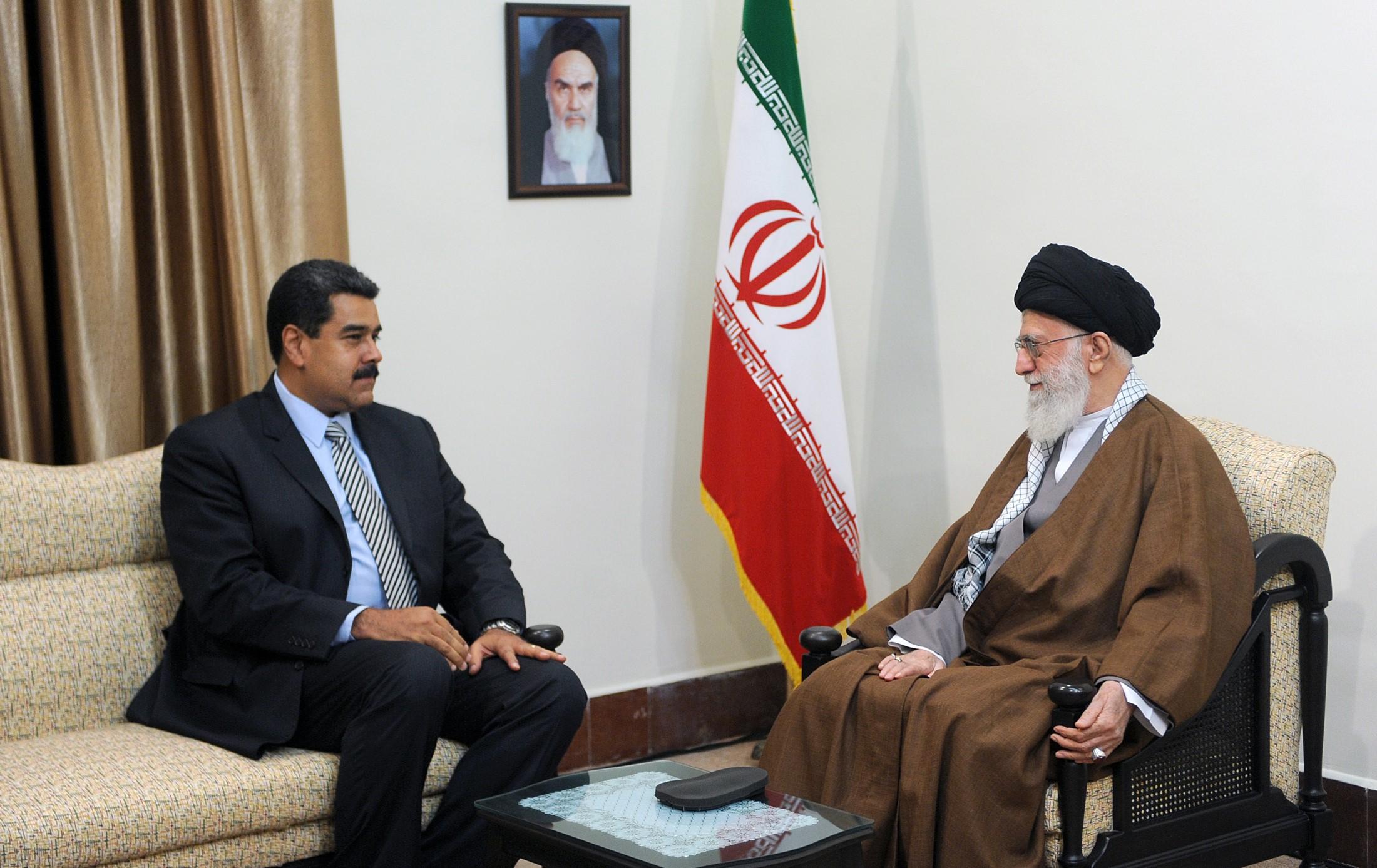
This time, however, Trump’s warnings, met with sharply worded Iranian cautions against interference in the country’s internal affairs, came alongside the arrest of one of Iran’s most prominent allies, Venezuelan president Nicolas Maduro, and his wife, Cilia Flores, in a U.S. operation that struck at the heart of Caracas on January 3, 2026.
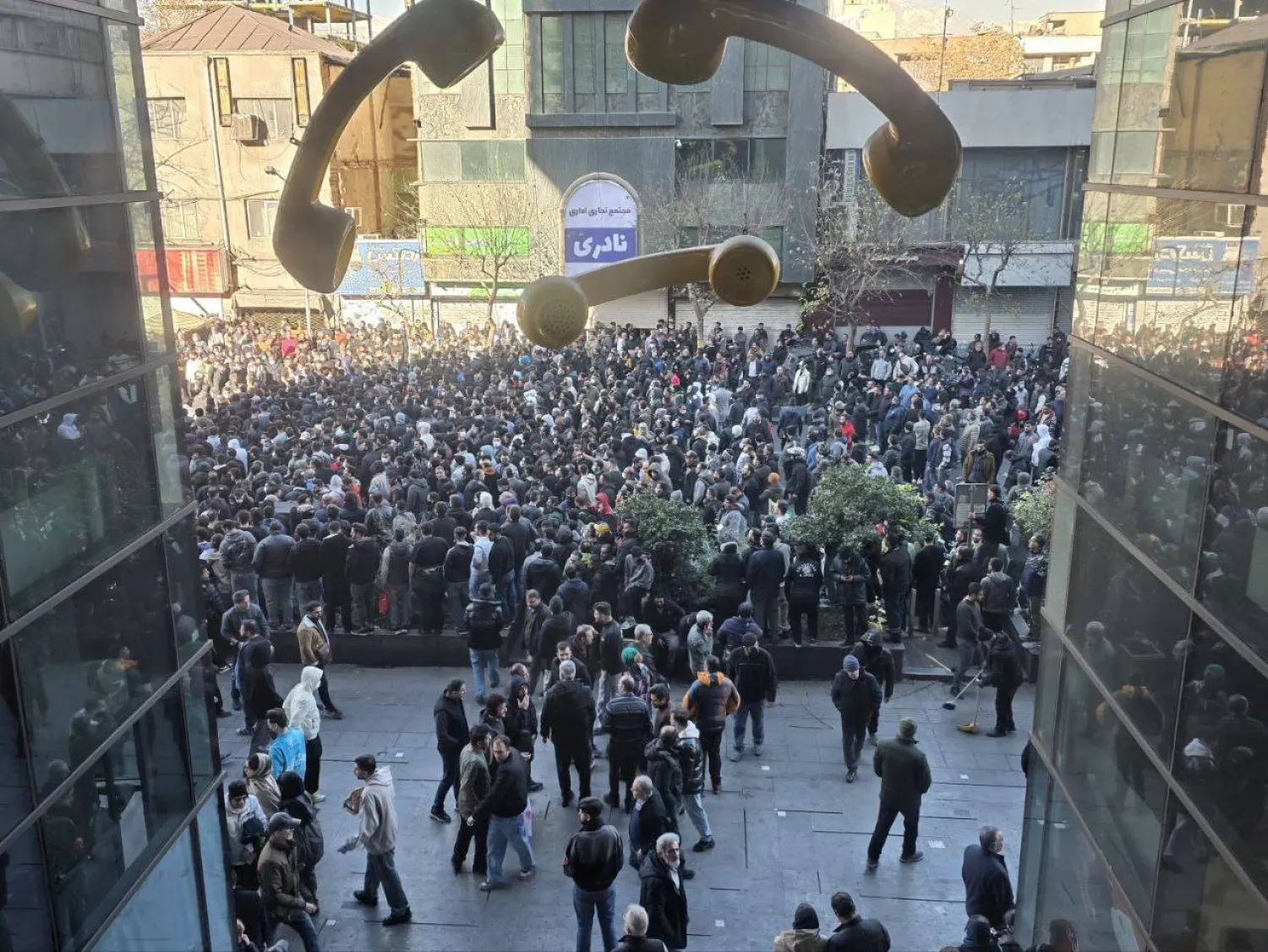
Iran has been witnessing a sustained wave of protests since December 28, 2025, across several cities. What began among bazaar merchants quickly spread to universities amid a deepening economic crisis and the collapse of the national currency. The unrest later escalated into attacks on and the burning of several security centers, accompanied by chants calling for the overthrow of the regime.
A Shift in Rhetoric
Despite the forceful response from Iranian officials to Trump’s threats at the moment they were issued on January 2, the arrest of Iran’s ally Nicolas Maduro the following day prompted Tehran to address the United Nations, warning that any “encouragement, support, or facilitation of sabotage or violent acts within a sovereign state constitutes an unlawful act that places responsibility on the intervening state.”
On January 3, Iran’s ANA news agency reported that Iran’s permanent representative to the United Nations, Amir Saeid Iravani, stressed in a letter that the Iranian people have endured for decades the consequences of U.S. policies marketed under humanitarian slogans.
He said the historical record of the United States reveals a recurring pattern of interference, pressure, and intrusion into the internal affairs of states under the pretext of supporting their peoples.
Iravani pointed to what he described as a striking paradox: claims of “support for the Iranian people” issued by U.S. officials, while their history is marked by military interventions, regime-change operations, and the unlawful use of force in various parts of the world.
The Iranian envoy said such practices represent a clear violation of the United Nations Charter and have contributed to the deaths of large numbers of civilians, the collapse of states, the eruption of humanitarian crises, and the rise of extremist and terrorist groups.
He called on the international community to uphold its legal responsibilities, urging it to condemn what he described as provocative and irresponsible statements made by the U.S. president against Iran, and to regard them as a serious breach of the principles and purposes of the UN Charter.
Iravani also called on the United States to immediately comply with its international obligations, to cease threats or the use of force, and to assume its responsibilities as a permanent member of the Security Council in a manner consistent with the rules and principles of the United Nations.
Meanwhile, Iran’s supreme leader, Ali Khamenei, wrote in a post on X on January 3 that “protest is a legitimate right, and officials must engage in dialogue with protesters, and we are doing so. But there is no benefit in talking to rioters, and those who incite unrest must be stopped at their limits.”
“The protest by merchants against the unrestrained rise in foreign currency prices is rightful. But the important issue is that a number of agitators and enemy agents have concealed themselves behind the merchants and raised slogans hostile to the Islamic Republic of Iran.”
“This unrestrained rise in foreign currency prices and the resulting instability is not a natural matter, but the work of the enemy. It must, of course, be confronted. The president (Masoud Pezeshkian) and the heads of the other branches of government are making efforts to address this situation,” Ali Khamenei concluded.
Earlier, Iran’s national security council head, Ali Larijani, said on X that any U.S. intervention would lead to “instability across the entire region and the destruction of American interests.”
Meanwhile, Ali Shamkhani, a close adviser to Iran’s supreme leader, Ali Khamenei, said on January 2 that Iran’s national security was a “red line,” warning on X that “any hand that reaches out to interfere in Iran’s security […] will be cut off by a harsh and painful response.”
Trump, meanwhile, wrote on his Truth Social platform on January 2, “If Iran opens fire and violently kills peaceful protesters, as it is accustomed to doing, the United States of America will intervene to save them. We are ready. Thank you for your attention to this matter.”

Political Upheaval
On the question of whether a Venezuelan-style scenario could be applied to Iran, the Middle East researcher Iyad Thabet said the arrest of Maduro sends an unambiguous message from the United States to those who defy it and act outside its interests, namely that Washington is no longer prepared to abide by international law and norms.
Speaking to Al-Estiklal, Thabet said this was “a phase that must be taken into account by all parties, and this aggression must be managed until the global crisis triggered by the United States passes.” He noted that Iran and its political system are firmly on the U.S. agenda, though perhaps not in the same manner seen in Venezuela, but rather through the threat of such action.
Thabet argued that an America facing economic retreat in the face of China and unable to restrain Russia now sees little option but to rely on military force to resolve issues that economic pressure has failed to settle, all with the aim of curbing the drift of smaller states toward both Russia and China.
In a similar vein, the political analyst Haider al-Musawi said the arrest of Maduro was not merely a military operation in Latin America, but a political earthquake whose aftershocks were immediately felt in Tehran.
The loss of Venezuela, he said, would mean for Iran the loss of “the lung through which it breathes in the western hemisphere,” placing the Iranian system before unprecedented challenges.
Writing in an article published by el-Manchar on January 3, al-Musawi said Venezuela represented more to Iran than a simple ally; it served as a logistical hub for intelligence operations and activities by Iran’s Quds Force and Hezbollah in Latin America.
He added that Maduro’s arrest sent a sharply worded message to the Iranian domestic audience, as the fall of an allied “dictator” weakens the barrier of fear among the Iranian public and reinforces the idea that power structures built on repression can collapse rapidly under combined internal and external pressure.
Al-Musawi pointed to the regime’s reaction, noting that Iranian officials such as Mustafa Mirsalim, a member of Iran’s Expediency Discernment Council, warned that Tehran would not surrender, amid fears the authorities could resort to harsher repression to mask a state of “strategic disorientation.”
According to al-Musawi, the most alarming message for Tehran lies in the “military tactic” employed, as the failure of Russian weaponry, with S-300 systems in Venezuela, unable to detect U.S. Delta Force units, raises serious questions about Iran’s own defensive effectiveness, which relies on similar technologies.
He concluded that Trump’s success in arresting a sitting head of state could encourage him to pursue comparable surgical actions against high-value Iranian targets if escalation in the Gulf continues.
“Iran today is not only grieving the loss of an ally,” al-Musawi wrote, “but is also deeply concerned that the roadmap applied in Caracas may be a draft for a future scenario targeting its centers of power in the Middle East.”
A Decisive Moment
In the same context, the Lebanese military expert Yaarob Sakher said that during the 12-day war between Israel and Iran, the United States was not seeking the overthrow of the Iranian regime. Rather, it was Israeli Prime Minister Benjamin Netanyahu who wanted the regime removed, but was restrained by U.S. President Donald Trump.
Sakher attributed this to several factors, chief among them that the United States was not prepared for the day after a regime collapse in Iran.
He said the country contains multiple ethnic and national groups, including Kurds, Persians, Azeris, Baluch, and Ahwazi Arabs, meaning that the fall of the system could trigger separatist movements, similar to what occurred in the Balkans, which fragmented into seven states. This, he said, was an outcome Washington sought to avoid.
He added that the situation has now changed in light of what he described as the Iranian regime’s intransigence and its refusal to comply with U.S. negotiation demands repeatedly voiced by Washington, foremost the complete dismantling of the nuclear file, second the reduction of the range of ballistic missiles, and third the abandonment of regional proxy forces. As long as Iran remains in this posture of rejection, Sakher argued, what happened in Venezuela could also happen in Iran.
According to Sakher, Netanyahu is preparing for such a round and could act in coordination with the United States. He noted, however, that one factor could delay a strike on Iran, namely the ongoing protests inside the country.
These, he said, are not merely popular demands or transient social protests, but rather an attempt by broad segments of Iranian society to break free from a social contract and to liberate themselves from a political system built on what he described as myth.
He continued by saying that the Iranian people provide a facilitating factor for regime change, as since 2009, every wave of popular protest has been met with promises of economic, social, and living reforms.
As a result, he said, the public is moving toward a decisive moment of emancipation from both the social contract and the political system, a development that could delay a strike on Iran if a popular uprising succeeds in overturning the regime.
The military expert concluded that current U.S. and Israeli preparations are moving toward either a comprehensive change in Iranian behavior, should Tehran respond to the three conditions, or, if it refuses, toward the overthrow of the regime.
He said this path requires careful study and meticulous planning, adding that he believes the United States and Israel have already planned ahead and that the moment of decision is approaching, unless Iran draws lessons from what is unfolding in Venezuela.
In the same vein, Mamoun Fandy, director of the London Global Strategy Institute, said in a post on X on January 3 that “if the system in Iran is not militarily and security-wise prepared over the next six months, it could face a fate similar to that of Maduro.
The balance of power is shifting, and recent strikes have been swift and highly targeted. Deterrence is not built on slogans, but on readiness and the ability to read transformations before it is too late.”
Conversely, Ibrahim Shir, a researcher on Iranian affairs, said in a television interview on January 3 that Iran is keeping all options on the table and examining its choices in response to what he described as “a sudden departure from the international context.”
Shir explained that Tehran fears the possibility of a U.S. operation inside Iranian territory, noting that this would not be the first time.
In the 1980s, Washington carried out the “Commanders” operation, deploying three helicopters inside Iran, but it failed due to weather and climatic conditions.
Opposition Iranian media outlets, including Iran International, have accused Iranian authorities of killing around three protesters with gunfire, while the semi-official Fars News Agency reported on January 2 that three members of the security forces were killed in attacks on security headquarters during the protests.
Sources
- Khamenei Responds to Trump’s Remarks: We Will Not Submit to the Enemy [Arabic]
- Ibrahim Shir: Iran Weighs All Options After “U.S. Bullying” in Venezuela [Arabic]
- Fall of Caracas Shakes Tehran: How Maduro’s Arrest Could Change the Game in Iran [Arabic]
- Iran’s First Response to Trump Threats: What Khamenei’s Adviser Said [Arabic]
- Iran Appeals to the United Nations, Urging Condemnation of Trump’s Threats and a Halt to Any Use of Force [Arabic]
- Trump Threatens Intervention in Iran Amid Protests, Larijani Issues Warning [Arabic]