IMF Agreement in Egypt: Genuine Recovery or Political Shield for Sisi
Egypt still has two reviews to pass: the seventh in March 2026 and the eighth and final one in November 2026.
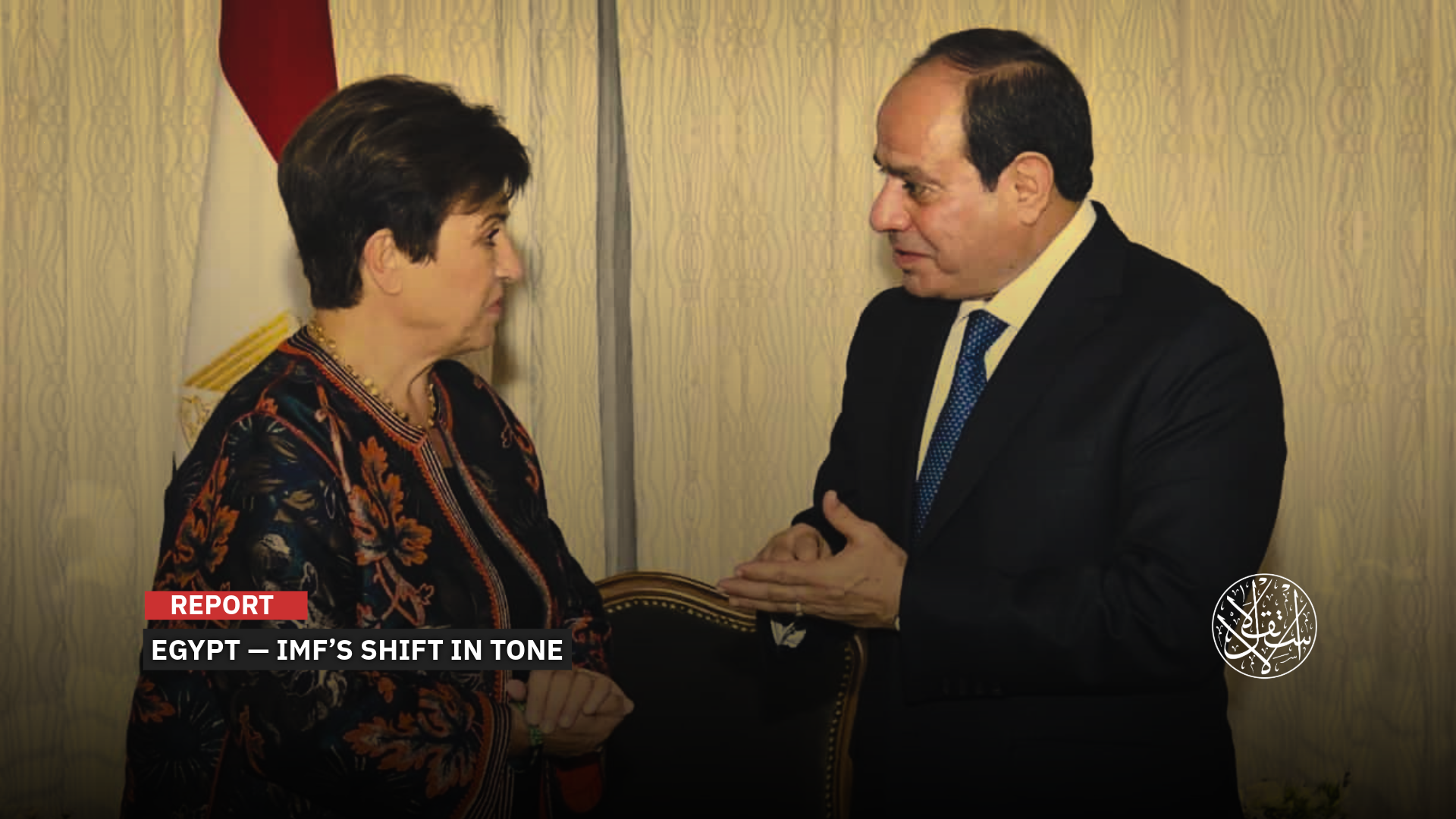
The four review reports issued by International Monetary Fund officials on Egypt’s economy, tied to the signing of an $8 billion loan agreement over 46 months, delivered blunt and often harsh criticism of the Egyptian regime for failing to meet key conditions.
The sharpest rebuke came in the fourth review, released on July 15, 2025, which struck a bleak and pessimistic tone on Egypt’s economic outlook, pointing to the persistence of military dominance and soaring debt levels projected to reach $202 billion by 2030.
By contrast, the IMF’s approval on December 23, 2025, of Egypt’s fifth and sixth reviews marked a striking shift in tone, with praise replacing the earlier criticism—raising questions about the reasons and implications behind the change.
Some economic assessments suggested that the Fund’s approval reflected recognition of “the success” of Egypt’s economic program, built on asset sales, additional borrowing, and price hikes in line with the IMF’s standard playbook.
Other assessments, however, pointed to different motivations, including the granting of an economic “good conduct certificate” aimed at shoring up Abdel Fattah el-Sisi’s regime, particularly at a moment of heightened regional complexity.
What Happened?
The fifth and sixth reviews followed 10 days of negotiations and were marked by far warmer praise for Egypt’s economic performance, with critical remarks few and largely muted.
The IMF statement said that Egypt’s economy is showing signs of strong growth, with economic activity rising to 4.4 percent in the 2024–2025 fiscal year and a marked improvement in the balance of payments, despite adverse external developments.
The IMF added that appropriately tight monetary policy has contributed to lowering inflation, while strong tax revenue performance has supported fiscal discipline. It also said that recent efforts to improve trade facilitation and streamline tax procedures had been welcomed by the private sector.
As for criticism of Egypt’s program, the IMF limited itself to calling for accelerating the pace of structural reforms, particularly those related to the role of the regime, the privatization program, and ensuring a level playing field.
The IMF said fiscal policy should continue to reduce debt while ensuring that social spending is prioritized to protect the most vulnerable.
In effect, this amounted to a certificate of economic good conduct—one likely to be formalized when the IMF’s executive board meets to approve the preliminary agreement.
It also clears the way for the release of roughly $3.8 billion from the $8 billion extended facility—$2.5 billion from the current tranche and $1.3 billion from a previous arrangement—easing financial pressure on the Egyptian regime, according to observers.
‘Well Done, Everyone!’
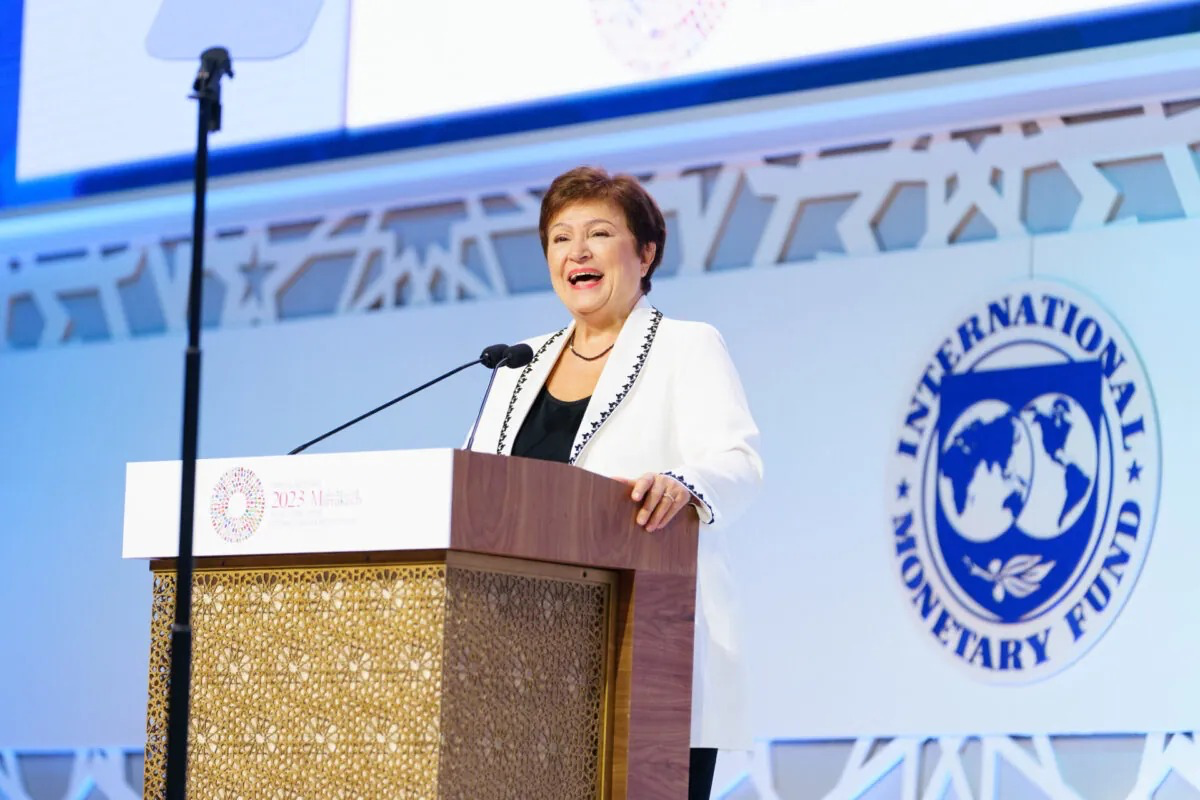
The closing press releases from the IMF mission, which was in Cairo from December 1 to 11, 2025, were notably upbeat, featuring positive remarks from Fund staff.
They spoke of productive discussions with the Egyptian authorities and said that stabilization efforts have delivered important gains, and the Egyptian economy is showing signs of strong growth.
“Stabilization efforts have delivered important gains, and the Egyptian economy is showing signs of robust growth,” IMF Mission Chief for Egypt Vladkova Hollar said in a statement.
She stressed the need to accelerate efforts to reduce the role of the state going forward—a clear call for further privatization and the sale of state-owned assets and projects.
This shift in tone, following four sharply critical reviews, was described by the financial outlet Enterprise on December 22, 2025, as amounting to a simple message: Well done, everyone.
The outlet interpreted it as a signal from the Fund that business leaders it met in Egypt agreed that the economy was moving in the right direction.
The IMF’s reservations or criticisms in its statement approving the fifth and sixth reviews were extremely softened regarding the regime’s privatization program and the sale of military-owned companies, with the Fund simply urging Egypt to avoid creating or expanding state-owned enterprise activities.
It noted that areas still requiring further work include the tax-to-GDP ratio, which remains modest by international standards at 12.2%.
While praising the decline in inflation, the Fund said it was not yet firmly entrenched, stressed that state-owned banks require strong and sustained governance practices, and called on the cabinet to accelerate the regime’s asset offering program.
What Comes Next?
Once the IMF’s executive board signs off on the reviews in January 2026, some $3.8 billion will be released into Egypt’s treasury—$2.5 billion from the fifth and sixth reviews under the Extended Fund Facility and a further $1.3 billion from the first review of the Resilience and Sustainability Facility.
That would bring Egypt’s total disbursements under the Extended Fund Facility so far to about $5.7 billion.
The significance of the agreement lies in the fact that the IMF provides a substantial share of its financing upfront, giving Egypt’s cabinet a liquidity buffer at the start of 2026.
The funds are expected to ease pressure on a regime facing heavy obligations simply to service its debt, with repayments and interest costs projected to rise further in 2026.
In November 2025, the Central Bank of Egypt revised its estimate for external debt service in 2026 to about $29.18 billion, up from a previous estimate of $27.87 billion. The figure includes both principal and interest payments, with interest costs alone revised upward by roughly $250 million.
Of that total, interest on external debt is estimated at around $5.4–$5.5 billion in 2026, separate from repayments of the debt’s principal, according to central bank figures.
A finance ministry report had already shown that interest payments alone exceeded budget revenues by about 50.4 billion pounds in the first quarter of the 2025–2026 fiscal year, underscoring the scale of the burden even before 2026 begins.
Rising interest costs are widely understood to mean greater strain on the regime budget, fewer resources for health, education, and infrastructure, and a deeper reliance on new borrowing to pay existing interest—hence the regime’s upbeat rhetoric about 2026.
Ziad Bahaa-Eldin, Egypt’s former deputy prime minister, said the importance of the fifth and sixth reviews lies in their ability to unlock fresh financing, assess implemented policies, map future risks, and provide markets and international institutions with what he described as “a credible certificate of confidence.”
He described the IMF mission’s statement on Egypt’s economy as positive and better than expected in its assessment of macroeconomic performance, particularly in terms of higher growth, lower inflation, exchange-rate stability, and rising revenues from tourism, remittances, and exports.
On the regime’s withdrawal from economic activity, Bahaa-Eldin noted that the Fund placed less weight on the issue this time than in previous reviews, focusing instead on the need to create a competitive environment between the state and the private sector.
Still, he cautioned that improvements in headline indicators do not reflect people’s living conditions, their struggle with rising prices, their anxiety over the public debt burden future generations will inherit, investor complaints about state crowding-out, or the daily hardships that economic metrics fail to capture.
The harsh policies imposed by the government, he argued, have not been matched by improvements in living standards. Instead, social gaps have widened and pressures on middle- and low-income groups have intensified—warning that without genuine structural reform, the country may have paid a high price for little return.
An analysis by the Egyptian Institute for Studies suggests that the IMF’s approval of the fifth and sixth reviews of Egypt’s financing program came despite clear slippage in meeting several core conditions.
Chief among them was a genuine withdrawal of the regime—particularly the military—from economic activity, exposing a widening gap between the officially declared reform narrative and the political calculations shaping the decisions of international lenders.
The analysis argues that the “required structural reforms” have not been achieved in the sense the Fund itself outlined in earlier documents, whether in terms of leveling the playing field, expanding the role of the private sector, or reducing market distortions caused by the dominance of the regime and sovereign bodies across large swaths of the economy.
Egypt still has two more hurdles to clear: a seventh review in March 2026, which could unlock another $1.25 billion, followed by the eighth and final review in November 2026, bringing an additional $1.25 billion.
Is the Goal to Shore up the Regime?
In many cases—Lebanon, Argentina, and Greece among them—the IMF steps in to bolster financial stability in countries facing acute economic crises. As a result, economists often see its role as indirectly reinforcing political stability as well, by easing economic pressure on governments and helping them avert widespread social unrest.
International media reports and analyses have long argued that IMF-linked reforms can “confer political legitimacy on governments,” signaling confidence by global institutions in the policies of those in power.
A research paper published by Cornell University in New York in May 2025 noted that money—including international financing—can shape a regime’s political legitimacy by reinforcing its stability, even when this is not an explicit condition set by creditors.
When Georgia sought an IMF loan, economist Vasil Revishvili said the government wanted a program with the Fund for political legitimacy, not to implement reforms, arguing that the program’s core value lay in the IMF’s image as a neutral arbiter that confers credibility at home and abroad, according to Business Media on March 13, 2025.
This does not mean the Fund formally treats country programs as political tools to boost regime legitimacy but rather as technical economic instruments aimed at strengthening the broader economy. Still, Western states that dominate the IMF may play a role in shaping its decisions.
A Bloomberg analysis on December 23, 2025, described a preliminary IMF loan agreement as a “confidence signal” for Egypt’s economy in international markets—one that could attract investors and reduce financial risk while politically strengthening the regime’s position at home and abroad by easing economic pressure, without directly underwriting political stability.
An analysis by the Egyptian Institute for Studies argues that the IMF’s approval of the fifth and sixth reviews ultimately reflects not reform success, but an implicit international consensus to shore up the Sisi regime during an exceptionally sensitive regional moment.
The unusually positive tone of the approval, it says, suggests that “commitment to reform” is no longer the sole decisive factor in judging progress and that the decision can be read as evidence of a shift in donor priorities, with political stability taking precedence over deep economic reform.
Financial support, in this reading, is aimed not only at improving macroeconomic indicators or closing funding gaps, but at preventing economic shocks that could spiral into broad social or political unrest in a country seen as central to regional equations.
Egypt’s regime is viewed as a necessary actor in managing security and political balances—from Gaza and border issues to indirect communication channels between rival parties—making economic stability a priority for international powers with influence over global financial institutions.
All of this suggests that the program has, in practice, shifted from a lever for reform into a political-economic support mechanism designed to manage risk rather than address its root causes.
The head of the Egyptian regime, Abdel Fattah el-Sisi, has himself called on the IMF to review its Egypt program to ease the burden on citizens, urging on October 20, 2024, a reassessment if reforms imposed pressures “people cannot bear.”
In an unusually direct message to international financial institutions—the IMF and the World Bank—he complained that the current program was being implemented under “extremely difficult regional and international conditions with severe negative effects worldwide.”
Earlier, on July 18, 2022, Sisi had asked European states to intervene with the IMF to soften its conditions, implicitly underscoring the West’s influence within the Fund’s executive board.
Sisi’s Patrons
A study by the Carnegie Endowment, published on November 19, 2020, and authored by Majed Mandour, argued that the Sisi regime has pursued a consistent strategy of pressure and intimidation toward the West, warning that economic harm to Egypt—or the collapse of the regime—would endanger Western economic interests.
The study linked this approach to Sisi’s broader strategy of plunging Egypt deeper into debt, effectively binding major creditor states to his rule and pushing them to defend the regime’s survival in order to secure repayment.
“President Sisi’s regime follows a consistent policy of entrenching itself in the global financial system to align its own stability with the economic interests of international organizations, Western states, and private companies,” according to the study.
Egypt, it added, relies heavily on debt to create forms of financial dependency between the regime and international actors.
Bloomberg reported on March 16, 2024, citing Ebtesam al-Ketbi, president of the Emirates Policy Center in Abu Dhabi, that the UAE’s intervention to shore up Sisi’s rule through the $35 billion Ras el-Hekma deal was driven by a desire to “ensure stability” and “avoid a return of Islamist groups such as the Muslim Brotherhood that thrive in times of upheaval.”
Sources
- IMF reaches staff-level agreement on Egypt's fifth, sixth loan programme reviews
- Egypt Strikes Initial Deal With IMF on Loan-Program Reviews
- IMF Mission Approves Egypt’s Fifth and Sixth Reviews, Softens Criticism of Government [Arabic]
- IMF reaches staff-level agreement on Egypt's fifth, sixth loan programme reviews