With Debt Soaring to Historic Highs, What’s Next for Bahrain’s Economy?
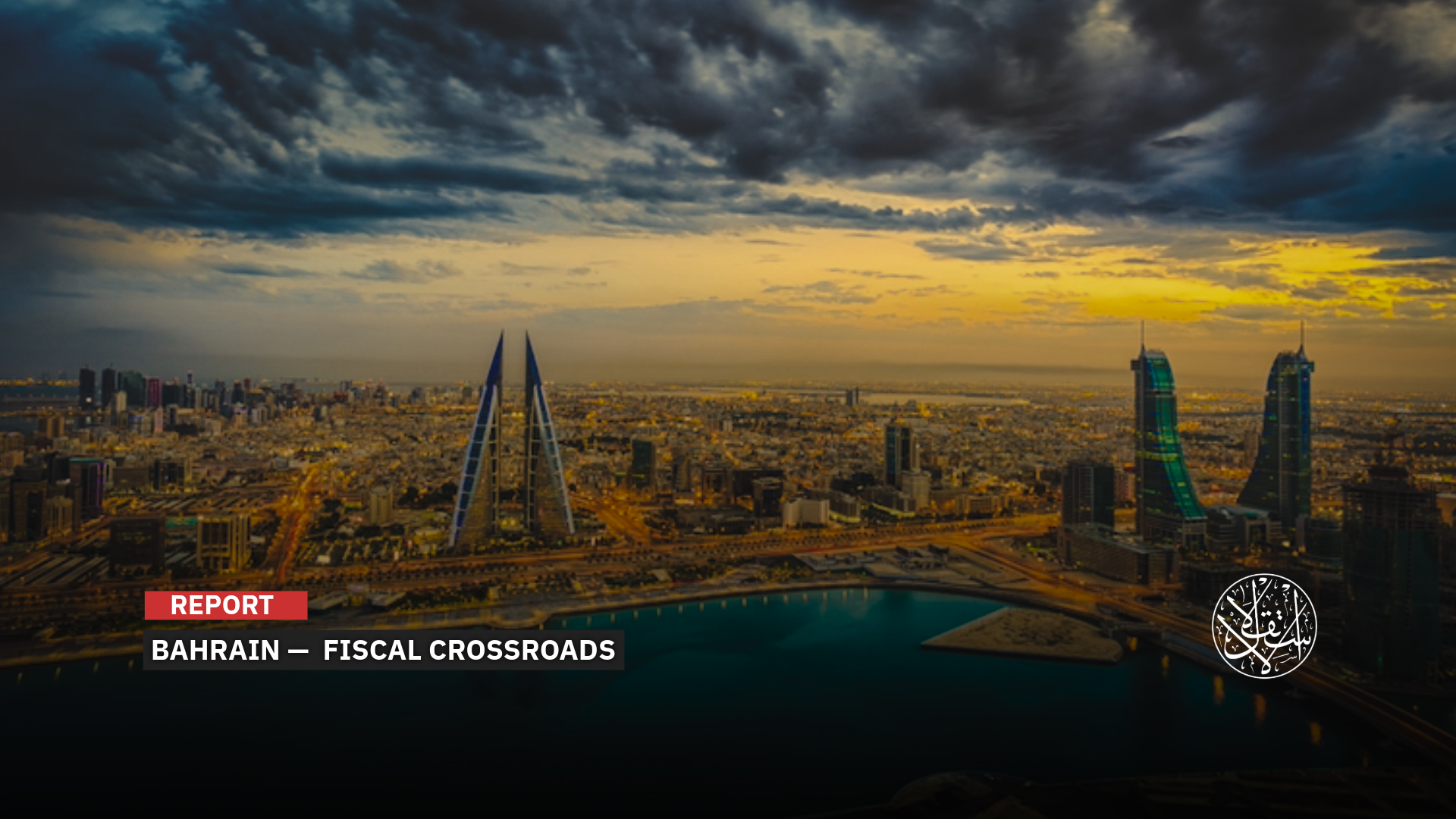
As 2026 Begins, Bahrain Faces a Difficult Global Economic Environment with Limited Flexibility.
In a move that underscores the tightening of fiscal space, Bahrain announced a package of economic reforms on December 29, 2025, including adjustments to corporate income tax and cuts in public spending, in an effort to rein in rising public debt and the budget deficit.
The announcement, reported by Bloomberg, comes as International Monetary Fund estimates suggest that Manama would need oil prices near $140 a barrel to achieve fiscal balance, a level far removed from current market realities, with prices hovering in the $60s.
The government confirmed that the measures include a new law on local corporate taxation, a 20% reduction in government administrative spending, higher fuel and natural gas prices for the business sector, and increased transfers of profits from state-owned companies to the public treasury.
As 2026 begins, the question is no longer whether belt-tightening is inevitable, but whether this package will be sufficient to slow a trajectory of public debt approaching unprecedented levels for the Gulf, or whether it is merely a temporary stopgap in an economic model that appears to be reaching its limits.
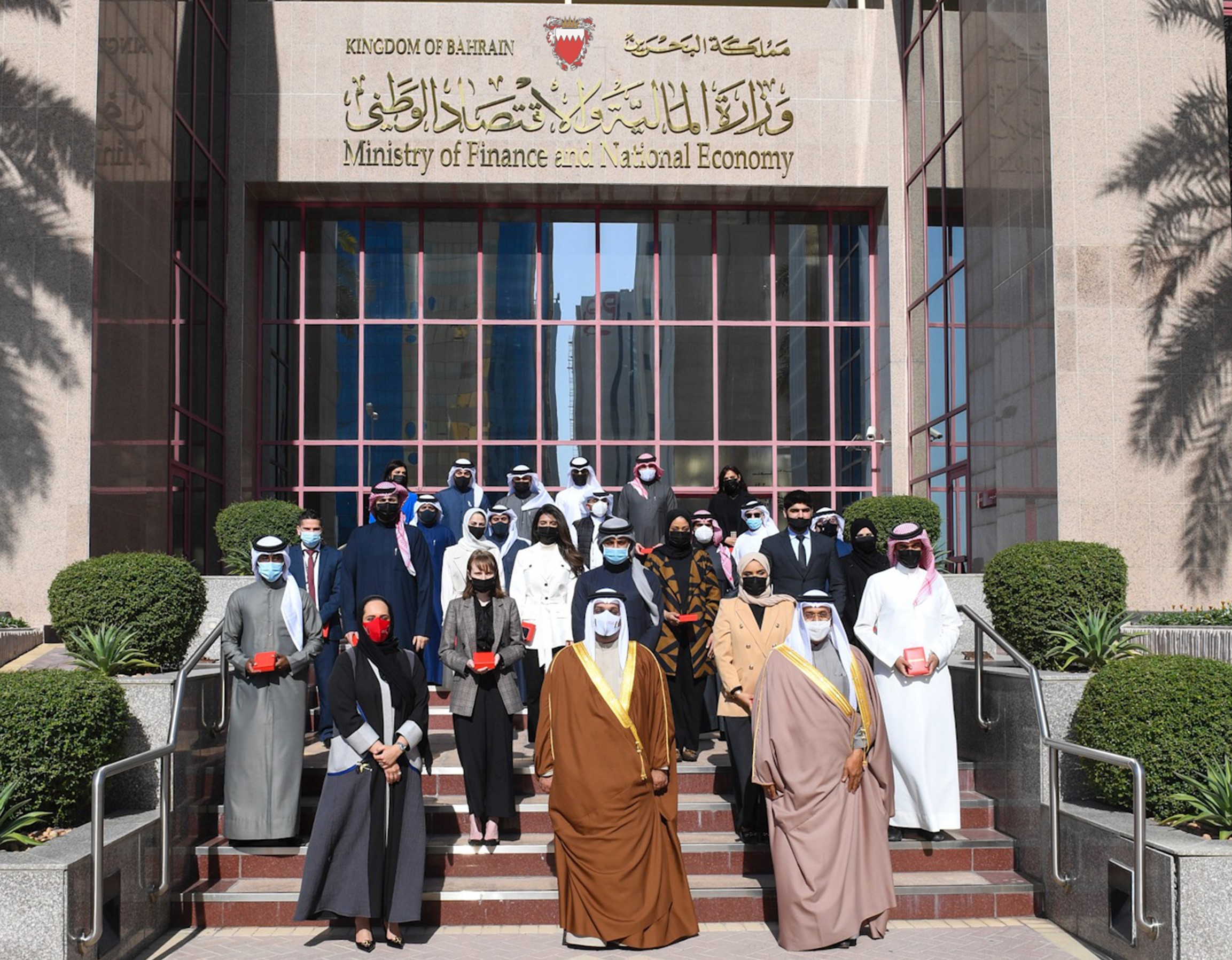
The Mapping of the Crisis
The question now is: how did Bahrain reach a level of debt approaching 140% of its GDP?
The answer, according to Bloomberg, cannot be reduced to December’s decisions alone, but requires a look at the path that preceded them.
Bahrain entered the current decade carrying a dual structural vulnerability: a government revenue base heavily dependent on oil, and a budget weighed down by fixed commitments, including social spending, public services, salaries, and subsidies, all within a relatively small economy with narrower fiscal space compared to its larger and wealthier neighbors.
This combination of limited size and fragile revenues means that any oil or financial shock quickly magnifies its effects, as alternatives are limited and the cost of delay rises year after year.
In this context, the International Monetary Fund adopted a more explicit tone on November 24, 2025, when its Article IV mission reported that the fiscal situation continued to deteriorate from 2024 through the end of 2025, with the overall deficit rising to around 11% of GDP, and total government debt climbing to more than 133% of GDP.
The fund stressed that additional fiscal measures and structural reforms are now required to place debt on a sustainable downward path.
In the language of international institutions, this phrasing is not a mere technical recommendation, but a clear warning that continued debt growth could transform it from a manageable problem into a market-driven crisis, imposing conditions on public policy through higher borrowing costs, tighter financing terms, and declining investor appetite.
This trajectory is fueled by at least two main factors. First, the weak growth of non-oil sectors relative to the scale of financial obligations leaves taxes, fees, and non-oil revenues insufficient to absorb shocks or offset fluctuations in oil income.
Second, the rising cost of debt service amid tightening fiscal conditions and higher global interest rates, a risk highlighted by Reuters citing Standard & Poor’s on April 23, 2025.
The agency noted that market volatility in Bahrain and weak financing conditions could further increase the burden of interest payments and keep deficits elevated, stressing that measures to enhance non-oil revenues, including the value-added tax introduced in 2019 and raised to 10% in 2022, have been offset by rising social spending and higher debt service costs.
An additional blow came from oil production itself; Standard & Poor’s reported that maintenance work at the Abu Safah field complicated the fiscal picture, as any disruption or delay in maintenance schedules quickly translates into revenue shortfalls and additional pressures on the deficit.
With the safety margin shrinking, the figure of 140% of GDP is no longer just a shocking headline, but the cumulative result of years of recurring deficits financed by borrowing, within a model that becomes increasingly fragile the longer the transitional phase toward a genuinely diversified and sustainable revenue base continues.

Imposing Taxes
According to a statement by the Bahraini Cabinet on December 29, 2025, a draft law was referred to the legislature proposing a 10% tax on the profits of local companies that exceed a specified threshold.
Bahrain News Agency provided more precise details, noting that the tax targets companies with annual revenues exceeding one million Bahraini dinars, with a 10% rate applied to profits above 200,000 dinars.
Yet the significance of this step lies less in the rate or the threshold itself than in the shift it represents in the philosophy of fiscal policy, in a country that has historically built part of its investment appeal on a low-tax environment compared with its regional neighbors.
Imposing a tax on corporate profits, even if limited to a segment of large companies, signals that Manama is seeking to broaden its revenue base away from oil, a move classified by international institutions as part of structural revenue reforms.
In parallel, the plan to reduce government administrative spending by 20% has emerged as an indication of an intent to curb unproductive current expenditure.
However, despite its accounting significance, this measure raises questions about implementation: will the cuts come solely through rationalizing procurement and operating expenses, or through a broader restructuring of the administrative apparatus? The difference is material; the former could yield quick savings, while the latter would have a slower impact but be more sustainable if based on improved public sector efficiency.
Meanwhile, the increases in fuel prices and natural gas tariffs for commercial and industrial activities carry a dual purpose: reducing the implicit subsidy burden on the one hand, and enhancing economic efficiency while generating additional direct or indirect revenue through pricing closer to market levels on the other.
Reports on the same day also discussed the adoption of a monthly fuel pricing mechanism, higher natural gas tariffs, and potential additional measures, including increases in electricity and water fees and higher charges for foreign labor.
At the same time, the government is betting on increased transfers of profits from state-owned companies to the public treasury, effectively redirecting part of the public sector surplus to the budget to reduce the deficit in the short term.
The balance here is extremely delicate: every additional dinar of revenue, or every cut in expenditure, theoretically helps reduce the annual deficit, but the net effect will remain contingent on the scale of these measures relative to the size of the deficit and the cost of debt service, and on the Bahraini economy’s ability to absorb the shock without slowing growth or undermining investor confidence.

Cut Back
In official discourse, the announced package appears as a measure to manage public finances while maintaining stability, yet the economic reality suggests otherwise: any increase in fuel, gas, electricity, and water prices quickly ripples through the entire economy, from transport and logistics costs to factory and store bills, ultimately reaching the consumer basket.
When operational costs rise for the private sector, companies face a stark choice: pass the increase on to prices, or absorb it by reducing margins, investment, or possibly employment. In either case, the social and economic effects are felt rapidly.
This raises pressing questions about social equity: will the increases be structured to protect lower-income groups? Can public policy prevent austerity measures from translating into long-term pressure on purchasing power, particularly in an economy where a significant share of activity relies on services, trade, finance, and tourism?
The IMF mission in November 2025 noted that real GDP growth reached 2.6% in 2024, despite tight fiscal conditions and global and regional uncertainty, but at the same time, linked fiscal sustainability to the need for further measures and deeper structural reforms.
This paradox captures the essence of the challenge: Bahrain requires fiscal discipline to reassure markets, yet it also needs non-oil growth to shield society from the cost of adjustment.
If fiscal tightening slows growth, output could shrink and revenues fall, eroding some of the gains from deficit reduction.
Thus, the package should be evaluated not only for its fiscal impact, but also for how its costs are distributed, and whether it opens the door to higher investment and productivity, rather than closing it.
In this context, the figure highlighted by Bloomberg remains most telling: an estimate that Bahrain would need oil prices near $140 a barrel to achieve budget balance.
This number illustrates, plainly, that the current revenue and spending structure assumes an oil world that does not exist on the near horizon: extremely high prices, stable production, and low sensitivity to financing costs, conditions rarely met simultaneously.
The weight of this conclusion grows when compared with market and institutional projections; the wide gap between the breakeven price and likely market prices means the deficit will persist even in a relatively favorable oil scenario, and any negative shock in prices or production could quickly reopen the fiscal wound.
This makes the question of sustainability central: is the existing fiscal model, based on expected oil revenue with gradual adjustments to fees and taxes, still viable? Or is a deeper rethinking required of the state’s relationship with current spending and non-oil revenues, alongside accelerated growth in sectors capable of generating stable returns?
The language of rating agencies in 2025 reflects a shift from warning to decisive action. On November 21, 2025, Standard & Poor’s Global Ratings lowered Bahrain’s long-term sovereign rating to B from B+, with a stable outlook, a move linked to rising debt and fiscal challenges. Bloomberg described the downgrade as the first since 2017, driven by debt pressures and deficit concerns.
The IMF was even more explicit, stating on November 24, 2025, that the fiscal trajectory requires additional measures and structural reforms to ensure sustainability.
This implies that the December 29, 2025, package may be an important step, but not the complete plan in the eyes of international institutions, which call for a multi-year program to ensure that improvements are neither temporary nor reversible under social or political pressure.
Ultimately, markets do not view any single measure in isolation; what matters to investors is the overall direction: will the 2025 measures create a sustained path that materially alters the debt curve, or will they remain a temporary response whose benefits erode over time?
The Ghost of 2018
The state of Bahrain’s economy has brought back into focus a question that has been deferred for years: will bailout scenarios return, and what are the limits of potential Gulf support? This question is expected to assert itself strongly as 2026 begins.
Memory turns to 2018, a pivotal moment in Bahrain’s financial history, when Manama required a support package from its wealthier neighbors to contain pressures, restore confidence, and prevent the crisis from sliding into a more dangerous trajectory.
But invoking the specter of 2018 in the current debate is not an exercise in nostalgia; it is a political and economic question left open: could a broad external support scenario repeat itself if debt continues to rise?
Today, according to a report by the opposition website Bahrain Mirror published on December 31, 2025, any potential support package will not be a replica of the past for two main reasons.
The first is that the global financing environment has become tighter, meaning any support is likely to be conditional on a clearly timed and financially structured reform program, rather than merely an infusion of liquidity to relieve immediate pressures.
The second is that the Gulf states themselves are undergoing deep shifts in investment and spending priorities, with massive domestic projects and oil balances that are less secure than during previous boom periods.
In this context, the December 29, 2025, package can be read as sending a dual message. One message to markets and rating agencies signals that Manama has begun to expand its revenue base, cut spending, and locally reprices energy.
The second message to Gulf partners indicates a desire to avoid reaching a point that would require urgent intervention or emergency rescue.
Economic researcher and academic Dr. Hussein Atoui observes that Bahrain is entering 2026 in a challenging global economic environment, marked by slowing growth, volatile energy markets, and heightened sensitivity in debt markets to interest rate and sovereign rating risks.
Dr. Atoui explained that these conditions limit Manama’s ability to rely on any significant rise in oil prices to close the deficit, particularly given the wide gap between current prices and the breakeven level needed for budget balance.
He added, in remarks to Al-Estiklal, that the fiscal maneuvering space still exists, but it is conditional on effective management of the financial transition. He sees the recent reform package as capable of generating gains by expanding non-oil revenues through corporate taxes and fees, genuinely reducing current expenditure, improving investor confidence, and lowering borrowing costs.
However, Atoui warned that these gains alone may not be sufficient to reverse the trajectory of public debt, noting that international institutions, led by the IMF, expect Bahrain’s debt to continue rising unless the measures are complemented by multi-year structural reforms that put debt on a clear downward path.
He concludes that, through the end of 2026, Bahrain stands at a crossroads: either transform the current austerity package into a long-term reform program that supports non-oil growth and mitigates risks, or remain in a cycle of partial solutions that could reproduce pressures similar to the 2018 crisis, but within a debt market that is far more sensitive and costly.
Sources
- Bahrain Unveils Package of Reforms to Fight Fiscal Woes
- In a Fresh Squeeze on Citizens, Bahraini Government Approves New Taxes, Fees, and Cuts to Essential Subsidies [Arabic]
- IMF Staff Completes 2025 Article IV Mission to The Kingdom of Bahrain
- With Debt Soaring to 133%, Bahrain Looks to New Gulf Aid Package to Rescue Economy [Arabic]
- Bahrain Rating Lowered To 'B' On Challenging Fiscal And Debt Dynamics; Outlook Stable
- S&P downgrades Bahrain's outlook to 'negative' on weak financing conditions