The New Syrian State Faces Remnants of the Assad Regime: Decisive Battle or Slow Burn?
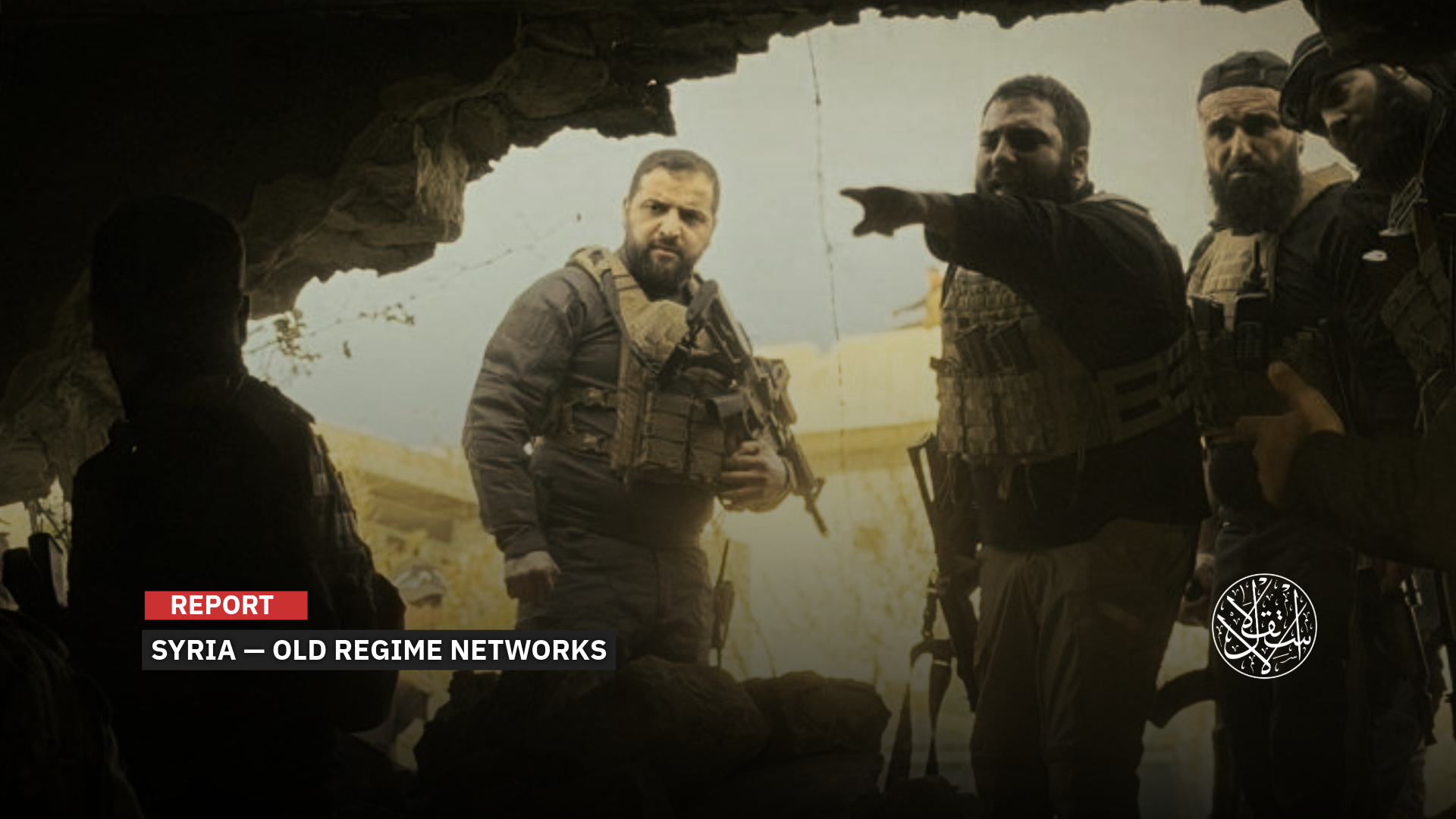
“The remnants of the Assad networks still have sources of funding.”
The new Syrian state continues to track and monitor sabotage operations carried out by remnants of Bashar al-Assad’s ousted regime, who have made the Syrian coast a secret hub for operations aimed at destabilizing security and unsettling the domestic scene during a delicate phase of state reconstruction.
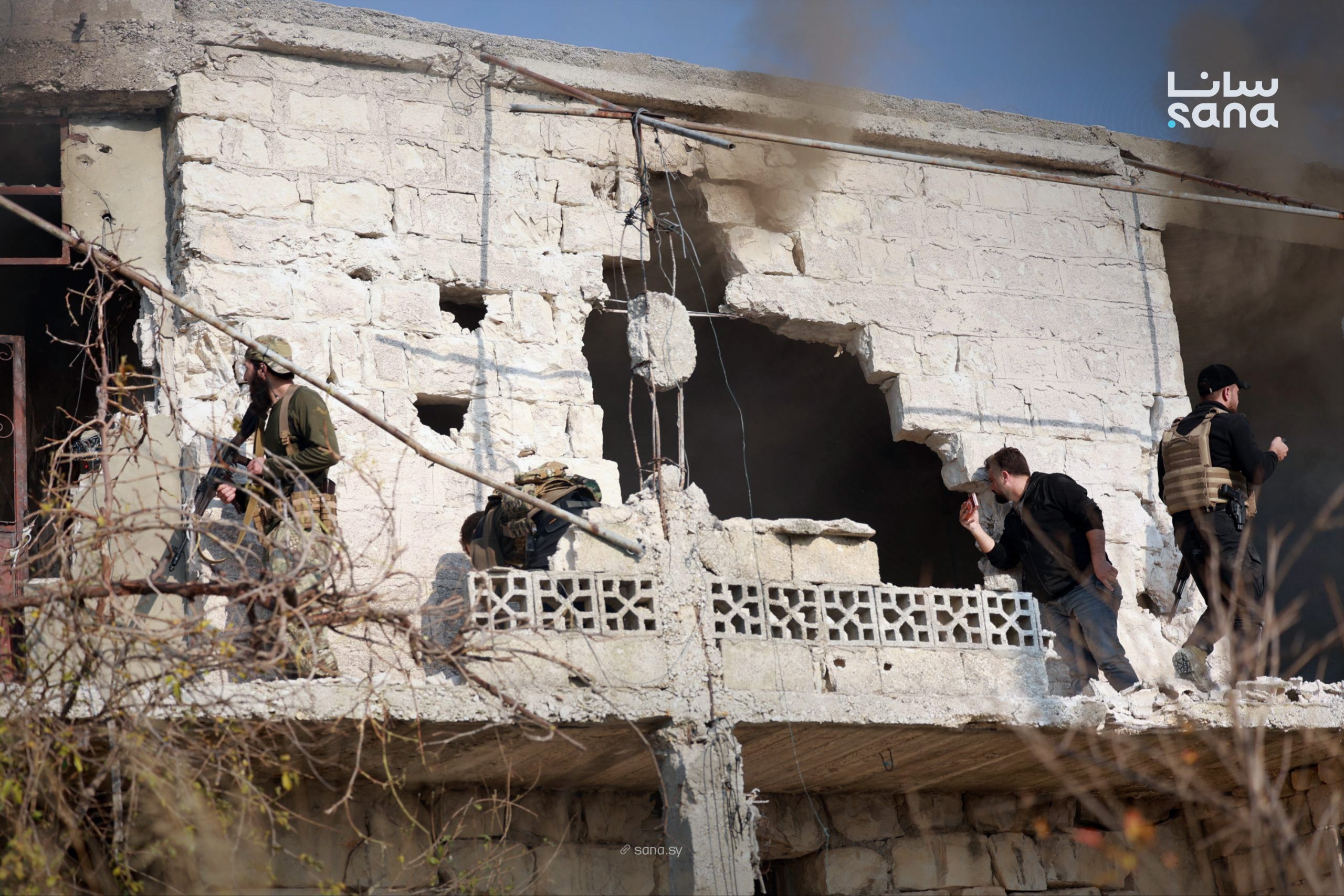
In a notable security development highlighting the challenges facing the new authorities, internal security forces in Latakia province, working alongside the Counter-Terrorism Branch and the Syrian army, conducted a targeted operation against an armed cell linked to the so-called “Saraya al-Jawad” and former officer Suhayl al-Hasan.
The operation, carried out on December 24, 2025, in the village of Baabda near Jableh, delivered a direct blow to one of the networks attempting to undermine security in the coastal region. It forms part of ongoing efforts by Syrian authorities to pursue remnants of armed groups connected to the previous regime and prevent the resurgence of chaos or scenarios that could threaten the country’s fragile recovery and stability.
Sabotage Networks
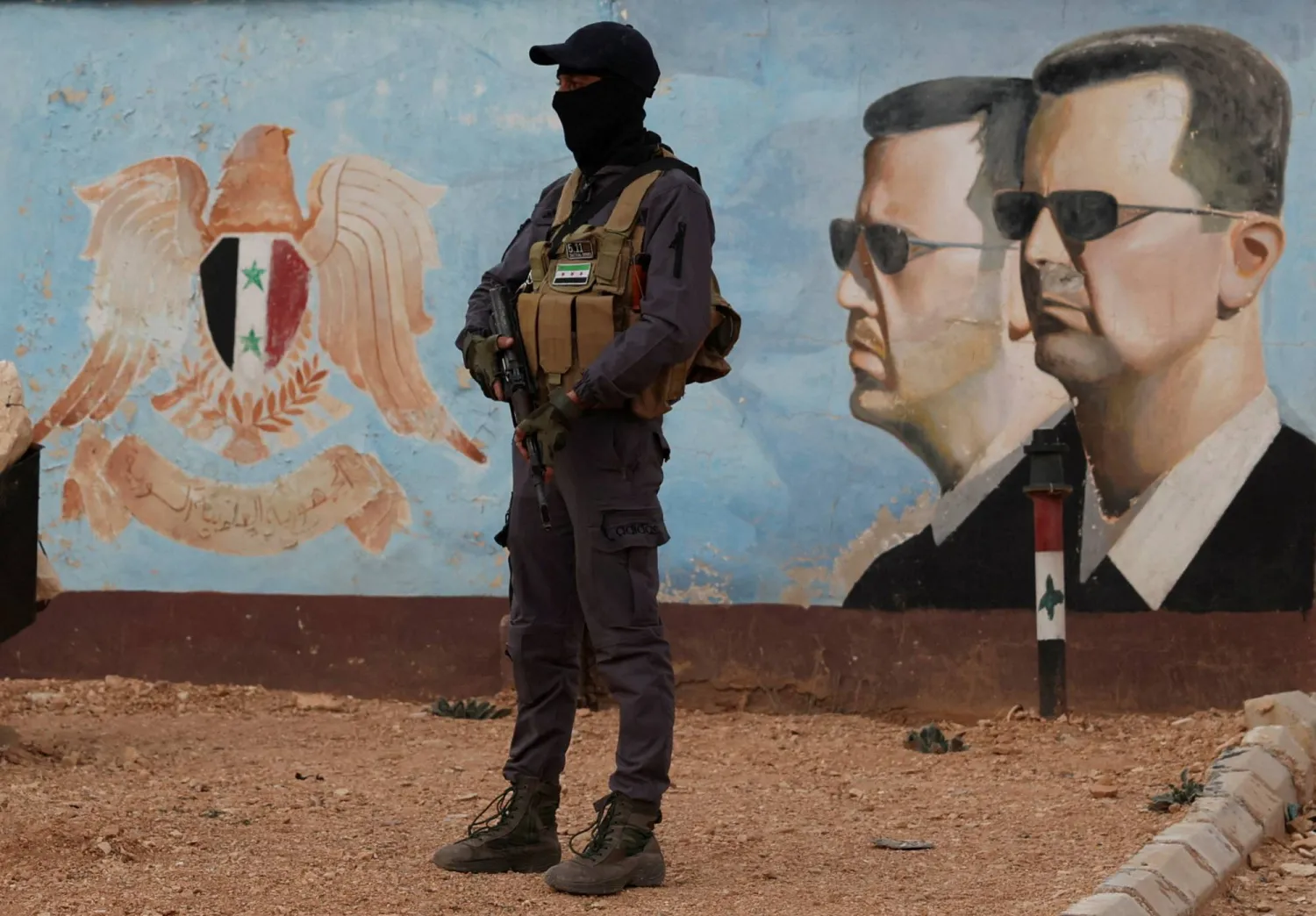
The new Syrian state continues to confront sabotage networks linked to remnants of Bashar al-Assad’s ousted regime, who have used the Syrian coast as a secret base to plan attacks aimed at destabilizing the country and disrupting a fragile phase of reconstruction.
According to Latakia’s internal security chief, Brigadier General Abdelaziz Hilal al-Ahmad, the targeted cell was involved in assassinations, bombings, and direct attacks on security forces, with plans for coordinated strikes over the New Year period. After surrounding the rural compound in Baabda near Jableh on December 24, 2025, security forces clashed with the suspects, killing three and capturing one, while four officers sustained minor injuries. Weapons and explosives were seized, and the detained suspect was handed over for investigation, with authorities vowing to pursue the remaining network.
State media reported the operation killed three loyalists of the old regime, including a senior figure whose identity was not disclosed, as Damascus moves to dismantle networks attempting to revive the collapsed Assad apparatus. Security analysts noted the involvement of former general Suhayl al-Hasan highlights persistent threats along the Syrian coast, signaling that a command cell connected to the old regime remains active and intent on disruption.
Al-Hasan, nicknamed “the Tiger,” previously led the 25th Special Mission Forces Division and was considered Russia’s key military ally in Syria under Assad. Remnants of the regime had attempted earlier in March 2025 to isolate the coast and threaten the political transition, launching attacks on patrols in Tartus and Latakia. The interior and defense ministries neutralized the rebellion within 24 hours, killing and arresting dozens, and restoring security across both provinces.
Investigations documented 1,426 civilian and military deaths and 20 missing persons during that period. Recent operations follow intelligence reports warning of active efforts to spark “two uprisings” against the new government, with exiled senior Assad figures allegedly funding and recruiting fighters, particularly along the coast, through loyalist networks.
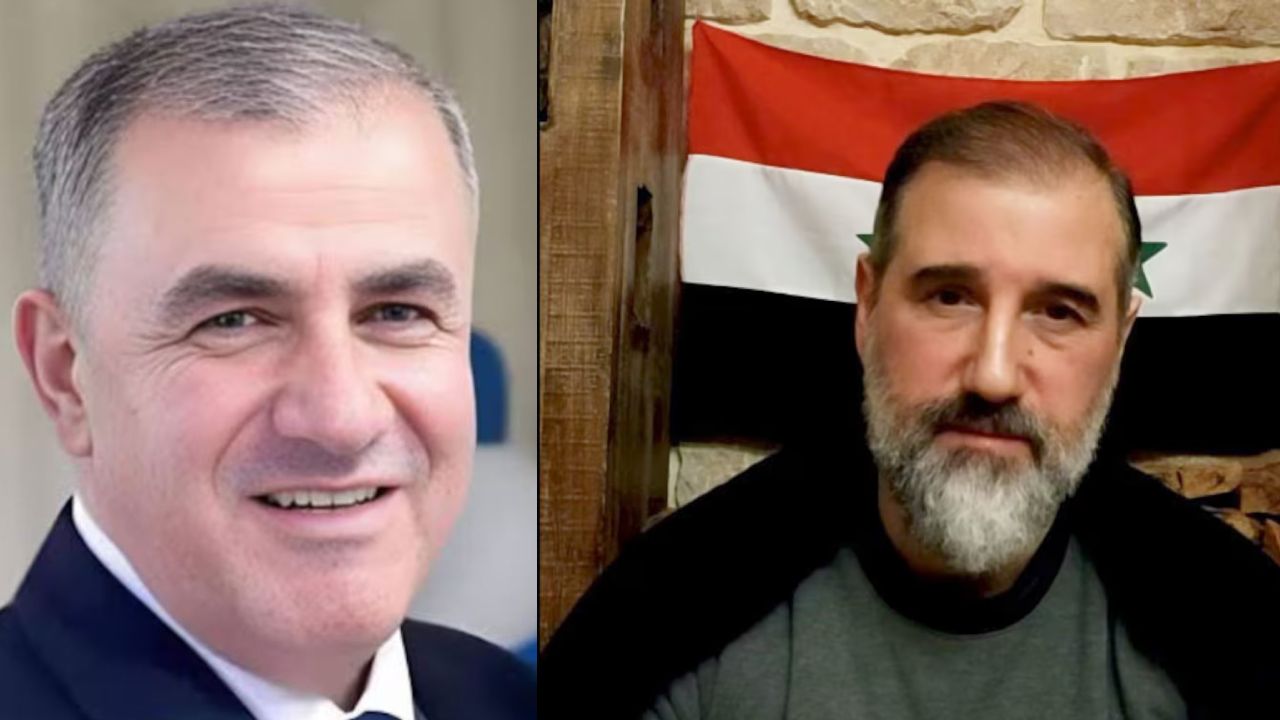
Financial backing reportedly comes from Rami Makhlouf, Assad’s cousin, who has provided cash and aid to maintain loyalties and secure a popular base for potential operations, according to The New York Times on December 24, 2025. Leaked communications suggest coordination between former military and security officials to regroup loyalists, secure money and weapons, and present themselves internationally as protectors of minorities to gain political cover.
Reuters reported on December 5, 2025, that Bashar Assad, in exile in Moscow since December 8, 2024, has largely accepted life in exile, while other close associates, including his brother Maher, have not relinquished ambitions of power. Assad loyalists Rami Makhlouf and General Kamal Hassan are reportedly attempting to form militias in Syria and Lebanon, drawing from the Alawite community, with more than 50,000 fighters under their influence. Maher al-Assad retains loyalty from thousands of former soldiers but has not yet directly funded or commanded them.
Makhlouf and Hassan are also said to be vying to control a network of 14 underground command rooms and weapons caches along the coast built under the former regime. Photos reviewed by Reuters confirm their existence. Hassan continues to coordinate by phone and voice message, plotting strategies to reclaim control over the Alawite heartland, while Makhlouf portrays himself as a messianic figure destined to return to power, invoking religious rhetoric and apocalyptic Shiite prophecies.
Despite their ambitions, the two conspirators are at odds, with diminishing chances of support from Russia, previously Assad’s main backer, and widespread distrust of both figures among Syria’s Alawites. Meanwhile, the new Syrian government works to foil their plans and prevent a return to chaos.
External Agendas
Documents show that funds have been funnelled through two senior Syrian officers who met with Rami Makhlouf in Moscow: Suhayl al-Hassan and Qahtan Khalil, the former head of Syrian Air Intelligence under Bashar al-Assad, both holding the rank of general.
According to documents seen by Reuters, loyalist forces of the ousted regime had drawn up preliminary plans to form a paramilitary force of 5,780 fighters, to be equipped via secret command centers. These centers included large storage facilities stocked with weapons, solar power systems, internet access, GPS devices, and advanced radio communications equipment.
Nine associates and relatives told Reuters that Makhlouf currently resides on a private floor of Moscow’s Radisson Hotel under tight security, while Kamal Hassan lives in a three-story villa in a suburb of the Russian capital, maintaining close ties with Russian officials.
In mid‑2025, a charitable organization called the “Western Syria Development Organization” was announced, claiming that one of its initiatives was a project to house Alawites in Lebanon, with funding provided by “the Syrian citizen, Major General Kamal Hassan.”
Three officers linked to Hassan, along with a Lebanese manager at the organization, described it to Reuters as a humanitarian cover designed primarily to extend Hassan’s social and political influence within Alawite communities.
Experts view this escalation as a stark warning of external efforts to re-establish Assad-era influence on the Syrian coast and sow chaos before the political stabilization phase concludes.
“The old Assad networks have redistributed themselves along the Syrian coast since Assad’s fall, refusing to accept the political changes on the ground,” Colonel Ahmad Hamadeh, a military and strategic analyst, told Al-Estiklal.
“The continued planning to target the new Syrian state, led by fugitive officers and wanted operatives, would not be possible without ongoing financial support and external ties issuing instructions to control certain areas, disrupt security, or provoke the state, particularly via the new militia led by Suhayl al-Hassan, known as Saraya al-Jawad,” he added.
Hamadeh highlighted a “core triangle” managing these networks: Kamal Hassan, former head of military intelligence under Assad; Suhayl al-Hassan, ex-commander of the 25th Division; and Rami Makhlouf, Assad’s cousin and businessman.
All three, he noted, are connected to foreign states and agendas seeking to undermine the new Syrian state. The active networks along the coast are funded and supported externally, prompting field operations, while the newly established Counter-Terrorism Branch positions itself to preempt any sabotage, whether targeting police, carrying out bombings, or planting explosives.
From an intelligence perspective, Hamadeh stressed that these networks are prepared to engage in armed clashes with Syrian security forces, demonstrating their complete refusal to recognize state institutions and their attempt to avoid justice for serious crimes committed against the Syrian people.
Containing the Alawites
The destabilizing moves by remnants of Bashar al-Assad’s regime along the Syrian coast have coincided with efforts by Sheikh Ghazal Ghazal, head of the Supreme Alawite Islamic Council in Syria and the diaspora, to mobilize the Alawite community against the new Syrian leadership.
The pattern became clear following a security operation by the Interior Ministry against regime loyalists in the village of Abda, near Jableh. Ghazal issued public calls demanding the “immediate withdrawal” of Syrian security forces from the area, without condemning the armed cells’ attacks or acknowledging the threats they posed to public safety and the risk of inflaming sectarian tensions.
In a filmed statement, Ghazal, who lives abroad, said, “Any attack on the Alawite community will not go unanswered but will be met with a flood and bare chests.” “Federalism is a solution for countries that have suffered bloody civil conflicts,” he added.
Earlier, Ghazal had called for a general strike, asking Alawites to stay home for five days starting 8 December 2025, and criticized the new Syrian government, claiming it was forcing citizens to celebrate the fall of Bashar al-Assad’s regime. Yet these calls drew little response in Alawite-majority provinces such as Hama, Homs, Tartus, and Latakia, highlighting the limited influence of his rhetoric on the ground.
Observers note that the geographical spread of the Alawite community across dispersed villages and provinces makes separatist or partition plans unrealistic. Proposals for a separate region encompassing the Syrian coast along with Homs, Hama, and surrounding rural areas clash with the region’s complex demographics, where Alawites, Sunnis, Christians, Ismailis, and Murshidis live intermingled, making a clean sectarian boundary impossible.
Within the Alawite community, some figures have actively sought to shield tens of thousands of Syrians from being drawn into Assad loyalist schemes, recognizing the potential for violent reprisals or collective punishment that could threaten their security and future.
Since Assad’s fall, the new Syrian government has relied on Khaled al-Ahmad, an Alawite former loyalist and childhood friend of President Ahmed al-Sharaa, to engage the community. Once a commander of paramilitary forces under Assad, al-Ahmad fell out of favor and left Syria, spending time in Cyprus.
Al-Ahmad’s current mission is to persuade Alawite civilians and former soldiers that their political, social, and security interests lie with the new Syria, not with revenge or sectarian loyalties.
Speaking to Reuters, al-Ahmad, who lives between a luxury apartment overlooking the sea in Beirut and a fortified villa in Damascus, said, “The work of healing—of uprooting sectarian hatred and honoring the dead—remains the only path toward a Syria that can live with itself again.”
Sources
- Security Operation Targets a Group Linked to the Criminal Suheyl al-Hasan in the Jableh Countryside of Latakia [Arabic]
- Assad’s Enforcers Brutalized Syria. Now They’re Living Large, Lying Low and Evading Justice
- Ghazal Calls for Withdrawal From Jableh, Warning the Government Will Bear Responsibility for the Fighting [Arabic]
- From Exile in Russia, a Former Syrian Intelligence Chief and Assad’s Cousin Plot Two Uprisings [Arabic]
- Sheikh Ghazal Ghazal: Symbolic meetings will not decide Syria’s fate