IMF Programs: Lifeline for Egypt’s Economy or a New Burden on Its People?
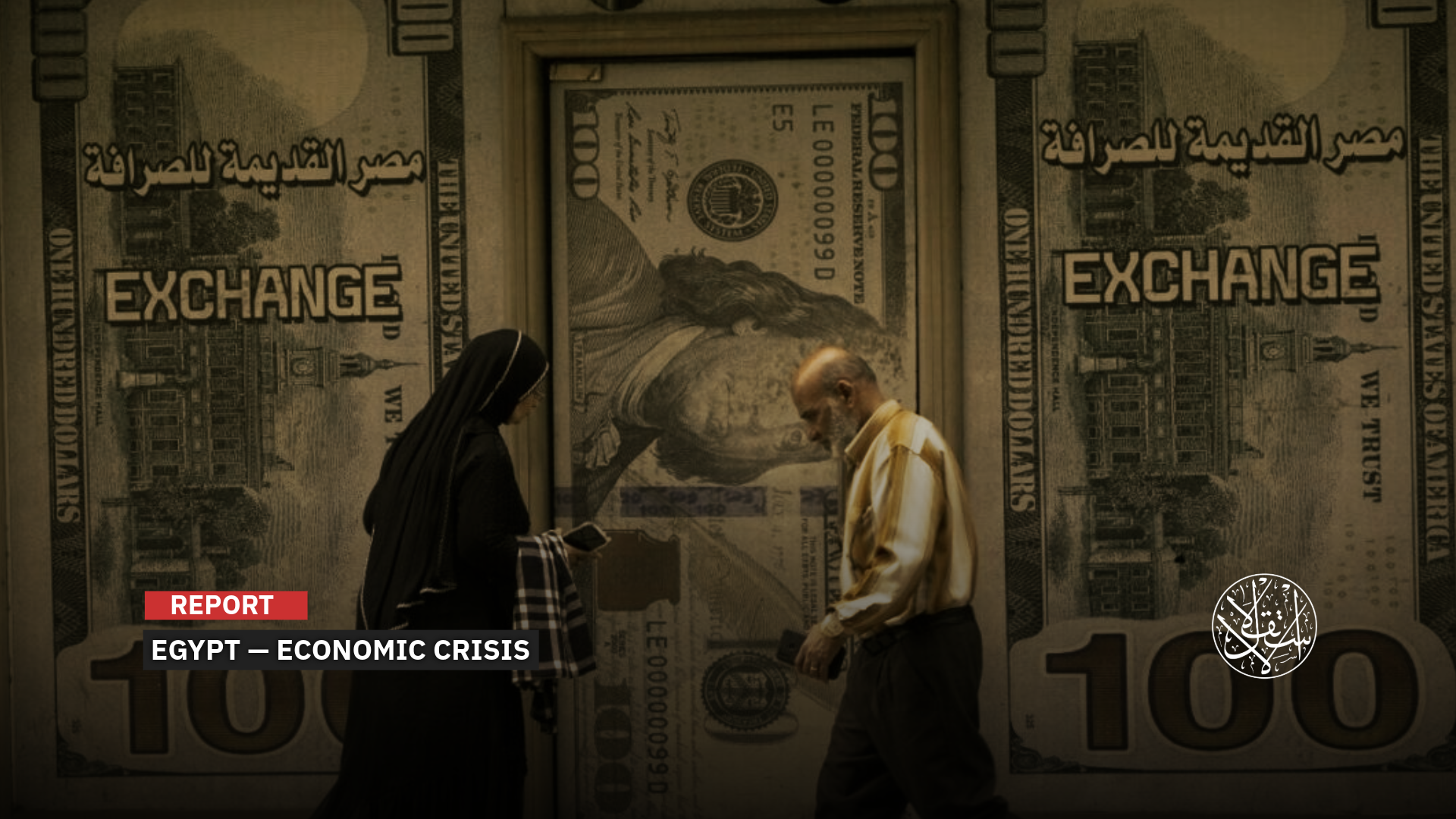
An Egyptian economist warns: the crisis may be delayed, but the bill will be higher.
As an International Monetary Fund mission arrived in Cairo to review Egypt’s loan program, official rhetoric followed suit in an attempt to frame “easing inflation” and a return to “economic stability” as proof of success on headline indicators.
Behind that reassuring language, however, a sharper reality came into focus. Ending fuel subsidies emerged as the clearest test of Cairo’s commitments to the IMF. While official statements point to improving numbers, millions of Egyptians are living a different story, one in which gasoline, electricity, and transport bills have become a daily strain, squeezing the middle class and pushing broader segments toward deeper economic erosion.
The question, then, is no longer why prices have risen, but why the regime insists on lifting subsidies at a moment it claims inflation is falling—and who ultimately pays the price for a version of “stability” that looks tidy in spreadsheets but fails to register in everyday life.
A Slow Drain
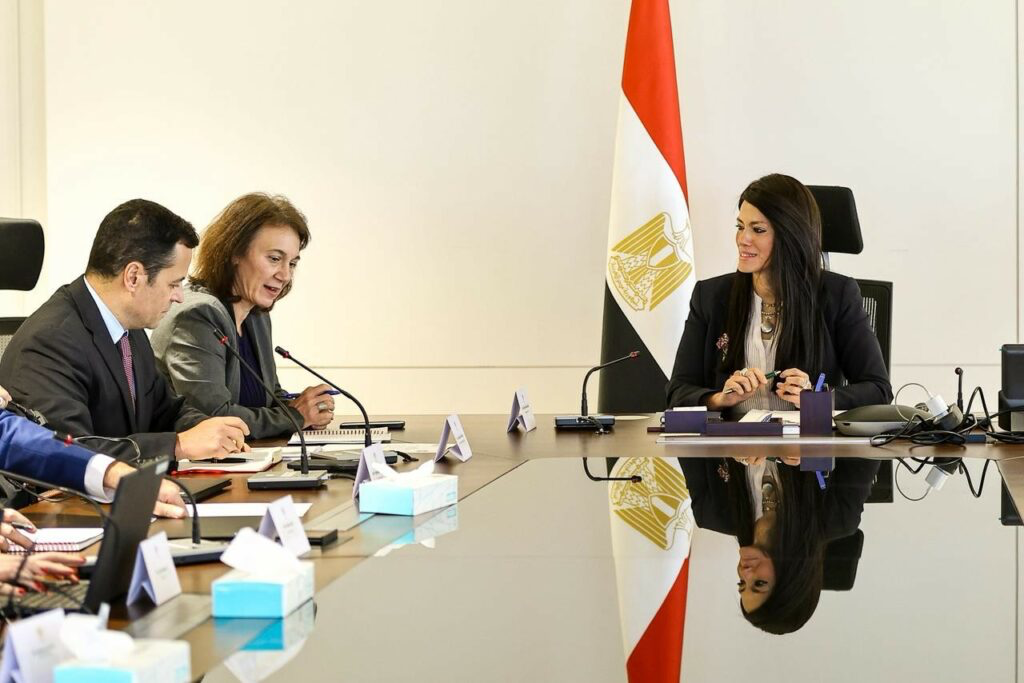
The IMF mission’s visit to Cairo, which began in early December 2025 and lasted 11 days, ended on December 22 with an agreement at the staff level on the fifth and sixth reviews, including the first assessment under the Resilience and Sustainability Facility. In theory, the deal clears the way for the release of a new tranche worth nearly $2.5 billion, pending approval by the Fund’s executive board.
Publicly, the Egyptian regime has framed the visit as a vote of confidence successfully secured, pointing to positive signals such as easing inflation and a foreign currency market no longer choked by shortages. Away from official statements, however—in the streets of Cairo, Giza, and the provinces—the message sounds very different: debt repayment comes first, people’s hardship later.
Here the contradiction is hard to miss. The regime is pressing ahead with ending fuel subsidies even as inflation declines, a move that is less an economic puzzle than a question of power and financing. According to a Mada Masr report on December 23, the priority is to lock in funding and preserve credibility with lenders, while the IMF looks for clear, measurable signs of compliance.
The cost, in the end, falls on the middle class, which year after year is quietly turned into the state’s informal fiscal buffer.
Officials continue to celebrate lower inflation, and in its latest review, the IMF noted that urban inflation fell to 12.3% in November 2025 after earlier spikes, adding that foreign currency availability has improved on the back of tourism, remittances, and Gulf investments, easing market distortions.
A counter-reading published by Almanassa on November 30 tells a different story: Egypt has shifted from a price crisis to an income crisis, from an inflation shock to a slow erosion of purchasing power. Falling inflation, the outlet notes, does not mean falling prices—only a slower pace of increase. What households have already lost is not restored by better headline numbers, especially when a new shock arrives in the form of higher fuel prices, the fastest route to rising transport costs and, in turn, higher prices across most goods and services.
A paper by the Egyptian Initiative for Personal Rights adds that the insistence on ending subsidies is not about timing inflation’s decline but about using it as a political window to dull public anger and push the cuts through while society remains exhausted and under strain.
Cutting Subsidies
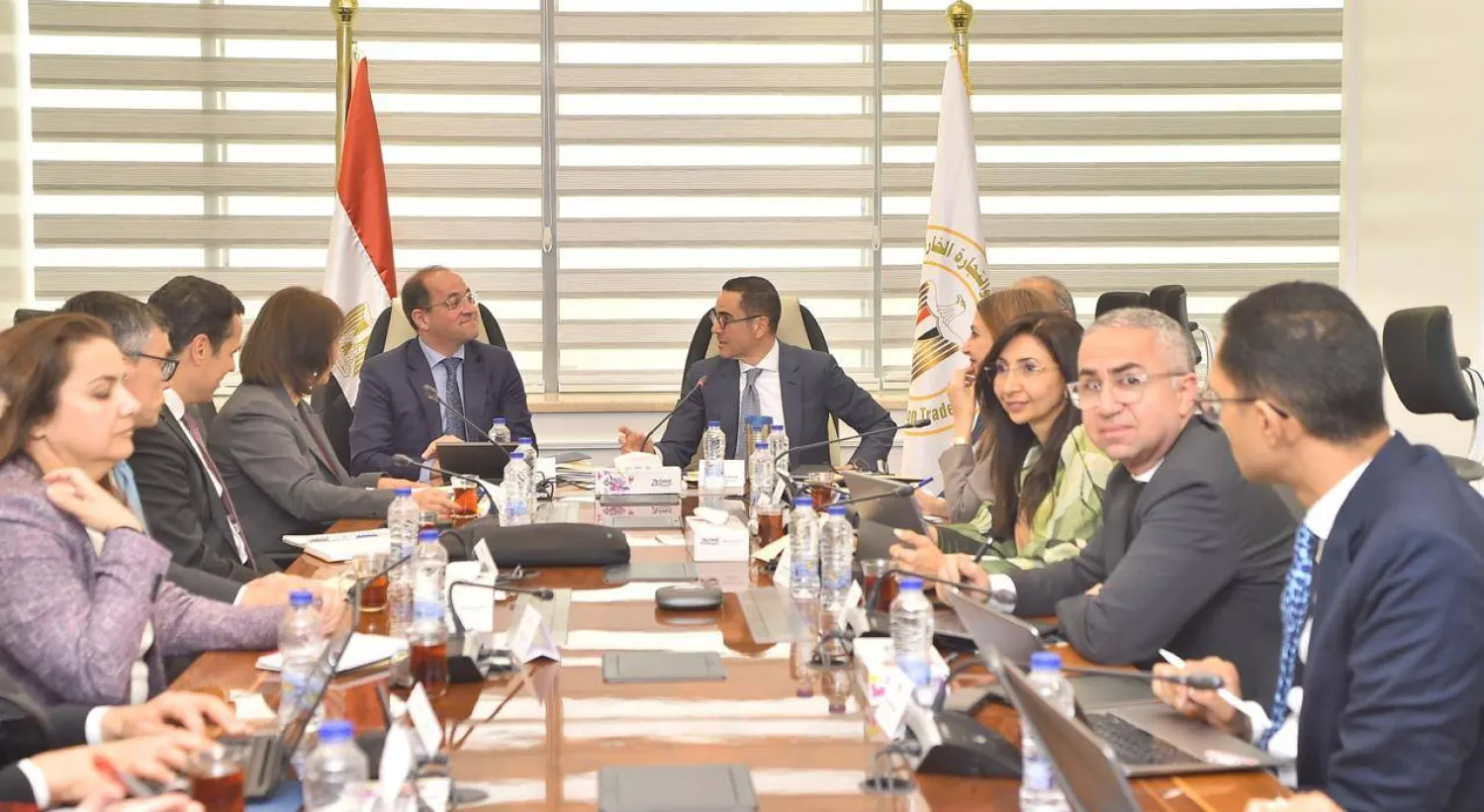
On April 10, 2025, the regime raised fuel prices as part of its subsidy-cutting drive, according to Reuters. The move aligned squarely with the IMF program, which treats energy subsidies as a core item to be reduced and more tightly targeted.
Another wave followed on October 17, 2025, with steep increases—by tens of percentage points—in the prices of gasoline 80, 92, and 95, as well as diesel. The regime then announced that prices would be frozen for a full year. The official line was simple: prices were raised, then fixed, to protect citizens. Economists read it differently. The hike-and-freeze formula, they argue, was designed to safeguard the IMF review and push its agenda through.
The decision looks less like a social protection policy than an attempt to manage the public anger expected after the hardest phase of price hikes had passed. At the same time, the regime still needs to demonstrate compliance to the Fund by sharply reducing fuel subsidies, broadening revenues, and posting a primary surplus—at least on paper.
That context makes the intervention of an independent research voice especially telling. On May 27, 2025, the Egyptian Initiative for Personal Rights released an analysis of the 2025–26 budget built around a blunt conclusion: the state is borrowing to service debt, not to build a viable economy.
The analysis found austerity still dominant, with spending on petroleum subsidies cut to less than half of its allocation in the current fiscal year—an indication that further fuel price increases lie ahead. This drop, it argued, is directly tied to IMF commitments to slash subsidy spending, with predictable knock-on effects for transport costs and, in turn, the prices of goods and services.
This is not a political claim so much as a reading of the budget’s internal logic. When the state trims fuel subsidies, it is not merely “rationalizing” spending; it is openly signaling that consumers—ordinary citizens—will be left to finance what remains of the gap.
At the same time, the analysis shows a revenue structure tilted toward the easiest taxes to collect. Wages and consumption taxes account for about 45% of expected revenues, compared with just 12.5% from corporate profit taxes and a mere 0.7% from property owners. In practice, the tax burden is shifting ever more heavily onto working taxpayers and salaried employees, rather than higher-profit sectors.
For the Egyptian Initiative, the most alarming issue is not subsidy cuts in themselves, but the speed and severity with which they are being imposed even as inflation falls. The underlying driver is debt. Interest on domestic and external debt is set to absorb roughly 87% of projected tax revenues in the new fiscal year, meaning taxpayers are effectively funding the returns of lenders—banks, institutions, and individuals, at home and abroad.
The Grip of Debt
In a detailed report titled Egypt in the Grip of Debt, published on July 26, 2025, the Paris-based Committee for the Abolition of Illegitimate Debt (CADTM) said that repayments of principal and interest now consume about 64.8% of Egypt’s planned total spending.
That leaves barely 35% of the budget for everything that directly shapes daily life—wages, subsidies, education, health care, public investment, and the purchase of goods and services.
The report argues that this fiscal map explains why cutting fuel subsidies is treated as part of a single, continuous process: squeezing the most flexible areas of social spending to make room for obligations that cannot easily be postponed, namely debt interest and repayments.
From this perspective, falling inflation does little to soften the regime’s determination to press ahead with subsidy cuts. The issue is not prices or inflation trends, but the cash flow demands of debt servicing.
The report goes further, grounding this argument in official regime data. Finance ministry figures show that interest payments on public debt in the first four months of the 2025 fiscal year reached roughly 899.1 billion Egyptian pounds—exceeding total budget revenues over the same period, which stood at about 864 billion pounds.
Those numbers, the report suggests, explain everything. When interest costs outstrip revenues, the state is effectively forced to reorder society’s priorities around servicing debt.
In that context, cutting subsidies is not an efficiency-driven economic reform but a financial decision aimed at feeding the repayment machine. With every IMF review, the pressure intensifies to prove the regime’s ability to extract additional resources from society without tipping into political breakdown.
The Exit Gate
Economic researcher Ahmed Youssef argues that the IMF mission’s visit to Cairo for the fifth and sixth reviews was not a routine technical exercise but a revealing political and economic moment that lays bare the choices facing the regime as it manages its crisis.
In comments to Al-Estiklal, Youssef said the regime treats IMF reviews as a kind of international seal of approval, while many citizens see them as a warning sign of another round of painful decisions, foremost among them the end of fuel subsidies.
History, he noted, offers little reassurance. IMF programs, Youssef argued, do not rescue economies so much as manage collapse and reschedule it. He pointed to cases such as Argentina, Sri Lanka, and Chile, all of which cycled through repeated IMF programs only to emerge more socially fragile, more heavily indebted, and less able to make independent economic decisions.
The Fund, in his view, succeeds at stabilizing headline indicators on paper but fails to build a productive economy or protect the social fabric.
What makes the Egyptian case particularly risky, Youssef said, is that the IMF program is no longer treated as a temporary fix but as a permanent path. Periodic reviews have become a standing mechanism of pressure, pushing subsidy cuts, expanding indirect taxes, and shrinking social spending, while the roots of the crisis remain largely untouched.
Persisting with IMF conditions even as inflation eases, he added, shows that the goal is no longer economic reform, but keeping external financing flowing at any cost.
Youssef contrasted this with countries that chose different paths and managed either to avoid the IMF trap or to exit it once its political and social costs became clear. He cited Turkiye as a notable example: despite ongoing economic criticism, Ankara regained a measure of decision-making independence by avoiding direct attachment to IMF programs—a strategic gain that, in his view, outweighs short-term improvements in headline indicators.
The core problem in Egypt, Youssef said, is not just the current IMF program but an entire economic model built on borrowing, debt servicing, and crisis management rather than resolution.
According to many economists, he added, the Egyptian economy would need generations to recover from its structural distortions if the current path continues unchanged.
That is why long-term reliance on the IMF poses a double risk: it narrows future options before the country has even emerged from its present crisis.
What Egypt needs now, Youssef concluded, is not another IMF review, but a decisive national plan to exit the IMF cycle itself. Breaking free, he stressed, does not mean isolation from the world. It means building a genuinely productive economy, reordering spending priorities, and confronting the debt file head-on, instead of pushing the costs of delay and easy fixes onto citizens.
“Continuing on the current path may postpone the crisis, but it will make it more costly, prolonged, and deeply damaging,” the researcher said.
Sources
- The difference between the price level and inflation
- IMF Staff Reaches Staff Level Agreement on Egypt’s Fifth and Sixth Review Under the Extended Fund Facility and First Review Under the Resilience and Sustainability Fund
- IMF Reaches Preliminary Deal with Egypt to Release $2.5 Billion to Liberalize the Economy [Arabic]
- “IMF Review”: Will It Affect Subsidy Cuts in Egypt? [Arabic]
- Interest Payments Exceed Revenues in the First Four Months of the Fiscal Year [Arabic]
- IMF Mission Approves Fifth and Sixth Reviews and Softens Criticism of Government [Arabic]
- Egyptian Initiative Urges MPs to Reject Budget Proposal [Arabic]
- Egypt in the Debt Trap: What Future for Development? [Arabic]