Somaliland on the Frontline: UAE, Israeli Occupation, Ethiopia, and the U.S. Battle for Bases
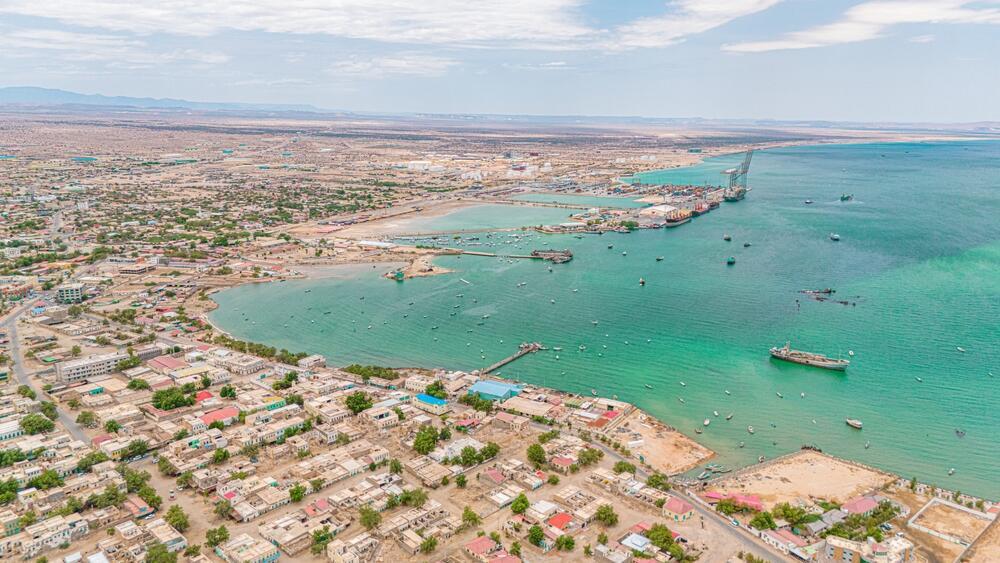
The base is located on the Red Sea coast, in a strategically important location.
Attention is increasingly turning to the military base in the port city of Berbera, amid discussions about “Israel’s” recognition of the breakaway region of Somaliland.
Perched along the Red Sea coast, the site occupies a strategically prized stretch of shoreline, long viewed as a gateway to one of the world’s most sensitive maritime corridors. That geography has drawn the interest of a crowded field of regional and global players, including the Israeli Occupation, the United Arab Emirates, Ethiopia, and the United States, according to past reports examining efforts to leverage Berbera’s port infrastructure for military purposes.
What remains opaque is who, precisely, controls the base or oversees its operations. There has been no official confirmation clarifying the roles played by the competing actors now linked to the site, leaving a vacuum filled by questions and quiet diplomatic signaling rather than clear answers.
Berbera’s port is the commercial heart of the city and the primary maritime outlet for Somaliland, a self-declared state that has operated outside Somalia’s authority since it announced its independence on May 18, 1991, in the wake of civil war and the collapse of the central government.
History of the Military Base
Berbera Port is one of the oldest sites with military use in the Horn of Africa, historically serving as a naval and missile base under the central Somali government. After a 1972 agreement between the administration of the late Somali President Mohamed Siad Barre and the Soviet Union, the port’s facilities came under Soviet control, though this presence later receded.
In later years, the port’s use expanded to include American military activities, following closer ties between Mogadishu and Washington. The site then experienced successive shifts in the nature of controlling influence after Somaliland declared its independence from the central government in 1991.
The strategic significance of the Berbera base and port stems from their location on Somalia’s northern coast, near the Gulf of Aden and the Bab el-Mandeb Strait, which links the Red Sea to the Indian Ocean and serves as one of the world’s most important maritime routes.
Somaliland’s coastline stretches roughly 460 miles along the Gulf of Aden, placing it close to the southern entrance of the Bab el-Mandeb, through which an estimated 12% of global trade passes annually, including energy shipments.
International interest in Berbera intensified during the Soviet era between 1970 and 1991, when the USSR established a naval base in the city to monitor the Red Sea and Bab el-Mandeb. This presence ended as Somali-Soviet relations deteriorated and the Soviet Union collapsed in the early 1990s.
Between 1991 and 2010, the region lacked central authority, with Somaliland effectively managing its affairs without international recognition.
In 2013, relations between the United Arab Emirates and Somaliland authorities accelerated amid growing interest in ports across the Horn of Africa. In 2016, DP World acquired Berbera Port, followed in 2017 by agreements between the UAE and Somaliland to establish a military facility in the city.
Reports indicate these steps included the development of port infrastructure and surrounding facilities, including air and naval installations. By 2024, the air base in Berbera had been expanded, with new facilities added and a nearby deep-water port in operation.
Between 2022 and 2025, American interest in the Berbera base and airport became evident, with visits from officials of U.S. Africa Command (AFRICOM) assessing the region’s military presence.
In March 2025, the Somali federal government offered the United States exclusive operational authority over several strategic bases and ports, including Berbera. The offer, however, was rejected by Somaliland authorities, who considered Berbera under their effective control, and was not implemented.
Located opposite Yemen across the Red Sea, Somaliland occupies a geographically sensitive position, giving Berbera Port increasing significance amid shifting security dynamics in the Red Sea and Gulf of Aden.
An Emirati Base with an Israeli Dimension
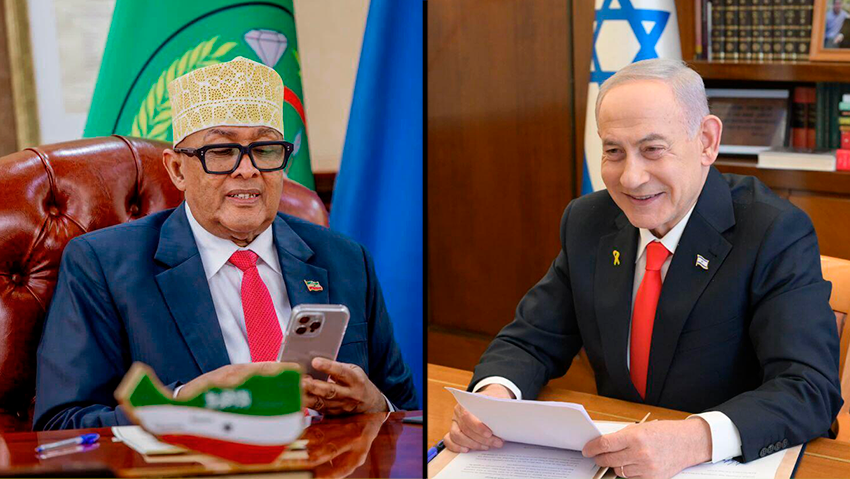
Following “Israel’s” recognition of Somaliland, Israeli Foreign Minister Gideon Sa’ar revealed that the region’s president made an unannounced visit to “Israel” last summer, meeting senior political and security officials.
According to Yedioth Ahronoth on 28 December 2025, the visit was widely seen within Israeli circles as paving the way for official recognition. The president of Somaliland reportedly contacted Israeli Prime Minister Benjamin Netanyahu immediately after the recognition, underscoring this context.
Observers noted that the UAE’s absence from statements condemning the Israeli recognition reflects growing ties between Abu Dhabi, Tel Aviv, and Somaliland authorities, particularly regarding cooperation over Berbera Port.
Maariv reported on 28 December 2025 that Israeli officials said recognition of Somaliland gives “Israel” a broader strategic margin, enhancing its military capabilities—especially in the air domain—and expanding its presence in the Red Sea region.
Officials added that Berbera Air Base includes hardened aircraft facilities and is located near a deep-water port along the Bab el-Mandeb Strait, one of the world’s key maritime chokepoints.
The base is reportedly suitable for joint use by multiple actors, including the UAE, the Israeli Occupation, and the United States, under security or military arrangements linked to Red Sea and Gulf of Aden maritime security.
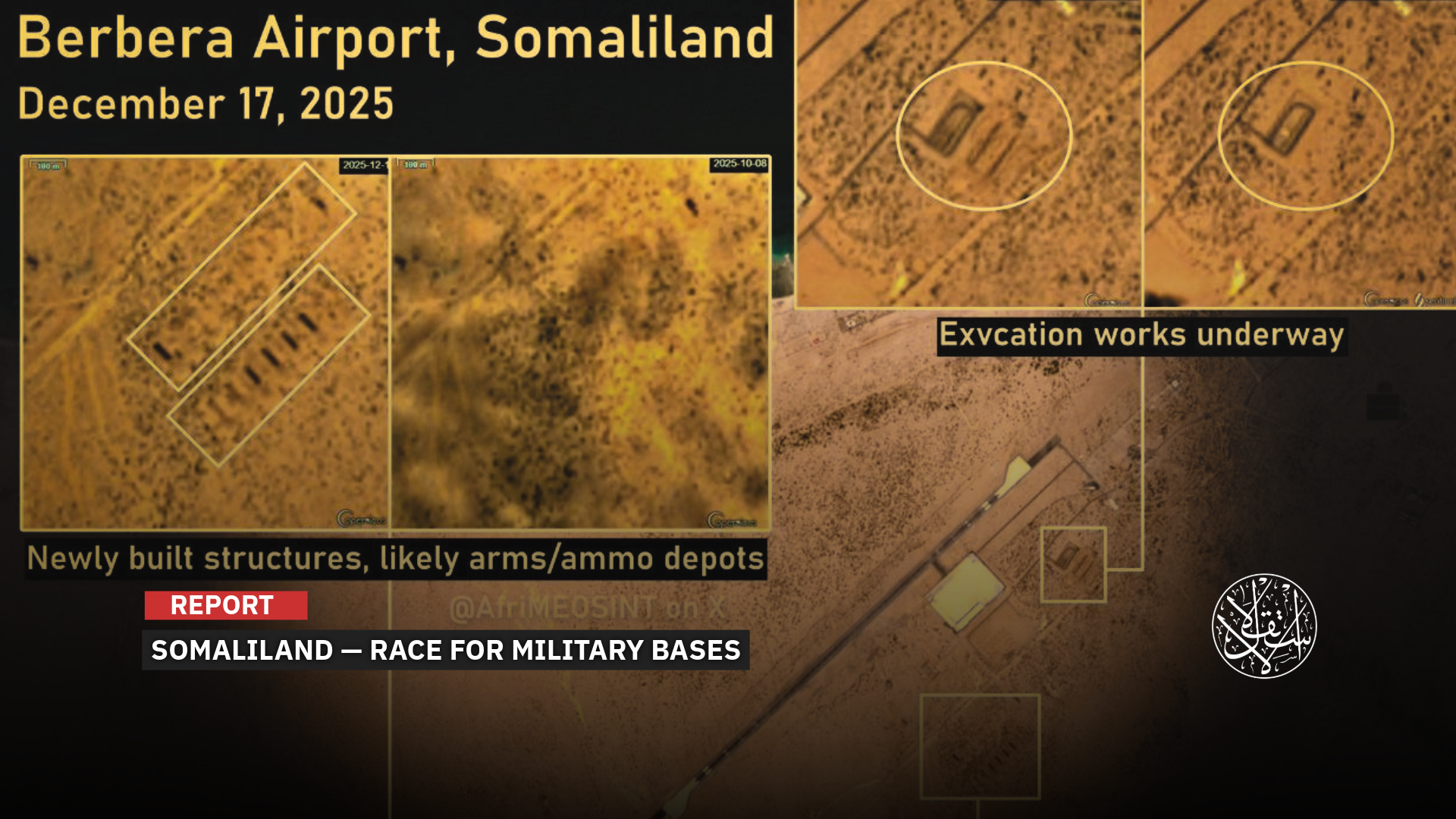
Open-source intelligence (OSINT) analysts have documented rapid military-oriented construction at Berbera Air Base in recent months. Satellite imagery shows around 12 underground hangars being built, believed to be intended for fighter jets and drones.
Analysts noted that Somaliland lacks a known combat air force, suggesting the facilities are likely designed for use by external parties.
Open-source intelligence analyst Ted Risch published images showing expansion work at Berbera Airport starting in late September 2025, including enlargement of a logistics site for military equipment and the initiation of a similar facility in November 2025.
Risch suggested these installations are likely intended to host military aircraft, with potential users including “Israel,” the UAE, Ethiopia, and the United States.
International reports indicate that Berbera Air Base features a four-kilometer runway, capable of accommodating heavy cargo planes and fighter jets. Satellite imagery available via Google Maps shows hardened aircraft shelters and underground bunkers designed to protect aircraft.
Yedioth Ahronoth reported on 29 December 2025 that “Israel’s” recognition of Somaliland is tied to strategic considerations, including Berbera’s proximity to Houthi-controlled areas in Yemen, highlighting potential future security or intelligence cooperation.
Similarly, the Israeli National Security Institute noted in an assessment published on 22 November 2025 that Somaliland could serve as an advanced platform for multiple missions, including intelligence collection and monitoring regional movements, particularly Houthi activities.
The Guardian reported on 27 December 2025 that “Israel’s” recognition of Somaliland fits into a broader context of geopolitical ambitions in the Red Sea and Yemen. The coverage emphasized that Berbera Base remains, for now, primarily a site for coordination and exploration of shared interests rather than a permanent Israeli military outpost.
Analysts cited by the newspaper suggest the UAE may operate the base, or it could be used under joint arrangements with other actors, including “Israel,” as a forward operations site in a strategically important area near the entrance to the Red Sea at the Bab el-Mandeb Strait.
Writer and academic Tim Anderson, director of the Center for Counter Hegemonic Studies, noted the possibility of a future Israeli role at the base, suggesting that Berbera Airport could be prepared for use under regional arrangements, though the specifics and timing remain unconfirmed.
An analysis published by the Turkish platform Clash Point, a media outlet known for its proximity to Turkiye’s ruling Justice and Development Party and its critical stance toward “Israel,” suggested that Tel Aviv’s recognition of Somaliland may be driven by security and intelligence calculations.
The analysis argued that the region’s geography, particularly the port and military base at Berbera, is seen as a forward vantage point for monitoring the Red Sea and the Bab al-Mandab Strait, tracking military activity in Yemen, including missile and drone launches, and keeping watch on Iranian naval movements.
It added that this approach fits into a broader Israeli effort to balance the influence of key regional powers, notably Egypt and Saudi Arabia, as well as Turkiye’s expanding strategic presence in Somalia.
According to the same source, logistical and military access to Berbera port could offer wider options for deploying naval or air forces and ease supply and support operations across the Horn of Africa, should suitable security or military arrangements be put in place.
Writing in Israel Hayom on December 28, 2025, Israeli researcher and Turkiye specialist Hay Eytan Cohen argued that “Israel’s” recognition of Somaliland carries clear regional implications, framing it as a political signal to Ankara amid intensifying competition for influence across Africa.
Geopolitical and strategic analyst Velina Tchakarova said that recognizing Somaliland as a sovereign entity opens up, in her view, a new arena for maneuvering in a strategically vital region.
Tchakarova noted that the move could enable direct access to Berbera port, strengthen maritime security arrangements in the Red Sea amid ongoing tensions, support efforts to counter Iranian influence, and create alternative trade corridors for Ethiopia via the sea.
Research assessments suggest that Somaliland occupies a strategically significant position in the southern Red Sea, given its proximity to one of the world’s most vital maritime corridors, offering potential leverage for monitoring shipping traffic and gathering intelligence tied to regional and maritime security.
According to these assessments, the territory’s geography allows for close observation of military developments, including missile and drone activity, tracking the movements of regional actors, and reinforcing maritime security across the Red Sea and the Gulf of Aden.
By contrast, an analysis published by The Jerusalem Post on December 29, 2025, took a more critical view of “Israel’s” move to deepen ties with Somaliland, warning that the approach carries political and security risks.
The paper argued that greater Israeli engagement could complicate local power balances, undermine stability in the Horn of Africa, and potentially affect “Israel’s” regional standing and relations with other actors.
It concluded that the current strategy may fall short over the long term, calling for a reassessment of “Israel’s” involvement in light of existing political and security realities.
The Netanyahu–bin Zayed Axis
Observers say “Israel’s” recognition of Somaliland fits into a broader pattern of maneuvering across the Horn of Africa and the southern Red Sea, where regional and international interests increasingly overlap.
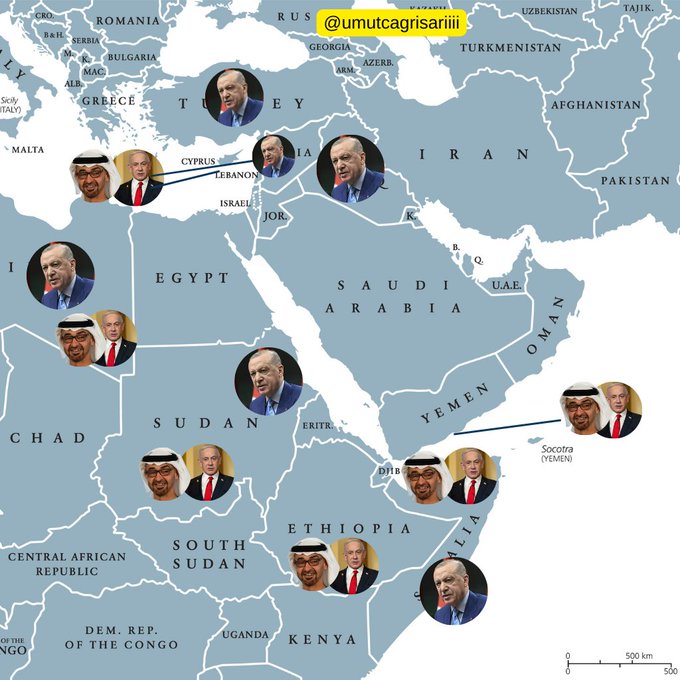
These readings point to a deepening alignment between the Israeli Occupation and the United Arab Emirates on a range of regional files over recent years, stretching from Yemen, Sudan, Ethiopia, and Libya to the eastern Mediterranean. That convergence, analysts suggest, has also shaped attitudes toward Somaliland.
Diplomatic tracking notes that while 21 Arab and Islamic countries issued formal condemnations of “Israel’s” recognition of the breakaway region, the UAE remained notably silent, a gap some analysts interpret as a signal of shared positioning rather than coincidence.
Analysts further argue that Israeli moves in Somaliland dovetail with existing Emirati interests, particularly around ports and logistics infrastructure, given Abu Dhabi’s extensive investment footprint across the Horn of Africa.
Former Turkish prime minister Ahmet Davutoglu has previously warned that “Israel’s” recognition of Somaliland should be read as part of wider regional arrangements, cautioning that it could upset delicate balances affecting Egypt, Saudi Arabia, and Turkiye.
Israeli media, including Maariv on December 28, 2025, have reported that recognition could ease cooperation with regional actors in the Red Sea arena, framed around maritime security and countering threats linked to Yemen.
According to these reports, Tel Aviv is weighing multiple options to expand its presence in the southern Red Sea through potential security arrangements with regional partners, though no official statements have clarified the scope or timeline of such plans.
Ethiopia and the United States
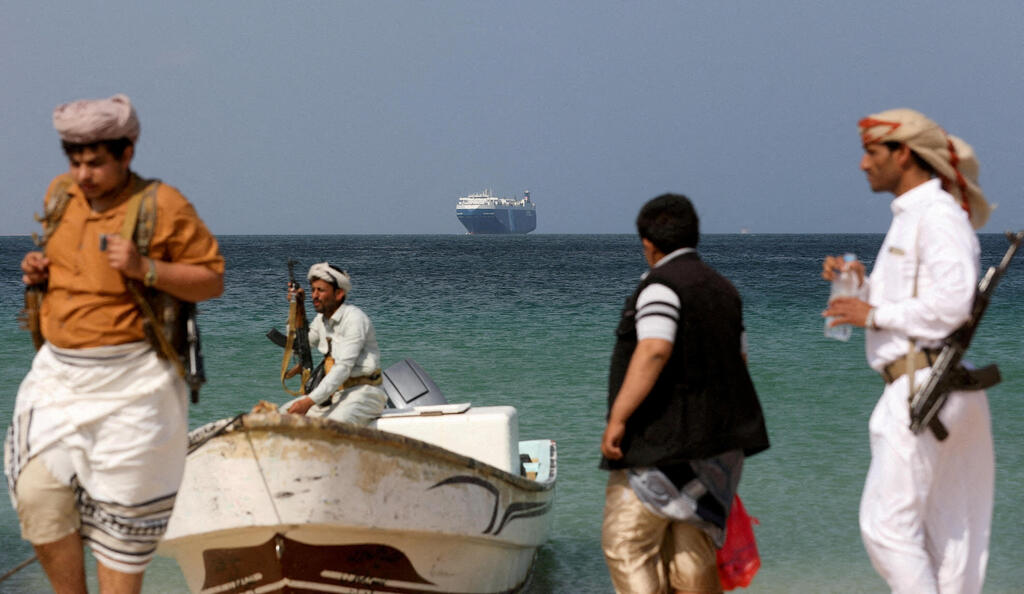
In the wake of “Israel’s” recognition of Somaliland, the interests of several regional and international players have begun to intersect more sharply, with Ethiopia standing out as a key actor. Addis Ababa has long sought a maritime outlet through Berbera, aiming to expand its reach in the Red Sea arena and strengthen its hand in its strategic rivalry with Egypt.
In January 2024, Ethiopia signed a memorandum of understanding with Somaliland’s authorities, granting it access to a 20-kilometer stretch of coastline along the Gulf of Aden to develop a commercial port and a naval base. The deal would have allowed Ethiopia to revive a navy that effectively disappeared after Eritrea’s independence in 1993, in exchange for recognition of Somaliland as a separate state.
The agreement, however, was frozen in September 2024 under pressure from neighboring countries, most notably Egypt, which strongly opposed granting Ethiopia a direct maritime outlet.
Following the signing of the MoU, the UAE and DP World publicly welcomed cooperation with Ethiopia at Berbera port, while Somaliland’s president said the deal included plans for an Ethiopian naval base in the town of Lughaya, west of Berbera, in return for trade facilitation and political recognition.
Analysts argue that “Israel’s” recognition of Somaliland effectively lends legal and political cover to Ethiopia’s lease arrangements at Berbera, which had previously suffered from the absence of a widely recognized sovereign partner.
From this perspective, the move could secure Ethiopia a critical access point to the sea while simultaneously offering the Israeli Occupation a strategic military and intelligence foothold near the entrance to the Red Sea, a sensitive zone shaped by Iranian and Houthi influence, and an area where “Israel” and the UAE are seeking to deepen their presence.
The United States, by contrast, appears to be taking a more cautious line on recognizing Somaliland, despite increased military engagement and high-level visits tied to security cooperation in the region. Washington already maintains several military facilities in Somalia and supports Somali forces in their fight against al-Shabaab.
According to reports, views within the U.S. administration remain divided, with some officials warning that recognition could undermine military cooperation with the federal government in Mogadishu.
At the same time, Republican Senator Ted Cruz urged recognition of Somaliland in a letter sent to President Donald Trump in August 2025, citing the territory’s alignment with “Israel” and its support for the Abraham Accords.
In an effort to bolster “Israel’s” position and widen international recognition of Somaliland, Israeli Prime Minister Benjamin Netanyahu urged Trump to recognize the territory, framing the move as a natural extension of the Abraham Accords championed by Trump.
Trump, however, struck a notably cool and cautious tone. In an interview on December 27, 2025, he ruled out any immediate U.S. recognition of the breakaway republic, downplayed the strategic incentives being offered, and dismissed the proposal to host an American military base as not a big deal.
Despite that hesitation, the Israeli outlet Walla reported on December 27, 2025, that “Israel” continues to seek U.S. backing, arguing that deeper engagement in Somaliland is necessary to counter China’s expanding footprint in the region.
Throughout 2025, Somaliland hosted several high-profile visits by U.S. officials. In June, General Michael Langley, then head of U.S. Africa Command, traveled to the territory alongside U.S. Ambassador Richard Riley to discuss security and defense interests and to inspect facilities at Berbera port.
Further visits followed in November and December, when General Dagvin Anderson, commander of U.S. Africa Command, met Somaliland’s president in Hargeisa and conducted an assessment of Berbera port.
Cairo, meanwhile, has voiced growing concern over “Israel’s” recognition of Somaliland and its alignment with Ethiopia, as well as what it sees as U.S. moves—backed by the UAE—toward legitimizing a military presence at Berbera. Egyptian media reports describe these developments as a direct threat to Egypt’s national security.
Sources
- Trump says not ready to follow Israel recognizing Somaliland: Report
- Why Israel’s recognition of Somaliland matters far beyond the Horn of Africa
- Israel becomes first country to recognise Somaliland as sovereign state
- Somaliland and Israel—Considerations Regarding Recognition and Cooperation
- Strategic misfire? Israel’s Somaliland move fuels new tensions - opinion
- Implications of Israel’s Recognition of Somaliland [Arabic]