Roads Over Cash: Who Holds Sudan’s Economic Power?
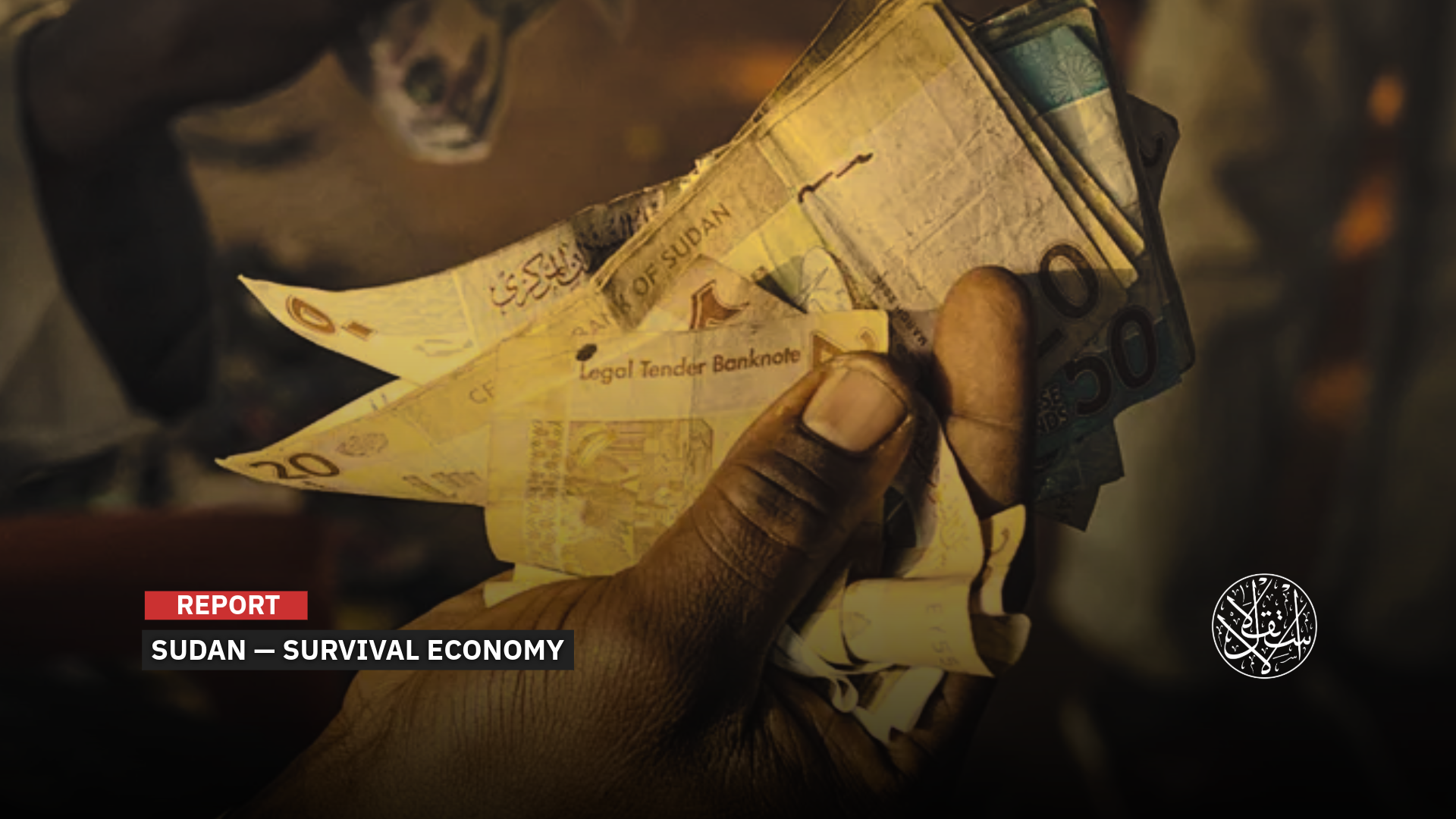
The gap has created a marginalized social class, described as “the forgotten.”
By the end of 2025, Sudan’s economic indicators appeared to be flashing a sharp warning signal after two years of relentless collapse.
While some reports spoke of a relative slowdown in inflation, deeper crises were emerging across other sectors, most notably, an acute shortage of cash.
According to reports by Reuters dated December 18, 2025, this slowdown did not reflect any genuine improvement in living conditions. Instead, it pointed to a harsher reality on the ground.
Some markets have partially reopened after long periods of closure, but they are operating without sufficient liquidity, even as the prices of several basic goods have tripled.
Many Sudanese now find themselves with money that exists only on paper or in bank accounts, yet they are unable to spend it to meet their daily needs.
At this point, the crisis is no longer confined to rising prices, it has extended to the disappearance of cash itself. Sudan’s economy has shifted from the language of figures and indicators to a daily struggle for survival.
What Sudan is experiencing today can no longer be described as a conventional economic crisis. It is a systematic collapse of the everyday economic cycle driven by war, one in which cash has been transformed from a means of life into a scarce commodity, and markets have shifted from spaces of exchange into arenas of survival.
At the heart of this breakdown lie the practices of the Rapid Support Forces militias, backed by the United Arab Emirates, which have played a central role in dismantling the financial and banking infrastructure, disrupting agriculture and trade, and producing an economy governed by force and weapons rather than law and institutions.
Cash in Short Supply
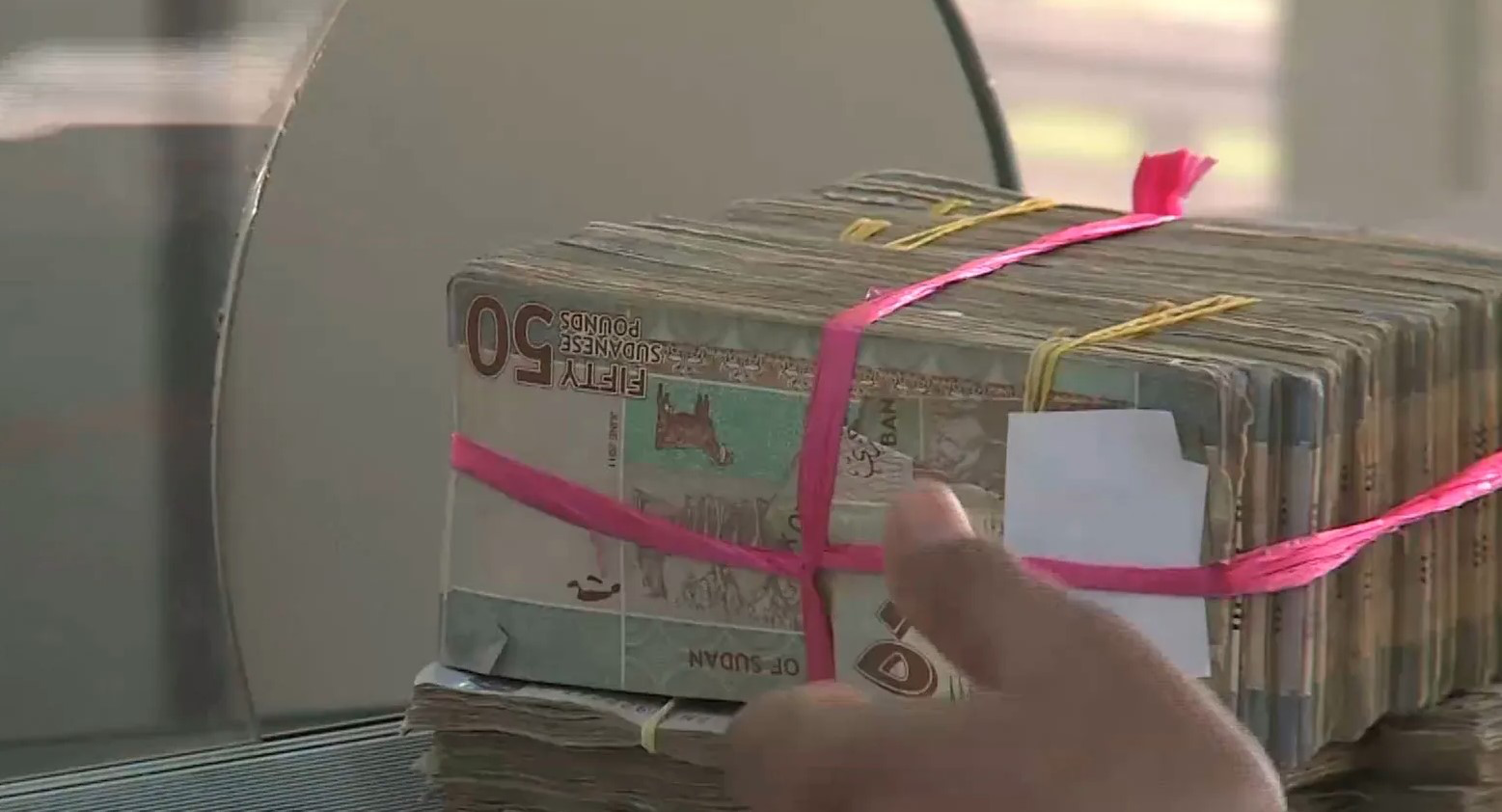
At the heart of Sudan’s cashless crisis lies a pivotal moment: the disappearance of cash from daily circulation, with money reduced to numbers trapped in bank accounts.
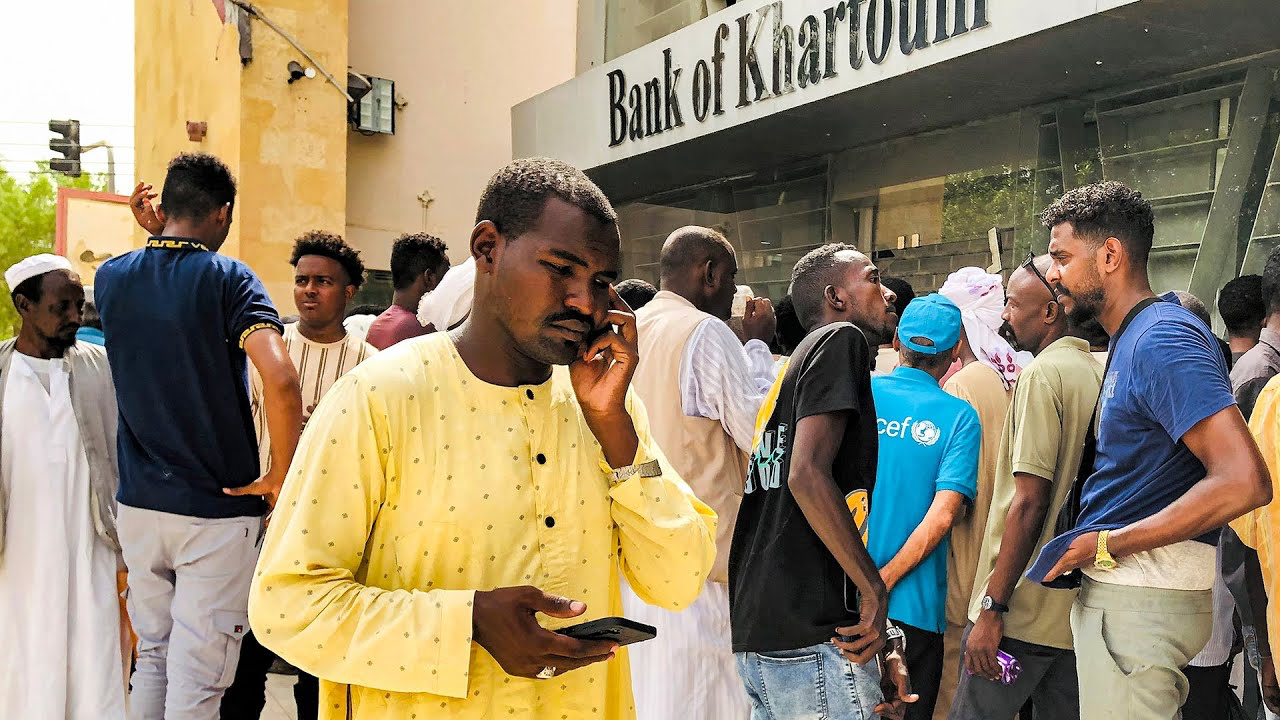
Even when salaries are transferred to banking apps or appear in statements, citizens encounter a liquidity wall, with banks lacking sufficient cash, low withdrawal limits, and long queues at ATMs that often end in frustration.
Since January 2025, the United Nations Office for the Coordination of Humanitarian Affairs (OCHA) has documented the limited availability of cash in the country, following measures linked to the new currency, a situation that has directly affected households’ ability to meet basic needs and hindered the implementation of cash-based humanitarian programs.
As the war continues and markets fragment, cash has not only become scarce, but is often entirely absent. People have been forced to turn to fragile alternatives: app-based transfers when networks are available, informal remittances with high fees and commissions, buying on credit from local shops, and, in extreme cases, bartering.
A report by ACAPS, an independent international humanitarian analysis organization, dated November 25, 2025, described this situation clearly, calling it a liquidity crisis that is a central driver of the collapse of formal trade and the breakdown of markets.
Thus, the absence of cash is no longer a side effect but has become a new daily structure of the economy: purchasing via transfers, pricing with commissions, and living on credit instead of salaries.
Despite this, Sudan Tribune reported on December 19, 2025, citing official sources, that the annual inflation rate slowed in November compared with previous months.
Economic experts noted that this was partially true mathematically, as the pace of increase decelerated, but this apparent improvement concealed a more serious reality: collapsing demand and millions of Sudanese effectively sidelined from the market.
Reports from the World Food Program in October and November 2025 indicated that the cost of a basic food basket had doubled or even tripled in several states compared with pre-war levels, while the Sudanese pound lost a large part of its value over the year.
Yet the most critical issue was not inflation but the absence of cash itself; money existed in accounts but not in people’s pockets.
Since the outbreak of war on April 15, 2023, Sudan’s banking sector has been dealt a crippling blow. Major banks in Khartoum and Omdurman were looted or forcibly closed, and branches of the Central Bank ceased operations.
With the Rapid Support Forces militia extending their influence across the capital and large parts of the country, the banking system lost its ability to function normally.
By mid-2024, thousands of employees were receiving salaries electronically in theory but could not access them. In 2025, this situation became semi-permanent.
UN reports released in September and October 2025 explicitly described a severe liquidity crisis that even hindered cash-based aid programs.
In cities like Omdurman and Madani, citizens now spend hours at ATMs only to withdraw amounts sufficient for a day or two. Cash is no longer a medium of exchange, but a rare privilege.
A Lifeless Market
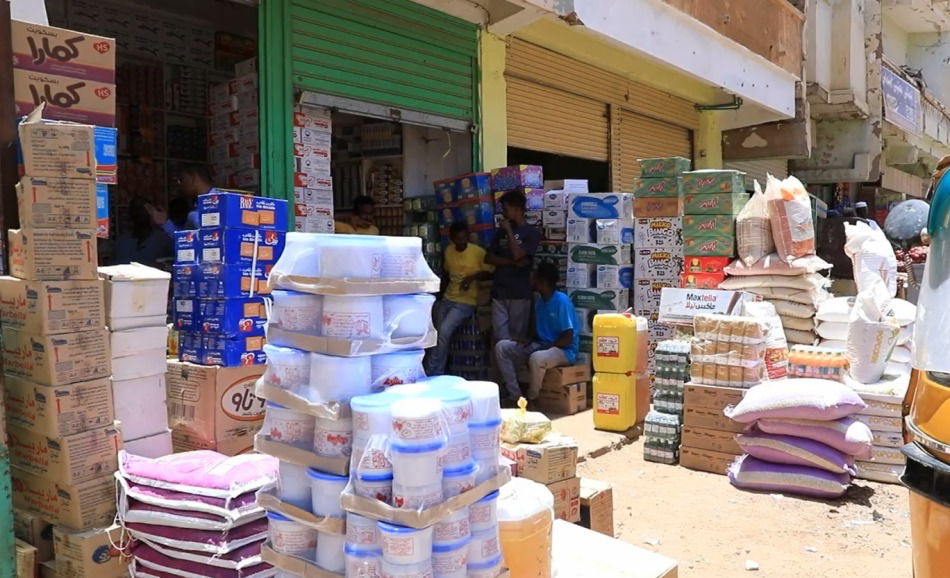
In the second half of 2025, some of Sudan’s major markets saw a partial return to activity. In Omdurman, parts of the main market reopened after more than two years of near-total paralysis.
At first glance, the scene seemed to signal a potential recovery, but at its core, it was more an expression of desperation than a sign of hope.
Merchants who returned to the market did so under pressure, not in a safe or stable environment. Field reports published by Radio Dabanga in August 2025 documented the imposition of illegal road fees, a sharp rise in transport costs due to insecurity, and the looting of commercial convoys, creating a continuous scene of chaos.
The absence of cash only worsened these conditions, as the costs of risk and extortion were passed directly onto consumers.
Prices were no longer determined solely by supply and demand but by the level of security risk. With liquidity scarce, many traders were forced to sell on credit, through electronic transfers, or even by bartering, further weakening the market and deepening the trust gap between buyers and sellers.
In November 2025, The New Humanitarian, an independent international news outlet based in Geneva that specializes in covering humanitarian crises and conflicts, described this shift as a serious indicator of the collapse of Sudan’s cash-based market, noting that some households had come to rely on exchanging goods and services rather than making direct purchases.
The platform reported, “The return of bartering is not a passing social detail, but a sign of currency failing to perform its fundamental function,” adding that “what is happening represents a deep economic regression, reflecting the scale of the crisis and setting Sudanese society back by decades.”
Farming on the Brink
The devastation of Sudan’s agricultural sector, most notably the Gezira Scheme, is among the key factors exacerbating the country’s current economic crisis.
For decades, the project formed the backbone of the national economy and was a primary source of cash income in rural areas.
Since 2023, however, it has suffered widespread destruction, including disrupted irrigation channels, looted warehouses, and displaced workers.
Reports from local agricultural organizations in 2024 and 2025 indicate that vast areas of the project have ceased production due to insecurity and the control of key regions by armed groups.
The loss of the Gezira harvest was not merely an agricultural setback, but a direct blow to cash flow in rural areas and the markets linked to them.
As agriculture declined, incomes vanished, and with income gone, purchasing power collapsed, accelerating the liquidity crisis.
In this context, Sudanese politician Dr. Ibrahim Abdel-Atti told Al-Estiklal that the most dangerous aspect of the current economic crisis is its uneven impact across society.
He explained that an economy without cash does not merely produce general poverty, but also reshuffles society along harsh and unfair lines.
Abdel-Atti added that the country is now economically divided into two distinct groups: those with access to international remittance networks or sources of foreign currency income, able to survive, albeit with difficulty, and those relying solely on local salaries or daily wages, left to face the collapse on their own.
He noted that households dependent entirely on local income are the most vulnerable to food insecurity, not just because of rising prices, but due to the disappearance of cash from daily circulation.
This gap has created a new social stratum, which he described as “the forgotten,” encompassing government employees, retirees, and families without external connections or access to remittance networks.
These groups now live on credit and irregular aid, reflecting a reality in which war has not only created poverty but redistributed it in a more unjust manner, contributing to the disintegration of what remained of the middle class.
Abdel-Atti emphasized that the economy is no longer merely a victim of chaos, but has become an instrument of direct control.
Controlling the roads means controlling goods, and controlling fuel means controlling market movements and the daily lives of people.
The absence of the state and the collapse of its institutions have intertwined security with the economy, turning hunger from a side effect of war into an unspoken tool of pressure.
He cited the use of the local economy to serve the logic of war, arguing that the liquidity shortage is no longer an incidental outcome of the conflict, but a deliberate element in subjugating civilians and undermining their social resilience.
The politician concluded that the fundamental question at the end of 2025 is: how can an entire society function without cash?
He stressed that the war has dismantled the foundations of economic life, from banks to agriculture and markets, and that the Rapid Support Forces militia played a central role in this dismantling.
Abdel-Atti described Sudan today as living under a “survival economy”: money exists but is unused, markets are open but fail to feed, people are alive but on the brink of collapse.
He warned that unless this reality is named for what it is, and political responsibility assigned to those who created it, the country will continue to spin in a vicious cycle, with numbers changing while people’s lives grow harsher day by day.