Kais Saied’s Call to Review EU Partnership: Real Concern or Political Gambit?
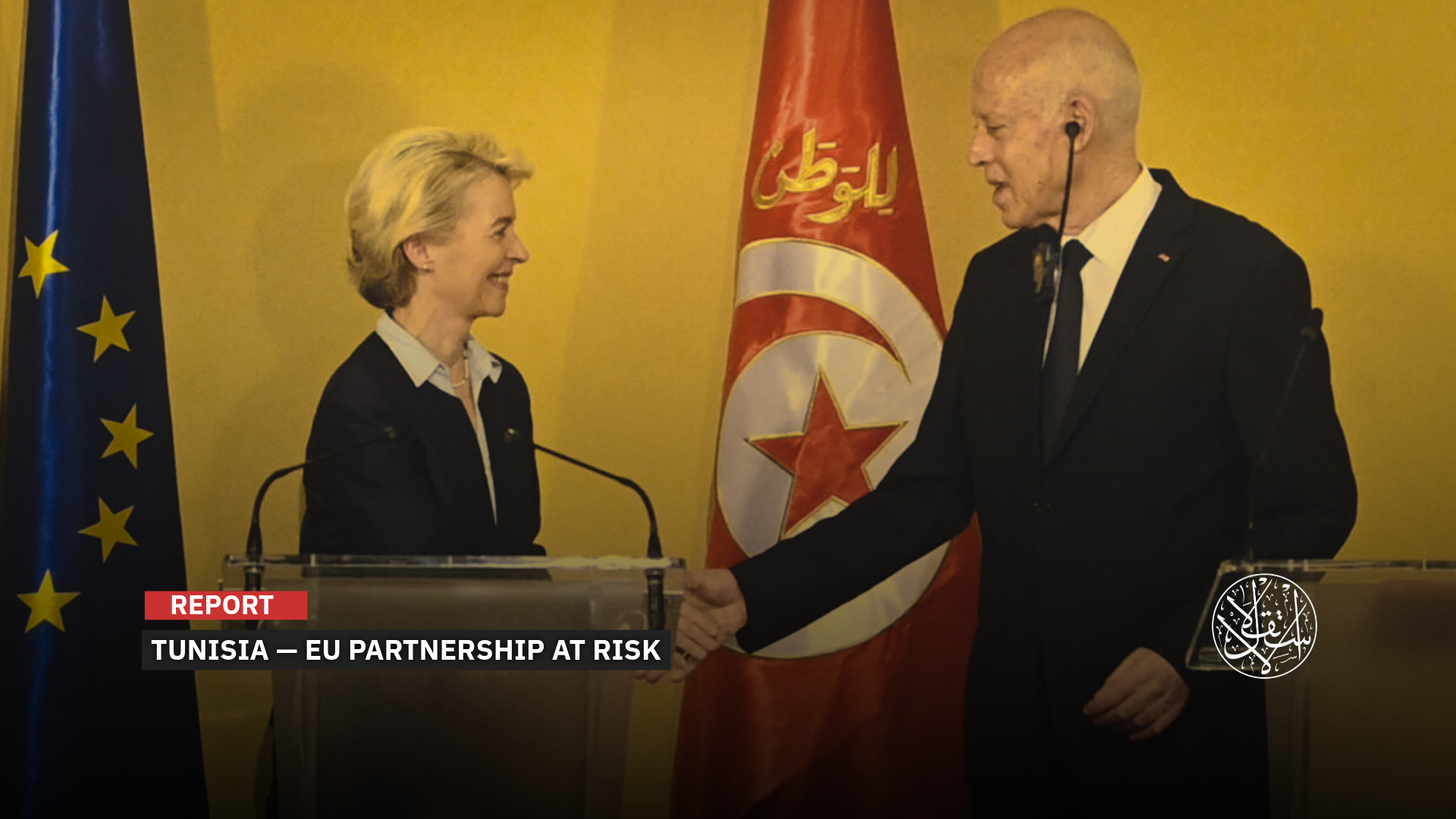
Saied’s repeated slogans are unlikely to move the needle or even get a hearing from the EU.
Coup leader Kais Saied’s call to review Tunisia’s European Union (EU) partnership, which he called unfair, has sparked debate at home, with some seeing real grievances and others dismissing it as political rhetoric.
The strategic and comprehensive partnership agreement between Tunisia and the EU covers key areas, including trade, energy, and efforts to combat irregular migration.
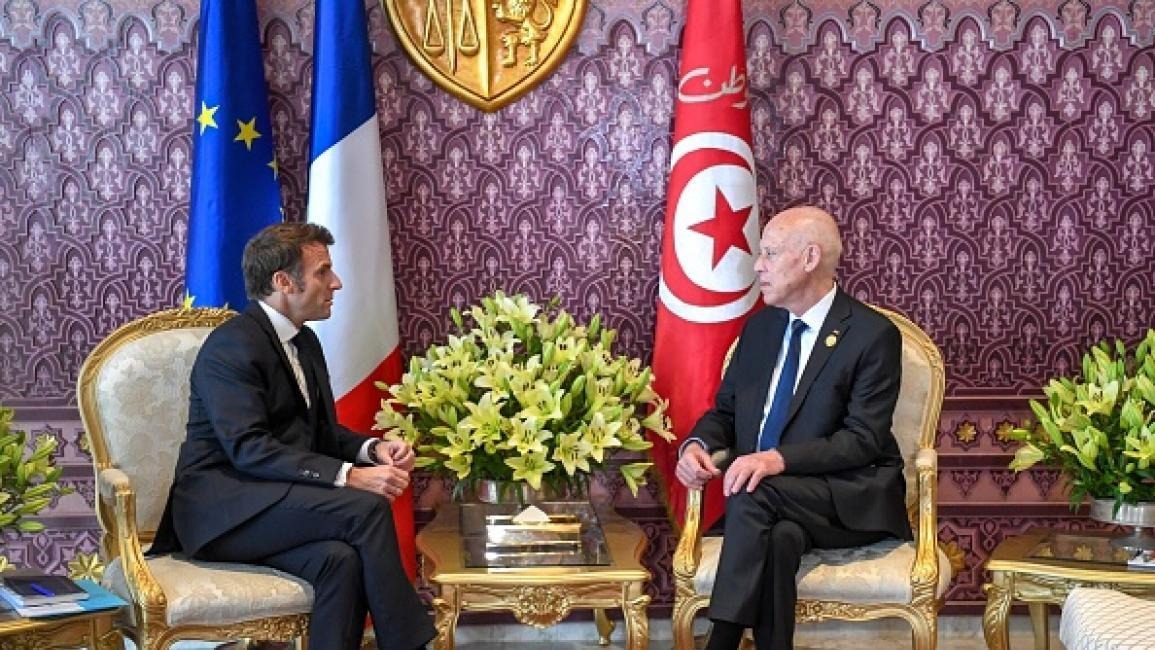
In a phone call with French President Emmanuel Macron on March 20, 2026, Saied addressed Tunisia’s relations with the EU, stressing the need to revise the agreement to make it more balanced, fair, and equitable, according to the Tunisian presidency.
He also emphasized that Tunisia remains determined to recover “stolen funds,” arguing that they belong to the Tunisian people and do not expire over time, adding that they should not be lost in legal processes that have so far yielded no results.
Saied called for stepped-up efforts to ensure the voluntary return of irregular migrants, saying Tunisia has “given a great deal” and is itself a victim of an unfair global economic system as well as criminal networks operating across the Sahel, the Mediterranean, and beyond that exploit migrants.
He stressed that international organizations and northern countries must fully assume their responsibilities, reiterating that Tunisia has from the outset refused to become either a transit country or a settlement zone for migrants.
The Euro-Mediterranean agreement, launched in 1995, remains the main legal and political framework governing relations between Tunisia and the EU, aimed at strengthening economic, social, and cultural cooperation.
Trade between Tunisia and the EU reached about €25.1 billion in 2024, with €13.0 billion in Tunisian exports and €12.1 billion in imports from Europe.
The EU is Tunisia’s leading trade partner, accounting for more than 43% of its imports and serving as its main foreign investor.
A Call for Reassessment
Amid Saied’s call to revisit Tunisia’s partnership with the EU, MP Fatma Mseddi submitted a parliamentary question to the foreign minister on the future of the agreement review and its link to irregular migration.
On March 24, Tunigate reported that Mseddi called for parliament to formally begin reviewing the EU partnership, saying the public wants real action—not just rhetoric—especially as irregular migration continues to rise.
She asked whether official negotiations with the EU have been launched to revise the agreements and what Tunisia’s priorities are in this review, particularly regarding economic balance and national sovereignty.
Mseddi also questioned whether irregular migration would be a central element in any upcoming revision of relations with the EU and what practical measures the state plans to ensure Tunisia does not become a transit or settlement hub for migrants.
Separately, she inquired about current deportation policies, the legal, diplomatic, and logistical obstacles slowing down removals of irregular migrants, and the steps the ministry intends to take to overcome them.
She further asked whether Tunisia has bilateral or multilateral agreements in place to accelerate deportations, what is hindering a more effective policy, and how cooperation with international organizations is being managed, particularly regarding voluntary return programs.
Mseddi also questioned whether the government plans to expand or revise these programs to improve outcomes and requested details on urgent measures and a timeline for delivering tangible results in response to public concerns.
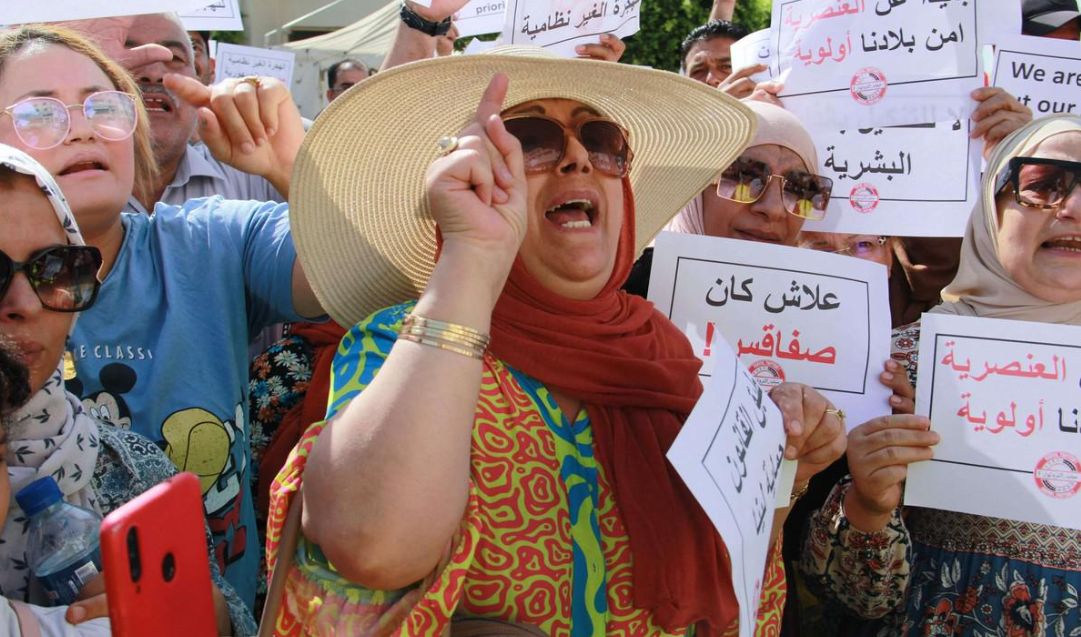
A Step Too Late
Politician and academic Tarak Kahlaoui said the EU-Tunisia agreement spans a broad range of shared priorities, from irregular migration to renewable energy.
But speaking on Diwan FM on March 24, he argued that while Tunisia is seeking financial and investment backing through the partnership, the real gains largely flow to foreign companies, particularly in sectors like renewable energy.
He noted that the agreement, signed in the mid-1990s under former head of the regime Zine el-Abidine Ben Ali, sparked controversy at the time, but critical voices were largely sidelined.
By most accounts, he added, Tunisia has lost significantly from the deal, as its industrial and economic fabric has been weakened by unequal competition with European products.
In any case, Kahlaoui argued that the agreement should have been revised years ago. While acknowledging the boldness of the current political discourse, he said practical implementation still appears to favor European interests over Tunisia’s.
He also questioned whether Tunisian authorities have conducted a proper evaluation of the partnership that would justify a new framework, warning that the absence of such an assessment and of clear explanations from the Tunisian side is regrettable.
Journalist Souhaib Mezriqi sees Saied’s remarks as part of his broader push for “national sovereignty” and what he calls “independent decision-making.”
Speaking in a recorded interview with France 24 on March 24, Mezriqi said the call to review the agreement is not new, noting that Saied has raised it before alongside other treaties, all framed around Tunisia’s sovereignty over its national resources.
The pro-Saied commentator stressed that international agreements are based on clauses of free consent and mutual interest and should not become tools of interference in domestic affairs—a direction he says the current authorities are seeking to reinforce.
On migration, he said there is an ongoing dialogue between Tunisia’s foreign ministry and several partners regarding this sovereignty-based approach.
He added that Tunisian authorities have made clear that any policy in this area must ensure the effectiveness and responsibility of state institutions so Tunisia does not become merely a transit or hosting point for migrants from south of the Sahara, framing the issue as one of national security.
He concluded by saying Tunisia has offered a unique humanitarian model in its treatment of migrants, denying allegations of forced displacement, killings, or abuses, unlike what he described as practices seen in other countries.
‘Objective Justifications’
An analysis published by Essahafa on March 24 argues that rising trade volumes, persistent sectoral deficits, and heavy reliance on the European market have fueled concerns over deepening economic dependency on the outside world.
The publication stresses that these concerns are amplified by the absence of strong national strategies for industry and agriculture, leaving the country exposed to fluctuations in European markets as well as their trade and political pressures.
It adds that this situation calls for a reassessment of the agreement to open broader opportunities for the Tunisian economy, attract investment projects, and strengthen exports to Europe.
On migration, the same source notes that Tunisia has developed its own approach to irregular migration, particularly as it has shifted from a transit country into a place of residence for many migrants from sub-Saharan Africa following tighter controls across the Mediterranean.
For this reason, it says Tunisia is urging international organizations working on migration to cooperate with its authorities in promoting voluntary return programs to countries of origin, while also calling for stronger development, security, and political stability in sub-Saharan Africa to address the root causes of migration.
Separately, financial analyst Bassam Enneifer highlighted the importance of the EU-Tunisia partnership, noting that it has significantly boosted Tunisian exports to Europe, which now account for around 70% of the country’s total exports.
Citing the African Manager on March 24, he said the agreement has helped position Tunisia as a trusted partner for EU countries, facilitating the establishment of European companies in Tunisia and their integration into global supply chains.
However, he argued that after more than three decades, revisiting and reassessing the agreement has become necessary to achieve a better balance and ensure mutual benefits, especially given rapid global economic and technological shifts.
He added that any revision should aim to improve export opportunities, stimulate employment, and attract investment, ultimately serving Tunisia’s economic interests while preserving its long-term relationship with its European partner.
‘Empty Slogans’
Tunisian political writer and media activist Nasreddine Souilmi said Kais Saied’s statements on “national sovereignty” and “independence of national decision-making” are nothing more than hollow slogans lacking any real basis or supporting evidence.
“One of Saied’s main problems is that he harshly criticizes others while his own domestic situation remains fragile and easily shaken,” Souilmi told Al-Estiklal.
“Agreements between Tunisia and the European Union include provisions in Article 2 requiring respect for democracy and human rights by both sides.”
“On this basis,” Souilmi added, “it is not possible to speak of sovereignty or independent national decision-making under an authoritarian rule and a breakdown of constitutional legitimacy and institutions.”
He stressed that achieving genuine sovereignty depends on consolidating democracy, including the presence of a free and effective opposition, whereas in the current context most opponents are either in prison or in exile.
“Without press freedom and free expression, there’s no real sovereignty or democracy—just empty slogans at home and abroad.”