Will Azerbaijan Secede From Iran?

Waves of protests by ethnic Azerbaijanis in northern Iran occasionally shake the authoritarian regime in Tehran, which fears that the unrest could revive a separatist movement that has historical roots in the region.
Ethnic Azerbaijanis, also known as Iranian Turks, are a Turkic-speaking minority group that makes up about a third of Iran’s population. They have long faced discrimination and repression from the central government, which denies them basic cultural and linguistic rights and neglects their economic development.
The protests erupted in early 2023 in several northern provinces where most of the 25 to 30 million ethnic Azerbaijanis live. The Iranian authorities claimed to have quelled the demonstrations, but the situation flared up again in recent weeks in the city of Tabriz, the largest and most symbolic city in the region.
Tabriz has been the epicenter of three major rebellions in the past 120 years: one in 1908 that led to the establishment of a constitutional monarchy, one in 1920 that briefly declared an independent republic of Azerbaijan, and one in 1978 that ignited the Islamic revolution that toppled the shah. The Iranian regime views any sign of separatism in Tabriz as a grave threat to its survival.
The prospects of such a scenario depend largely on the level of external support that the independence movement receives. This is not the first time that the idea of secession has surfaced, but it is the first time that various local organizations have united their efforts.
National activists of #SouthAzerbaijan put up banners with their main motto 'Freedom, Justice, National Government' in #Tabriz and #Ardabil, adding the following message: "Independence is the only way to save non-Persian nations."#Iran #IranRevoIution pic.twitter.com/6KYfRNmgcs
— Voice of South Azerbaijan (@VoiceofSAz) March 1, 2023
National Awakening Movement
Mahmudali Chehregani, the leader of a secessionist movement in Iran’s Azerbaijani region, has found a new platform to voice his defiance of the Iranian government: Azerbaijani television.
Chehregani, who lives in exile in Washington, D.C., and has been barred from entering the neighboring Republic of Azerbaijan since 2006, recently appeared on several TV channels there and urged the Iranian people to overthrow the clerical regime that has faced widespread protests in recent months.
His bold statements violated an agreement between Baku and Tehran to refrain from supporting separatist claims on each other’s territory and to shun Chehregani, who once declared that “Greater Azerbaijan will be the death of the chauvinist and hateful mullahs’ regime.”
Chehregani’s media exposure in Azerbaijan reflects the growing strain in the relations between Iran and Azerbaijan, which have accused each other of meddling in their internal affairs and siding with their foes.
Iran, which has a large ethnic Azeri minority concentrated in its northwestern provinces of Tabriz, Urmia, and Ardabil, is particularly alarmed by the potential for separatist unrest that it blames Baku for fomenting.
But Iran’s worries about Azerbaijan go beyond ethnic issues and involve regional rivalries in the Caucasus, where Iran faces off against Turkiye on one front and the Israeli Occupation on another.
Fierce War
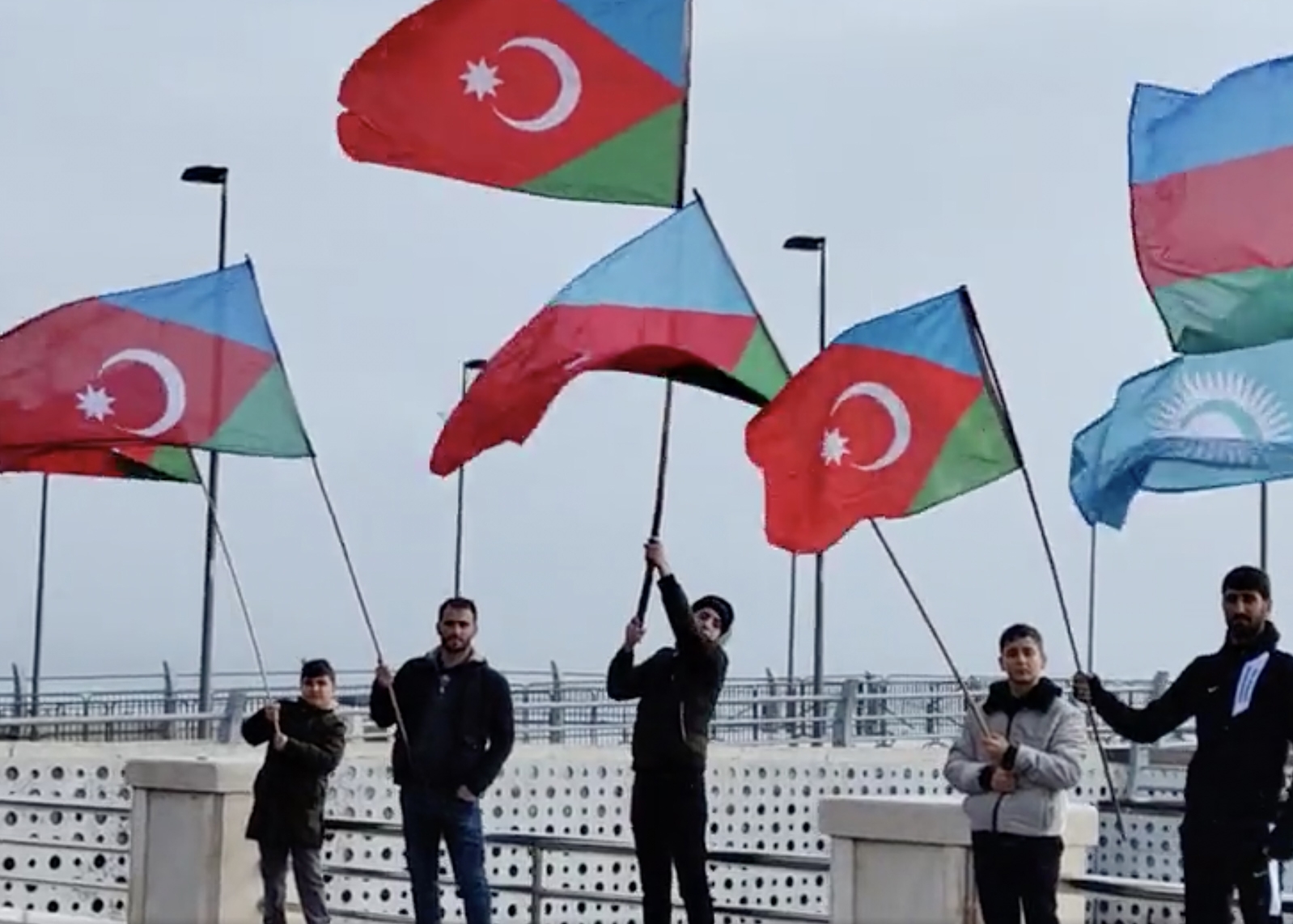
Since their independence, the former Soviet republics of Azerbaijan and Armenia have engaged in armed conflict over the Armenian-populated Nagorno-Karabakh region, located within Azerbaijan’s borders.
But when the Soviet Union collapsed in 1991, Armenia wrested the territory and came under its sovereignty, and Azerbaijan was unable to regain it until the 2020 war.
From the earliest moments of this conflict, Iran’s neighbor maintained its official neutrality toward the situation in the South Caucasus, albeit relatively tilted toward Armenia in contrast to Turkiye’s bias toward Azerbaijan.
This Iranian bias toward Armenia is a clear paradox, especially since Azerbaijan is a Shiite-majority country, just like Iran.
But that majority was the reason for Baku’s reticence in relations with Tehran, as it had long feared that the Shiite Islamic Revolution model would be exported to its borders.
Tehran, on the other hand, had fears of mobilizing Azeri society against the regime of the Islamic Revolution, as Azerbaijani nationalism with anger over the socio-economic crisis could create an explosive situation in Iran’s northern provinces.
The recent war between Azerbaijan and Armenia has exacerbated Tehran’s fears, which are deeply concerned about the changing balance of power around it, as Iran shares a 750-kilometer border with Azerbaijan.
Azerbaijan launched attacks on targets in southern Armenia in 2022 with the aim of controlling the Zangezur corridor, which lies on the border between Iran and Armenia, connecting the Republic of Azerbaijan and the Nakhchivan region.
Tehran saw the move as part of an attempt to encircle it, especially since Armenia’s southern cross-border corridor provides Turkiye with direct access to Central Asia, thereby reducing Tehran’s influence.
Iran has deepened its ties with Armenia, its longtime ally in the Caucasus, as part of its strategy to counter the influence of Turkiye and “Israel” in the region.
The short border that Iran shares with Armenia is a vital lifeline for the landlocked nation, which faces isolation from its neighbors Azerbaijan and Turkiye. Iran’s support for Armenia gives it leverage in the regional negotiations over the disputed territory of Nagorno-Karabakh.
Iran’s Islamic Revolutionary Guard Corps has also stepped up its military cooperation with Armenia, which hosts a Russian base near the Turkish border.
Iran’s overt support for Armenia marks a departure from its previous approach of diplomatic balance in the Caucasus, where it has tried to maintain good relations with both Armenia and Azerbaijan, which has a large ethnic Iranian population.
Turkiye’s Role
Turkiye’s assertive role in the Caucasus has raised tensions with Iran, its neighbor and rival, over a disputed corridor that could reshape the region’s geopolitics.
Ankara backed Azerbaijan in its war with Armenia last year, providing weapons and training that helped secure a decisive victory. Now, Turkiye is seeking to expand its influence through the Zangezur corridor, a planned transport link that would connect Azerbaijan with its exclave of Nakhchivan and Turkiye.
But Iran, which has a large ethnic Azeri population in its northwestern provinces, views the corridor as a threat to its territorial integrity and national identity. Tehran fears that Turkiye, a NATO member and a Western ally, is trying to stir up separatist sentiments among Iranian Azeris by appealing to their shared language, history, and culture.
Iran is also wary of the Israeli Occupation’s involvement in the project, as the Jewish state has cultivated close ties with Azerbaijan and has reportedly used its territory to spy on Iran’s nuclear activities.
Iran has responded to the corridor plan with a series of provocative moves, including military exercises near the border with Azerbaijan and statements questioning Baku’s sovereignty over the disputed lands.
Iranian leaders have also criticized Azerbaijani President Ilham Aliyev for his vision of “uniting the geography of the Turkish world,” which they see as a challenge to Iran’s regional role and influence.
The situation could escalate into a wider conflict if Azerbaijan and its allies persist with the corridor without addressing Iran’s concerns, especially as talks between Azerbaijan and Armenia remain fraught.
Iran may seek to enlist Russia’s help in mediating the dispute, as Moscow is also keen to avoid being drawn into another war in the Caucasus.
But Russia has its own interests in the region and may not be willing to antagonize Turkiye, its partner in several other conflicts. The fate of the Zangezur corridor hangs in the balance as the regional powers jockey for position and influence.
As for confronting the Israeli Occupation and its growing presence in the Caucasus, it remains unclear to what extent Tehran can formulate a defense and security policy to confront it, given its great preoccupation with the internal situation and its position in Syria.