Syria After the Repeal of the US Caesar Act, the Start of Recovery or a Recycling of the Crisis?
Oil and energy firms are set to benefit most from lifting the Caesar sanctions.
As the final vote approaches on repealing the U.S. Caesar Act, imposed on Syria since 2020, attention inside and outside the country is turning to what this moment could bring in terms of profound political and economic change.
Yet for Syrians, one question outweighs all others, does lifting the sanctions truly open the door to rebuilding the country?
After more than a decade of war, and the fall of Bashar al-Assad’s regime on December 8, 2024, Syria stands on the threshold of a new phase, one in which hopes for reconstruction intersect with the hard constraints of political and economic reality.
For millions of Syrians who lost their homes and were forced into displacement, refuge, or exile, reconstruction is not reducible to concrete projects or economic plans.
It embodies the hope of restored stability, the recovery of everyday life, and the closing of a long chapter of suffering.
This report examines the potential repercussions of repealing the Caesar Act on Syria’s reconstruction trajectory, weighing its opportunities and limits amid persistent political, security, and economic challenges.
It also reflects the questions being asked at home and abroad about the shape of the next phase, and about who truly holds the keys to rebuilding a country exhausted by years of war.
https://s3.eu-west-3.amazonaws.com/alestiklal/gallery/2025/12/13/237615073.webp
The Repeal of the Caesar Act
In a striking political move toward post-Assad Syria, the U.S. House of Representatives has voted in favor of legislation that would end the restrictive sanctions imposed under the Caesar Act, which was enacted in 2020 during the rule of the now-deposed Bashar al-Assad regime.
The repeal measure was passed on December 10, 2025, as part of a broader defense spending package known as the National Defense Authorization Act for fiscal year 2026, the annual legislation that sets policy priorities and budgets for the U.S. Department of Defense.
Speaking during the vote, the Republican congressman Brian Mast of Florida said, “Under this National Defense Authorization Act, we are repealing the sanctions imposed on Syria because of Bashar al-Assad and his torture of his people, and we are giving Syria a chance to chart its future after al-Assad.”
Mast had previously opposed lifting the sanctions, but clarified in a subsequent statement that the bill grants the White House the authority to reimpose them should the U.S. president determine that conditions warrant such a move.
The legislation now heads to the U.S. Senate, where a vote is expected before the end of the year, after which it would be sent to President Donald Trump for signature, the final step in the legislative process.
Under the U.S. constitutional mechanism, repealing the Caesar Act only takes effect after three stages, approval by the House of Representatives, approval by the Senate, and the president’s signature.
Damascus was quick to welcome the House vote, describing it as a direct result of months of what it called “constructive diplomatic engagement” with Washington.
In a statement, Syria’s foreign ministry said the step marked a “pivotal moment” for rebuilding trust and opening a new path for cooperation under the vision of President Ahmed al-Sharaa. It added that lifting the sanctions would
https://s3.eu-west-3.amazonaws.com/alestiklal/gallery/2025/12/13/1198190962.webp
Figures and Destruction
A study prepared by the Syrian Center for Policy Studies, a non-governmental think tank, and published in late May 2020, estimated that losses to the Syrian economy resulting from the application of the Caesar Act reached about $530bn, roughly 9.7 times the country’s gross domestic product in 2010, a measure of the cumulative impact of sanctions alongside the cost of war.
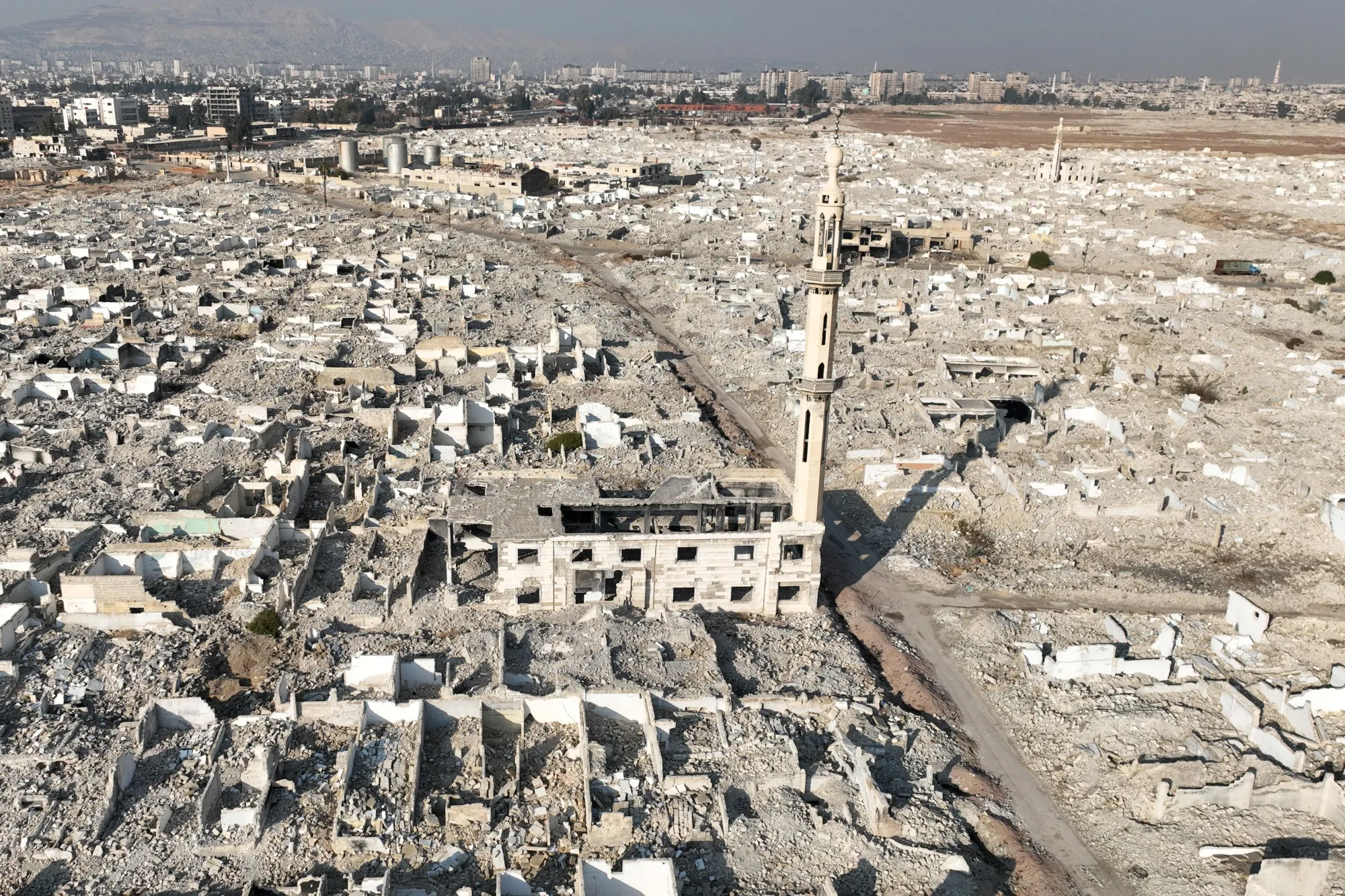
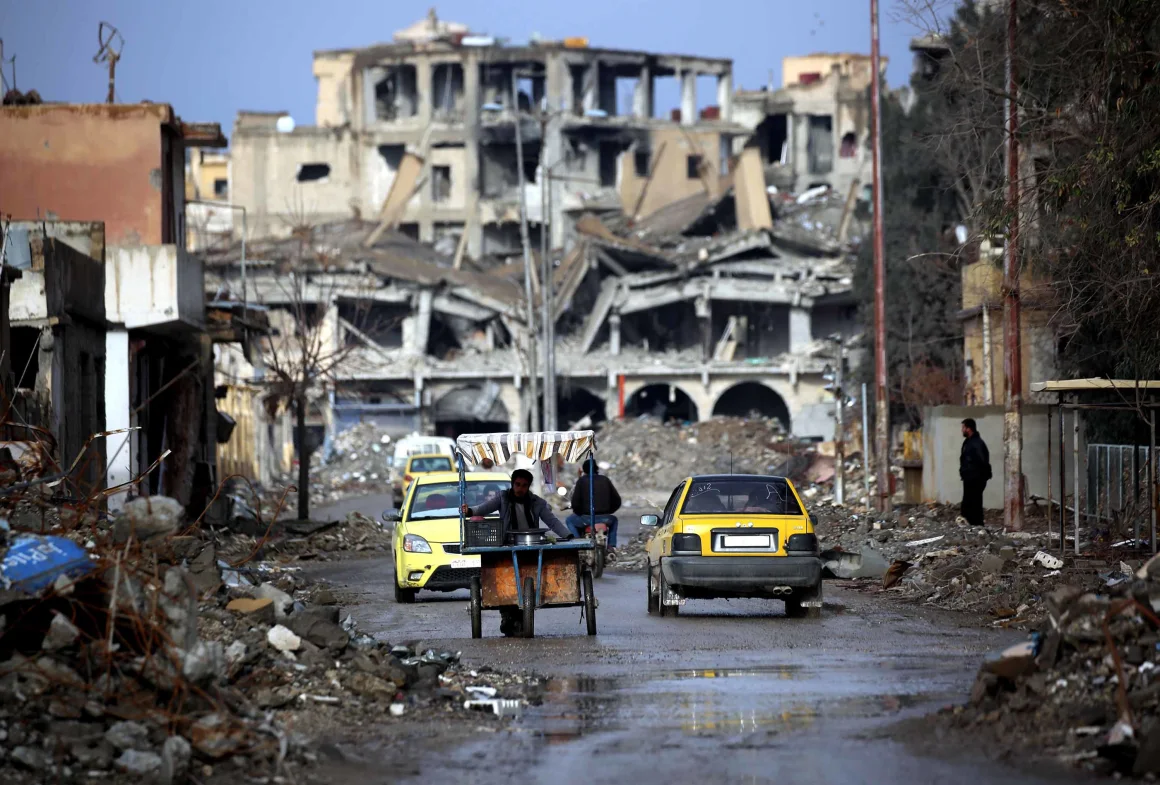
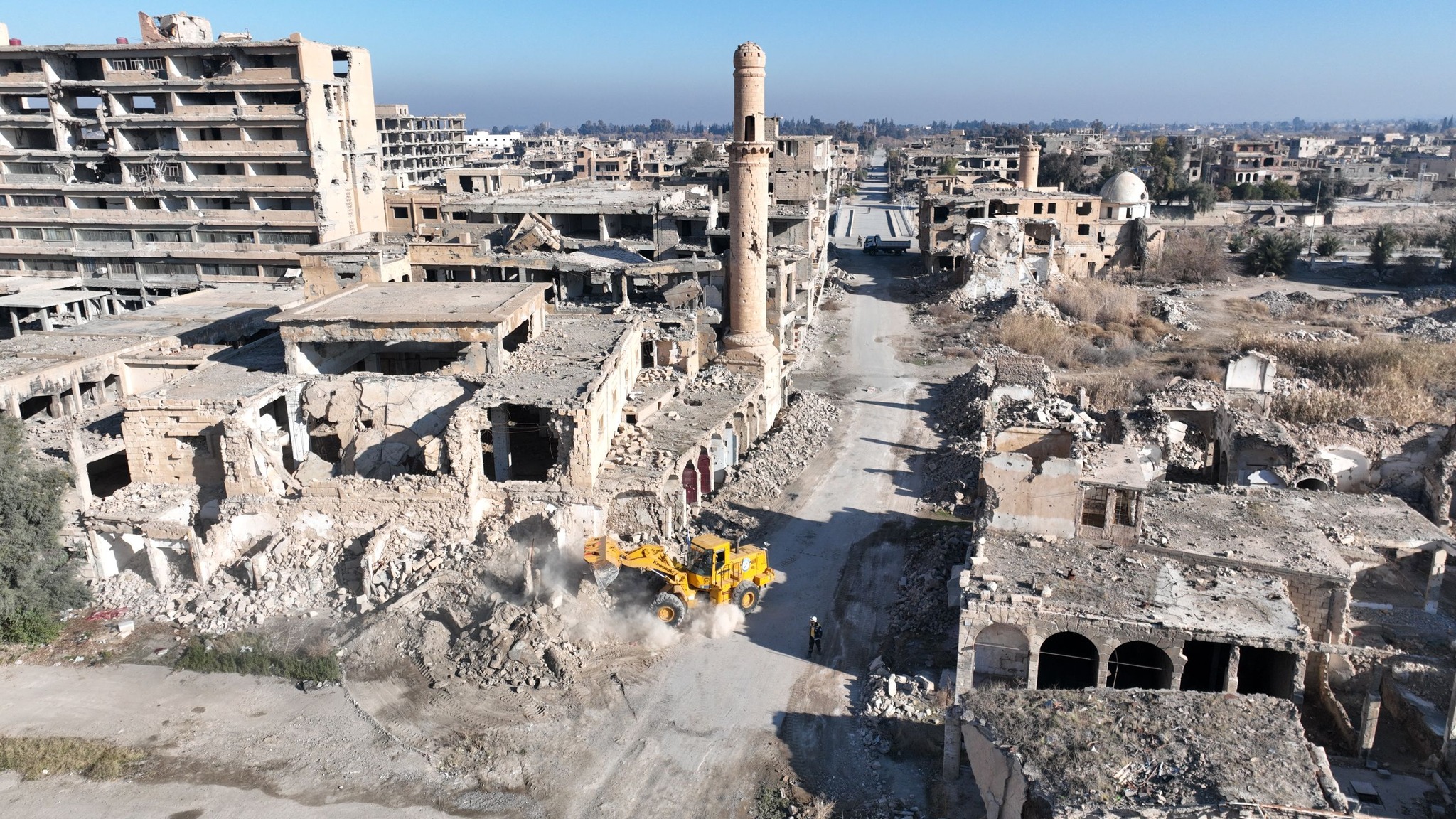
On the ground, vast swaths of Syria remain uninhabitable as a result of widespread destruction. Entire neighborhoods in major cities such as Aleppo, Damascus and its countryside, Homs, and Deir ez-Zor remain in ruins, while whole villages have been levelled.
With infrastructure collapsed and economic activity paralyzed, entire urban areas have been reduced to rubble, prompting experts to warn that conventional humanitarian aid alone is insufficient to rebuild the country.
Against this backdrop, Syria’s president, Ahmed al-Sharaa, said in a speech delivered in late October 2025 at the Future Investment Initiative conference in Riyadh, “We want to rebuild Syria through investment, not through aid and assistance.”
That argument is reinforced by recent World Bank estimates, which put Syria’s reconstruction needs at between $140bn and $345bn, with a “best estimate” of around $216bn, nearly ten times Syria’s GDP in 2024, estimated at about $21.4bn.
According to the report, around $75bn of that total would be allocated to rebuilding residential housing, $59bn to non-residential facilities, and $82bn to core infrastructure, including electricity grids, roads, and water networks, which alone account for nearly half of the overall damage.
The most heavily affected areas, notably Aleppo, the Damascus countryside, and Homs, account for the largest share of financing requirements, reflecting the scale of destruction to their core economic functions.
The World Bank cautions that these estimates remain conservative, given the high levels of uncertainty associated with assessments based on satellite imagery in areas that have experienced extensive destruction.
Observers note that launching a reconstruction process would not only affect those who remained inside the country, but would also have implications for millions of refugees, internally displaced people, and members of the diaspora, for whom the absence of housing and adequate urban infrastructure remains the single greatest barrier to return.
For this reason, the Syrian government has linked the reconstruction file to the repeal of the Caesar Act, which it describes as the most severe factor in choking the Syrian economy and blocking investment flows, through sanctions and legal restrictions, complex financial transfers and banking constraints, and logistical obstacles that have prevented any serious economic engagement inside the country.
https://s3.eu-west-3.amazonaws.com/alestiklal/gallery/2025/12/13/1799888208.jpg
A Sign of Opportunity
Within this context, Syrian researcher and director of the Iqtisadi website, Younes al-Karim, said in comments to Al-Estiklal that the U.S. House vote represents “the first step on the path to lifting the Caesar Act from Syria”.
He noted that the legislative process still requires approval by the Senate and the signature of the U.S. president, a process that could extend for around 90 days.
Al-Karim said the coming three months would constitute a decisive testing phase for Syria’s transitional government, measuring the extent of its commitment to implementing the requirements of the Caesar Act, particularly provisions related to political consensus and the implementation of the March 10, 2025, agreement between Damascus and the Syrian Democratic Forces.
He added that the level of compliance with these conditions would be directly reflected in the fate of the political track, whether in the Senate or once the bill reaches the U.S. presidency.
He pointed out that this process includes a core requirement, the exclusion of foreign forces and fighters from the new Syrian army, a demand that is fundamentally linked to Israeli security concerns.
Al-Karim said repealing the Caesar Act would not immediately translate into a comprehensive launch of reconstruction, but it would provide the legal cover needed to implement agreements signed after the fall of the Assad regime with the new Syrian state, agreements that foreign companies had been reluctant to activate because of the restrictions imposed by the law.
However, he said the impact on Syria’s central bank would remain limited, given the persistence of other legal obstacles, most notably sanctions imposed under the Syria Accountability Act of 2003, in addition to legislation related to terrorism financing under which Syria remains listed.
These U.S. legal frameworks, al-Karim explained, impose strict conditions on the central bank’s operations, including higher banking compliance standards, strengthened anti-money-laundering systems, and the restructuring of resources and operating mechanisms.
He argued that the most the Syrian government can do at this stage is to request a temporary suspension of these laws, granting the bank a grace period to reorganize itself.
Al-Karim pointed to the fragility of the banking sector’s infrastructure, in both state-owned and private banks, as well as weak staffing and limited resources, as factors that further complicate the central bank’s task. This is compounded by the urgent need for official deposits to bolster foreign currency reserves.
He also stressed the necessity of returning to international clearing houses and reactivating the Swift system, noting that this step would require at least a full year before Syria could implement it effectively.
He described this file as a realistic opportunity in which Saudi Arabia and Qatar could play a supportive role in the coming phase.
In addition, he said the central bank is now required to undertake extensive arrangements related to currency printing, including regulating volumes, specifications, and printing mechanisms in line with future technical and regulatory requirements.
On reconstruction, al-Karim said the process is unlikely to begin with the momentum expected by the Syrian public, given weak state resources and the collapse of the economy.
He suggested that projects would likely be concentrated in Damascus and its surroundings, as well as major urban centers, following urban planning models based on land acquisition by companies, with property owners offered alternative housing under social housing schemes.
He said reconstruction would only become attractive in the medium term if economic indicators improve, purchasing power rises, and a minimum level of political stability is achieved.
According to al-Karim, implementing the requirements of the Caesar Act effectively constitutes a signal of western acceptance of Syria’s new government, and a fundamental condition for any serious reconstruction path.
He added that following al-Assad’s fall, Damascus witnessed a notable rush by companies and states to sign agreements, memoranda of understanding, and investment projects.
He noted that President Ahmed al-Sharaa announced on October 29, 2025, that Syria had attracted $28bn in investments over ten months.
Al-Karim said these contracts, whether binding or non-binding, are executable under the current political reality, allowing investors to begin partial or phased implementation while awaiting the completion of legislative approvals.
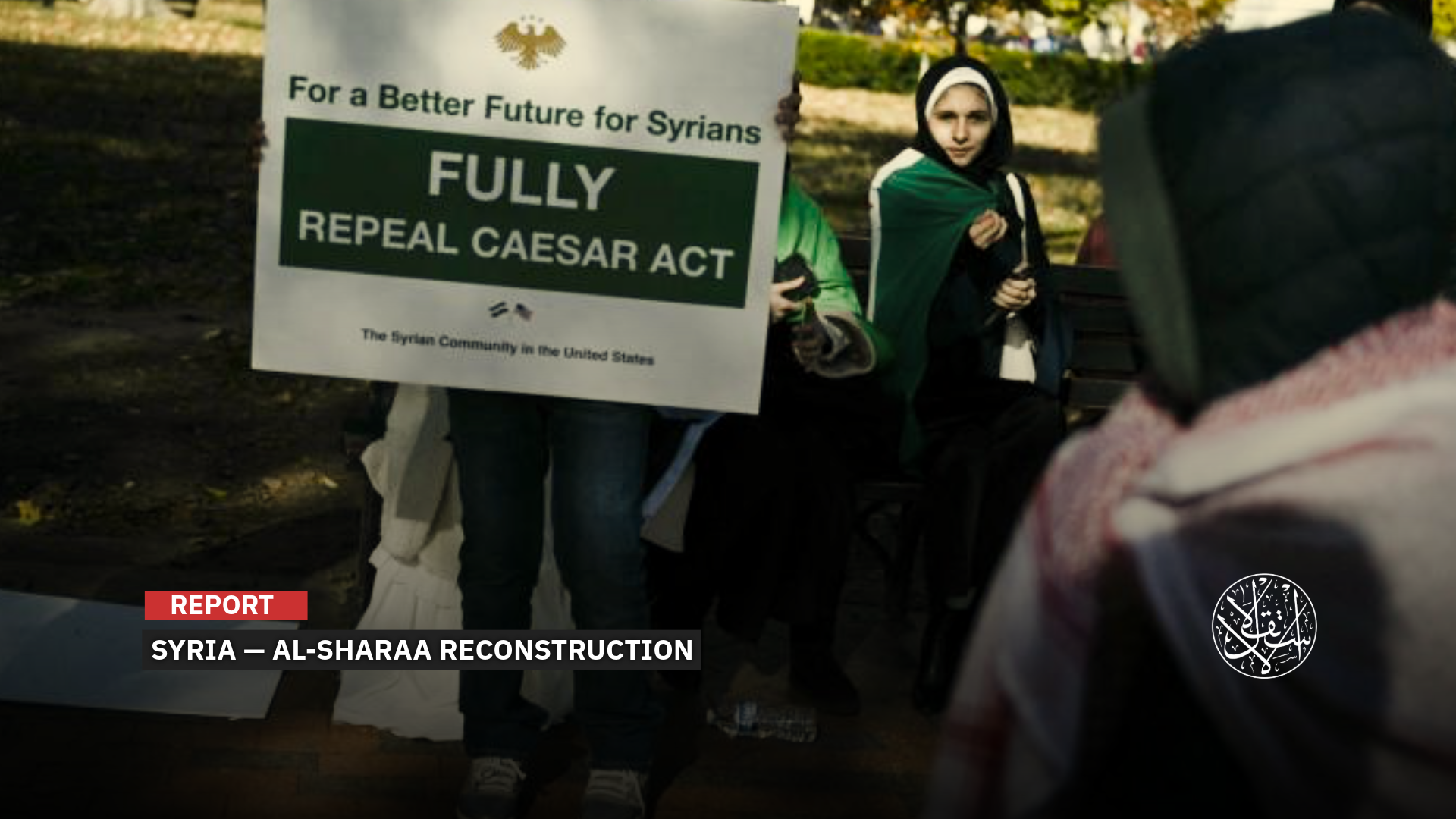
He concluded by saying that oil and energy companies would be among the biggest beneficiaries of lifting Caesar Act sanctions, as this would grant greater freedom to operate in a sector that has been paralyzed for years.
It would also ease the import of spare parts for the electricity sector and the rehabilitation of infrastructure, relieving pressure on public institutions and contributing to an improvement in public morale among Syrians exhausted by years of unfulfilled promises.
Sources
- US House of Representatives votes to repeal the Caesar Act on Syria [Arabic]
- 6.9 million tonnes of rubble, early figures reveal the scale of destruction in Syria [Arabic]
- One year after the revolution, Syria turns to investment, not aid, for reconstruction
- Through photographers’ lenses, the scale of destruction left by the regime in Syria is revealed [Arabic]