From the Disputed Islands to the Dorra Gas Field: Why the Gulf Is Pressuring Tehran at This Moment
Khamenei’s representative warned Gulf states not to cross Iran’s red lines.
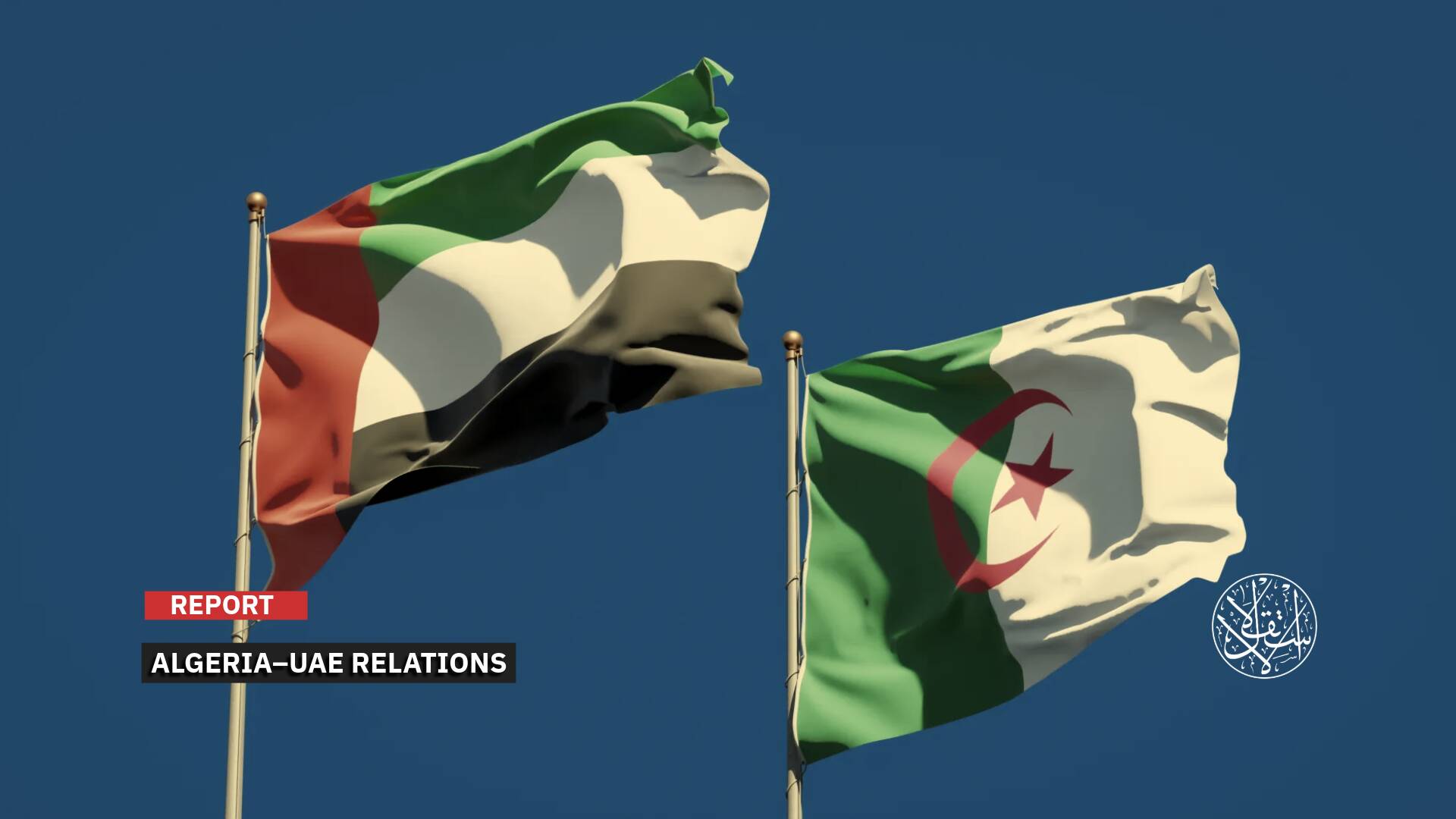
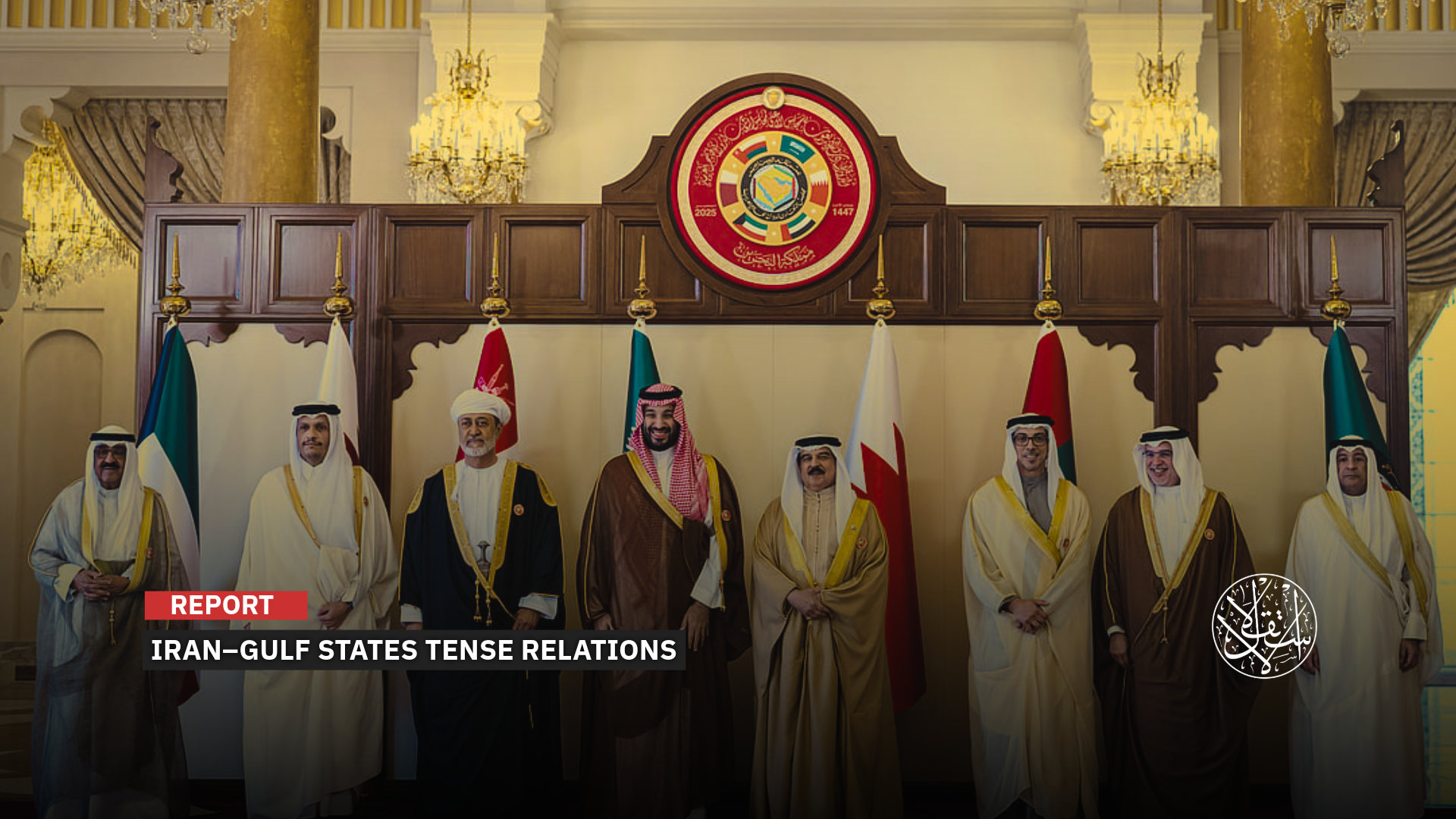
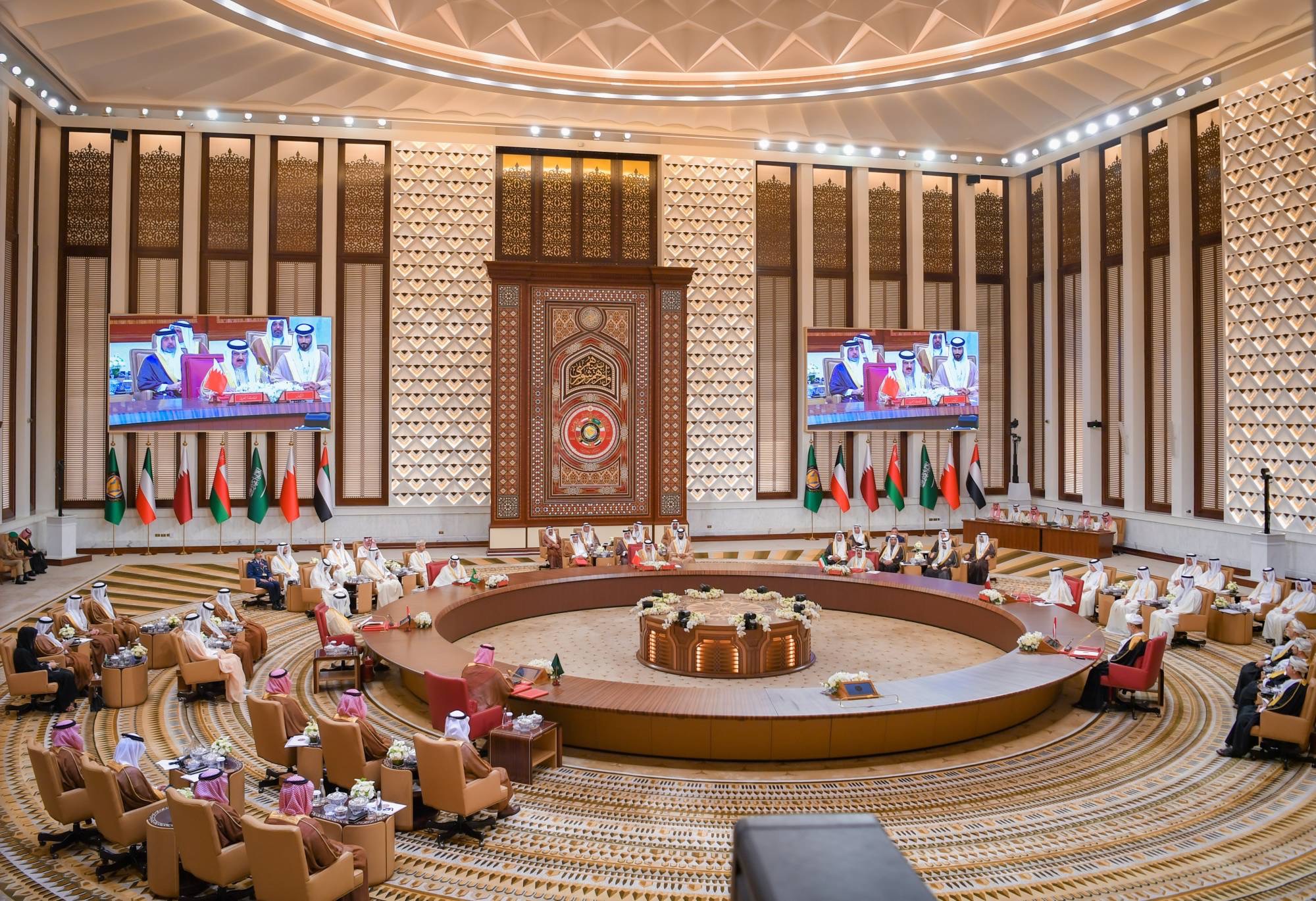
Tensions between Iran and the Gulf states have spiked sharply in the wake of a GCC summit in Manama, where member countries renewed their call for Tehran to end its “occupation” of the three Emirati islands and reaffirmed that control over the Dorra gas field lies solely with Kuwait and Saudi Arabia.
The message landed in Tehran like a spark in dry grass. Iranian officials fired back with a barrage of blistering statements—part warning, part threat—while state-aligned media amplified the outrage with combative coverage that edged into open incitement.
The flare-up has revived serious questions about where Gulf-Iran relations are headed and whether the region is once again sliding toward a destabilizing cycle of border disputes, energy standoffs, and political brinkmanship.
A Statement That Hit Differently
The final statement from the GCC summit in Manama ignited a fierce round of accusations between Iran and Gulf capitals after leaders again demanded an end to what they called “Iran’s occupation of the three Emirati islands.” They also underscored that Kuwait and Saudi Arabia alone hold exclusive rights to develop the Dorra gas field in Gulf waters.
While past GCC statements have routinely affirmed the same position, the December 3, 2025, statement stood out for its sharper tone and its unusually detailed rebuke of Iran’s actions on the islands.
Beyond reaffirming that the islands remain “occupied” by Iran and are “an integral part” of the UAE, the GCC urged Tehran to settle the dispute either through direct talks or by taking the matter to the International Court of Justice. It went further, condemning Iran’s construction of new housing intended to resettle Iranian citizens on the islands.
The council also blasted Tehran’s escalation, including placing a new “National Day of the Three Islands” on Iran’s official calendar, issuing inflammatory statements by senior officials, and conducting fresh military drills in the area.
The GCC flatly rejected a recent announcement by Ahmad Banafi, Iran’s appointed governor of Abu Musa, that 110 housing units would proceed under orders from the Ministry of Roads and Urban Development.
The summit praised the European Union for backing the UAE’s position, citing joint statements issued at the first GCC–EU summit in Brussels in October 2024 and during their 29th ministerial meeting in October 2025.
The three islands—Abu Musa, Greater Tunb, and Lesser Tunb—carry significant military and strategic weight in the Gulf. Iran seized control in 1971, just two days before the UAE’s independence from Britain, and Abu Dhabi has pressed for their return ever since, even as Tehran has steadily expanded its military footprint.
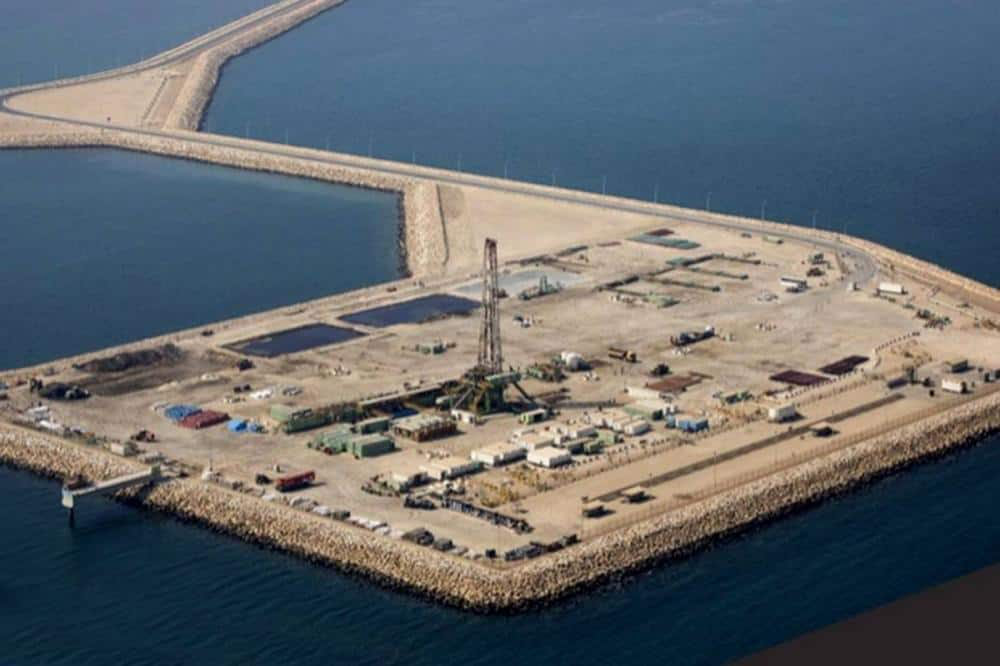
On Dorra, the GCC doubled down: the entire field lies within Kuwait’s maritime territory, and the natural resources in the adjacent partitioned zone belong solely to Kuwait and Saudi Arabia. Only those two countries, the statement stressed, hold the right to exploit its reserves—rejecting outright any claims by “other parties” in accordance with international law and existing bilateral agreements.
Discovered in 1960, the field holds some 200 billion cubic meters of gas and more than 300 million barrels of oil. Yet despite Kuwait and Saudi Arabia asserting full ownership, Iran continues to claim a third stake, effectively freezing any development plans to this day.
Red Lines
Iran did not take the Manama summit’s statement lightly. Several officials fired back with sharp, almost incendiary language. Ali Shamkhani, the Supreme Leader’s representative to Iran’s National Defense Council, warned Gulf states against “playing with Tehran’s red lines” when it comes to the three disputed islands.
Posting on X on December 4, Shamkhani said the GCC’s claims over Iran’s islands and the Dorra field, amid the malice of the U.S. and the Zionists, are anything but constructive.
“Iran exercised restraint during the twelve-day war despite certain forms of support for the [Israeli] aggression. Our strength in the Persian Gulf should not be misread; neighbors are meant to help build security, not toy with the Iranian people’s red lines,” he added.
The Iranian Foreign Ministry also hit back. Spokesperson Esmail Baghaei condemned the GCC’s summit statement on the three islands, insisting they are an “inseparable” part of Iranian territory. Any claims to the contrary, he said, are baseless, lack credibility, and openly violate the principles of territorial integrity and good neighborliness.
Baghaei stressed that Iran’s “actual, continuous, and undisputed sovereignty” over the islands stretches back centuries. Repeating unfounded allegations, he argued, “does nothing to alter historical and geographical facts, nor does it create any legal rights for those making them.”
He added that Iran’s policy is rooted in good-neighborly relations and cooperation to safeguard regional security, urging the UAE and the GCC to avoid “provocative positions” that undermine that principle.
Tensions spilled further into public view during a panel at the Doha Forum on December 7, where a heated exchange broke out between former Iranian vice president Mohammad Javad Zarif and GCC Secretary-General Jasem al-Budaiwi. Zarif, visibly agitated, rejected accusations that Iran harbors expansionist ambitions, arguing that Gulf states themselves have unresolved border disputes that international law does not consider major conflicts—a pointed reference to the standoff over the Dorra field.
Al-Budaiwi responded sharply, saying Iran is pushing the Gulf states to negotiate over the Dorra field, jointly owned by Saudi Arabia and Kuwait. He stressed that any dialogue must start with trust-building, pointing to what he described as deep and persistent gaps in relations with Tehran.
Zarif bristled at the remark and said, “Every GCC country has territorial disputes with each other; now my friend is talking about the Arash oil field, which is disputed between Iran, Saudi Arabia, and Kuwait, and he says this is Kuwaiti-Saudi business. Why is it Kuwaiti-Saudi business? because you say so?”
Al-Budaiwi replied bluntly, “Because international law says so.”
Zarif, raising his voice again, snapped back, “Not because international law says so, every time, every time, every time we went to talk about the Arash oil field, it was Kuwait that refused to talk, not Iran!”
That same day, al-Budaiwi issued a sharply worded statement condemning what he called “media remarks by Iranian officials targeting Gulf states, undermining Bahrain’s sovereignty, the UAE’s rights over its three islands, and the joint Saudi-Kuwaiti ownership of the Dorra field.”
The statement said the comments were riddled with “falsehoods, baseless claims, and unacceptable accusations” that violate the principles of non-interference and good-neighborliness—principles Iran itself breached, al-Budaiwi added, when it struck Qatar’s al-Udeid base on June 23, 2025.
The Final Warning
As tensions rise between Iran and the Gulf states, political analyst Iyad Thabet argues that the timing of the Gulf’s escalation is no coincidence. Regional dynamics, he says, have shifted. Iran’s influence is visibly receding while Western and Israeli pressure increases. “The Iranian regime is going through one of its weakest moments since 1979,” Thabet told Al-Estiklal.
According to him, Gulf capitals believe this is the moment to press for concessions by raising the issue of the three disputed islands and the Dorra gas field with unprecedented bluntness. Tehran considers this an act of political blackmail, a sentiment reflected in Ali Shamkhani’s sharp warnings.
Thabet adds that Gulf governments increasingly view Iran as unable to strike through regional proxies without risking a heavy American or even Israeli response. Any such move, he says, could pull Tehran into a second confrontation that it is in no position to handle.
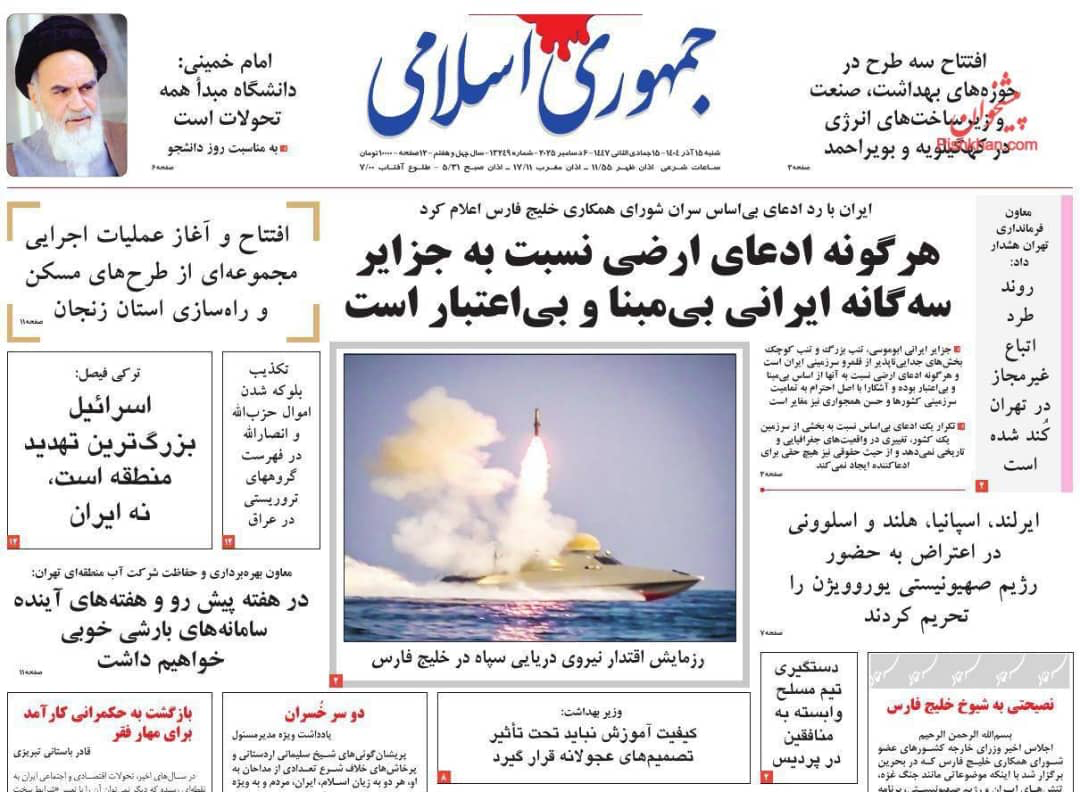
Iranian media reacted strongly to the Gulf Cooperation Council’s statement demanding the return of the islands to the United Arab Emirates. The newspaper Jomhouri-e Eslami wrote that this particular statement stood out for what it described as a “final warning,” calling it an escalation unlike any before.
In its editorial, the paper insisted that historical records confirm Iran’s ownership of the islands for centuries and that no political declaration can alter that. It argued that the broad public consensus in Iran on maintaining territorial integrity makes any concession regarding the islands or the Arash, also known as Dorra, field impossible. The paper urged Gulf states to stop repeating what it described as false claims and to stop relying on Western support. It stressed that Iran would not yield to threats.
Iranian writer Mohammed Saffouri echoed this view, arguing that each stronger Gulf statement reflects not an independent Gulf position but an American and Israeli encouragement intended to stir tensions and divert the region from the real danger, which is “Israel.”
In a December 6 editorial for Siyasat-e Rooz, Saffouri argued that while Iran steers clear of escalating tensions with its neighbors, that restraint should not be read as any openness to giving up territory. He urged a rethink of foreign policy and a stronger media push at home and abroad to reinforce Iran’s ownership of the islands.
In his view, raising the issue at this particular moment is designed to draw attention away from other regional crises. He argued that Iran’s response must be stronger on the political, media, and military fronts. He warned that if the issue is left to cool down, the other side will only become more confident.
Sources
- The Final Statement from the 46th Session of the Supreme Council [Arabic]
- Gulf Cooperation Council Responds to Iranian Officials’ Comments on Gulf States [Arabic]
- Iran Condemns Gulf Summit Statement on the Three Emirati Islands [Arabic]
- After Statement on Three Islands, Khamenei’s Representative Accuses Gulf States of “Crossing Iran’s Red Lines” [Arabic]
- Javad Zarif Loses Temper at Doha Forum Over Criticism of Iran, Mentions 'Tehran’s Proxies' [Arabic]